
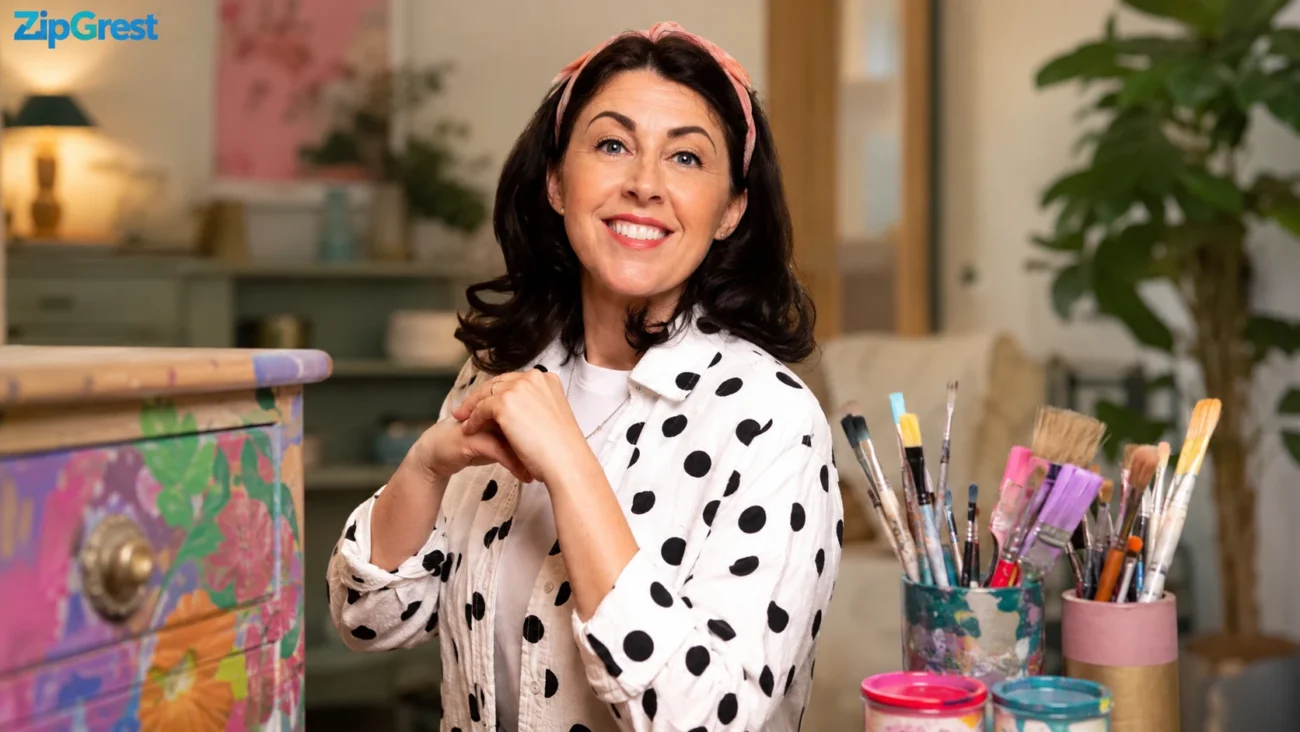
Gemma Longworth is best known to television viewers as the bright, practical, hands-on upcycler from Find It, Fix It, Flog It, but her story reaches far beyond a workshop bench. She is a Liverpool-based artist, furniture restorer, presenter, author, and creative wellbeing practitioner whose career has grown from textiles, grief support, hospital workshops, and a belief that making something by hand can help people feel more like themselves again. Her work sits between two worlds that rarely meet so naturally: the world of salvaged furniture and the world of emotional repair.
Readers usually search for Gemma Longworth because they have seen her on television and want to know who she is away from the programme. The fuller answer is more interesting than a simple TV biography. Longworth built her public profile through upcycling and interiors, but her creative identity was shaped by family loss, formal art training, community workshops, and a long commitment to using craft as a tool for confidence, memory, and healing.
Early Life and Family Background
Gemma Longworth is from Liverpool, a city that remains central to her work and public identity. Her career has been closely tied to Merseyside’s creative community, from her early education to her later workshops, studio practice, and larger public projects. She has often been described in connection with Liverpool’s independent arts scene rather than as someone who simply appeared on television after a conventional media career.
One of the most meaningful facts about her early life is the death of her younger brother. Public interviews have linked that loss to her decision to explore drawing, textiles, and art as a way of expressing grief. Longworth has explained that her brother loved drawing, and that making art in his memory helped her understand the emotional force of creativity before it became her profession.
Family influence also appears in the craft traditions around her childhood. Public profiles of her early business have described her learning and absorbing creative habits from older relatives, including knitting and drawing. Those details matter because Longworth’s later work is not presented as a sudden lifestyle brand; it grew from familiar, domestic, hands-on making that later became formal study, business, television, and therapeutic practice.
Education and First Creative Ambitions
Longworth’s education followed a clear creative path. She studied art and design in Liverpool before moving further into applied arts, drawing, textiles, and therapeutic uses of creativity. Her formal background helped her develop the technical side of her work, but it also gave her a framework for thinking about art as something that could support people through difficult emotional experiences.
After leaving school, she attended the City of Liverpool College, where she explored different areas of art and design. That kind of broad early training suited someone who would later move between fabric, paint, furniture, found objects, interiors, and group workshops. Rather than choosing one narrow discipline and staying inside it, Longworth built a career from the overlap between practical making and emotional expression.
She later studied Drawing and Applied Arts and completed postgraduate work in textiles. Her studies also connected to art therapy and the use of creative activity in care settings. That interest became one of the most defining parts of her career, especially through her work with hospitals, bereavement support, and creative wellbeing groups.
Art, Grief, and Hospital Workshops
Longworth’s work with children and families affected by grief is one of the most important parts of her biography. During and after her studies, she became involved in creative projects connected with Alder Hey Children’s Hospital in Liverpool. Her work included art-based support for children dealing with bereavement, helping them express feelings that can be hard to put into ordinary language.
This part of her life explains why her public message around craft often sounds deeper than decoration. For Longworth, making things is not just about producing a pretty object for a shelf or a newly painted chair for a room. It can also be a way to hold memory, release pressure, create routine, and give someone a small sense of control at a painful time.
That does not mean she presents craft as a cure-all, and responsible readers should not treat it that way. Her work is better understood as creative support, not a replacement for clinical help. But here’s the thing: for many people, a guided creative session can create a safe opening, especially when talking directly about grief or anxiety feels too difficult.
The Button Boutique and Building a Business
Longworth’s first major public business identity came through The Button Boutique, a creative venture she launched after finding that the available work did not match the life she wanted to build. Instead of waiting for the perfect role, she created one. The Button Boutique reflected her interest in textiles, handmade objects, vintage styling, workshops, parties, gifts, and upcycled homewares.
The business grew from practical craft sessions and local creative demand. It gave Longworth a base from which she could teach, sell, experiment, and connect with people who wanted to make things themselves. It also showed her ability to turn artistic training into a working enterprise, which is not always easy for graduates in creative fields.
The Button Boutique was not only a shop-style idea. It was part workshop, part studio, part community space, and part expression of Longworth’s belief that creative confidence can be taught. Through this stage of her career, she learned how to communicate with beginners, manage real clients, run sessions, and make creative work feel inviting rather than intimidating.
Career Breakthrough on Find It, Fix It, Flog It
Gemma Longworth became widely recognised through Find It, Fix It, Flog It, the restoration and upcycling programme associated with Channel 4 and later wider UKTV viewing. The programme follows presenters and restorers as they find neglected items in sheds, barns, lock-ups, and homes, then repair or repurpose them into pieces that can be sold. Longworth’s role brought her practical furniture skills and creative eye to a national audience.
On screen, she is often connected with Simon O’Brien’s side of the show, where old objects are turned into useful or decorative pieces. The appeal of her role lies in the fact that she can make rough, unwanted, or awkward materials feel worth saving. Viewers see her sanding, painting, rethinking shapes, choosing finishes, and finding a way to make overlooked pieces work again.
Television changed the scale of Longworth’s public profile, but it did not create her skill. By the time she reached viewers, she already had years of creative practice, business experience, and workshop teaching behind her. That background is part of why her on-screen presence feels grounded; she comes across less like a presenter playing at craft and more like a working maker who knows how much preparation sits behind a good finish.
Upcycling Style and Creative Philosophy
Longworth’s upcycling style is colourful, practical, and rooted in reuse. She is drawn to the personality of old objects, especially furniture and materials that still have value but need care, repair, or a completely new purpose. Her work often balances the demands of broad public taste with her own love of colour, pattern, texture, and expressive surfaces.
Preparation is one of the quiet lessons in her work. Upcycling can look quick on television or social media, but real restoration needs cleaning, sanding, repairs, priming, careful product choices, and patience. Longworth’s approach recognises that a piece must not only look good when the camera stops; it has to survive being touched, moved, sat on, opened, closed, and used.
Her philosophy also fits the wider interest in sustainability. Upcycling is not automatically virtuous if it is done badly or if it creates waste in another form, but thoughtful reuse can keep solid materials out of landfill. Longworth’s work shows the practical side of that idea: if a wardrobe, chair, cabinet, or table is structurally sound, imagination and skill can often give it a second life.
The Sir Thomas Hotel Project
One of Longworth’s notable public projects away from television was her involvement in the refurbishment of Liverpool’s Sir Thomas Hotel. The project gave her a chance to apply upcycling principles at a commercial scale rather than only in individual homes or television workshops. It also showed how sustainable design can work inside a hospitality setting, where furniture has to meet the demands of constant use.
The hotel project involved refreshing existing furniture rather than simply replacing everything. Longworth worked on pieces such as wardrobes, bedside cabinets, dressing tables, headboards, and chairs. The point was not to make old furniture look artificially new, but to bring tired rooms back to life while keeping good-quality pieces in use.
This kind of project helped establish Longworth as more than a craft personality. Hospitality interiors require consistency, durability, deadlines, and an understanding of how design feels to paying guests. Her role in the Sir Thomas Hotel refurbishment showed that her upcycling work could move beyond small decorative projects into serious interior renewal.
Hidden Gems and Creative Wellbeing
Longworth later developed Hidden Gems, a creative support project that brings together her experience in craft, art, upcycling, bereavement support, and wellbeing. The project reflects the most personal thread in her career: the idea that creativity can help people process difficult emotions and reconnect with themselves. It offers workshops and sessions for different ages, needs, and group settings.
Hidden Gems is closely aligned with the growing interest in creative health and social prescribing. Across the UK, community arts, craft groups, and cultural activities are increasingly discussed as ways to reduce isolation, support mental wellbeing, and help people find routine and connection. Longworth’s work sits naturally inside that movement because it is practical, warm, and based on doing rather than simply talking.
The name Hidden Gems also fits her wider public identity. She is drawn to things and people that may be overlooked, whether that means an unwanted cabinet, a forgotten skill, or a person struggling to see their own value after loss. That connection between object repair and human confidence gives her work a recognisable emotional centre.
Craft Your Cure and Becoming an Author
In 2025, Longworth’s creative wellbeing work reached a wider audience with her book Craft Your Cure: 25 craft and upcycling projects to heal and bring joy. The book brought together her personal story, her love of making, and her belief that craft can support people during hard seasons of life. It also allowed readers who knew her from television to understand the deeper reasons behind her work.
The book includes creative projects across craft, textiles, DIY, and upcycling. Its purpose is not only to teach a technique, but to encourage people to slow down, use their hands, and make something that carries emotional meaning. That distinction is important because Longworth’s work often begins with an object but ends with a feeling: pride, calm, memory, confidence, or relief.
Becoming an author also shifted her public identity. She was no longer only the woman viewers recognised from a restoration programme; she became a voice in the wider conversation about creativity and wellbeing. The book gave structure to ideas she had been developing for years through hospital work, community sessions, upcycling, and personal experience.
Family, Relationships, and Private Life
Gemma Longworth has shared some meaningful family context publicly, especially around the death of her younger brother and the way that loss shaped her creative life. That story is central to understanding her work, because it connects her personal grief to her later focus on art, memory, and healing. It also explains why bereavement support has become such an important part of her public mission.
There is less reliable public information about her romantic relationships, marriage, or children. Unlike some television personalities, Longworth has not built her public profile around private domestic exposure. Most trustworthy public material focuses on her work, education, upcycling, creative projects, brother’s death, book, and community activity.
For that reason, claims about a husband, partner, or children should be treated carefully unless Longworth has confirmed them herself in a reliable public setting. A respectful biography should not fill private gaps with guesswork. What can be said with confidence is that family loss influenced her creative direction and that her public work often honours the emotional importance of memory, connection, and care.
Income Sources and Estimated Net Worth
There is no credible public record confirming Gemma Longworth’s exact net worth. Any specific figure circulating online should be treated as an estimate unless it is backed by verified accounts, official disclosures, or direct confirmation. She is a working creative professional, not a celebrity whose finances are widely documented through major contracts or public filings.
Her income sources appear to include television work, furniture upcycling, interior projects, creative workshops, public appearances, writing, and projects linked to Hidden Gems. She has also run creative businesses and worked with organisations in community and wellbeing settings. Those streams suggest a varied creative career rather than a single large source of income.
The truth is, net worth is often one of the weakest areas of online celebrity biography. For someone like Longworth, the more useful financial story is not a guessed total but the way she has built a living across several connected fields. Her career shows how a modern creative worker can combine craft, media, education, community work, authorship, and design projects into one public identity.
Public Image and Why Viewers Like Her
Longworth’s public image is approachable, practical, and emotionally open without being overexposed. On television, she comes across as a maker who enjoys the problem-solving side of objects: what can be saved, what can be changed, and what might surprise people once it is finished. That kind of warmth is a major reason viewers remember her.
Her appeal also comes from the fact that she does not present creativity as something reserved for experts. She has spent much of her career teaching ordinary people how to make, repair, and try. That makes her work accessible to viewers who may never restore furniture professionally but still want to paint a chair, repair a cushion, join a craft group, or make something meaningful after a difficult period.
There is also a strong local quality to her public identity. Longworth’s Liverpool roots remain visible in her projects, language, and professional networks. She is not simply attached to the city as a biographical detail; Liverpool is part of the creative ecosystem that shaped her and continues to support much of her work.
Where Gemma Longworth Is Now
Gemma Longworth is currently best understood as a creative professional working across television, upcycling, writing, interiors, and wellbeing. Her work with Find It, Fix It, Flog It keeps her connected to audiences who enjoy restoration and practical design. Her book and Hidden Gems work place her in a broader conversation about craft, mental wellbeing, grief support, and sustainable living.
Her current public direction seems to bring her two main identities together. One identity is the skilled upcycler who can turn unwanted objects into something useful and attractive. The other is the creative support practitioner who understands that making things can help people process emotion, rebuild confidence, and feel less alone.
That combination is likely to define her next chapter. As interest in second-hand interiors, repair culture, and creative wellbeing continues to grow, Longworth’s work feels well placed. She represents a version of craft that is neither purely nostalgic nor purely decorative; it is practical, personal, and connected to real life.
Frequently Asked Questions
Who is Gemma Longworth?
Gemma Longworth is a Liverpool-based artist, upcycler, TV presenter, author, and creative wellbeing practitioner. She is best known for her work on Find It, Fix It, Flog It, where she helps restore and repurpose unwanted objects. Away from television, she has built a career through textiles, furniture restoration, workshops, community projects, and creative support work.
What is Gemma Longworth famous for?
She is most famous for appearing on Find It, Fix It, Flog It, a programme about restoring and selling neglected items. Viewers know her for her practical upcycling skills, colourful design sense, and ability to turn overlooked objects into useful pieces. She is also known for her book Craft Your Cure and her wellbeing-focused creative work.
Where is Gemma Longworth from?
Gemma Longworth is from Liverpool, and the city has remained closely connected to her career. She studied there, built creative businesses there, worked with local organisations, and took part in public projects in the city. Her Liverpool identity is part of how many viewers and readers understand her work.
Is Gemma Longworth married?
There is no widely confirmed public information about Gemma Longworth’s marital status. Reliable public sources focus mainly on her creative work, television career, education, family loss, upcycling projects, and wellbeing practice. Unless she confirms private details herself, it is more accurate to say that her marriage or relationship status is not publicly established.
Does Gemma Longworth have children?
There is no reliable public confirmation that Gemma Longworth has children. Many online biography pages make unsupported claims about public figures, so this detail should not be stated as fact without a trustworthy source. Longworth’s public profile is centred on her career, family background, workshops, television work, and creative health projects.
What is Gemma Longworth’s book?
Gemma Longworth’s book is Craft Your Cure: 25 craft and upcycling projects to heal and bring joy. It combines practical craft and upcycling projects with her personal belief that making can support emotional wellbeing. The book reflects the same themes that run through her career: creativity, grief, memory, colour, repair, and confidence.
What is Gemma Longworth’s net worth?
Gemma Longworth’s exact net worth has not been publicly verified. Any specific figure online should be treated as an estimate unless backed by reliable financial records or direct confirmation. Her income appears to come from several creative sources, including television, workshops, upcycling, interiors, writing, and community projects.
Conclusion
Gemma Longworth’s story is not simply a television success story. It is the story of a creative worker who turned personal loss, art training, practical skill, and community care into a career with real emotional weight. Her public life shows how craft can move from the kitchen table to the workshop, the hospital, the television screen, and the bookshelf.
What makes her stand out is the consistency of her purpose. Whether she is restoring furniture, teaching a group, writing about craft, or supporting people through bereavement, the same idea keeps returning: damaged or overlooked things can still hold value. That belief gives her work a warmth that viewers and readers can feel.
Her career also says something about the changing status of craft itself. Making is no longer treated only as a hobby or a decorative extra; for many people, it is part of sustainability, mental wellbeing, memory, and personal identity. Longworth has become one of the recognisable British voices connecting those ideas in a practical, accessible way.
As she continues to work across upcycling, television, authorship, and creative wellbeing, Gemma Longworth remains a figure shaped by both skill and feeling. Her importance lies not in celebrity spectacle, but in showing people that repair can be useful, beautiful, and deeply human.
