
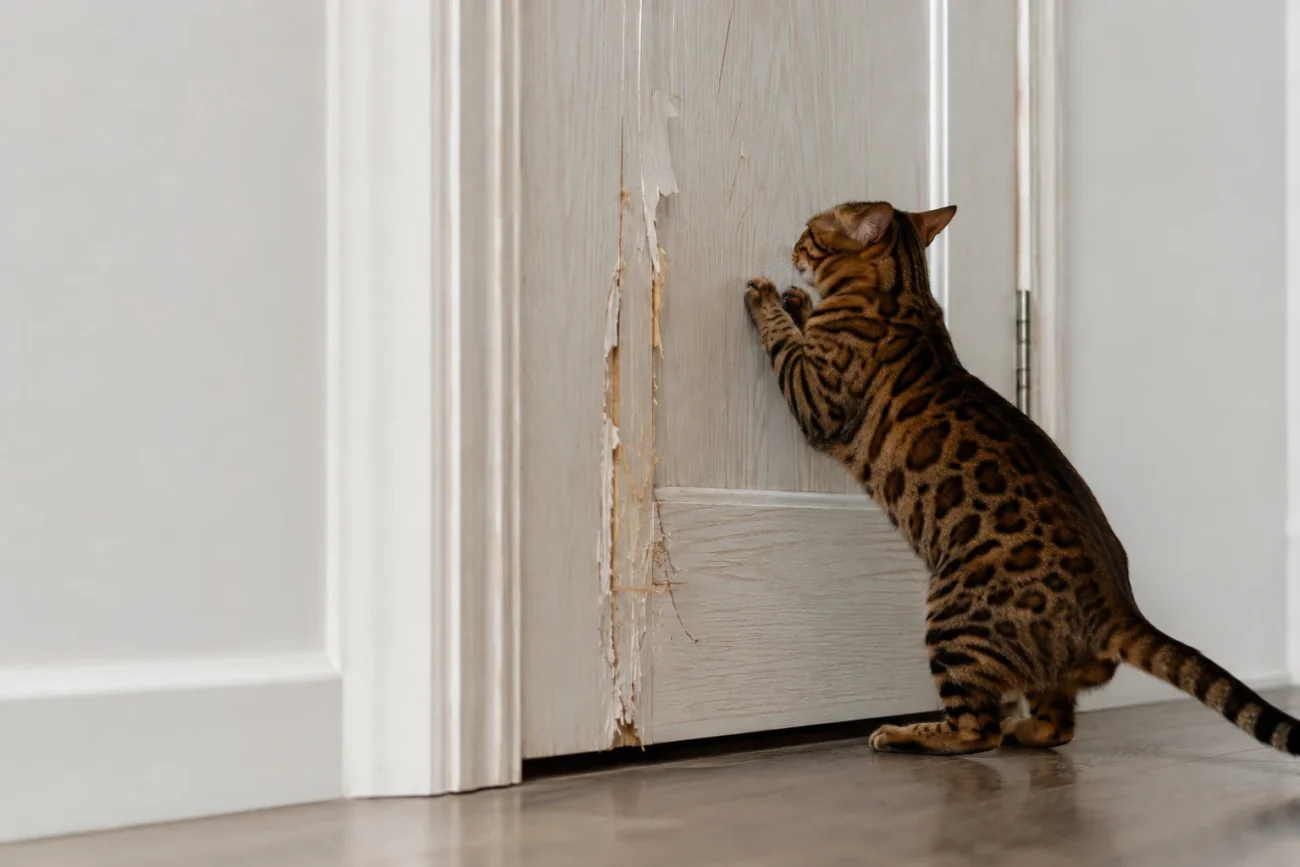
Living with pets is one of life’s greatest joys, but every pet owner eventually notices that cats and dogs can be surprisingly tough on interior doors. Dogs often scratch doors when excited, anxious, or waiting to enter a room. Cats naturally sharpen their claws on vertical surfaces, and unfortunately, a beautiful door panel can quickly become one of their favorite targets.
Replacing damaged doors every few years is expensive, but choosing the right door from the beginning can dramatically reduce maintenance costs while keeping your home looking elegant for many years.
Many homeowners initially focus only on the appearance of a door. While design certainly matters, the finish, core construction, and surface technology are often far more important when pets are part of the household. Modern manufacturing has introduced highly durable materials that were not commonly available just a decade ago, allowing homeowners to enjoy beautiful interiors without constantly worrying about scratches or dents. Solid core construction, durable laminate surfaces, engineered wood products, and protective coatings all contribute to extending a door’s lifespan in busy homes with pets.
“The best pet-friendly interior door is not simply the strongest one. It is the door that balances durability, easy maintenance, safety, and timeless design.”
If you’re looking for premium interior doors that combine modern design with everyday durability, Interior Doors by Indigo Doors offer a wide selection of customizable solutions for contemporary homes. Whether you have an active dog, a curious cat, or a busy family, you’ll find stylish options built for long-lasting performance. Learn more at https://indigodoors.com/.
Why Pets Scratch Interior Doors
Understanding why animals scratch doors helps explain why some doors fail much sooner than others.
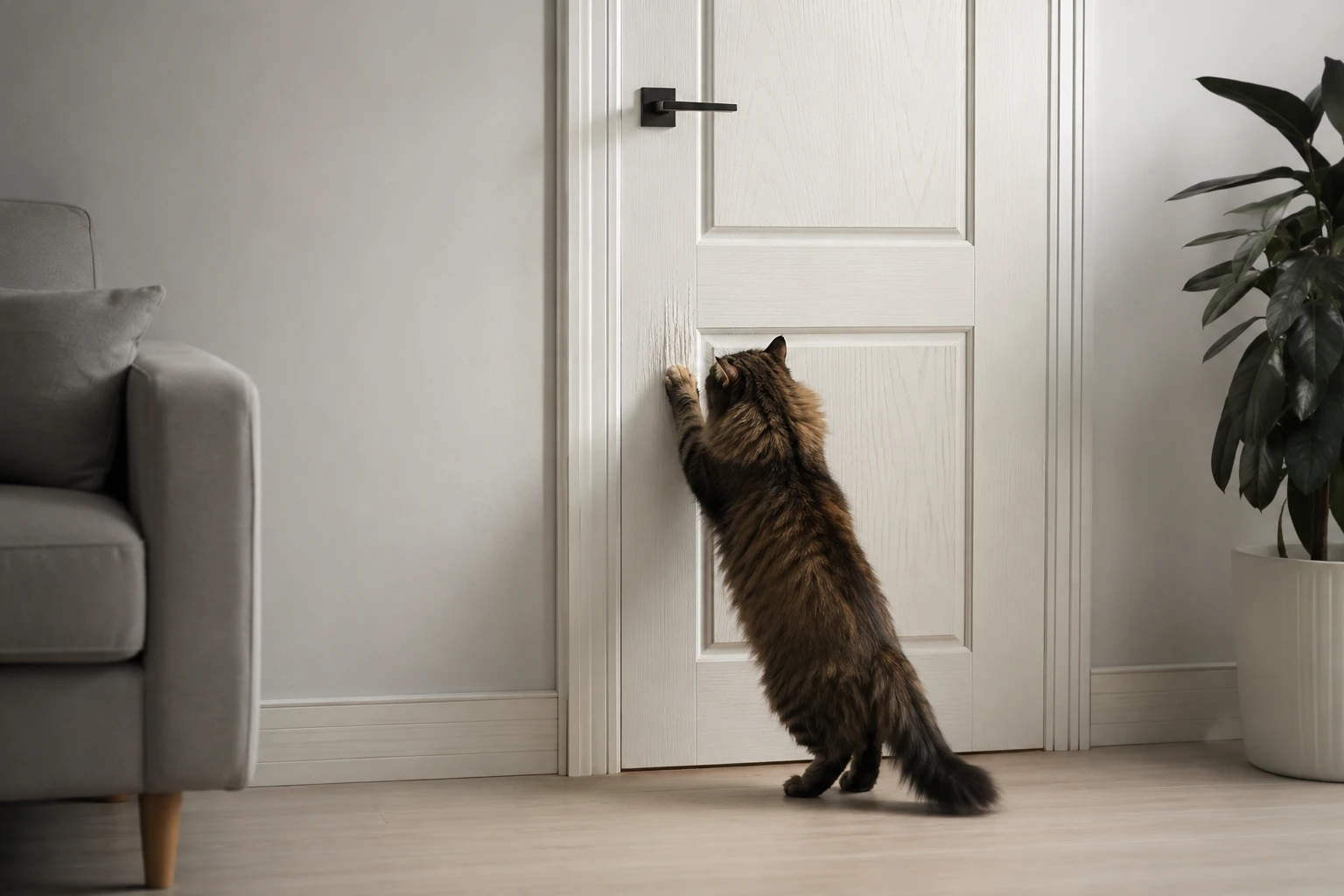
Dogs commonly scratch because they hear family members on the opposite side, experience separation anxiety, become excited before walks, or simply want attention. Larger breeds can apply considerable force with their front paws, creating deep grooves in painted finishes or soft veneers.
Cats behave differently. Scratching is a completely natural behavior that keeps claws healthy, marks territory, and stretches muscles. Even well-trained indoor cats may occasionally scratch a nearby door if no scratching post is available.
This means that no interior door is completely immune to damage. However, selecting highly resistant materials can reduce visible wear by a remarkable margin. Durable surfaces are less likely to chip, dent, or develop noticeable claw marks, making them an excellent long-term investment for homes with pets.
The Most Important Features to Look For
When comparing different interior doors, prioritize the following characteristics instead of focusing only on style.
- Choose solid core construction because it withstands impacts much better than hollow core doors.
- Look for scratch-resistant laminate, CPL, or HPL finishes instead of soft painted surfaces.
- Select doors that are easy to wipe clean since muddy paws, fur, and nose prints are unavoidable.
- Prefer matte or textured finishes because they hide small scratches far better than glossy surfaces.
- Invest in quality hardware and hinges that will remain stable despite years of frequent use.
These features work together rather than independently. A durable finish applied over a weak door structure will still leave you disappointed after years of heavy use.
Comparing Popular Door Materials
Choosing the correct material is one of the biggest decisions you’ll make. Every option has strengths and weaknesses depending on your budget, interior style, and the behavior of your pets.
| Door Material | Scratch Resistance | Maintenance | Recommended for Pet Owners |
|---|---|---|---|
| Solid Wood | High but requires refinishing | Moderate | Excellent |
| Solid Core MDF | Very High | Easy | Excellent |
| Laminate | Very High | Very Easy | Excellent |
| CPL Surface | Excellent | Very Easy | Excellent |
| HPL Surface | Outstanding | Very Easy | Premium Choice |
| Veneer | Moderate | Moderate | Good |
| Painted MDF | Moderate | Moderate | Acceptable |
| Hollow Core | Low | Easy | Not Recommended |
Among today’s surface technologies, CPL and HPL laminates have become especially popular because they offer excellent resistance to scratches, moisture, frequent cleaning, and everyday wear while requiring very little maintenance. HPL generally provides even greater impact resistance than CPL, although both significantly outperform decorative foil finishes in demanding environments.
“Buying a durable door once is usually far less expensive than repairing or replacing a beautiful door that cannot withstand everyday life with pets.”
Why Solid Core Doors Are Worth the Investment
Many homeowners hesitate when comparing the price of hollow core and solid core doors. At first glance, hollow core doors appear to offer better value, but this perception often changes after several years of daily use.
A hollow core door is lightweight because much of its interior consists of a honeycomb structure or lightweight filler. While perfectly suitable for closets or rarely used rooms, these doors are much easier to dent and generally provide limited resistance against repeated scratching.
Solid core doors are much denser and stronger. They resist impacts more effectively, feel substantially more premium when opening and closing, reduce sound transmission between rooms, and tolerate years of daily use without becoming unstable. Their weight also contributes to a higher-quality feel throughout the home. These advantages make solid core construction one of the most frequently recommended options for households with children and pets alike.
Choosing the Right Surface Finish
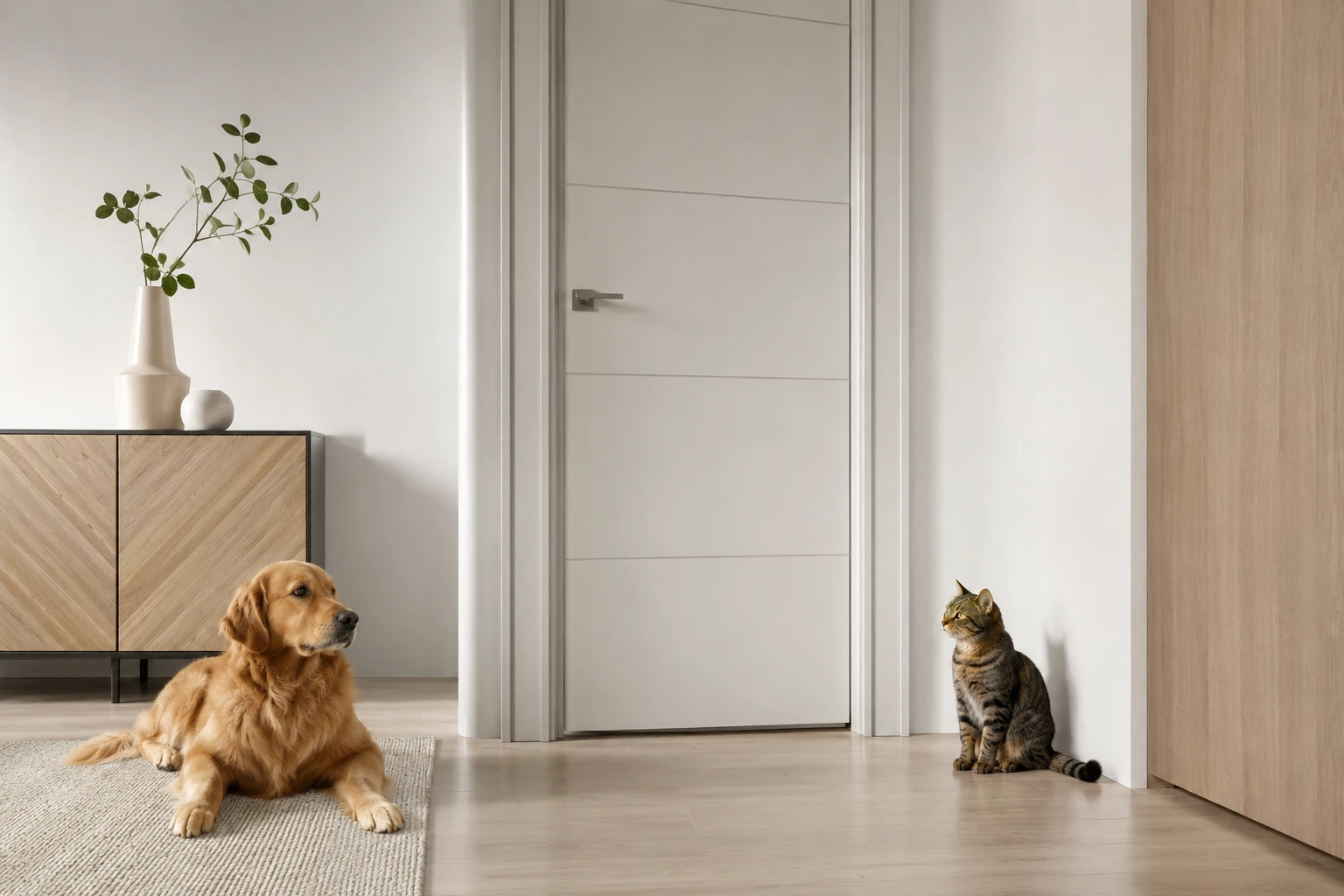
The outer finish of an interior door often determines how well it will resist scratches over time. Even a strong solid core door can begin to look worn if the surface coating is too soft.
Many homeowners still choose painted doors because they complement modern interiors. While high-quality polyurethane paints offer decent durability, painted surfaces usually reveal scratches sooner than laminate finishes. Glossy paint is especially unforgiving because even light claw marks become visible when sunlight reflects across the surface.
Laminate technology has advanced considerably in recent years. CPL, or Continuous Pressure Laminate, provides an excellent balance between affordability and durability. HPL, or High Pressure Laminate, offers even greater resistance to scratches, impacts, and abrasion, making it an outstanding option for households with energetic dogs or multiple cats.
Wood veneer remains popular because it delivers the authentic appearance of natural timber. However, veneer is thinner than solid wood and can be more difficult to repair if deep scratches occur. For pet owners who want the warmth of wood without excessive maintenance, textured laminate often provides the best compromise.
Texture Matters More Than Most People Think
A door’s texture influences how visible everyday wear becomes. Smooth, reflective finishes create an elegant appearance, but they also highlight fingerprints, dust, pet hair, and even tiny claw marks.
In contrast, lightly textured surfaces naturally disguise minor imperfections. Wood grain embossing, brushed finishes, and matte coatings scatter light instead of reflecting it evenly, making scratches far less noticeable.
This doesn’t mean glossy doors should always be avoided. If your pets are well trained and scratching is uncommon, glossy finishes can still be an attractive choice. However, for active households, practical considerations often outweigh aesthetics.
“A scratch that blends into the texture of the door is far less noticeable than one exposed on a perfectly glossy surface.”
