
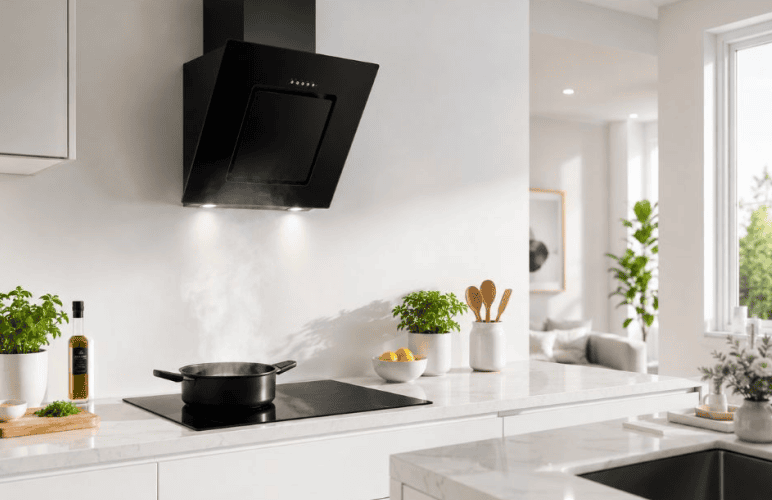
A small kitchen can become uncomfortable quickly when cooking produces heat, steam, odors, and airborne particles. Yet improving ventilation can create another challenge: bulky equipment may reduce cabinet space, interrupt sightlines, or make an already compact room feel more enclosed. In a small kitchen, ventilation therefore needs to solve an air-quality problem without creating a space problem.
The answer is not necessarily to choose the largest or most powerful cooker hood available. Effective ventilation depends on matching the extraction method, hood design, airflow, installation requirements, and kitchen layout. A well-planned system can help control cooking by-products while preserving useful storage and movement space. The key is to consider ventilation as part of the kitchen’s overall design rather than treating it as an appliance that is added at the end.
Start With the Real Ventilation Problem
Before changing the ventilation system, identify what is actually causing the problem. Strong odors that remain long after cooking, condensation around cabinets, excessive heat, or air that feels stale can all point to different ventilation needs. For example, a kitchen that becomes humid while boiling food may need better moisture management, while one where frying odors spread throughout an apartment may have a capture or extraction problem.
It is also important to distinguish between cooker hood extraction and general room ventilation. A hood is designed primarily to capture cooking emissions close to the cooktop, while broader ventilation helps move and replace air throughout the room. A hood can therefore be functioning as intended while the kitchen still feels stuffy if overall air movement is poor.
This distinction matters more in a compact kitchen because there is less room for air to disperse. Tall cabinets, refrigerators, shelving, and other fixed features can create areas where air movement is limited. Identifying the main problem first makes it easier to decide whether the priority should be better capture, improved airflow, a different hood configuration, or a combination of measures.
Use the Right Hood for the Available Space
Choosing a cooker hood for a small kitchen is not simply about finding the largest model that fits. The hood should suit the cooking surface and be positioned to capture cooking emissions effectively. Its dimensions and projection should also work with nearby cabinets, walls, ceiling height, and available headroom. A well-sized hood can provide useful ventilation without making the room feel unnecessarily crowded.
The cooking surface is an important starting point because the hood needs adequate coverage over the area where cooking takes place. An undersized unit may allow fumes to escape before they reach the capture zone, while an oversized model can add visual bulk without guaranteeing better results. Cooking habits matter too, as frequent frying, grilling, or high-temperature cooking can create greater ventilation demands.
The best approach is to balance extraction performance with coverage, installation position, noise, maintenance, and available space. The goal is not maximum capacity, but practical ventilation that suits the cooking area and remains comfortable to use every day.
Choose a Ventilation Design That Fits the Kitchen
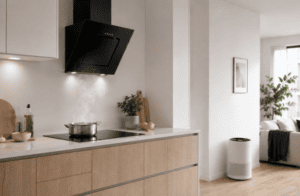
The physical shape of a cooker hood can affect how spacious a small kitchen feels. A conventional projecting design may occupy visual and physical space above the cooking area, especially in a narrow room. Other configurations can create a better balance between extraction, head clearance, cabinet space, and visual openness.
Wall-mounted, under-cabinet, integrated, slimline, and angled designs each suit different layouts. An angled cooker hood, for example, may help reduce the visual obstruction created by a conventional projecting design while maintaining a dedicated ventilation point. However, appearance should not be considered separately from performance or installation requirements.
The hood still needs suitable positioning over the cooking surface and enough clearance to operate effectively. In a compact kitchen, even small changes in projection can affect the room’s openness. A design that aligns neatly with cabinets, lighting, and surrounding fixtures can make the cooking area feel more spacious and organized, while remaining visually open.
Improve Airflow Beyond the Cooker Hood
A cooker hood is only one part of the ventilation system. Once cooking emissions have been captured, the room still needs an appropriate movement of air. If replacement air cannot enter the space easily, airflow patterns can become less predictable, particularly in kitchens that are tightly enclosed.
One useful concept is make-up air: when air is extracted from a room, replacement air has to come from somewhere. In a well-sealed kitchen, limited replacement airflow can influence how air moves through the room. This does not mean that every small kitchen requires a separate make-up air system, but it does show why simply increasing fan power does not solve every ventilation problem.
Natural openings can sometimes support overall airflow. Where practical, a window or door can help remove residual heat and odors after cooking. Cross-ventilation may also improve circulation when there are suitable openings on different sides of the space.
These measures should support, rather than replace, an appropriately designed extraction system. The goal is to allow air to move efficiently without forcing the ventilation equipment to overcome unnecessary obstacles.
Make Ventilation Work With Your Kitchen Layout
Ventilation should be planned alongside the rest of the kitchen rather than added after cabinets, appliances, and lighting are installed. In a compact room, the area around the cooktop may need to accommodate several functions at once. Considering ventilation early can help prevent conflicts between the hood, storage, and working space.
Think about how the hood interacts with upper cabinets, tall appliances, lighting, worktops, and walking routes. A suitable hood can still make a kitchen feel cramped if it interrupts sightlines, reduces storage, or projects too far into a walkway. Lighting also deserves attention because poorly positioned equipment can create shadows across the cooking surface.
Ducting may require additional space above cabinets or within a wall or ceiling, depending on the ventilation method. Planning these requirements before installation can prevent an efficient system from becoming an awkward addition. The goal is simple: do not solve an airflow problem by creating a space problem. Good planning allows ventilation, storage, lighting, and movement to work together.
Ducted vs. Recirculating Ventilation for Small Kitchens
Small kitchens often face building or installation restrictions, making the choice between ducted and recirculating ventilation important. Ducted systems exhaust air outdoors, while recirculating models filter air before returning it to the room. The better option depends on the property, available installation route, and cooking needs.
| Consideration | Ducted | Recirculating |
| Air handling | Exhausts outdoors | Filters and returns air |
| Ducting | Required | Not required |
| Installation | Can be more involved | Often simpler |
| Main advantage | Direct external exhaust | Greater flexibility |
Ducted ventilation can be effective where an external route already exists or can be installed. However, creating ductwork may be difficult in apartments, rental properties, or remodeled kitchens. Recirculating ventilation can be more practical where ducting is unavailable, but regular filter maintenance is especially important. Neither approach is universally better; the right choice depends on the kitchen’s layout, installation limitations, and ventilation needs.
Focus on Features That Matter More Than Appearance
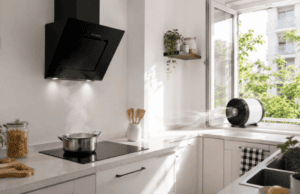
A cooker hood should complement a small kitchen visually, but appearance is only one part of the decision. Features that affect everyday operation can determine whether the system remains useful and comfortable over time. Extraction performance should be considered alongside fan-speed options and operating noise. Multiple settings allow stronger ventilation when cooking produces heavier fumes while avoiding unnecessary noise during lighter tasks. A hood that is excessively loud may discourage regular use.
Filter access is another practical consideration. Grease and cooking residue accumulate over time, so filters need regular cleaning. If they are difficult to remove or maintain, routine care may be postponed. Lighting, control placement, overall footprint, and cleaning requirements also deserve attention when comparing compact options.
When comparing a compact model such as Ciarra ONE, evaluate practical characteristics such as footprint, controls, filtration, noise, and maintenance rather than choosing solely for appearance. The most useful features are those that support consistent everyday use and fit naturally into the kitchen.
Avoid These Common Small-Kitchen Ventilation Mistakes
Several seemingly sensible choices can reduce ventilation effectiveness or make a compact kitchen less comfortable.
- Choosing a hood based only on appearance:A stylish design still needs to suit the cooking surface and installation conditions.
- Ignoring cooking-surface coverage:Poor coverage can allow cooking emissions to escape before they reach the capture area.
- Blocking airflow with cabinets or appliances:A tightly packed layout can interfere with air movement around the cooking zone.
- Neglecting filter maintenance:Accumulated grease and residue can reduce cleanliness and affect ventilation performance.
- Assuming maximum power solves every problem:Positioning, hood coverage, ducting, and room airflow also influence results.
- Ignoring operating noise:Excessive noise can discourage regular use, reducing the practical benefit of the system.
Avoiding these mistakes is often more useful than simply looking for a hood with the highest advertised extraction figure.
A Practical Way to Choose the Right Ventilation Approach
Start by identifying the main problem. If cooking odors and airborne emissions are the primary concern, focus on effective capture and an appropriate extraction method. If external ducting is practical, a ducted approach may be worth considering. If creating an external route is difficult or prohibited, recirculating ventilation may provide greater installation flexibility.
Then consider how the equipment will fit into the room. Look at its projection, height, cabinet position, lighting, head clearance, and effect on walking space. If preserving a sense of openness is a priority, the hood’s physical shape can be particularly important.
Finally, consider everyday usability. Noise, filter access, cleaning requirements, controls, and fan settings can all influence how consistently the system is used. The best choice is therefore not simply the most powerful or attractive option, but the one that provides an appropriate balance between ventilation performance, practicality, and available space.
Conclusion
Improving ventilation in a small kitchen is ultimately an exercise in balance. Effective extraction needs to work alongside airflow, installation requirements, cooking habits, noise, maintenance, and the physical limitations of the room. Choosing the largest hood available is not necessarily the best solution if its size or configuration interferes with storage, movement, or visual openness.
A more considered approach starts with the actual ventilation problem and then looks at hood coverage, design, airflow, ducting, maintenance, and kitchen layout together. With the right planning, even a compact cooking area can have effective ventilation without feeling unnecessarily crowded.
For readers comparing space-conscious cooker hood options, Ciarra Appliances offers designs worth exploring alongside the practical considerations discussed in this guide.
FAQ
1. How can I improve ventilation in a small kitchen?
Improve ventilation by choosing a suitably sized cooker hood, positioning it correctly over the cooking surface, maintaining filters, and supporting airflow through the room where practical. The ventilation method should also suit the kitchen’s layout and installation limitations.
2. Is a ducted or recirculating cooker hood better for a small kitchen?
Neither is universally better. A ducted hood can be useful when an external exhaust route is practical, while a recirculating hood can be more flexible when external ducting is unavailable or difficult to install.
3. Can a cooker hood make a small kitchen feel cramped?
Yes. A large or poorly positioned hood can reduce visual openness, interfere with cabinets, affect head clearance, or project into a walkway. Choosing a design that fits the kitchen’s proportions can help maintain a more open feeling.
4. Does a more powerful cooker hood always provide better ventilation?
Not necessarily. Ventilation performance also depends on hood coverage, positioning, airflow, installation, ducting, and maintenance. A suitably matched system can be more practical than simply choosing the highest extraction capacity.
5. How often should a cooker hood filter be cleaned?
The appropriate cleaning frequency depends on the filter type and how frequently the kitchen is used. Regular cleaning is particularly important for recirculating systems because filtration plays a central role in how they handle cooking emissions.
