
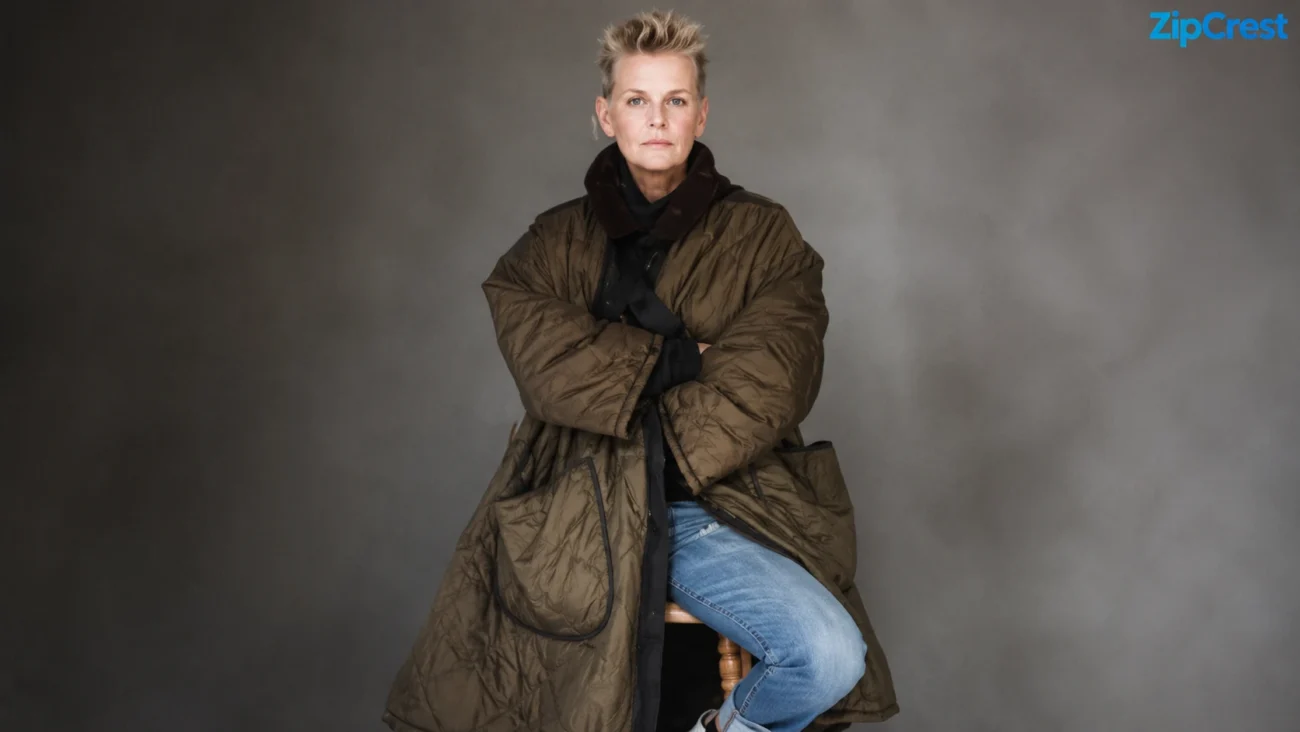
Long before fashion began celebrating “ageless” beauty campaigns and multigenerational runway casting, Jeny Howorth represented a different kind of model presence. She was sharp-featured, self-possessed, slightly rebellious, and impossible to confuse with anyone else. With her cropped bleached hair, direct gaze, and instinctive understanding of clothes, she became one of the defining British faces of the 1980s fashion world without ever turning herself into a loud celebrity brand.
That distinction still matters. Many models from the decade became symbols of excess or tabloid fame, but Howorth built a quieter reputation rooted in credibility inside the industry itself. Editors, stylists, photographers, and designers continued returning to her image because she brought personality to fashion photographs rather than simply appearing in them. Decades after her first covers, she remains connected to campaigns, editorials, and conversations about style, aging, creativity, and fashion history.
For readers searching her name now, curiosity usually begins in one of three places. Some remember her from the 1980s and want to know where she is today. Others discover her through her daughter, model Georgia Howorth. Younger fashion audiences often encounter her through newer work with brands like Burberry or through archive images circulating online. The deeper story behind Jeny Howorth ties all those threads together.
Early Life and Family Background
Jeny Howorth grew up in Hampstead, London, during a period when British youth culture was shifting quickly. London in the 1970s was rough around the edges but creatively electric, and that atmosphere shaped many future artists, musicians, stylists, and fashion figures. Howorth has publicly described her father as an engineer and her mother as a teacher, which placed her upbringing somewhere between practicality and creativity rather than glamour.
Even before modeling entered her life, she was already experimenting with personal style. She later recalled dyeing her hair green as a teenager, something that sounds ordinary today but was far more unusual at the time. That instinct to play with appearance would become central to her modeling identity later on. The truth is, Howorth never looked like someone waiting for fashion to define her; she arrived with a point of view already forming.
Her entry into modeling happened by chance rather than careful planning. According to her own recollections, she was discovered in a Baker Street hair salon in 1979 while still very young. The discovery story fits the era perfectly because late-1970s British fashion agencies were increasingly interested in girls who looked distinctive rather than traditionally polished.
Entering the Fashion Industry
The modeling industry Howorth entered was changing fast. The glossy supermodel era had not fully arrived yet, and many photographers were searching for faces that felt real, modern, and unpredictable. British fashion magazines especially were becoming more experimental, blending punk influence, streetwear, and high fashion in ways that felt less rigid than earlier decades.
Howorth stood out immediately because she had an androgynous edge that photographers loved. Her height, bone structure, and relaxed physicality gave clothes movement without overwhelming them. But here’s the thing: the hair mattered almost as much as the face. Her cropped blonde haircut, developed alongside celebrated hairstylist Sam McKnight, became one of the most recognizable fashion looks of the decade.
The hairstyle later became so associated with Howorth that many fashion writers credited her with helping define a whole visual mood of 1980s editorial culture. It was sharp but not severe, feminine but not delicate. Designers and photographers understood instantly that the haircut changed how garments appeared on camera. It made silhouettes cleaner, more graphic, and more modern.
Building a Reputation in the 1980s
By the early 1980s, Howorth had become deeply connected to the international fashion circuit. She worked in London, Paris, Milan, and New York during a period when editorial magazines still held enormous cultural power. Fashion photography was becoming more cinematic and emotionally expressive, and she fit naturally into that transition.
Her editorial credits during the decade included work with British Vogue, American Vogue, Elle, Mademoiselle, and i-D. She appeared in fashion stories that reflected both luxury fashion and youth-driven style culture, something relatively few models managed successfully at the time. Some faces belonged strictly to couture, while others belonged strictly to edgy street fashion. Howorth could move between both worlds.
One reason photographers valued her was her ability to understand clothing instinctively. She later spoke about learning from photographer Arthur Elgort, who emphasized that a model’s responsibility was to present the clothes properly. That approach sounds simple, but it separates technically skilled models from people who merely photograph well. Howorth understood shape, movement, and proportion in ways that made garments feel alive.
Steven Meisel, Peter Lindbergh, and other major image-makers of the period also worked with her. Those collaborations placed her within a generation of models who helped redefine fashion photography into something more emotionally textured and less artificial. Lindbergh especially favored women who projected intelligence and individuality, qualities Howorth naturally carried into photographs.
The Sam McKnight Connection
Fashion history often remembers certain model-hairstylist relationships because they create instantly recognizable images. Jeny Howorth and Sam McKnight formed one of those pairings. McKnight later became one of the world’s most respected hairstylists, working with everyone from Princess Diana to Chanel, but during the early years he and Howorth were part of the same creative scene.
Howorth’s cropped blonde style became one of McKnight’s early signature looks. It gave her photographs a directness that separated her from the heavily styled glamour common during parts of the 1980s. Fashion editors noticed immediately because the haircut changed how readers perceived her personality. She looked independent, slightly mischievous, and entirely contemporary.
What’s surprising is how modern those images still feel today. Many 1980s fashion photographs now look trapped inside their era, weighed down by styling trends that aged badly. Howorth’s strongest pictures remain surprisingly current because the styling depended more on attitude and proportion than excess decoration.
The haircut also influenced later generations of fashion imagery. Models like Agyness Deyn were often compared to Howorth years later because of the same cropped, cool-toned aesthetic. Fashion rarely invents entirely new visual languages; instead, it revisits strong ideas from earlier decades. Howorth became one of those recurring reference points.
Work With Major Designers and Fashion Houses
During the height of her career, Howorth worked with designers who shaped fashion during the 1980s and beyond. Her career intersected with brands and creatives who valued individuality rather than standard glamour. She appeared in campaigns and runway presentations linked to labels including Christian Dior and later Miu Miu and Burberry.
Her connection to Helmut Lang became especially important in retrospect. Lang’s fashion world valued minimalism, urban realism, and personality-driven casting. Models in his shows often looked less like fantasy figures and more like sharply dressed people moving through real city life. Howorth’s understated confidence matched that atmosphere perfectly.
She later reflected on Lang’s shows as unusually intimate and personal compared with many large fashion productions. The models walked naturally, with attitude but without theatrical exaggeration. That sense of realism became one of the defining visual codes of 1990s fashion and influenced runway presentation for years afterward.
Simone Rocha later included Howorth in runway casting during the late 2010s as fashion began reconsidering age representation. Rocha spoke openly about valuing women with visible life experience and emotional presence. For Howorth, those later runway appearances did not feel like nostalgia bookings. They felt like recognition of enduring credibility.
Life Beyond Modeling
Unlike some fashion figures who remain permanently attached to public visibility, Howorth gradually built a more private creative life outside the industry spotlight. She became increasingly involved in art and handmade creative work, describing herself more as a maker than a conventional fine artist.
She has spoken about sewing, quilting, collage, cooking, gardening, and building objects by hand. Those interests may sound separate from modeling, but there is a clear connection between them. Modeling at the highest level often requires sensitivity to texture, structure, and visual balance. Howorth simply redirected those instincts into other forms of creation.
Not many people know this, but she also moved behind the camera professionally. She photographed for i-D magazine during the 1990s, including work involving Naomi Campbell and styling by Edward Enninful. That transition mattered because it showed she understood fashion imagery from both sides of the lens.
The shift from model to creative collaborator gave her career unusual depth. Many models remain associated only with youth and beauty, while Howorth developed a reputation tied to visual intelligence and artistic instinct. That helped sustain industry respect long after her first major modeling years.
Marriage, Family, and Motherhood
Jeny Howorth’s public identity later became linked to her daughter, Georgia Howorth, who entered modeling herself during the 2010s. Georgia’s rise introduced Jeny to a younger generation of readers and fashion followers who may not have known her earlier work firsthand.
Fashion media often framed them as part of a multigenerational modeling family, but their relationship never appeared overly commercialized. Georgia spoke publicly about receiving grounded advice from her mother about staying polite, being herself, and maintaining self-belief within the industry. Those comments reflected a practical parenting style rather than stage-managed celebrity messaging.
The two also worked together professionally in editorials and fashion features. Their appearances together carried emotional resonance because audiences could see visual similarities while also recognizing different eras of fashion represented side by side. Jeny’s career began during the age of editorial print dominance, while Georgia emerged in the era of social media and digital branding.
Public information about Howorth’s private relationships and marriage remains relatively limited, and she has generally avoided turning family life into public spectacle. That privacy likely contributed to her lasting industry respect. She maintained enough distance from celebrity culture to preserve personal boundaries while still remaining visible professionally.
Public Image and Industry Reputation
Fashion can be brutal about aging, especially toward women, which makes Howorth’s continued relevance more meaningful than it may initially appear. She belongs to a relatively small group of models whose authority increased with age rather than disappearing after youth.
Her public image today combines elegance, experience, artistic credibility, and realism. She is often described less as a former supermodel and more as a lasting fashion figure whose aesthetic still resonates. That difference matters because it shifts attention away from nostalgia and toward continued cultural value.
Designers and editors continue casting her because she brings history into the frame without looking trapped in it. There is a confidence visible in her later work that younger models often cannot replicate because it comes from lived experience rather than styling tricks. Photographers understand this instinctively.
Fashion’s growing interest in mature models during the late 2010s and 2020s also helped reintroduce figures like Howorth to wider audiences. Still, the industry remains inconsistent about age representation. Her successful return worked partly because she already carried strong archive credibility.
Net Worth and Professional Life
Reliable public net worth figures for Jeny Howorth are difficult to confirm. Various entertainment websites publish estimates, but most lack sourcing and should be treated cautiously. What can be said with confidence is that her income likely came from several professional streams over the decades, including editorial modeling, advertising campaigns, runway appearances, photography, and creative work.
Unlike celebrity personalities who build fortunes through constant commercial exposure, Howorth’s career followed a more selective path. Her value inside fashion has always rested more on influence and creative reputation than mass-market fame. That kind of career often produces industry respect without the highly visible wealth associated with mainstream celebrity culture.
Her continued representation through professional agencies and recurring campaign work suggests steady professional demand. Recent work with luxury brands indicates that her image still carries commercial strength, particularly for fashion houses interested in heritage, authenticity, and timeless style.
Recent Projects and Current Life
In recent years, Howorth has remained visible through carefully chosen fashion projects rather than nonstop media appearances. Her work in Burberry campaigns under creative director Daniel Lee introduced her to another generation of luxury fashion consumers. The casting felt intentional because Burberry wanted faces connected to British creative history and cultural memory.
Editorial work has continued as well. Fashion magazines increasingly use mature models to create stories about continuity, experience, and changing ideas of beauty. Howorth fits naturally into those conversations because her career spans multiple eras of fashion photography.
At the same time, she appears committed to maintaining a grounded personal life outside constant industry attention. Interviews suggest someone more interested in creativity, home life, art, and making things than celebrity visibility. That balance may partly explain why her public image still feels authentic after decades in fashion.
The truth is, Jeny Howorth represents a type of career that has become rarer in the social media era. She built long-term respect slowly through consistency, visual intelligence, and adaptability rather than constant personal exposure. That makes her story unusually durable.
Cultural Influence and Legacy
Fashion history often remembers the loudest personalities first, but the people who influence style most deeply are sometimes quieter figures whose images continue circulating for decades. Howorth belongs firmly in that category. Her photographs helped define a cleaner, more modern visual language during a major period of change in fashion imagery.
Her influence appears in later generations of models with cropped hair, understated styling, and androgynous energy. Designers continue returning to that aesthetic because it still communicates confidence and modernity. Even when audiences do not recognize her name immediately, they often recognize the visual codes she helped popularize.
There is also something meaningful about her longevity itself. Fashion rarely grants women long careers without demanding reinvention into celebrity entrepreneurship or constant public branding. Howorth remained closely connected to image-making and creativity without turning herself into a lifestyle product.
That quieter path may actually strengthen her legacy. She exists in fashion memory primarily because of the work itself: the photographs, the campaigns, the runway appearances, and the feeling she brought into clothes. Very few careers survive that way.
Frequently Asked Questions
Who is Jeny Howorth?
Jeny Howorth is a British fashion model and artist best known for her work during the 1980s fashion era. She became recognized for her cropped blonde hairstyle, editorial work for major magazines, and collaborations with important photographers and designers. She later expanded into photography and artistic creative work.
Why is Jeny Howorth famous?
She became famous through her modeling career during the 1980s and early 1990s. Her distinctive appearance, especially her short blonde haircut associated with hairstylist Sam McKnight, helped make her one of the recognizable British fashion faces of the era. She also remained active in fashion through later campaigns and editorials.
Is Jeny Howorth still modeling?
Yes, Jeny Howorth has continued modeling in recent years. She has appeared in campaigns, editorials, and fashion projects well into the 2020s, including work connected to luxury brands and major magazines. Her later career has become part of wider conversations about age diversity in fashion.
Who is Georgia Howorth?
Georgia Howorth is Jeny Howorth’s daughter and is also a professional model. She entered the fashion industry during the 2010s and has appeared in editorials and campaigns. Fashion media have occasionally featured both mother and daughter together.
Did Jeny Howorth work with famous photographers?
Yes, she worked with several major fashion photographers during her career, including Arthur Elgort, Steven Meisel, and Peter Lindbergh. Those collaborations helped place her within an influential generation of fashion imagery during the 1980s and 1990s.
What is Jeny Howorth doing now?
Public interviews and recent fashion projects suggest that Howorth continues balancing selective modeling work with artistic and creative pursuits. She has spoken about interests including sewing, quilting, collage, gardening, and making objects by hand while still participating in fashion editorials and campaigns.
Conclusion
Jeny Howorth’s story is not built around scandal, reinvention gimmicks, or celebrity mythology. Her career lasted because she understood images, clothes, and presence at a deeper level than many of her contemporaries. Fashion trusted her because she made garments feel believable rather than overly performed.
Her influence still surfaces in modern casting, styling, and editorial photography. Designers continue searching for models who project intelligence, ease, and individuality in the same way Howorth did decades earlier. That search never really ends because those qualities are difficult to manufacture.
There is also something refreshing about the restraint in her public life. She remained connected to fashion while avoiding the exhausting cycle of constant self-exposure that defines much of modern celebrity culture. That distance preserved both mystery and credibility.
Today, Jeny Howorth stands as more than a surviving fashion figure from the 1980s. She represents a model of creative longevity built on taste, instinct, adaptability, and authenticity. In an industry obsessed with novelty, that kind of staying power remains rare.
