
Most people planning a trip up the California coast fixate on one question: Harbor House lunch or dinner? It seems like a small thing. Then you start picturing the dining room at noon with the Pacific blazing through the windows, versus the same room at eight with candles doing all the work. Suddenly the decision gets harder. The food doesn’t change. The kitchen runs on the same philosophy all day. But the way you experience the meal? That shifts completely.
The Property Does Most of the Heavy Lifting
Harbor House Inn California sits on a bluff above the water, a few miles south of Mendocino proper. The building’s old enough that it feels planted there rather than built. Maybe twelve tables in the dining room. Small enough that the ocean keeps interrupting. You’ll be mid-sentence and a pelican goes past at eye level, and the conversation just dies. That’s not a flaw. That’s the whole point.
This is what a destination restaurant in California should feel like. Not flashy. Not trying to impress you with tablecloths and choreographed service. Just a room with a view that makes everything taste better. A Michelin dining experience doesn’t have to be stuffy. When the setting is this strong, the kitchen’s job is mostly to not get in the way. Quiet luxury means confidence without announcement.
What Separates a Meal You Remember From One You Don’t
Some restaurants nail the food and miss everything else. The service is stiff. The room feels generic. The ingredients could be from anywhere. You leave satisfied but empty. The restaurants that stick with people tend to share a few traits. Seasonal ingredients, for one. Not the grocery store version of seasonal. The real thing, where the menu actually changes because the garden changed.
Attentive hospitality matters too, but attentive doesn’t mean hovering. It means a server who notices your glass is empty without making a production of filling it. And then there’s place. A restaurant that’s truly tied to its location can’t be replicated somewhere else. You taste the soil, the water, the weather. These fine dining principles are simple to list and hard to execute. When a kitchen gets them right, you remember the meal for years. When it doesn’t, you remember the bill.
A Daytime Meal Changes How You Eat
Sitting down for a meal at an ocean-view restaurant on a California property like this one in the middle of the day means eating with the lights on. Full visibility. The water stretches out and does its thing while you work through a salad or a piece of fish. It sounds like a small difference. It isn’t. The meal feels more casual, not because the food is less careful, but because the atmosphere isn’t trying to be romantic. It’s just beautiful.
Guests staying at a luxury coastal hotel in California or a boutique hotel in Northern California often do this. They eat early, then walk the property or drive into Mendocino for the afternoon. The meal becomes part of a longer day rather than the main event. If you’re not staying overnight, daytime dining also means you’re not navigating those winding coastal roads after dark. That alone pushes a lot of people toward an earlier reservation.
Evening Shifts the Mood Entirely
Dinner at Harbor House Inn feels different. Not better. Different. The light drains out of the sky, and the windows turn into mirrors. Suddenly the room feels smaller, more intimate. Candles do what candles do. The Pacific is still out there, but now it’s a presence you sense rather than see. That shift matters if you’re planning a romantic coastal getawayin California. The pacing slows. A wine pairing dinner in that setting doesn’t rush toward its finish.
For some people, this is the version they want. The meal becomes the whole evening. Courses arrive without hurry. Conversation dips and returns. The structure of a luxury dining menu, even one that changes seasonally, gives the night a natural arc. By the time dessert shows up, the room has done its work. You’re not thinking about where else you need to be.
The Kitchen Doesn’t Care What Time It Is
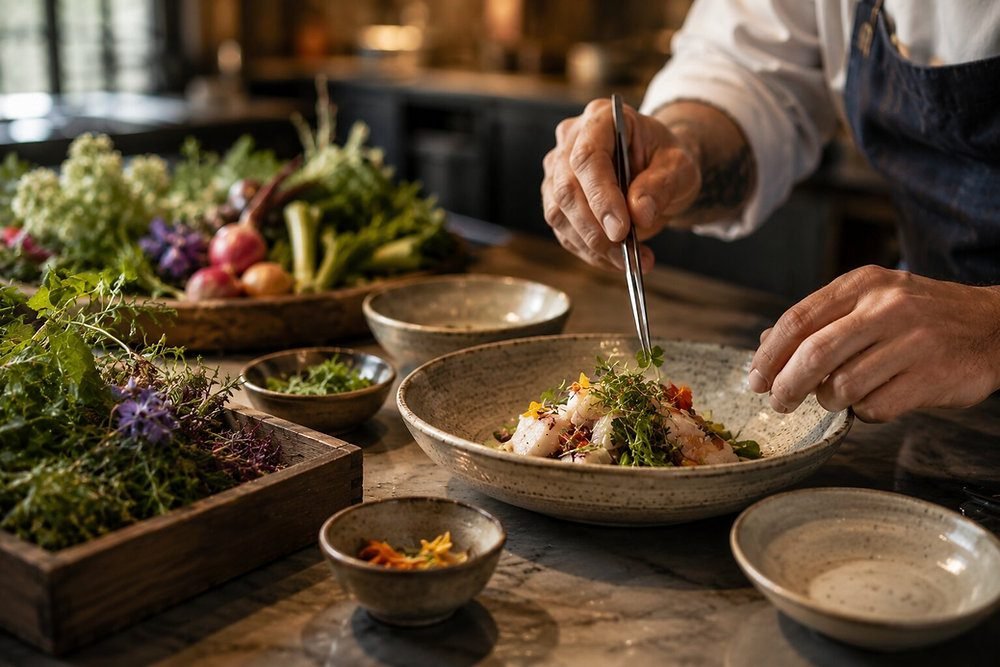
What makes Harbor House Inn work, at noon or at midnight, is how deeply it’s connected to the land around it. Chef Matthew Kammerer built the menu around whatever the property and the nearby waters provide. The Harbor House Inn Ranch supplies a lot of the produce. This is hyper-local cuisine without the lecture. It’s just how the kitchen operates. Grow it, forage it, catch it, cook it.
This is a Michelin-star restaurant Mendocino locals talk about in a certain tone. Respectful, a little proud. The kitchen holds two Michelin stars and a Michelin Green Star. The Green Star points to sustainable gastronomy, which here isn’t a marketing department invention. Responsible sourcing shows up in small ways. A fish caught that morning. Greens picked after the fog lifted. Nothing shipped from across the world when the coast is right there.
Guests at the luxury inn Mendocino Coast sometimes mention this. Whether they ate at midday or after dark, the food carried the same quiet confidence. The ranch, the ocean, the forest. It all ends up on the plate. That consistency is more impressive than it sounds. Plenty of places cook well at dinner and treat lunch like an afterthought. A kitchen that refuses to do that is making a statement about what it values.
You’re Choosing a Mood, Not a Menu
The decision between lunch and dinner isn’t about quality. It’s about what you want the meal to feel like. If you’re staying at an oceanfront luxury inn, you might not have to choose. Stay two nights and do both. But if you’re driving in for a single reservation, consider the shape of your day. Do you want to see the coast while you eat, or feel it pressing against the windows after dark?
Daytime suits travelers who want to explore afterward, take photos, linger on the bluffs. Evening suits a slower, more celebratory mood. Neither one is the wrong call. It’s bright versus dim, airy versus intimate, afternoon energy versus night quiet. The food will be good either way. That part’s not in question.
A Few Things Worth Knowing Before You Book
Service schedules at Harbor House Inn shift with the seasons. If you’re specifically chasing a chef tasting menu or a California tasting menu experience, check what’s currently offered before you commit to dates. Reservations for a fine dining menu at a California destination like this one go fast. Weekends especially. The coast draws bigger crowds in summer and early fall, though the fog can make any month unpredictable.
If you’re coming just for the meal, give yourself extra time. The drive from the Bay Area takes longer than the map suggests, and the last stretch is winding. You’ll want to walk the property, sit on the bluffs, breathe a little. Dress in layers. Even a warm afternoon can turn cool by evening, and the dining room is close enough to the water that the temperature drops fast.
The Same Coast, Two Different Ways of Seeing It
What defines the Harbor House dining experience isn’t the hour on the clock. It’s the place itself. The kitchen doesn’t lower its standards because the sun went down. The ingredients come from the same soil and the same water. The service carries the same ease. Whether you sit down in bright daylight or as dusk settles over the Pacific, the meal will taste like the Mendocino Coast. That’s the constant.
You’re really just deciding what kind of backdrop you want. A bright room with the ocean in full view, or a warm room with the night pressing in. Both versions work. The coast is good company either way.
