
Industrial operations have always depended on efficiency, consistency, and reliability. For decades, manufacturers relied on scheduled inspections and reactive maintenance to keep production lines moving. While these methods worked to some extent, they often led to unnecessary downtime, wasted resources, and expensive repairs that could have been prevented earlier.
Today, machine learning is changing how industrial systems operate. Instead of waiting for equipment to fail or following fixed maintenance schedules, companies can now predict problems before they happen. Machine learning models can analyze huge amounts of operational data, detect unusual patterns, and help businesses make faster and more informed decisions.
The combination of industrial automation and predictive maintenance is becoming one of the most practical applications of artificial intelligence in manufacturing, logistics, energy, and heavy industry.
The Shift From Reactive to Predictive Operations
Traditional maintenance strategies usually fall into two categories: reactive maintenance and preventive maintenance.
Reactive maintenance means fixing equipment after it breaks. This approach can cause production delays, emergency repair costs, and unexpected downtime. Preventive maintenance improves on this by scheduling inspections and part replacements at regular intervals. However, even preventive maintenance can lead to unnecessary servicing of equipment that still works properly.
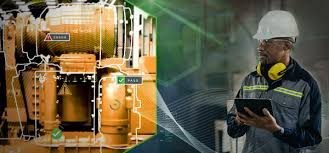
Predictive maintenance introduces a smarter alternative. Sensors installed in industrial machines collect data such as temperature, vibration, pressure, sound, and energy consumption. Machine learning algorithms analyze this data continuously and identify patterns that may indicate wear, malfunction, or future failure.
Instead of relying on assumptions, businesses can make decisions based on real operational conditions.
This shift has significant financial value. A single hour of downtime in manufacturing facilities can cost thousands or even millions of dollars depending on the industry. Predictive systems help reduce those interruptions while extending equipment lifespan and improving productivity.
Early adoption often begins with a limited pilot program, but many organizations eventually scale machine learning solutions across multiple facilities and production lines.
Companies that invest in automation frequently work with specialists who understand both industrial systems and AI implementation. Businesses exploring advanced operational optimization often turn to Tensorway’s machine learning services to build scalable predictive maintenance and automation solutions tailored to industrial environments.
How Machine Learning Works in Industrial Automation
Industrial automation already includes programmable logic controllers, robotics, and monitoring systems. Machine learning adds another layer by allowing systems to learn from historical and real-time data.
The process usually begins with data collection. Modern factories generate enormous amounts of information from connected devices and sensors. This data is then cleaned, organized, and fed into machine learning models.
Several types of machine learning are commonly used in industrial environments:
Supervised Learning
Supervised learning models train on labeled historical data. For example, a system may learn the patterns that occurred before previous equipment failures. Once trained, the model can recognize similar warning signs in the future.
Unsupervised Learning
Unsupervised learning helps identify anomalies without predefined labels. This is useful when failure scenarios are rare or difficult to categorize. The model learns what normal machine behavior looks like and flags unusual deviations.
Reinforcement Learning
Reinforcement learning is often used in robotics and process optimization. Systems improve performance over time by testing actions and receiving feedback based on outcomes.
Together, these approaches allow industrial systems to become more adaptive and responsive.
Predictive Maintenance in Real-World Industries
Predictive maintenance is no longer limited to experimental projects. It is already being used across multiple industries where equipment reliability directly affects operations.
Manufacturing
Factories use machine learning to monitor conveyor systems, motors, pumps, and robotic equipment. By identifying unusual vibration or temperature changes, companies can replace components before failures stop production.
Manufacturers also use predictive analytics to optimize energy consumption and reduce waste on production lines.
Energy and Utilities
Power plants and energy providers manage highly complex infrastructure that requires constant monitoring. Machine learning systems help detect abnormalities in turbines, transformers, pipelines, and electrical grids.
In renewable energy, predictive maintenance helps wind farms and solar facilities maximize uptime while lowering maintenance costs.
Transportation and Logistics
Transportation companies use predictive systems for fleet management. Sensors installed in trucks, trains, and aircraft monitor engine health and operational efficiency.
Instead of following fixed maintenance schedules, companies can service vehicles only when data indicates it is necessary. This reduces operational costs and improves asset utilization.
Oil and Gas
The oil and gas sector often operates in harsh environments where equipment failure can lead to safety risks and environmental damage.
Machine learning helps monitor drilling equipment, pipelines, and offshore platforms. Predictive systems can identify corrosion, pressure anomalies, or performance degradation before serious incidents occur.
Benefits Beyond Maintenance
Although predictive maintenance receives much of the attention, machine learning also improves broader industrial automation processes.
Improved Operational Efficiency
Machine learning algorithms can optimize workflows and production scheduling based on demand, machine capacity, and resource availability.
Automation systems become more dynamic rather than relying solely on fixed rules.
Better Quality Control
Computer vision systems powered by machine learning can inspect products in real time and identify defects with high accuracy.
This reduces waste and improves product consistency across manufacturing lines.
Enhanced Workplace Safety
AI-powered monitoring systems can detect unsafe conditions, equipment malfunctions, or human error risks before accidents occur.
In some industrial environments, automated systems also reduce the need for workers to perform dangerous manual inspections.
Reduced Energy Consumption
Machine learning models can optimize equipment performance to minimize energy use without affecting production quality.
This has become increasingly important as businesses focus on sustainability goals and rising energy costs.
Challenges Companies Still Face
Despite the benefits, implementing machine learning in industrial environments is not always simple.
One major challenge is data quality. Industrial systems often rely on legacy equipment that was never designed for modern data collection. Inconsistent or incomplete data can reduce model accuracy.
Another challenge involves integration. Many companies operate complex infrastructures built over decades. Connecting older systems with modern AI platforms requires careful planning and technical expertise.
There is also the issue of trust. Industrial operations cannot afford unreliable predictions. Teams may hesitate to rely on machine learning unless models consistently demonstrate accurate and explainable results.
Cybersecurity is another growing concern. As factories become more connected, businesses must secure industrial networks and protect sensitive operational data from cyber threats.
Finally, successful adoption often depends on organizational culture. Machine learning projects require collaboration between engineers, data scientists, IT specialists, and operations teams. Without alignment between departments, implementation can become fragmented.
Why Human Expertise Still Matters
There is a misconception that automation completely replaces human workers. In reality, industrial machine learning works best when combined with human expertise.
Engineers still play a critical role in interpreting predictions, validating results, and making operational decisions. Machine learning tools support workers by providing better visibility into system performance.
For example, a predictive maintenance model may identify unusual vibration patterns in a motor. Human technicians then investigate the issue, determine the root cause, and decide on the best corrective action.
Rather than replacing industrial teams, machine learning often helps them work more efficiently and focus on higher-value tasks.
The Future of Smart Industrial Systems
Industrial automation continues to evolve rapidly. The growth of Industrial Internet of Things (IIoT) devices, cloud computing, and edge AI is making predictive systems faster and more accessible.
Edge computing allows machine learning models to process data directly on industrial devices instead of sending all information to centralized servers. This reduces latency and enables faster decision-making in real-time environments.
Digital twins are also becoming more common. These virtual models replicate physical equipment and production systems, allowing companies to simulate scenarios, test optimizations, and predict failures before they happen in the real world.
As machine learning models improve, industrial systems will likely become increasingly autonomous. Future factories may automatically adjust production rates, manage energy use, and schedule maintenance with minimal manual intervention.
However, businesses that succeed will likely be the ones that combine advanced technology with practical operational knowledge rather than relying on automation alone.
Final Thoughts
Machine learning is transforming industrial automation from a reactive process into a predictive and data-driven system. Predictive maintenance helps businesses reduce downtime, lower operational costs, improve workplace safety, and extend the lifespan of critical equipment.
The technology is already delivering measurable results across manufacturing, energy, logistics, transportation, and heavy industry. At the same time, successful implementation still depends on high-quality data, reliable infrastructure, and close collaboration between engineers, operations teams, and AI specialists.
Industrial automation is no longer only about replacing manual labor with machines. Modern systems are becoming smarter, more adaptive, and capable of learning from real-time operational data to improve performance continuously.
As industrial environments continue adopting advanced automation strategies, companies like Tensorway are helping businesses integrate machine learning into real-world industrial operations, predictive maintenance systems, and scalable automation workflows. Organizations that successfully combine industry expertise with intelligent technologies will likely be better positioned to improve efficiency, reduce risks, and stay competitive in an increasingly automated future.
