
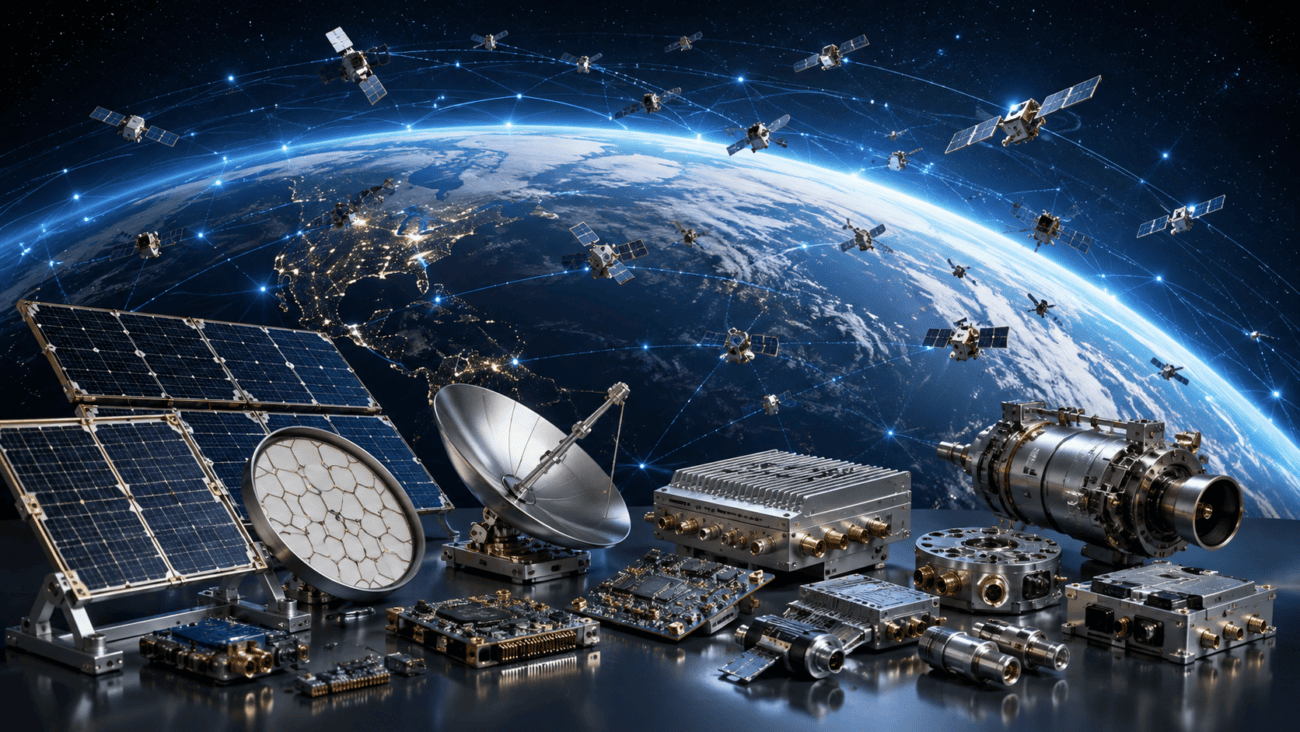
You may be imagining gazing at stars in the night sky, only that one spot suddenly turns long and full of bright points shooting overhead. Those lights are a sign that mega-constellations are on the rise! Low-Earth-orbiting constellations of thousands of satellites now surround the planet. They provide high-speed internet, support Earth observation, and enable the delivery of real-time data services.
This shift changes everything. What once involved a few custom-built spacecraft now demands mass production. Operators face pressure to launch more units faster and at lower cost. The result is clear: growth in these constellations sharply raises demand for satellite components.
We see factories racing to supply solar arrays, reaction wheels, antennas, and power systems. Supply chains that once handled dozens of satellites now prepare for tens of thousands. The story of this transformation reveals both opportunity and challenge for the entire space industry.
The Rapid Expansion of Mega-Constellations
Starlink surpassed 10,000 active satellites in low Earth orbit. Other programs follow closely. Amazon’s Project Kuiper, China’s Guowang and Qianfan, and OneWeb continue building out their networks. Analysts project tens of thousands more satellites by 2030.
Market reports value the satellite mega-constellation sector at nearly fifteen billion dollars recently. Projections show it reaching over fifty billion dollars within a decade. Low latency and global coverage drive this growth. Rural areas, ships, aircraft, and remote industries all need reliable links.
Yet volume creates pressure. Traditional satellite programs built a handful of craft over years. Constellation operators must produce dozens each month. This pace forces a move from craftsmanship to industrial-scale manufacturing.
Why Demand for Satellite Components Equipment Surges
What are the components of satellites? Every satellite needs a bus and a payload. The bus provides structure, power, thermal control, guidance, and communications. The payload handles the mission, whether broadband transponders or imaging sensors.
Key components of satellite systems include solar panels, batteries, reaction wheels, star trackers, propulsion units, and antennas. Radiation-hardened electronics and optical inter-satellite links also rank as critical. High-volume production multiplies orders for all of these items.
Satellite equipment suppliers now face longer lead times for specialized parts. Radiation-hardened chips can take years to produce. Propulsion systems and laser terminals remain constrained. At the same time, standardized designs and automation help scale output.
Here, the need for quality satellite components becomes essential. Operators seek partners who deliver flight-proven, mass-producible hardware. These systems support the high-rate manufacturing required today.
Manufacturing Challenges and Innovations
Thermal extremes, vacuum, and radiation test every part. Materials must resist outgassing and maintain performance across wide temperature swings. CNC-machined structures, form-in-place gaskets, and advanced thermal interfaces address these demands.
Electrical ground support equipment has evolved too. Traditional test campaigns lasted weeks for one satellite. Constellation lines need parallel stations and automated sequences. Data systems track thousands of units while maintaining quality.
Vertical integration helps. Combining machining, shielding, coating, and assembly under one roof cuts delays. Early engineering collaboration prevents costly failures once satellites reach orbit.
Business Impact Across the Supply Chain
Launch providers see historic demand. Ground stations and user terminals expand in parallel. Space traffic management services grow as conjunction warnings rise.
Satellite components, materials and subsystems form the foundation. Companies that supply reaction wheels, solar cells, and power systems benefit from sustained volume. Defense and commercial operators both invest heavily.
We observe a dual market. Mass-produced small satellites for broadband dominate unit counts. Larger, higher-value craft still capture significant revenue. Both streams increase overall need for components.
Looking Ahead
Reusable rockets and modular buses lower costs further. Software-defined payloads add flexibility. Yet sustainability remains vital. Collision risks and debris management require careful planning.
The industrial era of space has arrived. Mega-constellations turn orbital infrastructure into something as essential as undersea cables. Success depends on a robust supply of satellite components equipment that meets strict performance and production goals.
Operators now treat satellites as replaceable assets rather than unique craft. This mindset accelerates innovation across the entire value chain. New materials resist radiation better while remaining light enough for frequent launches. Automated factories reduce human error and raise consistency from one unit to the next.
Satellite and its components must evolve together. What are the components of satellites that will define the next decade? Reliable power systems, precise attitude control, and resilient communications will stay central. Advanced optical links between satellites will cut reliance on ground stations. Improved propulsion will allow longer operational lives and safer end-of-mission disposal.
Satellite components supplier networks that scale efficiently will shape the future. Satellite equipment suppliers who adapt to high-rate production stand to gain the most. Collaboration between manufacturers, operators, and regulators will determine whether this rapid growth remains safe and sustainable for everyone who depends on space-based services.
What experience have you had with satellite technology or connectivity from these networks? Share your thoughts or questions in the comments below. We welcome your views on how this growth affects everyday life and industry.
