
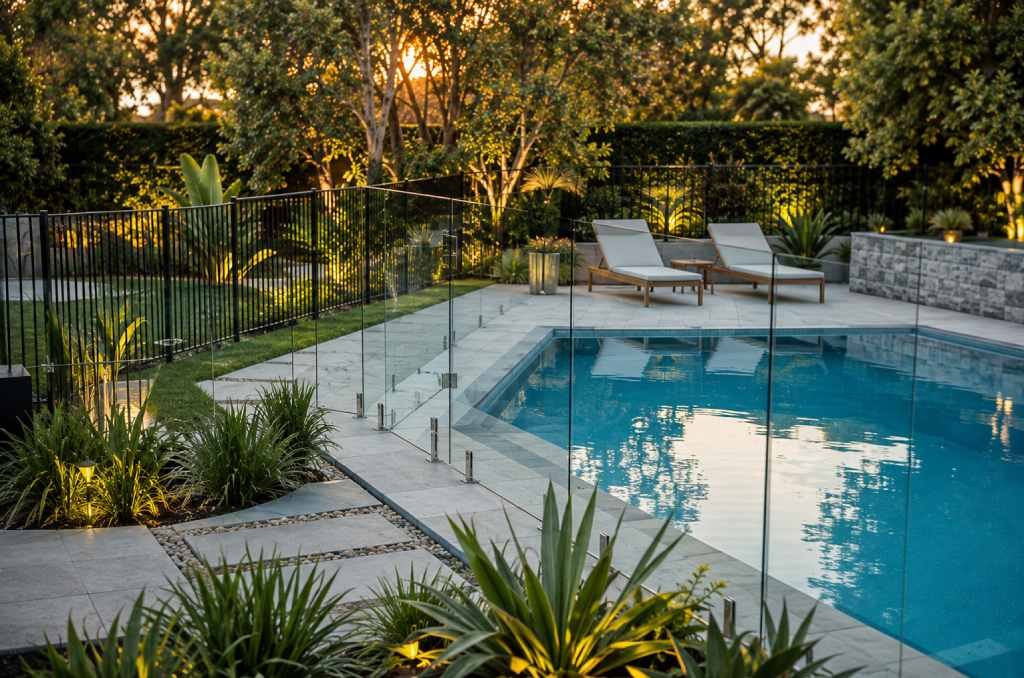
Yes, landscaping can absolutely make a compliant pool fence fail, even if the fence itself never changes. A garden bed, a new retaining wall, or a tree planted too close to the barrier can each create a foothold inside the non-climbable zone, and that is enough to fail your next inspection. Most owners focus on the fence and forget the yard around it, which is exactly where problems tend to grow, sometimes literally. Booking pool barrier inspections in Melbourne before you start any backyard project is the easiest way to landscape without creating a compliance headache.
Can Landscaping Really Make a Compliant Pool Fence Fail?
Yes. A fence that passed last time can fail this time if something new has grown or been built inside the non-climbable zone.
Inspectors check the space around your barrier, not just the barrier itself. This clear space, usually 900mm outside the fence, needs to stay free of anything that could give a child a boost.
A new garden bed, a stack of pavers, or even a fast-growing shrub can quietly turn a compliant fence into a failed one, without anyone touching the fence at all.
This is one of the most common reasons an older, previously compliant pool fails its four-year renewal, since gardens grow and change far more than fences do.
What Counts as a Climbable Object Near Your Fence?
Anything sturdy enough to hold a child’s weight and close enough to use as a step counts as climbable.
- Pot plants, garden beds, or raised planter boxes
- Retaining walls, low brick walls, or garden edging
- Outdoor furniture, storage boxes, or the pool pump itself
- Woody shrubs, hedges, or established trees, not soft annual flowers
Soft, floppy plants generally do not count, since they bend rather than support weight, but anything stiff or woody does. Inspectors judge each item on whether a small child could realistically use it as a step, not on its size alone, so even a low but solid object can be flagged.
Which Plants Are Safe to Plant Near a Pool Fence?
Low, soft, spreading plants are generally safe. Woody shrubs, climbers, and anything that grows tall fast are the ones to avoid.
| Plant type | Near the fence |
|---|---|
| Soft ground covers and grasses | Generally fine, since they cannot bear weight |
| Spiky, low-growing plants | Often fine and can even discourage climbing |
| Woody shrubs and hedges | Avoid within the clear zone, they thicken and firm up over time |
| Climbing vines or espaliered trees | Avoid entirely, they are built to climb structures |
Can a Neighbour’s Tree or Shed Affect Your Compliance?
Yes, even if it sits entirely on their property, not yours.
The non-climbable zone does not stop at the boundary line. If your neighbour’s tree branch, shed, or garden bed reaches into that clear space around your fence, it can still fail your inspection.
This is frustrating, since you cannot always control what happens on the other side of the fence, but a friendly conversation with your neighbour early tends to solve it faster than waiting for an inspector to flag it.
Overhanging branches are the most common version of this problem, since they creep into the zone gradually and often go unnoticed until inspection day.
What About Retaining Walls, Pergolas and Decks?
Any structure built close to your fence needs to be checked against the barrier standard before you build it, not after.
A retaining wall used as part of the barrier itself needs to be at least 1.8m high with very little lean.
A deck or pergola built nearby can also quietly reduce your effective fence height or create a climbing point through its rafters or steps.
Always check your plans against your pool barrier before council approves any backyard renovation, since fixing a finished structure costs far more than adjusting a plan on paper.
How Much Does It Cost to Fix a Landscaping Issue?
Most fixes are cheap. Removing mature trees is the exception.
| Fix needed | Typical cost |
|---|---|
| Move a pot plant or garden ornament | Free |
| Relocate a small shrub | $0 to $200 |
| Remove a mature tree or palm | $500 to $2,000 or more |
| Modify a retaining wall | Several hundred dollars, depending on size |
Catching these issues during planning, rather than after a garden has matured for a few years, keeps almost every fix in the cheaper end of this range.
Book Your Pool Inspection Today
Check before you plant, build, or landscape, not after the fact.
A licensed inspector checks your barrier and the surrounding area, then provides you with a clear photo report within 24 hours.
Book your inspection online today and plan your next backyard project around a fence that already passes.
