
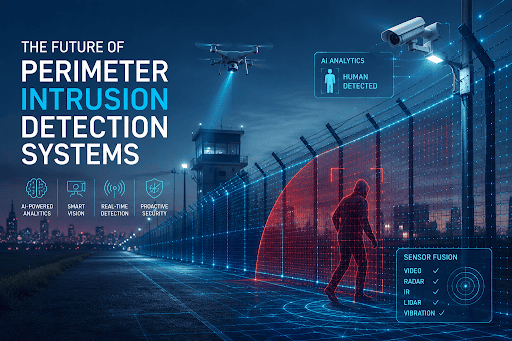
Quick answer: The future of perimeter detection systems is being shaped by three shifts: artificial intelligence that filters out false alarms before they reach a control room, sensor fusion that combines multiple detection technologies into one intelligent picture, and cloud-based platforms that let security teams monitor several sites from a single screen. For UK operators of critical infrastructure, data centres, energy sites and industrial facilities, this means faster, more accurate detection with far less noise than the systems of even five years ago.
Why Perimeter Security Is Changing So Quickly
For decades, a perimeter intrusion detection system did one job: tell you when something crossed a line. That was useful, but it came with a well-known problem – false alarms. Wind, wildlife, rain, and even passing traffic could trigger a sensor and send a security team chasing nothing. Over time, that erodes trust in the system, and tired operators start to second-guess genuine alerts.
Today’s threats have also changed. Sites are more valuable, more remote, and more attractive to organised criminals looking for copper, batteries, plant equipment or sensitive data. At the same time, security budgets need to stretch further, and clients expect a system that proves its worth rather than just ticking a compliance box. That pressure is exactly what’s driving the next generation of perimeter intrusion detection technology.
From Single Sensors to Sensor Fusion
Older perimeter intrusion detection systems typically relied on one detection method – a single fence-mounted sensor cable, for example. It worked, but it also meant one point of failure and one type of trigger to interpret.
The direction of travel now is sensor fusion: combining two or more detection technologies so they cross-check each other before an alarm is raised. A modern perimeter detection system might combine:
- Fence-mounted vibration or fibre-optic sensors that detect cutting, climbing, or lifting
- Ground-based volumetric sensors such as microwave or infrared beams for open areas without a fence line
- Video analytics and thermal imaging that visually confirm an intrusion rather than just registering movement
- Buried cable or seismic sensors for covert detection where a visible fence line isn’t practical
When two independent technologies agree that something is happening, the confidence in that alert goes up dramatically – and the confidence in a false trigger goes down. This is becoming the standard expectation for any serious perimeter intrusion detection system protecting a high-value UK site.
Artificial Intelligence Is the Real Turning Point
If there’s one development defining the future of perimeter detection systems, it’s AI-driven analytics. Rather than simply reacting to a change in signal, modern systems are being trained to recognise the difference between a person, a vehicle, an animal, and environmental noise like rain or foliage movement.
This matters because it directly solves the industry’s oldest complaint: alarm fatigue. A control room operator watching a genuinely intelligent perimeter intrusion detection system isn’t fielding dozens of nuisance alerts a night – they’re seeing a handful of verified, high-confidence events they can act on immediately. Over time, AI models also improve as they learn the specific patterns of a site, becoming better calibrated to its layout, weather exposure, and normal daily activity.
For sites such as battery energy storage facilities, data centres, and substations – often unmanned and remote – this shift from “detect everything” to “detect what matters” is what makes round-the-clock protection genuinely workable.
Integration Over Isolation
Perimeter intrusion detection used to sit in its own silo, separate from CCTV, access control, and the wider security management platform. That’s no longer good enough. The future is integrated: one platform where a perimeter alert automatically triggers the nearest camera to slew to the breach point, floodlights activate, and a verified alarm is pushed straight to a monitoring team or the client’s own control room – all within seconds.
This kind of integration also supports remote and multi-site monitoring, which is increasingly important for organisations managing several facilities across the UK. A single security operations centre can now oversee perimeter intrusion detection across a portfolio of sites, rather than needing dedicated on-site personnel at every location.
Cloud Platforms and Remote Management
Cloud-connected perimeter detection systems are also changing how these systems are managed day to day. Instead of engineers needing to visit a site to check sensor health, adjust sensitivity, or review event history, much of that can now be done remotely. This reduces maintenance costs, speeds up fault diagnosis, and means system tuning can happen based on real performance data rather than guesswork.
For clients, this translates into a system that keeps improving after installation, not one that’s fixed the day it’s commissioned.
What This Means for UK Sites
The direction perimeter intrusion detection systems are heading in isn’t about replacing physical security – fences, gates, and barriers remain the essential first line of defence. What’s changing is the intelligence layer sitting on top of that physical boundary. The sites that benefit most from this evolution tend to share a few characteristics:
- Critical national infrastructure – energy, water, and telecoms sites where downtime has real consequences
- Data centres – where the physical fence line is the first control in a much larger security stack
- Battery energy storage sites (BESS) – remote, unmanned, and holding high-value equipment
- Industrial and logistics sites – large perimeters where manned patrols alone aren’t cost-effective
- Stadiums and event venues – where perimeter breaches carry both security and safety implications
In each case, the goal is the same: fewer false alarms, faster verified response, and a system that scales as the site or the threat landscape changes.
Choosing a Perimeter Detection System Built for the Future
Not every perimeter intrusion detection system on the market today is built with this future in mind. When assessing options, it’s worth asking a few practical questions:
- Can the system combine more than one detection technology, or is it reliant on a single sensor type?
- Does it use analytics to reduce false alarms, or does every trigger require human judgement from scratch?
- Can it integrate with existing CCTV and access control, or will it sit as a standalone system?
- Is remote monitoring and diagnostics available, or does every issue require a site visit?
- Is it designed for your specific site conditions – fence line, open ground, weather exposure, and risk profile?
A perimeter intrusion detection system that answers “yes” to these questions today is one that’s genuinely built for where the industry is heading, not just where it’s been.
Final Thoughts
The future of perimeter detection systems is less about a single breakthrough technology and more about smarter combinations of proven ones – sensor fusion, AI-driven verification, and integrated, cloud-connected platforms working together. For organisations responsible for protecting critical sites across the UK, that means perimeter intrusion detection is becoming faster, more accurate, and considerably easier to manage than it’s ever been.
Looking to future-proof your site’s perimeter security? Sysco Technical Solutions designs and installs tailored perimeter intrusion detection systems for critical infrastructure, data centres, energy sites, and industrial facilities across the UK.
