

Thomas Boone Quaid is the son of actor Dennis Quaid and real-estate professional Kimberly Buffington, and the twin brother of Zoe Grace Quaid. Born on November 8, 2007, he became known to the public not through an entertainment career of his own, but because of his famous family and a serious medication error that affected him and his sister shortly after their birth.
Now 18, Thomas remains a largely private figure. Recent reporting has placed him at the transition between high school and college, but there is no credible public record establishing an independent acting career, business role, or other professional body of work. That distinction matters: much of what is publicly significant about Thomas concerns events that happened when he was an infant and the patient-safety advocacy those events later inspired in his parents.
Family and early background
Thomas Boone Quaid and his twin sister, Zoe Grace Quaid, were born on November 8, 2007. Their parents, Dennis Quaid and Kimberly Buffington, later confirmed the date in written testimony submitted to the U.S. House Committee on Oversight and Government Reform.
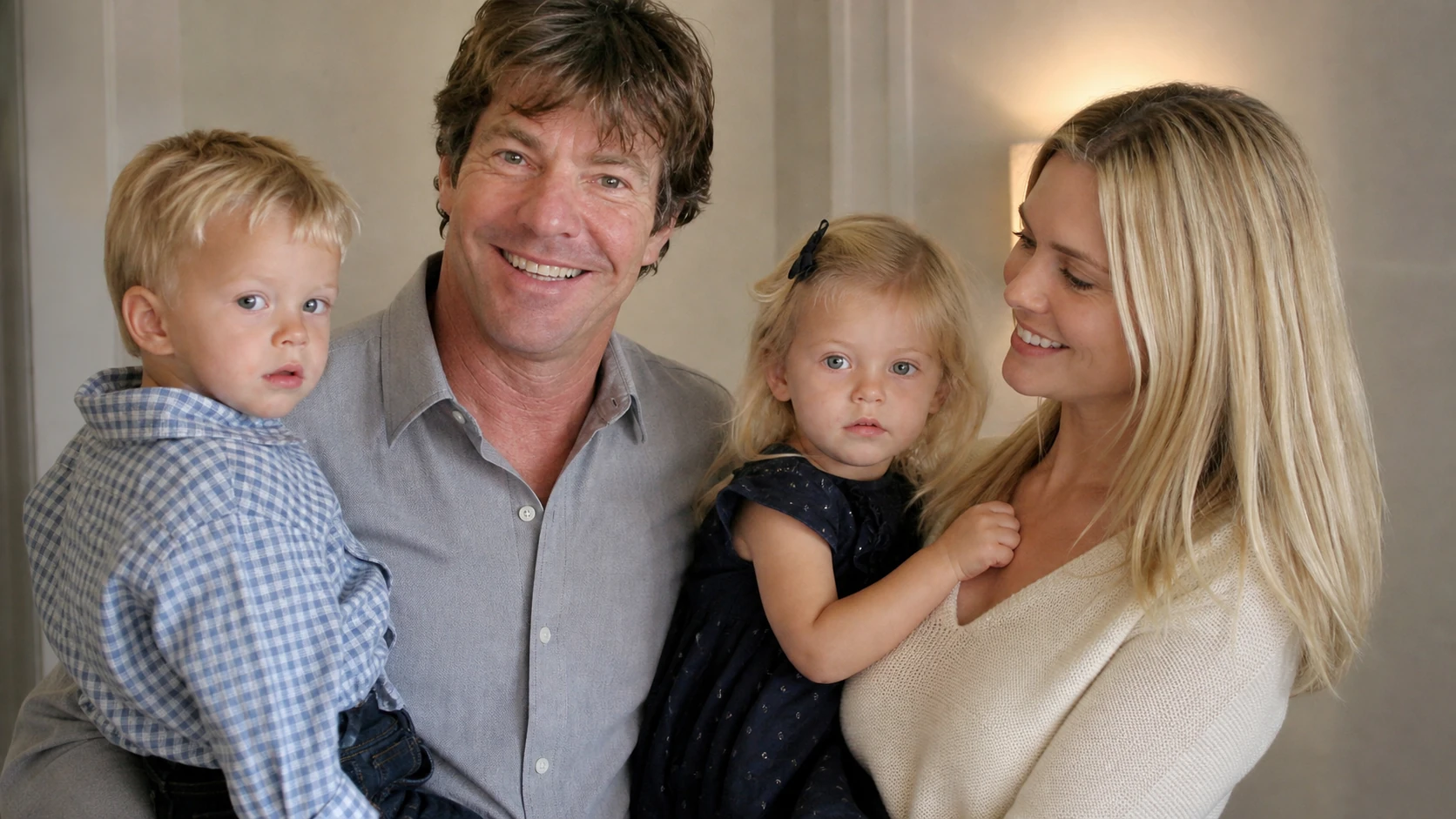
People has reported that the twins were born via gestational carrier in Santa Monica, California. According to the publication, Thomas was born first, at 8:26 a.m., two minutes before Zoe, and weighed 6 pounds, 12 ounces.
Thomas also has an older paternal half-brother, Jack Quaid, Dennis Quaid’s son from his marriage to actress Meg Ryan. Jack went on to establish a public acting career, while Thomas has so far remained outside the entertainment industry as far as reliable public reporting shows.
That difference is useful when reading online profiles of the Quaid family. Photos, acting credits and career information associated with Jack should not be assumed to relate to Thomas simply because both are Dennis Quaid’s sons.
The 2007 hospital medication error
Thomas and Zoe entered the national news only days after their birth.

After developing staph infections, the newborn twins were admitted to Cedars-Sinai Medical Center in Los Angeles. According to a later Illinois appellate court opinion in Quaid v. Baxter Healthcare Corporation, their physician prescribed Hep-Lock with a concentration of 10 units of heparin per milliliter to flush their intravenous lines.
On November 18, 2007, hospital personnel instead administered heparin with a concentration of 10,000 units per milliliter — 1,000 times the prescribed concentration.
Dennis and Kimberly Quaid later testified before Congress that the twins received another administration of the higher-concentration heparin later that day. Their testimony described a prolonged period during which the babies’ blood-clotting ability was severely affected before their test results returned to the normal range.
The twins survived. In their May 2008 congressional testimony, their parents said no damage was apparent at that point, although they also emphasized that the possible long-term consequences were not yet known. Later mainstream reporting described both children as having recovered and been discharged from the hospital.
What investigators found
The incident was not simply a matter of one incorrect vial being picked up in isolation.
The appellate record summarized findings from a California health investigation that identified failures in the hospital’s medication-handling process. Wrong-strength heparin vials had been sent to the pediatric unit, and nurses had not followed procedures requiring them to check medication labels before administration.
Those findings are separate from another issue that later became part of the Quaids’ litigation: the design and labeling of the drug packaging.
Dennis and Kimberly brought claims against Baxter Healthcare alleging that similarities between the appearance of lower-concentration Hep-Lock packaging and the much stronger heparin product contributed to the error. That was an allegation made by the plaintiffs, not a judicial finding that Baxter caused the overdose.
Baxter disputed responsibility, arguing that the event resulted from human error at the hospital and saying that it had revised the product labeling before the Quaid twins were treated. The 2009 Illinois appellate ruling commonly cited in connection with the case dealt with where the lawsuit should proceed, rather than deciding the underlying product-liability claims on their merits.
That distinction is important because later retellings sometimes compress a complicated sequence of hospital errors, packaging allegations and litigation into a single claim about who was responsible. The public record supports a more careful account.
How the incident shaped his parents’ patient-safety advocacy
The medication error became a turning point in Dennis and Kimberly Quaid’s public lives.
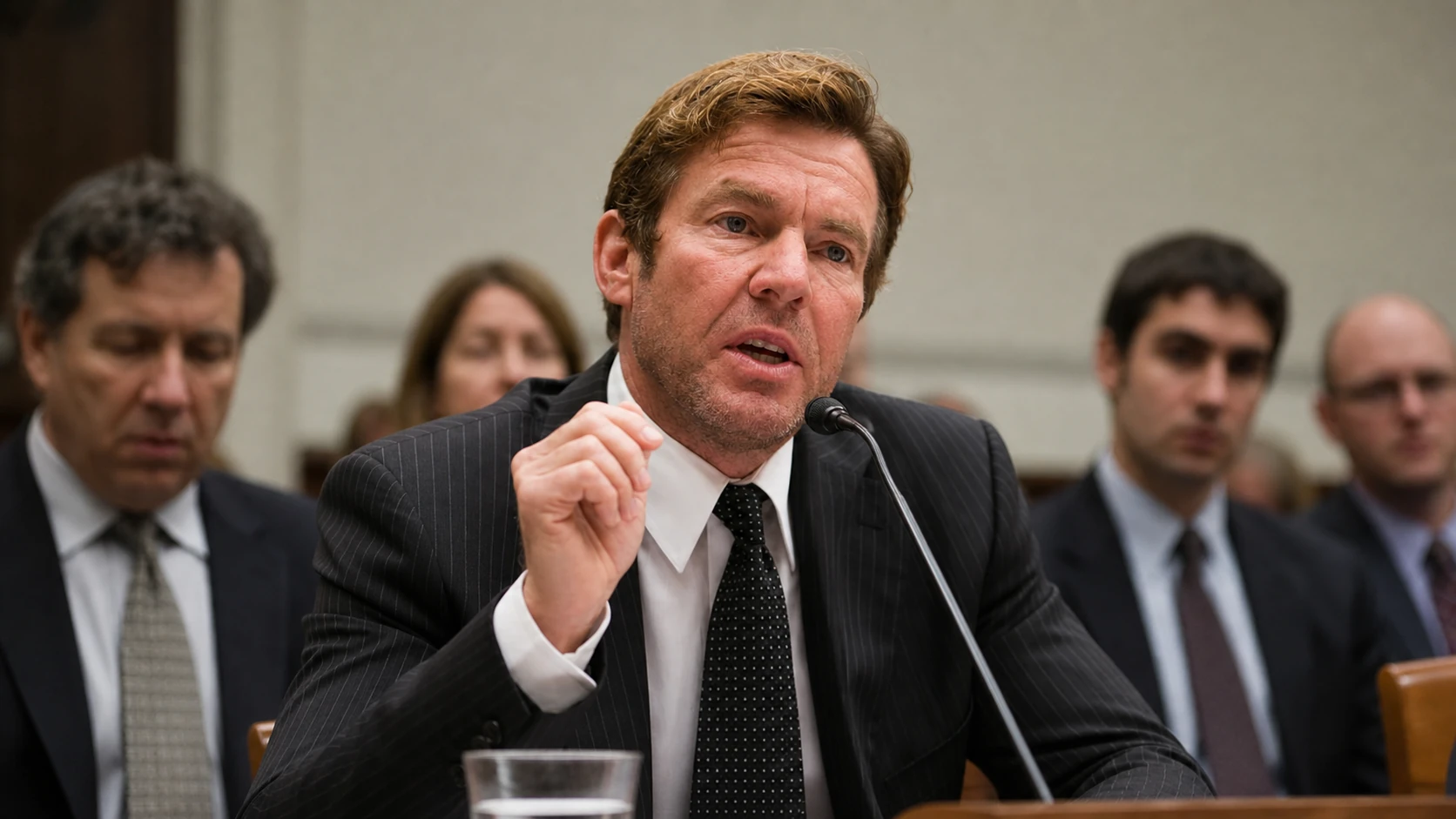
In May 2008, Dennis Quaid appeared before Congress in connection with questions about drug manufacturers, product liability and patients’ ability to seek legal remedies. Contemporary Reuters reporting covered his testimony and the broader debate over manufacturer responsibility.
The family also became involved in patient-safety advocacy beyond the lawsuit. The Agency for Healthcare Research and Quality’s Patient Safety Network later described the heparin incident as helping transform the Quaid family into advocates for reducing medical errors.
The Quaid Foundation was subsequently involved in the 2010 documentary Chasing Zero: Winning the War on Healthcare Harm, which focused on preventable medical mistakes and patient safety.
Those efforts belong primarily to Thomas’s parents and the family organizations associated with them. Thomas was a newborn when the event occurred, so it would be misleading to describe him personally as a patient-safety activist or to credit him with later policy work.
His significance in this part of the story is instead as one of the patients whose experience helped motivate that advocacy.
What is publicly known about Thomas in 2026
The public record becomes much thinner once Thomas’s childhood moves beyond the 2007 hospital episode.
Entertainment Weekly reported in May 2026, citing court documents it reviewed, that Thomas was expected to graduate from high school in June. People also described both twins as 18 and entering adulthood.
People further reported that Thomas planned to attend the University of Colorado Boulder after graduation, citing information from the twins’ social-media accounts. That should be treated as a reported plan rather than proof of current enrollment: no authoritative university record confirming that he had matriculated was identified in the available reporting.
There is likewise no strong public evidence that Thomas has begun an acting career or established another public-facing profession. That does not mean he lacks interests, ambitions or work of his own; it means those details have not been documented by reliable public sources strongly enough to present as fact.
For a person who grew up in a well-known family, that relatively limited public footprint is itself notable. Most reliable coverage of Thomas concerns either his infancy, his relationship to Dennis Quaid and Zoe Grace Quaid, or his transition into adulthood. Claims circulating elsewhere about his wealth, dating life, religion, hobbies, personality or exact residence are not supported well enough to belong in a responsible profile.
Final thoughts
Thomas Boone Quaid is best understood as a private young adult whose name became public because of his family and an extraordinary medical incident shortly after his birth.
The most firmly established facts are straightforward: he was born on November 8, 2007, is the twin brother of Zoe Grace Quaid and the son of Dennis Quaid and Kimberly Buffington, survived a serious heparin medication error as a newborn, and later became part of a family story that helped drive his parents’ patient-safety advocacy.
As of 2026, the available evidence does not support portraying him as an entertainer or public professional in his own right. Current reporting instead places him at the beginning of adulthood, with college attendance reported as a plan rather than a confirmed present status. Any fuller account of his career or private life would require stronger public evidence than is currently available.
