
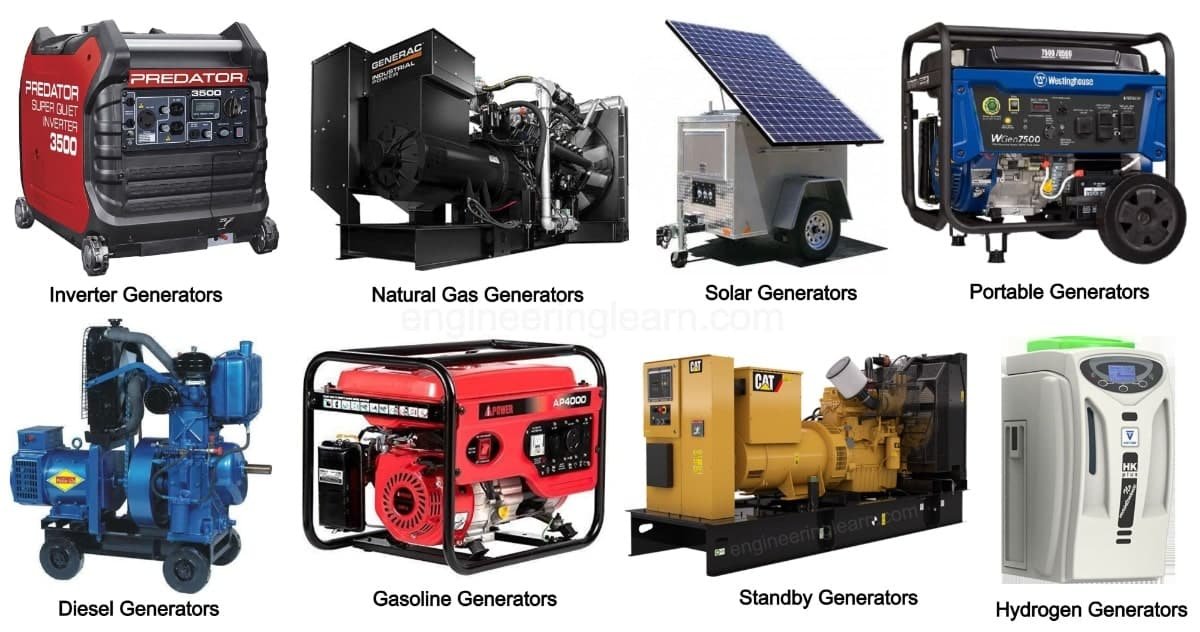
When the power goes out, do you know which backup power source would work best for your needs? Generators have become essential equipment for homes, businesses, and outdoor activities, yet many people remain unsure about the different types available and their specific applications. Understanding the distinctions between generator categories helps you make an informed decision about which option suits your situation, whether you need emergency backup power, portable energy for camping, or continuous power for a construction site.
1. Portable Generators
Portable generators are compact, fuel-powered units designed for flexibility and mobility. These machines typically run on gasoline, propane, or diesel and can be transported to different locations as needed. They range in size from small handheld models producing around 1,000 watts to larger units capable of generating 10,000 watts or more. Most homeowners choose portable generators for camping trips, outdoor events, temporary job sites, or backup power during short-term outages.
The appeal of portable generators lies in their affordability and ease of use. You can purchase a reliable portable generator for a fraction of the cost of permanently installed backup systems. A mid-range portable generator suitable for powering essential household appliances during an outage might cost between several hundred and a couple thousand dollars. These units require minimal installation because they sit outside your home and connect to a power panel or individual appliances through extension cords. However, portable generators produce noise and exhaust fumes, so they should always operate outdoors in well-ventilated areas to prevent carbon monoxide poisoning.
2. Standby Generators
Standby generators, also called backup generators or home generators, are permanently installed systems that automatically activate when utility power fails. These units are typically larger than portable models and connect directly to your home’s electrical panel and fuel supply. Natural gas or liquid propane serves as the fuel source for most residential standby generators, eliminating the need for manual refueling. When a power outage occurs, standby generators detect the interruption and switch on automatically without any action required from you.
The primary advantage of standby generators is their convenience and seamless operation during emergencies. Your home never loses power because the transfer happens in seconds, keeping refrigerators running, heating or cooling systems operational, and lights on throughout your property. Unlike portable generators, standby units operate quietly and remain out of sight, typically placed on a concrete pad outside your home. The initial investment for a standby generator system is substantially higher than portable options due to installation costs, equipment expenses, and the need for professional setup. Many homeowners consider this investment worthwhile for the peace of mind and continuous protection these systems provide, especially in areas prone to frequent outages or for people with medical equipment requiring reliable power.
3. Inverter Generators
Inverter generators represent a newer technology that produces cleaner, more stable electrical power than traditional portable generators. These units use advanced circuitry to convert raw power into a smooth current similar to utility power, making them safe for sensitive electronics like laptops, smartphones, and medical devices. Inverter generators are typically smaller and lighter than conventional portable generators while producing comparable wattage, making them ideal for campers and travelers. Many people choose inverter generators specifically because they can safely power delicate equipment without risking damage from power fluctuations.
The trade-off with inverter generators involves both cost and fuel efficiency. These units generally cost more than standard portable generators due to their sophisticated technology and superior power regulation. However, inverter generators compensate by operating more fuel-efficiently, which means you spend less on gasoline over time and make fewer trips to refuel during extended use. Someone using an inverter generator for a weekend camping trip would need fewer fuel stops than with a traditional portable model of similar output. The quieter operation of inverter generators also makes them popular for residential areas, campgrounds, and situations where noise pollution is a concern.
4. Industrial Generators
Industrial generators are heavy-duty units designed for continuous operation in demanding commercial and construction environments. These machines are built to withstand harsh conditions and produce substantial wattage, often generating 20,000 watts or more. Industrial generators typically run on diesel fuel because it provides better efficiency and reliability for long-term use compared to gasoline. Construction companies, manufacturing plants, data centers, and hospitals frequently depend on industrial generators to keep operations running.
Industrial generators serve critical functions in settings where power interruptions could result in significant financial loss or safety risks. A hospital, for example, must maintain continuous power for life-support equipment, surgical lights, and climate control in sensitive care areas, making reliable backup power an operational necessity. Industrial models come in various configurations, including skid-mounted units that can be transported between job sites and permanently installed systems for facilities requiring consistent backup power. These generators require professional installation, regular maintenance, and ongoing fuel supply management. The complexity and robust construction of industrial generators means they represent substantial capital investments, but organizations in critical sectors view this expense as essential insurance against business disruption.
5. Solar Generators
Solar generators represent an emerging category that harnesses renewable energy through photovoltaic panels to store power in rechargeable battery systems. These units produce no emissions, require no fuel purchases, and operate silently, making them environmentally friendly alternatives to fossil fuel-powered generators. Solar generators work well for low-power applications like charging devices, powering small appliances, or running lights in remote locations where fuel delivery would be impractical. As battery technology continues improving, solar generators are becoming viable options for more applications.
The main limitation of solar generators involves power output and weather dependency. Most residential solar generators produce significantly less power than fossil fuel alternatives, making them unsuitable as primary backup systems for homes requiring high wattage. Solar generators depend on sunlight to recharge their batteries, which means cloudy weather or nighttime conditions reduce their effectiveness considerably. Vessels and watercraft operating far from shore face similar reliability challenges, which is why purpose-built marine generators remain the standard choice for onboard electronics and navigation systems during extended voyages. The solar generator segment continues to grow as environmental consciousness increases and battery efficiency improves, offering homeowners and businesses progressively more sustainable power options.
Conclusion
Choosing the right generator type depends on your specific power needs, budget, and intended use. Portable generators offer affordability and flexibility for temporary power situations, while standby generators provide automatic, seamless backup for homes and businesses. Inverter generators balance portability with clean power output for sensitive electronics, industrial generators deliver robust performance in demanding environments, and solar generators provide sustainable options for specific applications. By understanding what each generator type offers, you can select the solution that best matches your requirements and provides reliable power when you need it most.
