
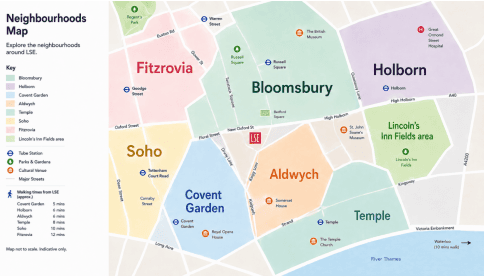
Choosing where to live as an LSE student can be difficult because central London rents are high and a cheaper room may mean a longer daily commute. Living close to campus can save time but usually costs more, while areas farther away may offer better value. The best areas for LSE London accommodation include Holborn and Covent Garden, Bloomsbury, Shoreditch, and Elephant and Castle. Each offers a different balance of rent, commute, room choice and lifestyle. Students should compare their budget, preferred room type and daily journey to campus when choosing accommodation.
Best Areas to Live near LSE
The best areas to live near LSE range from walkable central neighbourhoods such as Holborn and Bloomsbury to areas like Shoreditch and Elephant and Castle, which offer different balances of rent, accommodation choice and commute time. The table below compares these best areas’ features for LSE students.
| Area | Commute time to LSE | Weekly rent | Key Features |
| Holborn and Covent Garden | 5 to 10 minutes on foot | £440 to £565 per week | Closest area to LSE; walkable location with cafés, restaurants and central London attractions. |
| Bloomsbury | 5 to 15 minutes on foot | £300 to £600 per week | Academic neighbourhood with libraries, museums and a quiet student-friendly atmosphere. |
| Shoreditch | 15 to 25 minutes by bus | £350 to £600 per week | Creative and lively area with trendy cafés, markets and nightlife; well connected to LSE. |
| Elephant and Castle | 12 to 19 minutes by bus or Tube | £300 to £700 per week | Affordable central area with modern accommodation and convenient transport links. |
Holborn and Covent Garden
Holborn and Covent Garden suit LSE students who want to walk to Houghton Street in around 5 to 10 minutes. Student accommodation in Holborn and Covent Garden typically costs around £440 to £565 per week, depending on the room type and property. Supermarkets, cafés, theatres, and several Underground stations make everyday errands and commuting convenient. The main drawback is the higher Zone 1 cost that comes with such a central location.
Bloomsbury
Bloomsbury is a good choice for students who prefer an academic atmosphere within a 5 to 15-minute walk of LSE. Student rooms and apartments generally ranged from around £300 to £600 per week. With Senate House Library, the British Museum and the Brunswick Centre nearby, the area offers a strong mix of study spaces, cultural attractions and everyday amenities. However, affordable student accommodation can be highly competitive, particularly for well-located rooms.
Shoreditch
Shoreditch is popular among LSE students who value restaurants, music, and nightlife over a walking commute. A bus journey to campus generally takes around 15 to 25 minutes, while student accommodation in August 2026 was available from roughly £350 to £600 per week. Brick Lane and Old Spitalfields Market offer plenty of food, shopping, and social options, making Shoreditch particularly appealing to students who enjoy a lively neighbourhood. Students should also check the late-evening journey to and from LSE before choosing a property.
Elephant and Castle
Elephant and Castle suits LSE students _x0005_looking for a wider choice of flats and purpose-built student accommodation south of the Thames. From this area,_x0005_ LSE can be reached in around 12 to 19 minutes by bus or Tube. Student housing options in Elephant and Castle ranged from approximately £300 to £700 per week, reflecting differences in room type and property. The main trade-off is a daily commute, but students may benefit from greater housing choice and a wider range of budgets.
University Halls vs Private Student Accommodation near LSE
LSE students can choose between university halls and private student accommodation, depending on their budget, room preferences and lifestyle.
LSE University Halls
LSE halls provide a ready-made student community and can make the transition to university life easier. Utilities, internet and contents insurance are typically included in the rent, while some catered residences also provide meals.
- Price: LSE university halls cost around £152.60 to £498.53 per person per week, depending on the residence, room type, catering,and contract length.
- Best for: Students looking for a social student community and a more straightforward accommodation option for university life.

Private Student Accommodation near LSE
Private student accommodation gives LSE students more flexibility over location, room type and tenancy length. Options range from studios and en-suite rooms to shared rooms and multi-bedroom flats, depending on how much privacy and independence you want. uhomes.com makes it easier for LSE students to compare student accommodation in London, UK, by showing rent, room types, facilities, transport links, availability, and bill inclusions in one place.
- Price: Private student accommodation near LSE, withprices ranging from around £300 to £700 per week, depending on the property and room type.
- Best for: Students who want more choice over where they live, greater privacy or a room type that better suits their lifestyle and daily commute.
Is It Expensive to Live near LSE?
Yes, accommodation near LSE can be expensive, mainly because the university is located in central London. Student accommodation within a convenient commute of LSE commonly costs around £200 to £600+ per week, with central studios and premium en-suite rooms often at the higher end. Shared rooms or accommodation farther from campus can help reduce rent, but students should also factor in transport costs.
Living in Zones 3–4 can offer lower rents, but regular travel to central London may cost roughly £40–£60 per week, depending on the route and travel frequency. Eligible students can apply for an 18+ Student Oyster photocard for discounted Travelcards. When choosing where to live, it is worth comparing the total cost of rent and commuting costs. uhomes.com lists private student accommodation with exclusive deals, including cashback offers, seasonal promotions, group booking discounts and vouchers. These offers can help students book their preferred accommodation near LSE at a more competitive price and get better value for their budget.
How to Choose the Best Place to Live as an LSE Student?
The best place to live as an LSE student depends on your commute, total weekly cost, room type, tenancy terms, and lifestyle.
- Check the actual door-to-door commute to the LSE campus at your usual travel time. A property may look central but still involve an inconvenient change or longer journey. Students who live locally should also compare accommodation costs with commuting from home, where practical.
- Calculate the total weekly cost, including rent, utilities, internet, transport, laundry, deposits, and the number of rent-paying weeks. Bills-included accommodation can make budgeting easier, but check exactly what is covered before booking.
- Room condition and location are also important. Students who can visit in person should check the room and surrounding area, while international students can use detailed photos, VR tours, and live online viewings. uhomes.com also provides first-hand property information from UK inspection tours, including videos and inspection reports, helping students assess rooms, facilities and locations before booking.
- Finally, read the tenancy agreement carefully. Check the fixed term, payment schedule, deposit, cancellation policy, and maintenance arrangements. A longer tenancy may provide greater security, but it also means committing to a higher total rent. uhomes.com’s accommodation consultants can also help students review key contract terms, including rent payments, deposits, cancellation conditions and maintenance arrangements, before signing.
How Can You Find Ideal Student Accommodation near LSE in London?
uhomes.com makes it easy for students to find suitable accommodation near LSE by comparing weekly rent, commute time, room type, move-in date and included bills. Students can set a clear budget and preferred commute, then shortlist student properties based on room types, facilities, nearby amenities and transport links.
Starting your search early can give you more choice, especially for September intake. Students applying for LSE halls should check the official LSE accommodation website for application and booking dates, as availability and deadlines may vary. Students considering private accommodation should also confirm availability and tenancy terms before reserving.
Conclusion
The best LSE accommodation is the one that works as a complete weekly package. Students should check the real journey to Houghton Street, the full cost after bills and transport, the room’s actual condition and every important tenancy term. A short walk may justify a higher rent, while a longer commute may deliver more privacy or a wider choice of rooms.
Frequently Asked Questions About Living near LSE
How Much Does It Cost to Live as an LSE Student in London?
The cost of living for LSE students is about £1,550 per month, including accommodation, food, travel, and personal costs. This is a planning figure rather than a fixed requirement. A central studio, frequent dining out, or regular travel will raise the total, while a shared room and walking commute may reduce it.
How Far Should I Live from LSE?
Students should ideally live within a 30-minute commute of LSE. Those who prioritise convenience and campus life can choose accommodation within a 5- to 15-minute walk, particularly in Holborn, Covent Garden or Bloomsbury. Students who want more space or a wider choice of accommodation can consider areas farther from campus, provided they have a reliable bus or Tube connection to LSE.
How Much Is Student Accommodation near LSE?
Student accommodation near LSE generally costs around £200 to £600+ per week, depending on the location, room type, and tenancy length. LSE halls for 2026/27 range from around £152.60 to £498.53 per person per week, while private student accommodation near LSE started at around £210 per week when checked in August 2026. Central en-suite rooms and studios can cost considerably more. Students should compare like-for-like room types and check whether utilities and other bills are included.
