
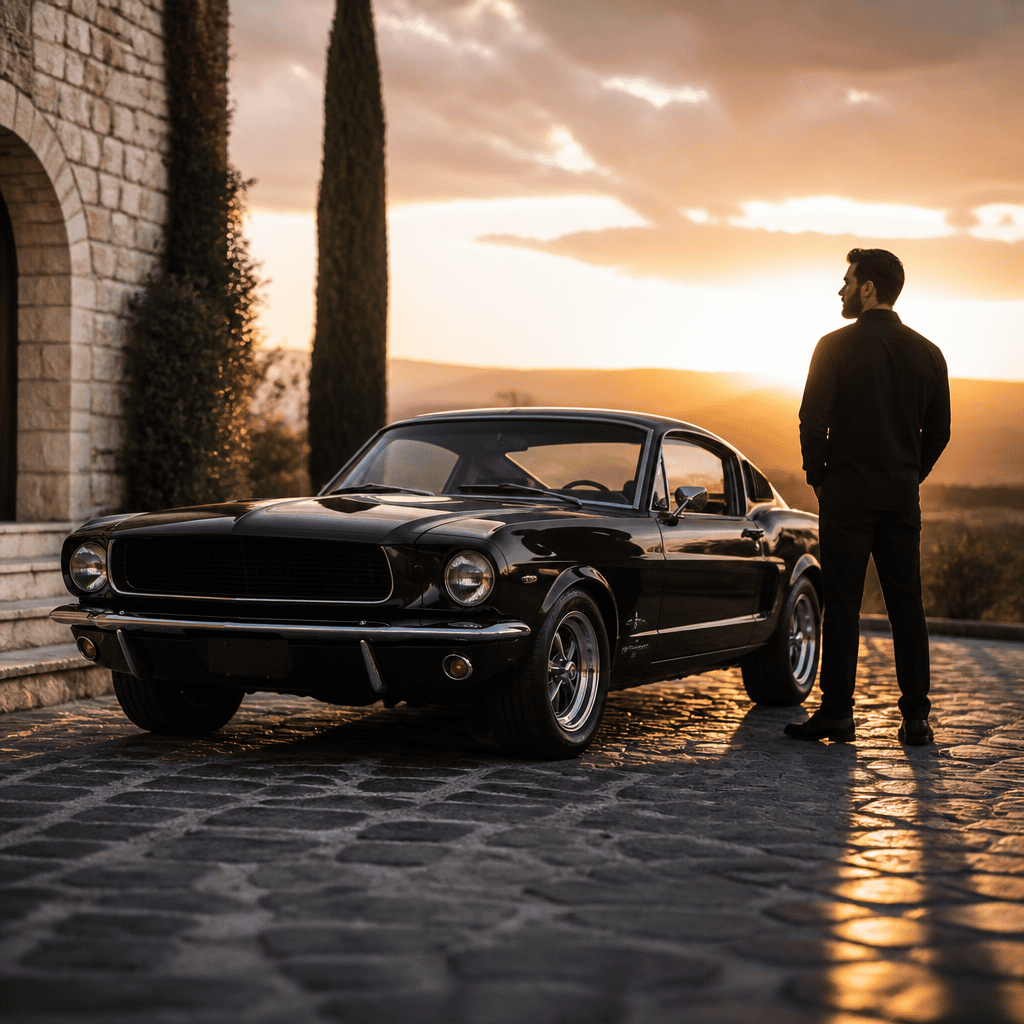
There is something deeply personal about owning a classic Ford Mustang. It is not simply a matter of horsepower figures or chrome trim — it is about the relationship between a driver and a machine that carries decades of American automotive identity. For many enthusiasts, the classic Mustang represents a golden era of design, engineering ambition, and cultural significance that modern vehicles rarely replicate. But owning one responsibly, and enjoying it fully, requires far more than a title and a set of keys.
The Enduring Appeal of the Classic Ford Mustang
Since its debut in 1964, the Ford Mustang has occupied a unique position in automotive history. It was not the fastest car of its era, nor the most technically sophisticated. What it offered instead was something more elusive: accessibility paired with style. A working professional could afford one, a young driver could aspire to one, and a seasoned collector could obsess over one. That breadth of appeal has never truly faded.
The 1965 and 1966 models in particular have become icons. Their long hoods, short rear decks, and sculpted flanks remain as visually compelling today as they were when they first rolled off the assembly line in Dearborn, Michigan. Collectors and restorers continue to seek them out, and the market for well-preserved or thoughtfully restored examples remains remarkably strong. But the journey from barn find to road-ready classic is rarely straightforward.
What Happens When a Classic Breaks Down on the Road
Even the most carefully maintained classic vehicles are not immune to mechanical failure. A well-documented case involved a 1966 Ford Mustang that broke down on a highway, leaving its owner stranded and highlighting the very real challenges that come with driving vintage iron on modern roads. You can read more about this 1966 Mustang highway breakdown and what it reveals about the vulnerabilities of aging mechanical systems under real-world driving conditions.
Stories like this are not meant to discourage classic car ownership — quite the opposite. They serve as a reminder that the experience of driving a vintage Mustang demands preparation, knowledge, and ideally, a vehicle that has been properly restored rather than merely cosmetically refreshed. The difference between a car that looks good in photographs and one that performs reliably on an open highway is enormous, and it comes down entirely to the quality of the work done beneath the surface.
The Hidden Costs of Deferred Maintenance
Many classic Mustangs on the market today have been through multiple owners, each with varying levels of mechanical competence and financial commitment. A vehicle that appears complete and presentable may be hiding decades of deferred maintenance — worn brake lines, deteriorated fuel systems, compromised wiring harnesses, and suspension components that have never been properly inspected. These are not cosmetic concerns. They are safety issues that can turn a Sunday drive into a roadside emergency.
This is why serious collectors and drivers increasingly turn to builders who approach restoration as a comprehensive discipline rather than a surface-level exercise. The goal is not simply to make a car look original — it is to make it drive better than it ever did from the factory, while preserving the character and authenticity that make it worth owning in the first place.
Caring for Your Classic: Beyond the Basic Wash
Ownership of a classic vehicle carries responsibilities that extend well beyond mechanical upkeep. The exterior finish, interior materials, and chrome details of a vintage Mustang require consistent, informed care to remain in peak condition. Paint from the 1960s — or even a modern respray — responds very differently to environmental exposure than contemporary factory coatings, and treating it with the wrong products can cause irreversible damage.
Understanding why your car deserves more than a quick wash is essential for any classic car owner who wants to protect their investment long-term. Proper detailing, paint correction, and protective coatings are not luxuries — they are part of a responsible ownership routine that preserves both the visual integrity and the monetary value of the vehicle.
Storage, Climate, and Long-Term Preservation
Beyond regular washing and detailing, classic Mustang owners must also consider how and where their vehicles are stored. Humidity, temperature fluctuation, and UV exposure are among the most destructive forces a vintage car can face. Climate-controlled storage, breathable car covers, and periodic mechanical exercise — running the engine, cycling the brakes, moving the vehicle — all contribute to long-term preservation. A classic car that sits untouched for extended periods often deteriorates faster than one that is driven regularly and maintained attentively.
Revology Cars: Where Restoration Meets Modern Engineering
For enthusiasts who want the authentic experience of a classic Mustang without the uncertainty of an unknown restoration history, there is a compelling alternative. Revology Cars specializes in building continuation vehicles — faithful reproductions of classic 1960s Ford Mustangs that are constructed with modern components, safety systems, and engineering standards. These are not replicas in the dismissive sense of the word. They are meticulously crafted automobiles that honor the original design while delivering the reliability and drivability that vintage vehicles often cannot provide on their own.
Each Revology build begins with period-correct styling and works outward from there, incorporating fuel-injected engines, modern suspension geometry, updated braking systems, and contemporary electrical architecture — all hidden beneath bodywork that is visually indistinguishable from the original. The result is a vehicle that can be driven confidently on a modern highway without the anxiety that accompanies a purely vintage machine.
Who These Vehicles Are Built For
Revology’s clientele tends to include enthusiasts who grew up with the original Mustang and want to reconnect with that experience on their own terms, as well as younger collectors who appreciate the design language of the era but prefer the dependability of modern engineering. There is no compromise on authenticity — the visual and tactile experience of driving a Revology Mustang is unmistakably rooted in the 1960s — but there is also no compromise on performance or safety.
The Broader Meaning of Classic Car Culture
Classic car ownership, at its best, is a form of stewardship. These vehicles are artifacts of a particular moment in industrial and cultural history, and the people who maintain, restore, and drive them are keeping that history alive in a tangible, visceral way. A well-maintained 1966 Mustang rolling through a coastal town on a summer morning communicates something that no museum exhibit can fully replicate — it is history in motion, experienced rather than observed.
That responsibility demands seriousness. It demands proper mechanical care, thoughtful detailing, informed storage practices, and — when the time comes to acquire or commission a vehicle — a clear-eyed assessment of what quality actually looks like beneath the surface. The classic Mustang community is large and passionate, and its best members understand that the cars they love deserve nothing less than the highest standard of care.
Conclusion
Owning a classic Ford Mustang is one of the most rewarding experiences available to an automotive enthusiast. It connects the driver to a lineage of American design and engineering that has few equals in the global automotive canon. But that reward is proportional to the effort invested — in maintenance, in care, in choosing the right vehicle from the right source. Whether you are preserving an original example or commissioning a modern continuation build, the commitment to quality is what separates a great ownership experience from a frustrating one. The road is long, and the Mustang deserves to be on it.
