
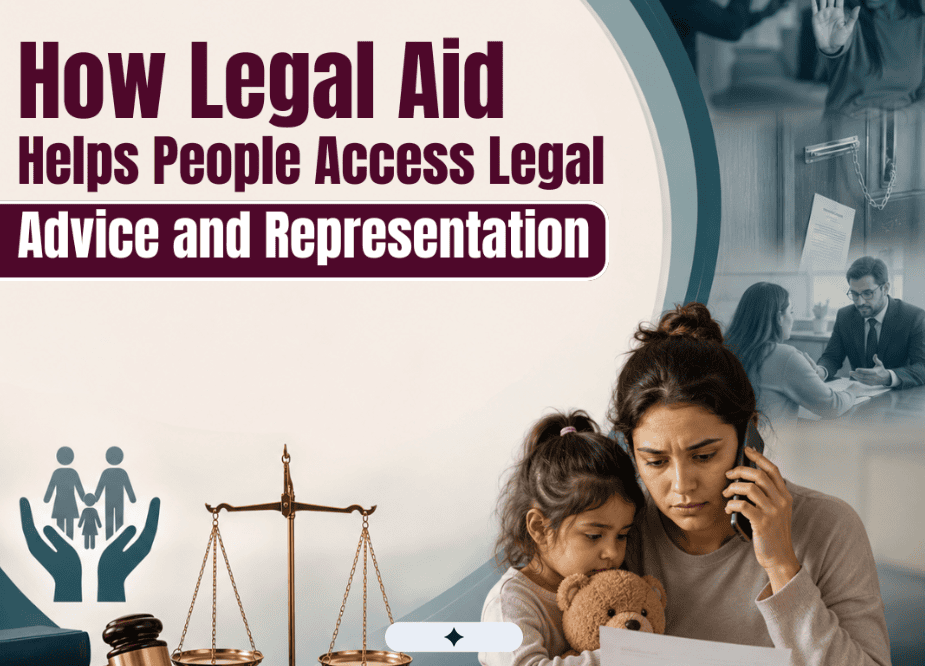
A lower-class young mother sits at her kitchen table, a letter in one hand and the phone in the other, trying to calculate if she can afford a solicitor on a zero-hours contract. This is a problem for many people, and a common assumption is that legal aid is unaffordable, so they will miss out.
This assumption is incorrect, because legal aid is used for things such as domestic violence, evictions and other things you would rather not experience. In this guide, we hope to explain exactly what legal aid covers, what support you can expect, who qualifies, and what to do if you don’t qualify. Stay with us. By the end, you will have clarity, not confusion, and practical knowledge you can actually use.
What Is Legal Aid?
Legal Aid is a publicly funded programme that covers, in whole or in part, the expenses of legal advice, mediation, and representation for those who cannot afford it. Legal Aid is delivered by the Legal Aid Agency, an executive agency of the Ministry of Justice, and has been in operation since 1949.
Most solicitors in Watford who regularly assist clients with legal aid applications report that the most common reaction to eligibility is relief, combined with surprise that such assistance is an option at all.
Why Is Legal Aid Important for Access to Justice?
Without legal aid, a large proportion of people would find themselves in court proceedings without an advocate, facing off against an opponent with significantly greater resources or, indeed, the state itself. As such, Legal Aid was created in order to right this imbalance and provide a level of justice for all. Whether or not it accomplishes its goals is a matter of debate.
The Law Society has released reports which state that means testing has not kept up with inflation for over a decade, and as such, fewer and fewer people are eligible for legal aid. This is a valid point and one that contributes to the importance of consulting with a solicitor, rather than making assumptions about eligibility.
With the change in legal aid, many people are now in a worrying position of thinking they don’t qualify for assistance or conversely that they are guaranteed to qualify. The only way to know for sure is to contact a family solicitor and find out.
Who Can Get Legal Aid in the UK?
Eligibility for legal aid falls under two categories: financial and legal. It is important to note that a person must pass both assessments to receive funding.
Financial Eligibility (Means Test)
Eligibility is determined based on the information provided by the applicant. Financial eligibility depends on your income, savings, family situation, and the nature of the case. The criteria are subject to change, so it is best to contact a solicitor or check the latest guidelines.
It is important to note that the figures listed above are merely guidelines and that the exact eligibility criteria are subject to change on a yearly basis. The Legal Aid Agency’s means test calculator on the GOV.UK website is the official source of information.
Legal Eligibility (Merits Test)
With the means test aside, not every case falls under the umbrella of legal aid, regardless of the financial situation of the applicant. The merits test performed by the Legal Aid Agency assesses the viability of a case and whether it is reasonable to expect public funding to be used for that particular case. As such, it is possible to fail the second stage of assessment even if one passes the means test.
Who Is Most Likely to Qualify?
As previously mentioned, means-tested benefits, single parenthood with low income, and having little to no capital are all indicators of potential eligibility for legal aid. Victims of domestic abuse and those with child protection concerns tend to be prioritised, as the legal issues which arise from these circumstances often require additional funding.
If you are unsure if your circumstances fall under the criteria, seeking professional help may assist you. Family and divorce lawyers can help advise you on the matters and what you may be eligible for in terms of legal aid.
What Types of Legal Cases Does Legal Aid Cover?
Legal aid isn’t available for every type of legal problem. It’s worth being honest about that upfront, since a fair few people assume it covers more than it actually does.
Family Law Cases
Most cases that qualify for family legal aid involve an element of domestic abuse or child protection. Uncontested divorces generally fall under the category of ineligible cases.
Criminal Defence
Police station advice is available to all, regardless of financial situation, while representation before the court is dependent on the means and merits tests. It is crucial to note that police station advice is wholly free of charge, regardless of whether or not the defendant qualifies for further assistance.
Housing and Eviction Cases
Legal aid is available for several housing-related issues, including homelessness, repossession, and serious disrepair. Eligibility depends on individual circumstances.
Domestic Abuse Cases
Cases that involve injunctions against abusive partners are covered by Legal Aid, and the means test is often waived due to the severity of the issue.
Public Law and Mental Health Issues
Representation before tribunals regarding mental health matters or judicial reviews about public bodies’ decisions is available through Legal Aid.
Legal aid rules are different for different types of legal problems, so it is important to get advice about what help you might be able to get before making a claim. An employment lawyer in Watford can also help you to understand what options you have if you have disputes with your employer or other employment-related issues.
How Does Legal Aid Help People Access Legal Advice and Representation?
It’s easy to think of legal aid purely as a discount on legal fees. In practice, it does more than that.
Covers the Cost of Legal Advice
This benefit is self-explanatory, but it is important to remember that Legal Aid’s existence makes legal advice more accessible to those who need it most.
Provides Access to Experienced Solicitors
Legal Aid-approved solicitor practices will always have someone available to discuss a potential case, meaning that the advice received will be of a competent standard. It is important to note that solicitors who offer legal aid services are required to sign a contract with the Legal Aid Agency, which means their services have been approved by an official body.
Helps People Prepare for Court
Most people have little to no experience with going to court, or even with attending a tribunal. Even those who are confident in their ability to prepare for such proceedings will find that a solicitor can assist significantly in ensuring every detail is correct.
Protects Legal Rights throughout the Process
Speaking with a solicitor can provide the reassurance that nobody is missing any deadlines, filing any documents incorrectly, or failing to provide any information that the court needs to make a decision. Many solicitors note that most issues with court cases arise from one side not following the proper procedures, often due to the stress and difficulty of representing oneself in court.
Legal aid can also be particularly important when dealing with complex matters where the correct advice is essential from the outset. Legal aid immigration solicitors can help eligible individuals understand their rights, prepare the necessary documents, and navigate the legal process with greater confidence.
How to Apply for Legal Aid?
Check Eligibility
Speak with Citizens Advice or use the eligibility checker provided by the government to confirm that legal aid is an option.
Gather the Required Documents
Bring relevant documents to the first meeting with a solicitor. It is a good idea to bring documents that confirm one’s income, residency, and circumstances, as this will greatly expedite the process.
Speak with a Solicitor
Only solicitors who have a contract with the Legal Aid Agency can apply on one’s behalf. A representative will discuss the details of one’s case and decide whether it is viable.
If your legal matter involves immigration or residency, getting specialist guidance can make the application process easier to understand. Visa services in Watford can also provide support with relevant visa requirements and documentation, helping you take the right steps from the outset.
Documents You Need for a Legal Aid Application
Applicants will be asked to provide documentation that confirms their income, residency, and the details of the case for which they are requesting assistance. Examples of documents that might be required include:
Proof of Income
Payslips, benefit letters, or information about self-employment, depending on the situation.
Proof of Identity and Residency
This usually takes the form of a passport or a driving licence, along with recent utility bills or another document that confirms one’s address.
Evidence Related to Your Case
This category is extremely diverse, ranging from police reports in the case of domestic abuse to correspondence with a landlord in the case of repossession.
Understanding the documents you will need is also useful if you want to avoid unnecessary expenses such as family law solicitor costs. By having the correct paperwork, you enable your solicitor to assess your case and know what support they can offer.
Keeping your legal paperwork organised can help you find the information you need easily and save you time when applying or renewing. To see why it’s important and how to do it, see our article Why Keeping Your Legal Documents Organised Matters.
What Happens If You Don’t Qualify for Legal Aid?
There are other options for people who do not qualify for legal aid. Some of these options are detailed below:
Alternative Options for Funding Legal Aid
Conditional Fee Agreements (also known as “no win, no fee”)
These agreements are usually applied to specific types of claims and work in a similar way to legal aid. The solicitor who takes on the case will only receive payment if one wins the case or reaches a specific agreement.
Legal Expenses Insurance
Many people who are unaware that they have it can benefit from legal expenses insurance. This type of coverage can be found as an add-on to home or car insurance, and it can be relatively cheap to add to an existing policy.
Fixed Fees and Payment Plans
Some solicitor practices offer fixed-fee consultations or payment plans that allow a person to pay for legal services in installments.
Free Initial Legal Consultations
There are solicitor practices that offer free legal advice in specific circumstances, such as those that specialise in family law. It is a good idea to ask around before speaking with someone who explicitly advertises this type of service.
If your case concerns any immigration-related issues, it is also a good idea to ask about the immigration lawyer fees and available payment plans. It is important to understand what funding options are available when looking for a lawyer.
Common Misconceptions About Legal Aid
Legal Aid Is Only for Criminal Cases
Not true. Legal aid can be provided for a variety of issues, including those that fall under family law, housing law, and more, depending on individual circumstances.
Everyone on a Low Income Automatically Qualifies
Although testing is an essential part of determining eligibility, it is not the sole factor. It is possible to have a low income and still fail the means test due to additional circumstances.
Legal Aid Covers All Kinds of Legal Issues
It doesn’t. Legal Aid typically does not cover employment-related disputes and most other family law issues outside of those that involve domestic abuse or child protection.
Why Seeking Legal Advice Early Can Make a Difference
Avoids Costly Mistakes
People who delay legal advice are much more likely to find themselves in a difficult position and make mistakes. In many cases, the consequences of these mistakes are irreversible and much more expensive to resolve.
Improve Your Chances of a Better Outcome
When legal advice is sought early, it is much easier to gather evidence and build a strong case. Additionally, solicitors who receive early briefings have more time to prepare for court and represent their clients in the best possible light.
How the Right Solicitor Can Support Your Legal Aid Application
Assesses Eligibility
An experienced solicitor can provide initial advice and help determine whether one is eligible for legal aid assistance.
Guiding You Through the Application Process
Many people find this part of the process especially daunting and confusing. This is why a qualified solicitor should handle the necessary paperwork – mistakes here can be costly and time-consuming to fix.
Representing Your Interests Every Step of the Way
When choosing a solicitor, it is important to consider not only their experience and qualifications but also their ability to thoroughly represent one’s interests in court.
Conclusion
Legal Aid can help make professional counsel and representation accessible to you when you need it most. If you’re uncertain about your eligibility, speaking with a solicitor can often be the best way to learn more. Even if you aren’t eligible for legal aid, many solicitors can help you explore your other options and help you understand your case.
If you are in any doubt as to whether you qualify for legal aid or what the best course of action is, Fosters Legal Solicitors are on hand to give you the best possible advice. Just get in contact with the team, who will be able to offer you straightforward advice.
