
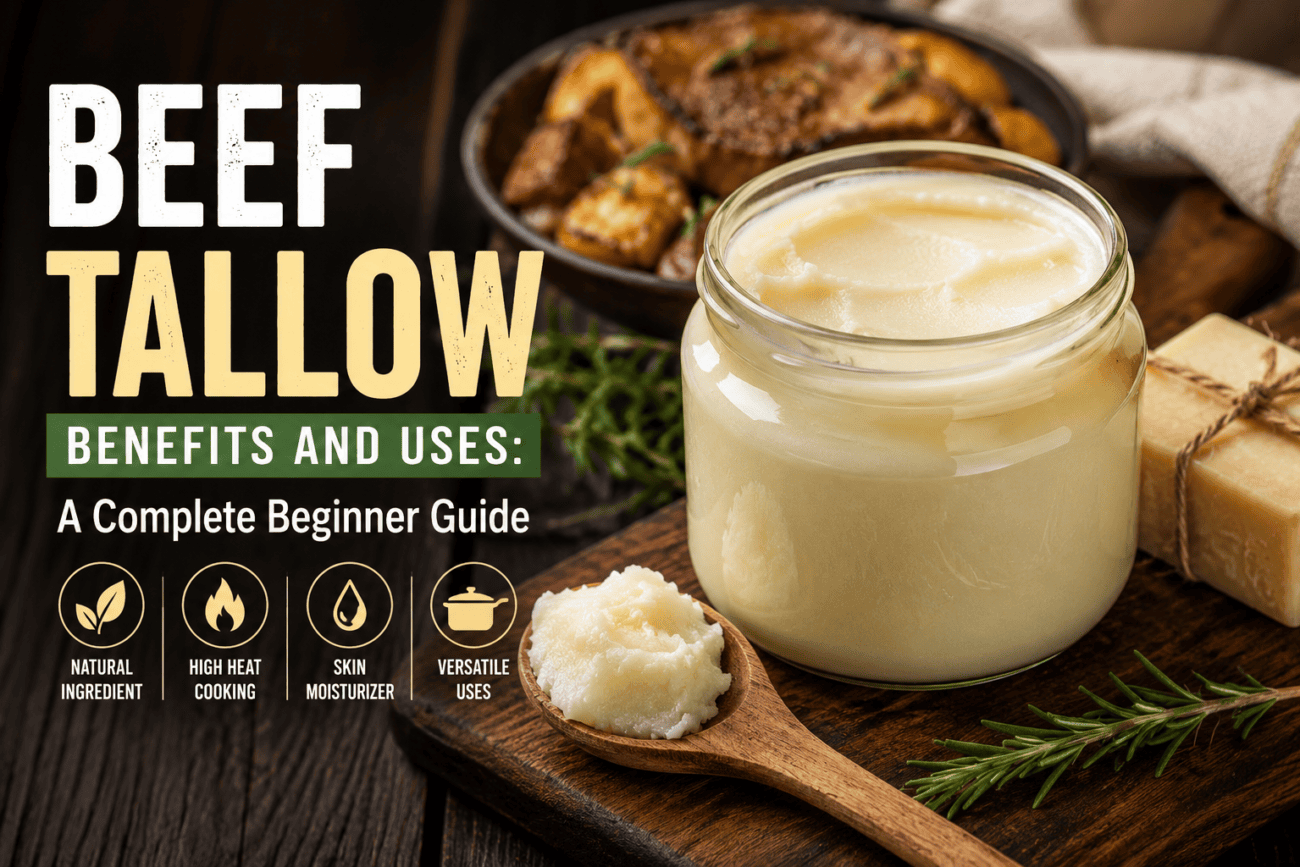
Beef tallow is a traditional cooking fat that has gained fresh interest among home cooks, skincare fans, and people looking for simple, less processed ingredients. Made by rendering the fat from beef, it has a rich texture, high heat tolerance, and a long history in everyday cooking. For beginners, learning how it is made, where it can be used, and what to look for when buying it can make the choice much easier.
Today, this versatile fat is used for more than frying. Some people add it to roasted vegetables, homemade fries, savory dishes, and baked recipes, while others use purified tallow in simple body-care products. This guide explains the main benefits and uses of beef tallow in clear, practical terms, so you can decide whether it fits your kitchen or personal-care routine.
What Is Beef Tallow?
Its appeal also comes from its flexibility: one product can support several recipes without requiring a change to your cooking habits. That makes it a practical ingredient to test gradually.
Beef tallow is a rendered form of beef fat. Rendering means heating the fat slowly so that moisture and solid particles separate from the usable fat. Once filtered and cooled, the result is a firm, pale fat that can be stored and used in different ways.
Good-quality tallow is usually mild in smell when properly rendered. Its stable texture makes it useful for cooking, while its traditional use in soaps and balms has also helped it gain attention outside the kitchen.
Key Beef Tallow Benefits
One reason beef tallow has become popular is its useful cooking properties. It can handle relatively high cooking temperatures and can give foods a crisp texture and deep savory taste.
Other benefits include:
- Long storage potential when kept properly in a cool, dry place.
- A firm texture that works well for frying and roasting.
- A rich flavor that can add depth to savory meals.
- Versatility across cooking and some personal-care products.
- A simple ingredient profile compared with many blended cooking fats.
Like any dietary fat, it should be used in sensible amounts. People with specific dietary needs should consider their overall eating pattern rather than treating one ingredient as a health solution.
How to Use It in Cooking
Cooking is one of the easiest ways for beginners to try tallow. A small amount can be heated in a pan before adding potatoes, vegetables, or meat. It is also useful for roasting because it can help create a browned, crunchy surface.
Try these ideas:
- Toss potatoes with a little melted tallow before roasting.
- Use it for pan-frying eggs, vegetables, or meat.
- Add a small amount to savory pastry or homemade biscuits.
- Use it instead of another cooking fat when making crispy fries.
- Mix a little into sauces or gravies for extra richness.
Start with a modest amount and adjust according to the recipe. Because the flavor can be noticeable, using too much may overpower lighter foods.
Tallow for Skincare
Rendered tallow is also found in some balms, soaps, and moisturizers. Its texture can create a rich, protective feel on the skin, which is why it appeals to people who prefer simple body-care formulas.
If you are buying a tallow-based skincare product, check the ingredient list and packaging. Choose products made for cosmetic use when your goal is skincare, and patch-test new products on a small area first, especially if your skin reacts easily.
How to Choose Quality Tallow
Not all products are made in exactly the same way. Look for clear information about the source, rendering process, storage instructions, and intended use.
A few useful buying checks are:
- Choose a reputable seller with clear product details.
- Check whether the product is intended for food or skincare.
- Look for a clean appearance and suitable packaging.
- Follow storage instructions after opening.
- Avoid products with an unusually strong or unpleasant odor.
If you are shopping for related products online, you may also see terms such as Honey Pack UK. This is a separate product category, so do not assume that every product using a similar natural-ingredient theme serves the same purpose.
How to Store Beef Tallow
Proper storage helps maintain quality. Keep unopened tallow according to the seller’s instructions, and protect it from heat, moisture, and direct sunlight. Once opened, use a clean, dry utensil to prevent contamination.
For longer storage, some people refrigerate or freeze tallow. Always check the product label first, because storage advice can vary by preparation and packaging.
Is It Right for You?
Tallow may suit people who enjoy traditional cooking fats, want a versatile ingredient, or like experimenting with homemade recipes. It can be especially useful for high-heat cooking and crisp roasted foods.
However, it is not necessary for everyone. If you already have a cooking routine that works well, there is no need to replace every fat in your kitchen. Think about taste, cooking method, dietary needs, price, and storage before making it a regular purchase.
Common Beginner Mistakes
New users can avoid several easy mistakes:
- Using too much and making food overly rich.
- Heating fat far beyond what the recipe needs.
- Storing it where heat and moisture can affect quality.
- Confusing food-grade tallow with skincare-only products.
- Buying without checking the ingredient list or source.
Starting with a small jar and a few simple recipes is often the easiest way to learn how it behaves.
Conclusion
Beef tallow is a versatile rendered fat with practical uses in cooking and, in suitable prepared products, skincare. Its firm texture, rich flavor, and ability to work well with high-heat cooking make it worth exploring for beginners. With sensible portions, proper storage, and careful product selection, it can become a useful addition to a well-planned kitchen.
The best way to decide whether this rendered beef fat suits you is to start small. Try it in one familiar recipe, compare the taste and texture, and then decide where it fits into your routine.
