
Not long ago, earning visibility online was mostly a mechanics game. You found the right search terms, sprinkled them across your pages in just the right places, and built a web of links to signal authority. If you followed the technical playbook, the algorithms rewarded you.
Honestly, it felt a lot like solving a simple puzzle at a desk, with the quiet hum of a laptop at midnight.
That playbook is changing right before our eyes.
With the rapid integration of artificial intelligence into search platforms, the way people find information, products, and services has fundamentally shifted. Search engines aren’t just indexing keywords and matching text strings anymore. They’re synthesizing complex answers, drawing from vast pools of information, and presenting users with direct solutions.
So what does this mean for your business?
In this new landscape, one factor has quietly moved from a soft brand metric to an absolute core requirement. That factor is reputation.
Building a resilient, trusted brand identity isn’t just something your communications team handles in a vacuum. It’s the very engine driving your digital discovery. Understanding why reputation matters now more than ever, and how to cultivate it, is essential for any business looking to stay visible.
The Shift from Keywords to Trust Signals
Traditional search systems evaluated websites based largely on on-page signals and technical structures. While quality content always mattered, smart optimization techniques could often help a site punch above its weight class, even if the real-world company behind it was relatively unknown.
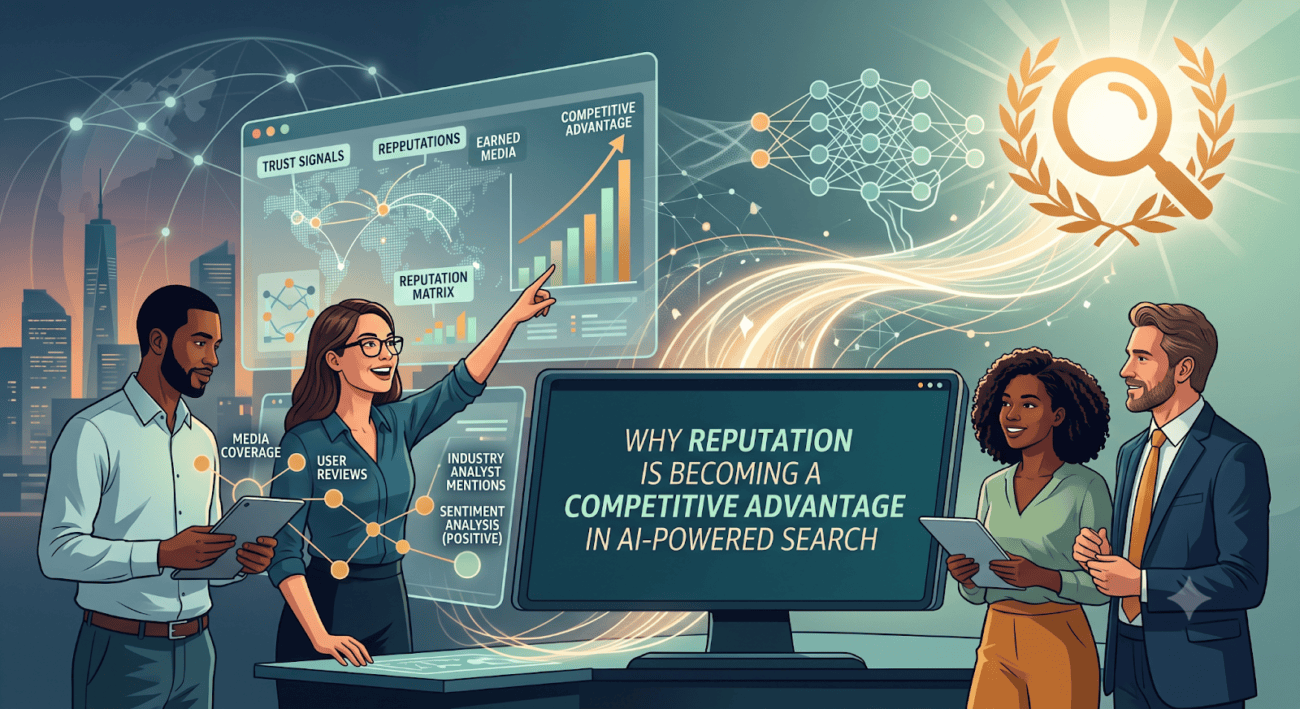
AI-driven models work differently. They read across the web, digesting articles, user reviews, media coverage, and community discussions. These systems aim to evaluate entity authority.
In simple terms, they want to know: who are you, what do people say about you, and can you actually be trusted?
When an AI system generates an answer for a user, it relies on sources that demonstrate clear credibility. A site with technical optimization but zero mention in reputable publications or zero positive brand sentiment will struggle to gain traction. You know, it really comes down to human validation in the end. The algorithm is constantly looking for third-party validation.
And that changes everything.
If third parties, journalists, industry analysts, and actual customers are talking about your company in a positive context, AI models recognize that real-world consensus. That consensus becomes a massive competitive advantage.
Why Media Coverage and Public Validation Matter More Than Ever
Because modern search systems scan the broader web to understand credibility, earned media has taken on a dramatically elevated role. Mentions in respected industry publications, featured quotes from your leadership, and coverage in mainstream news outlets aren’t just nice digital clippings to share on social media. They’re primary trust feeds for search models.
It reminds me of how real relationships work outside the screen. Trust isn’t claimed. It’s earned.
But how do you secure that kind of real-world authority?
This reality makes strategic media relations a core driver of modern search visibility. Aligning your story with what journalists and audiences care about requires real expertise in positioning and message framing. Working alongside an experienced public relations agency can help a company secure the kind of high-profile, authentic coverage that search engines actively look for when determining authority.
When an AI model sees your brand consistently cited in authoritative stories within your niche, it connects your company directly to those topics. That association is far more powerful than repeating a keyword twenty times on a landing page.
The Role of Sentiment and Customer Perception
Reputation isn’t just about being mentioned. It’s about how you’re mentioned.
Older algorithms struggled to interpret nuance. An AI system, however, excels at understanding sentiment. It reads customer reviews, forum debates, and social media commentary, evaluating whether the general consensus around a brand is positive, neutral, or negative.
Have you considered how an algorithm perceives your customer feedback?
If a user asks an AI assistant for the top solutions in your sector, the system will actively weigh public sentiment. Brands with widespread customer dissatisfaction or unaddressed public relations issues will likely get passed over in favor of competitors with clean, positive reputations.
Improving your online reputation, I guess, requires a much more grounded approach:
- Prioritize customer experience. The best public relations strategy in the world can’t fix a product or service that consistently disappoints users. Authentic positive sentiment starts with real user satisfaction.
- Encourage genuine feedback. Make it easy for happy clients and customers to share their experiences on independent review platforms and industry forums.
- Address negative feedback openly. Ignore issues at your own peril. Resolving complaints publicly shows both human readers and monitoring systems that your organization is accountable and responsive.
And that’s the point. Real accountability builds long-term authority.
Crafting Thought Leadership That Stands Out
To build a reputation that withstands algorithmic shifts, brands must also contribute original value to their industries. Generic, synthesized articles written purely to fill space no longer capture attention, nor do they build real authority.
Maybe we all need to slow down and write things that actually matter.
Real reputation is built on original insight.
This means sharing proprietary research, highlighting real case studies, and offering unique perspectives on industry trends. When your team speaks clearly and authoritatively on emerging challenges, other publications take notice and cite your insights.
This creates a positive loop:
- You publish unique, valuable insights.
- Industry writers and publications reference your work.
- AI systems observe these citations and recognize your brand as an expert source.
- Your overall authority rises, elevating your reach across all search channels.
Bringing It All Together
Search is no longer an isolated technical task. It has merged with brand building, media strategy, and public relations.
As intelligent systems continue to mediate how audiences discover products and services, the brands that win won’t be those that attempt to game the system. The winners will be the organizations that invest in real-world trust, cultivate strong media relationships, deliver exceptional customer experiences, and consistently share valuable expertise.
In the AI era, your reputation is your search strategy.
