
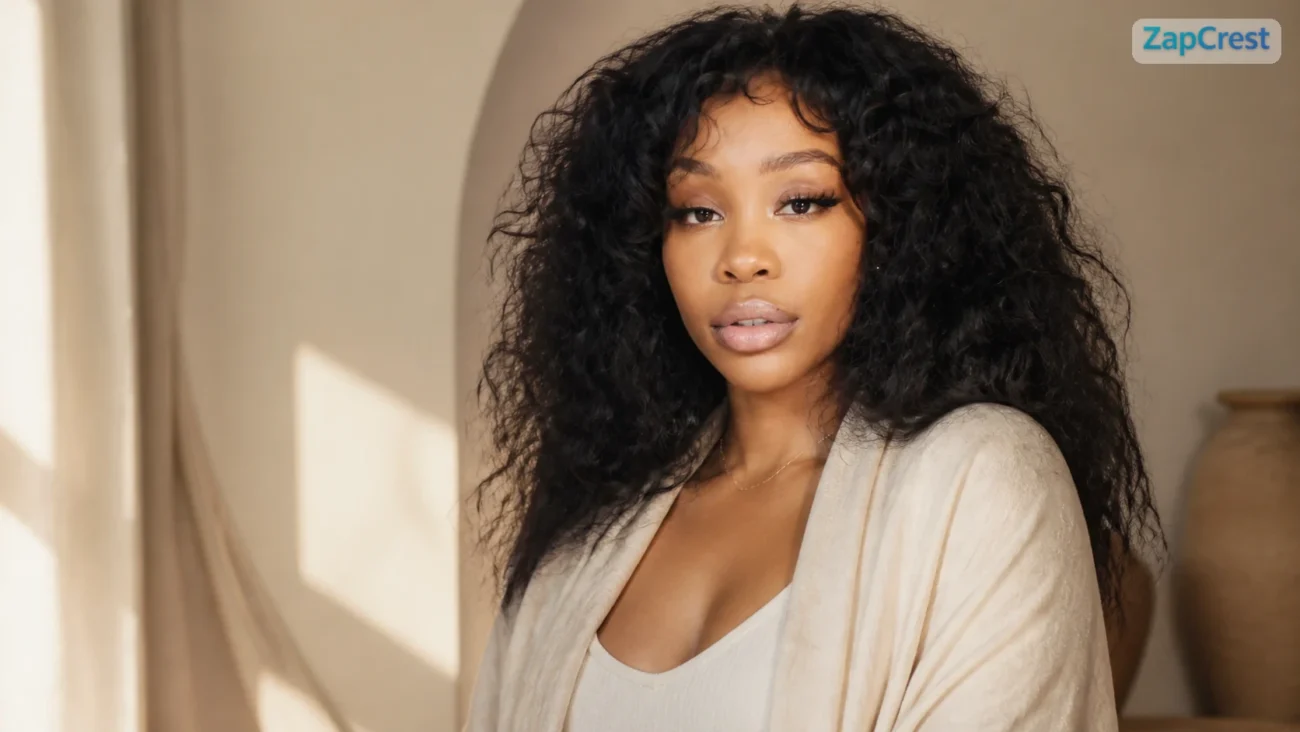
SZA, whose full name is Solána Imani Rowe, has publicly identified as Muslim and has said she was raised Muslim. Her religious background is more nuanced than a single label suggests: her father is Muslim, her mother is Christian, and she grew up in a household where both faith traditions were present.
SZA has spoken openly about Islam, prayer, Ramadan and hijab, particularly in a 2021 interview with Muslim Girl. At the same time, her public spirituality has continued to develop. By 2026, she was also discussing yoga, meditation and time spent at the Isha Foundation in India. Those practices do not, on the available evidence, establish that she converted to Hinduism or formally left Islam.
The most accurate description is therefore that SZA has publicly identified with Islam and was raised Muslim, while her more recent spiritual life includes practices outside a narrowly defined Islamic context. Her precise current denomination or private religious identity has not been publicly established.
Growing up with a Muslim father and Christian mother
SZA’s religious background begins with an interfaith family.
In a 2013 interview with Complex, she described herself as having been raised Muslim. Her father, Abdul Mubarak-Rowe, is Muslim, while her mother, Audrey Rowe, is Christian. Later reporting by People described a household in which the two religious traditions were not treated as mutually exclusive parts of family life.
SZA attended Muslim school, but Christianity was also present through her mother. Her parents made room for each other’s religious occasions, creating an upbringing in which she was exposed to both traditions even though she personally described her upbringing as Muslim.
That distinction matters because descriptions of SZA as coming from a “Christian and Muslim family” can sometimes be mistaken for uncertainty about her own background. The evidence is clearer: she grew up in an interfaith household but has explicitly said she was raised Muslim.
Her relationship with Islam was also shaped by growing up in the United States during a period when Muslims faced heightened hostility after the September 11, 2001 attacks.
Hijab, Islamophobia and SZA’s adolescence
One of SZA’s most detailed discussions of religion concerns hijab.
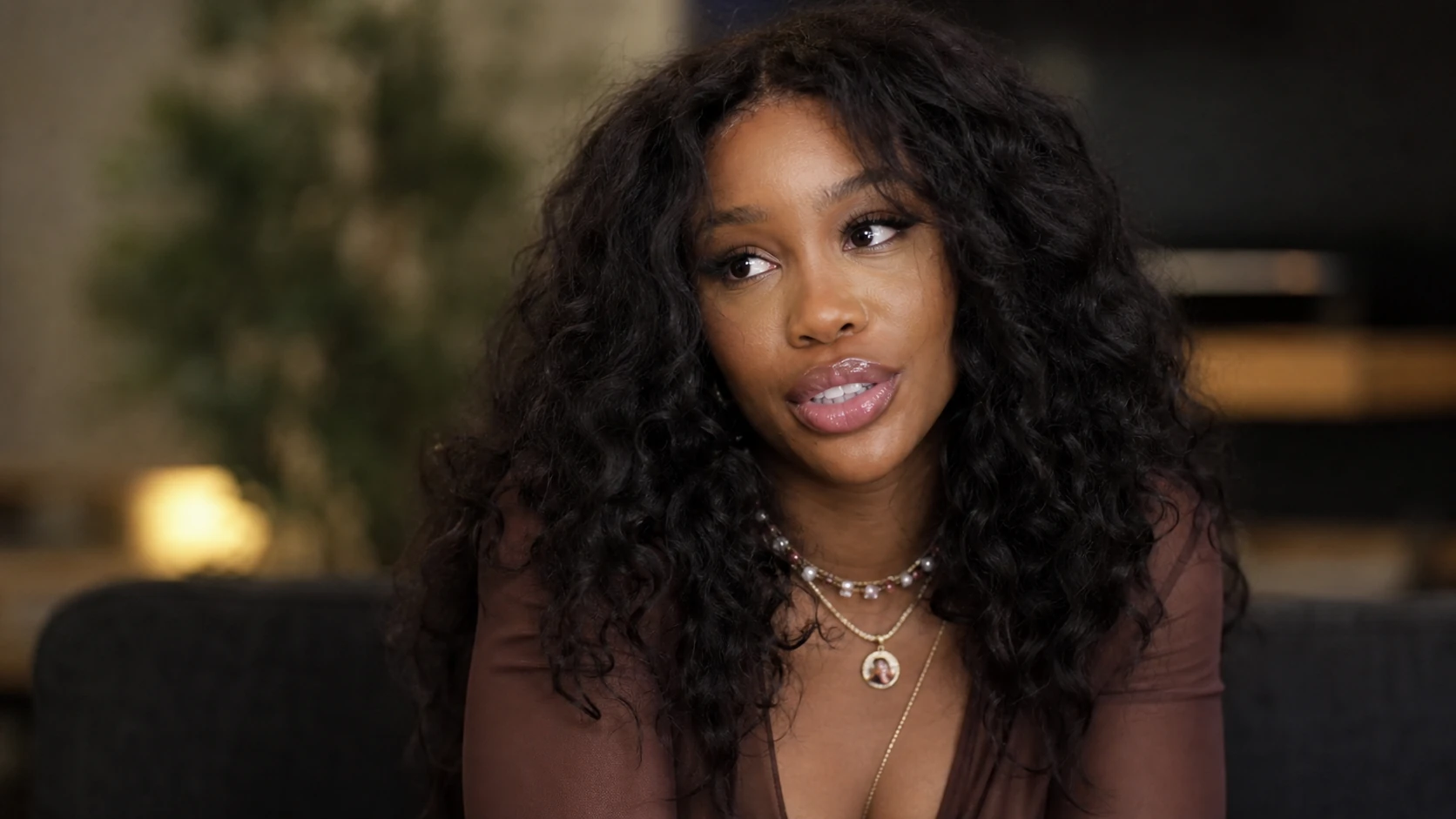
She has said that she wore hijab during parts of her childhood and adolescence. In interviews with Complex, Vogue and Muslim Girl, she described experiencing harassment after 9/11 because she was visibly Muslim.
SZA recalled being taunted at school, and Vogue reported her account of other students pulling at or removing her hijab and following her home. Her decision to stop covering consistently developed in that environment.
That history makes it misleading to present her removal of the hijab as evidence that she simply rejected Islam. Her own descriptions connect the change to fear, social pressure and Islamophobic treatment.
She later returned to covering for a period during high school and continued thinking about hijab as an adult. In her 2021 Muslim Girl interview, she said that wearing it remained something she thought about.
Her experience illustrates a recurring theme in the way she has discussed faith publicly: the tension between religious attachment and anxiety about whether she was practicing in the way others might expect.
What SZA has said about practicing Islam
SZA has generally spoken about religion in personal rather than doctrinal terms.
In her 2021 conversation with Muslim Girl, she discussed Allah, salat, Ramadan and Muslim identity directly. She acknowledged trying to maintain prayer while also expressing feelings of guilt about not always meeting the religious standard she expected of herself.
She also spoke about intending to fast during Ramadan unless health circumstances prevented it.
Those statements are significant because they go beyond simply saying that she came from a Muslim family. They show that Islam remained part of how she discussed her own spiritual life as an adult.
At the same time, those comments should not be converted into claims about exactly how she practices today. Her detailed discussion of prayer and Ramadan dates primarily from 2021, and there is no reliable basis for declaring how frequently she currently prays, whether she fasts every Ramadan or whether she presently follows all particular religious observances.
There is also no strong public evidence establishing a specific Islamic denomination for her. Although she used language describing her upbringing as “orthodox Muslim” in an early interview, the available record does not justify confidently labeling her Sunni, Shia or part of another specific branch.
That uncertainty is different from uncertainty about whether Islam has been part of her identity. On that broader point, her own interviews are clear.
The meaning of the name SZA
SZA’s stage name can create another source of confusion about her religious affiliation.
She has explained that SZA was formed using the Supreme Alphabet, a system associated with the Nation of Gods and Earths, also known as the Five Percent Nation. Her choice of name was influenced in part by the naming tradition associated with artists such as RZA of the Wu-Tang Clan.
That connection should not be treated as evidence that SZA belongs to the Nation of Gods and Earths or the Nation of Islam.
Her explanation establishes a cultural and linguistic influence on her professional name, not organizational membership. The available interviews do not support assigning her a Five Percenter or Nation of Islam identity simply because of the source of the letters in “SZA.”
This distinction is particularly relevant because internet biographies sometimes collapse Muslim identity, the Nation of Islam and Five Percent terminology into a single category. They are not interchangeable, and SZA’s public record does not justify doing so.
Yoga, meditation and her spirituality in 2026
SZA’s more recent public comments show that her spiritual life has expanded beyond the Islamic practices she discussed earlier.
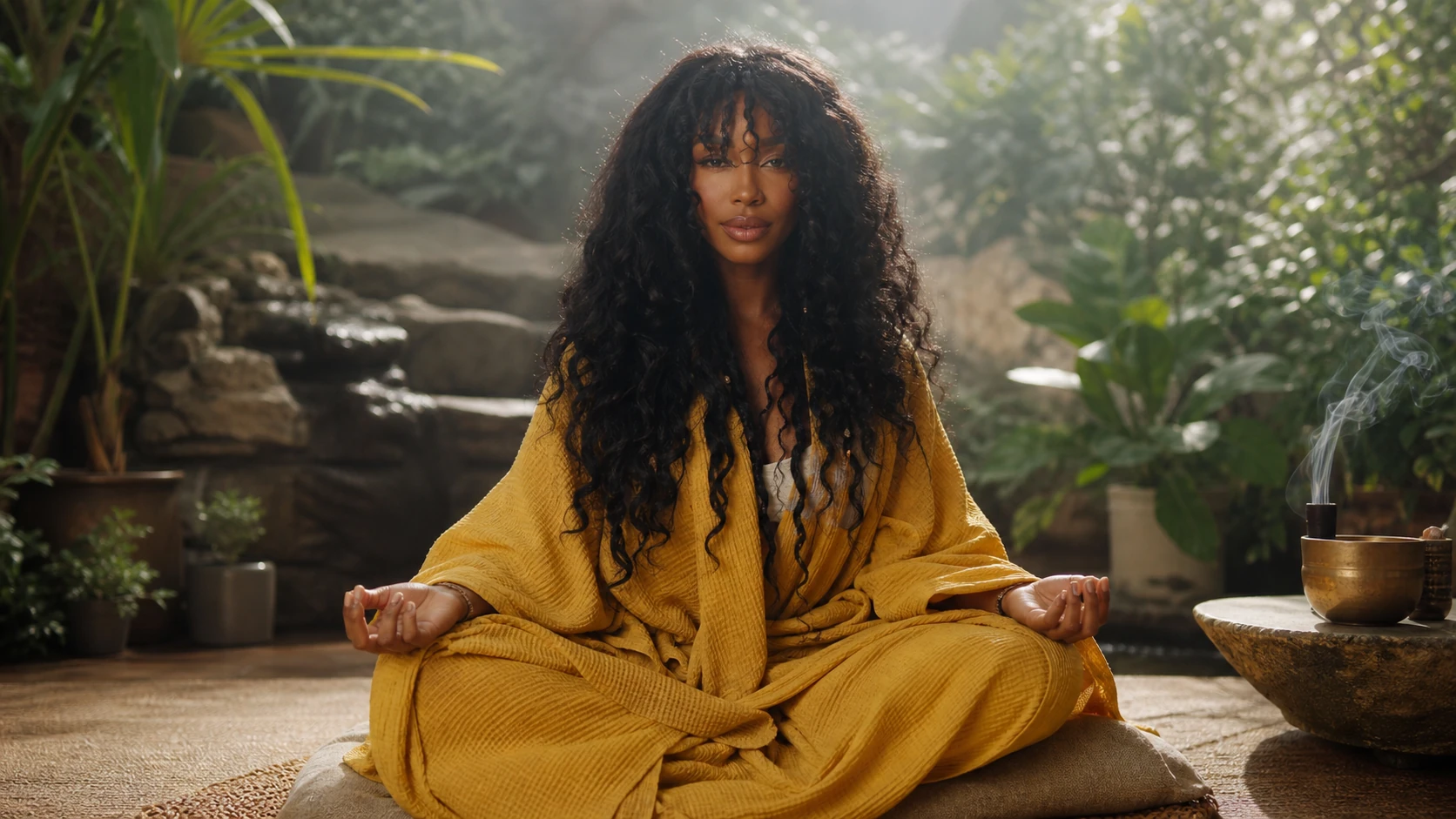
In a March 2026 interview with i-D, she described spending extended periods at the Isha Foundation, practicing yoga and meditation and engaging with teachings associated with Sadhguru. She discussed Shambhavi Mahamudra, periods of silence and time at an ashram as meaningful parts of her personal development.
Those experiences might prompt the question of whether SZA converted to Hinduism.
There is no reliable evidence in the available public record establishing such a conversion.
Her 2026 interview discusses yogic and meditative practices, but it does not contain an announcement that she renounced Islam, became Hindu or adopted another formal religious identity. She also continued to use the language of God while discussing her spiritual life.
Yoga, meditation and participation in activities at a Hindu-rooted spiritual organization are therefore better described as elements of her evolving spirituality rather than proof of a change in religion.
The distinction is important because religious identity is ultimately something a person defines for themselves. SZA has publicly identified with Islam in earlier direct interviews; no comparably authoritative later statement establishes that she replaced that identity with another one.
From Ctrl to SOS
Religion is one part of SZA’s public story, but her prominence comes primarily from her work as a singer and songwriter.
She emerged through Top Dawg Entertainment and became a major figure in contemporary R&B with Ctrl in 2017. The album established her distinctive songwriting voice and brought her into a much larger national and international audience.
Her career expanded considerably with SOS, released in 2022. The album debuted at No. 1 on the Billboard 200 and became the defining commercial breakthrough of the next phase of her career. Its extended life continued with SOS Deluxe: Lana, which helped return the project to the top of the chart.
Her songwriting also received institutional recognition. In June 2024, the Songwriters Hall of Fame presented her with its Hal David Starlight Award, an honor recognizing influential younger songwriters.
By August 2026, the Recording Academy listed SZA with seven Grammy wins and 31 nominations. Among her recent major honors was Record of the Year at the 2026 Grammys for “luther,” her collaboration with Kendrick Lamar.
Those achievements place her religious background in the context of a career that has moved far beyond the relatively small audience she had when she first discussed her Muslim upbringing publicly in the early 2010s.
SZA’s current creative chapter
SZA remained active in 2026 rather than simply extending the SOS era indefinitely.
In February, she released “Save the Day” for Pixar’s Hoppers. The following month, her i-D interview indicated that she had returned to the studio and was working toward a third album.
Her recent interviews also suggest that creative work and spirituality have increasingly overlapped in her thinking. Meditation, physical recovery, periods of silence and time away from the machinery of celebrity have become part of the way she publicly describes her life.
That does not make her recent work a religious project, nor does it establish a new religious affiliation. It does show why a simple one-word description of her beliefs can miss some of the complexity in her own account.
SZA’s public story contains both continuity and change: a Muslim upbringing that she has discussed directly, painful experiences with Islamophobia, an adult relationship with Islamic prayer and Ramadan, and later engagement with additional spiritual disciplines.
Final thoughts
SZA was raised Muslim and has publicly identified with Islam. She grew up with a Muslim father and Christian mother, wore hijab during parts of her youth and has spoken candidly about prayer, Ramadan and the difficulties of feeling that she did not always practice perfectly.
Her spirituality has since broadened publicly to include yoga, meditation and experiences at the Isha Foundation. As of August 2026, however, reliable evidence does not establish that she formally converted to Hinduism or publicly renounced Islam.
The fairest description is therefore not to assign SZA a new faith based on her spiritual practices, but to report what she has actually said: Islam has been a meaningful part of her identity and upbringing, while her spiritual life continues to evolve alongside one of contemporary R&B’s most successful careers.
