
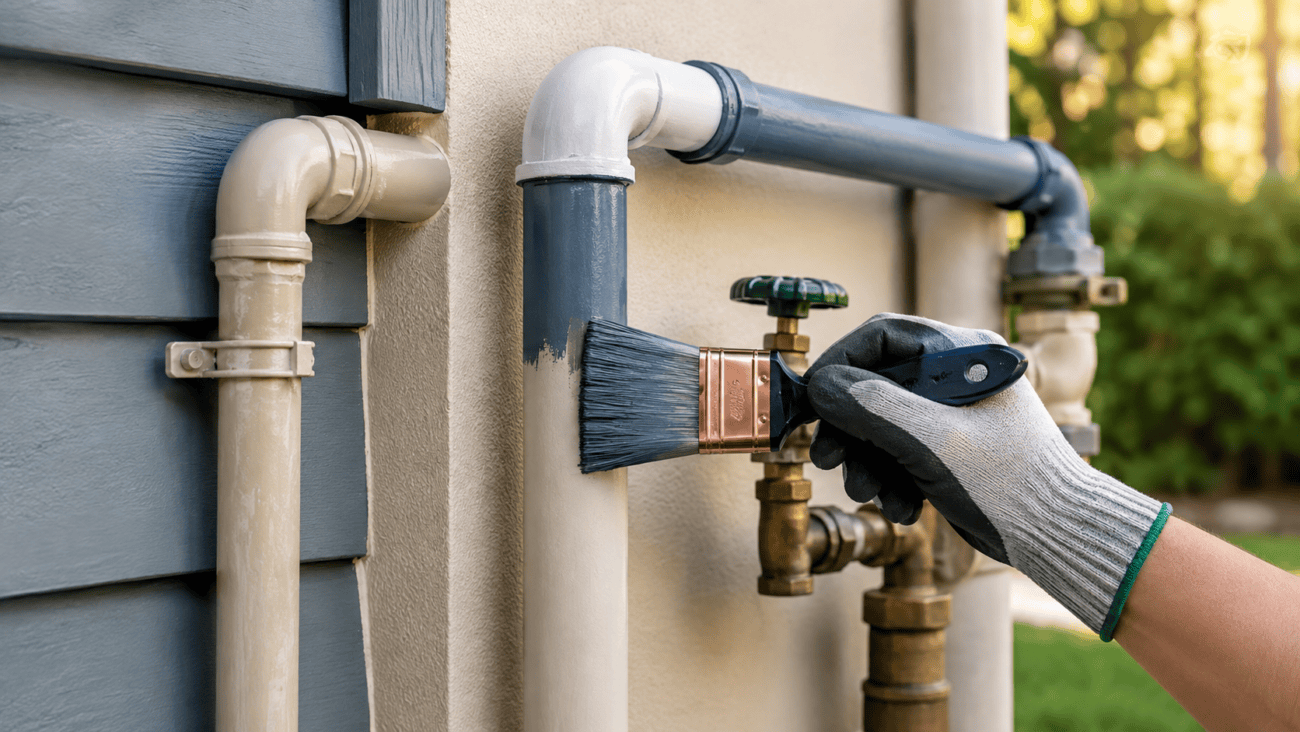
Many homeowners wonder, can you paint house plumbing pipes to improve the look of their interiors or protect exposed pipes from damage. The simple answer is yes, plumbing pipes can be painted, but the process requires proper preparation, suitable paint, and careful application. Using the wrong products or skipping preparation can cause peeling, rust, or damage over time. citeturn0search1
Exposed plumbing pipes are common in basements, bathrooms, kitchens, garages, and modern industrial-style homes. Instead of hiding them, many interior designers now use paint to make pipes blend with walls or become part of the overall home design.
Why Paint House Plumbing Pipes?
Painting plumbing pipes is not only about improving appearance. It can also provide practical benefits when done correctly.
Old metal pipes may look outdated because of rust, stains, or worn surfaces. A fresh coat of paint can make them look cleaner and match your home’s interior style. For example, black-painted pipes can create an industrial design theme, while pipes painted the same colour as walls can almost disappear into the background.
Paint can also add an extra layer of protection to certain metal pipes by reducing exposure to moisture and helping prevent surface corrosion. However, paint does not repair damaged pipes or replace proper plumbing maintenance.
Which Types of Plumbing Pipes Can Be Painted?
Different pipe materials require different preparation methods. Before painting, identify the type of pipe installed in your home.
Copper Pipes
Copper pipes can be painted, but the surface must be cleaned first. Remove dirt, oxidation, and any green residue before applying primer. A suitable metal primer helps the paint stick properly.
PVC and Plastic Pipes
Plastic pipes can also be painted, but they need special preparation. Since PVC surfaces are smooth, normal paint may not bond well. Light sanding and a plastic-compatible primer can improve adhesion. citeturn0search8
Steel and Iron Pipes
Metal pipes are easier to paint because paint bonds well with properly prepared surfaces. Remove rust, clean the surface, and use a rust-resistant primer before applying the final coat.
What Paint Should You Use on Plumbing Pipes?
Choosing the right paint is one of the most important steps. Regular wall paint is usually not the best option because plumbing pipes face moisture, temperature changes, and daily wear.
For metal pipes, use:
- Metal primer
- Rust-resistant paint
- Oil-based or enamel paint for durability
For plastic pipes, choose:
- Plastic bonding primer
- Acrylic or spray paint designed for plastic surfaces
If the pipe carries hot water or is near heating equipment, select heat-resistant paint that can handle higher temperatures.
How to Paint House Plumbing Pipes Step by Step
Painting pipes is a simple home improvement project if you follow the correct process.
1. Clean the Pipes
Start by removing dust, grease, and dirt. Use warm water and mild cleaning solutions. Allow the pipes to dry completely before moving forward.
2. Remove Rust and Old Paint
For metal pipes, use sandpaper or a wire brush to remove loose paint and rust. A smooth surface allows the primer and paint to bond better.
3. Apply Primer
Primer creates a strong base between the pipe surface and the paint. It is especially important for metal and plastic pipes because both materials can have adhesion problems.
4. Paint Thin Coats
Apply several thin layers instead of one thick coat. Thick paint layers can drip, crack, or take longer to dry.
5. Allow Proper Drying Time
Let each coat dry completely before applying another layer. Rushing this process can reduce the durability of the finish.
Should You Paint Pipes Inside Walls?
Most hidden plumbing pipes do not need painting because they are already protected inside walls or ceilings. Painting is mainly useful for exposed pipes where appearance matters.
Visible pipes in modern homes are sometimes intentionally highlighted as a design feature. In luxury interiors, exposed copper, black steel, or coloured pipes can become part of the room’s visual style instead of something homeowners try to hide. citeturn0search1
Common Mistakes When Painting Plumbing Pipes
Many DIY homeowners make mistakes that reduce the quality of their results.
Avoid these problems:
- Painting dirty pipes
- Skipping primer
- Using ordinary wall paint
- Painting leaking or damaged pipes
- Covering important labels or access points
- Applying paint on very hot pipes
Before painting, always check that the plumbing system is in good condition. Paint should improve appearance, not hide plumbing problems.
Can Painting Pipes Affect Plumbing Maintenance?
Paint generally does not affect plumbing performance when applied correctly. However, avoid painting areas that need regular inspection, such as valves, connections, or pipe identification markings.
In commercial buildings, colour coding is often used to identify different pipe systems. In homes, keeping access points visible can make future repairs easier.
Final Thoughts
So, can you paint house plumbing pipes? Yes, you can. Painting exposed pipes is an affordable way to refresh your home’s appearance and create a more attractive interior. The key is selecting the correct paint, preparing the surface properly, and applying each coat carefully.
Home improvement websites like Home Comfort Experts focus on helping homeowners create better living spaces through home designs, improvement ideas, and interior inspiration. Their platform shares practical information about upgrading homes, improving comfort, and creating stylish environments. By combining smart design choices with proper maintenance, homeowners can transform functional elements like plumbing pipes into attractive parts of their overall home décor.
