
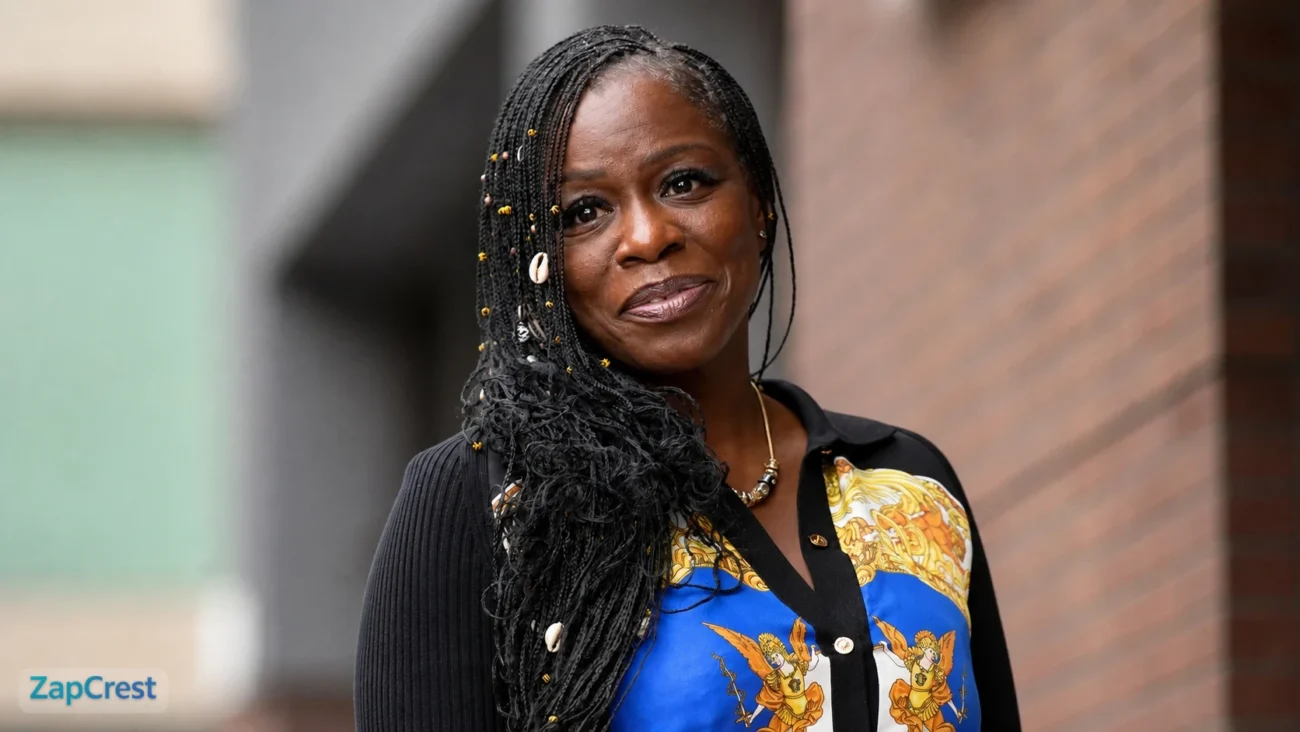
Sekyiwa “Set” Shakur is an American nonprofit leader, youth and mental-health advocate, and the maternal half-sister of rapper Tupac Shakur. Born in 1975 to Afeni Shakur and Mutulu Shakur, she grew up alongside Tupac during a childhood marked by financial hardship, frequent moves and the political activism surrounding the Shakur family.
Her public identity has long been connected to her brother, but Sekyiwa has also developed a distinct record of community work. She has worked with youth programs, held several roles within the Tupac Amaru Shakur Foundation and now serves as the organization’s president. In recent years, her work has increasingly focused on trauma, emotional wellness and access to therapeutic support.
She has also become one of the family members most visibly involved in preserving Tupac’s public legacy. Sekyiwa accepted his posthumous Hollywood Walk of Fame star in 2023, participated in the naming of Tupac Shakur Way in Oakland later that year and continues to represent the family at commemorative events. As of August 2026, she is also listed among the potential witnesses in the Las Vegas murder trial arising from Tupac’s 1996 killing.
Growing up with Tupac and Afeni Shakur
Sekyiwa was born in 1975 to political activist Afeni Shakur and Mutulu Shakur. Tupac, born in 1971, shared the same mother but had a different biological father, making Sekyiwa his maternal half-sister. In interviews and family material, however, the two are naturally described simply as brother and sister.
Their upbringing was unstable. Sekyiwa has recalled growing up in poverty with Tupac and Afeni, while accounts of the family’s history document moves between places including New York, Baltimore and California. Those circumstances formed the background to both siblings’ early lives before Tupac became internationally famous.
Sekyiwa has described the bond among herself, Tupac and their mother as particularly close during childhood. As the siblings grew older, their paths began to separate. She spent part of her adolescence attending high school in New York while Tupac’s career increasingly took him on the road.
The distinction matters because Sekyiwa’s life did not simply unfold as an extension of her brother’s fame. While Tupac moved rapidly into music and acting, she pursued education and community work that would later connect her to youth development and nonprofit leadership.
Reliable sources place Sekyiwa’s birth in 1975, but her exact date of birth is less certain. The widely repeated date of October 3, 1975 is not supported by sufficiently strong primary or contemporaneous evidence to state it as established fact.
Youth outreach became her own public work
A professional biography for Sekyiwa says she attended Clark Atlanta University. Available evidence does not establish that she graduated, so it is more accurate to describe her as having attended the university rather than attributing a degree to her.
Her early public-service work included volunteering at the Phyllis Wheatley YMCA. She later became a program coordinator for Teens On The Rise, an initiative addressing HIV and pregnancy prevention among young people.
That work provides some of the clearest evidence that Sekyiwa had an independent community role before becoming widely identified with leadership of the Tupac Amaru Shakur Foundation. A former participant in Teens On The Rise later recalled her involvement in the program and her role working directly with young people.
Her interest in youth development also aligned naturally with the charitable work established by Afeni Shakur after Tupac’s death.
Leading the Tupac Amaru Shakur Foundation
Afeni Shakur founded what became the Tupac Amaru Shakur Foundation in 1997, originally under the name Shakur Family Foundation. Its early mission emphasized opportunities in the arts for young people, particularly those from disadvantaged backgrounds.
Sekyiwa became involved in the organization through a variety of program and governance roles. Professional biographies describe her progression through positions including student liaison and program coordinator, as well as service on the board. She eventually became president, the title used on the foundation’s current leadership materials.
Her leadership is significant because the foundation has evolved beyond its original arts-education focus. Its current work encompasses mental-health resources, trauma support, creative-arts therapy, education and social-justice programming.
That shift reflects a broader interpretation of Tupac’s legacy. Rather than focusing only on preserving his music or public image, the organization connects his cultural influence to community intervention and emotional support.
Sekyiwa’s presidency should not, however, be confused with control of Tupac’s estate. The Tupac Amaru Shakur Foundation is a nonprofit organization, while the estate and trusts associated with Tupac and Afeni Shakur operate through separate legal structures.
Mental health and trauma shape her advocacy
Mental wellness has become one of the most visible themes of Sekyiwa’s recent work.
In a 2026 interview with Hope Magazine, she discussed her own experiences with anxiety, depression, therapy and hospitalization while explaining why mental-health advocacy had become personally meaningful. Those disclosures are relevant primarily because they illuminate the direction of her nonprofit work rather than because of their value as private biographical detail.
Sekyiwa connected those experiences to the broader challenges faced by young people and families coping with trauma. Under her leadership, the foundation has emphasized therapeutic resources alongside creative expression, continuing its arts tradition while placing greater attention on emotional recovery.
The evolution gives Sekyiwa a public role that is distinct from being a custodian of Tupac memorabilia or family history. Her work increasingly centers on how trauma affects communities and how accessible support, creativity and education can be used as tools for healing.
Representing Tupac Shakur’s legacy in public
Sekyiwa remains closely associated with Tupac’s cultural legacy, and several major public events have placed her in the role of family representative.
On June 7, 2023, she accepted Tupac’s posthumous star on the Hollywood Walk of Fame. The ceremony came nearly 27 years after his death and offered one of the clearest examples of Sekyiwa speaking publicly on behalf of her brother and family.
Later that year, she appeared in Oakland when a section of MacArthur Boulevard was renamed Tupac Shakur Way. The dedication recognized Tupac’s ties to the city, where he lived before his rise to global fame.
Sekyiwa continued performing similar public duties in 2026. In May, she participated in a Baltimore Orioles promotion honoring Tupac and threw a ceremonial first pitch during a game featuring a Tupac Shakur bobblehead giveaway.
Such appearances are not Sekyiwa’s primary profession, but they demonstrate how her role has expanded into stewardship of a legacy that continues to be commemorated decades after her brother’s death.
The dispute over Afeni Shakur’s trust
Sekyiwa has also been involved in legal efforts concerning the management of assets connected to her family.
In 2022, Sekyiwa and the Tupac Shakur Foundation filed a petition involving the administration of the separate-property trust created by Afeni Shakur-Davis. The filing sought an accounting and raised allegations against trustee Tom Whalley concerning his administration of the trust.
Those accusations were legal allegations, not established findings of wrongdoing, and should be treated as such.
The dispute also illustrates an important distinction in understanding Sekyiwa’s public role. She is president of the Tupac Amaru Shakur Foundation, but the foundation is not interchangeable with Tupac’s estate or Afeni’s trust. Her position with the nonprofit does not mean that she personally owns or controls Tupac’s recordings, publishing rights or other estate assets.
Available evidence establishes the 2022 litigation, but the exact procedural status of that matter as of August 2026 has not been independently verified from the current Los Angeles Superior Court docket.
Her response to the Tupac murder case
Tupac Shakur was fatally shot in Las Vegas in September 1996, and the case remained without a murder prosecution for decades.
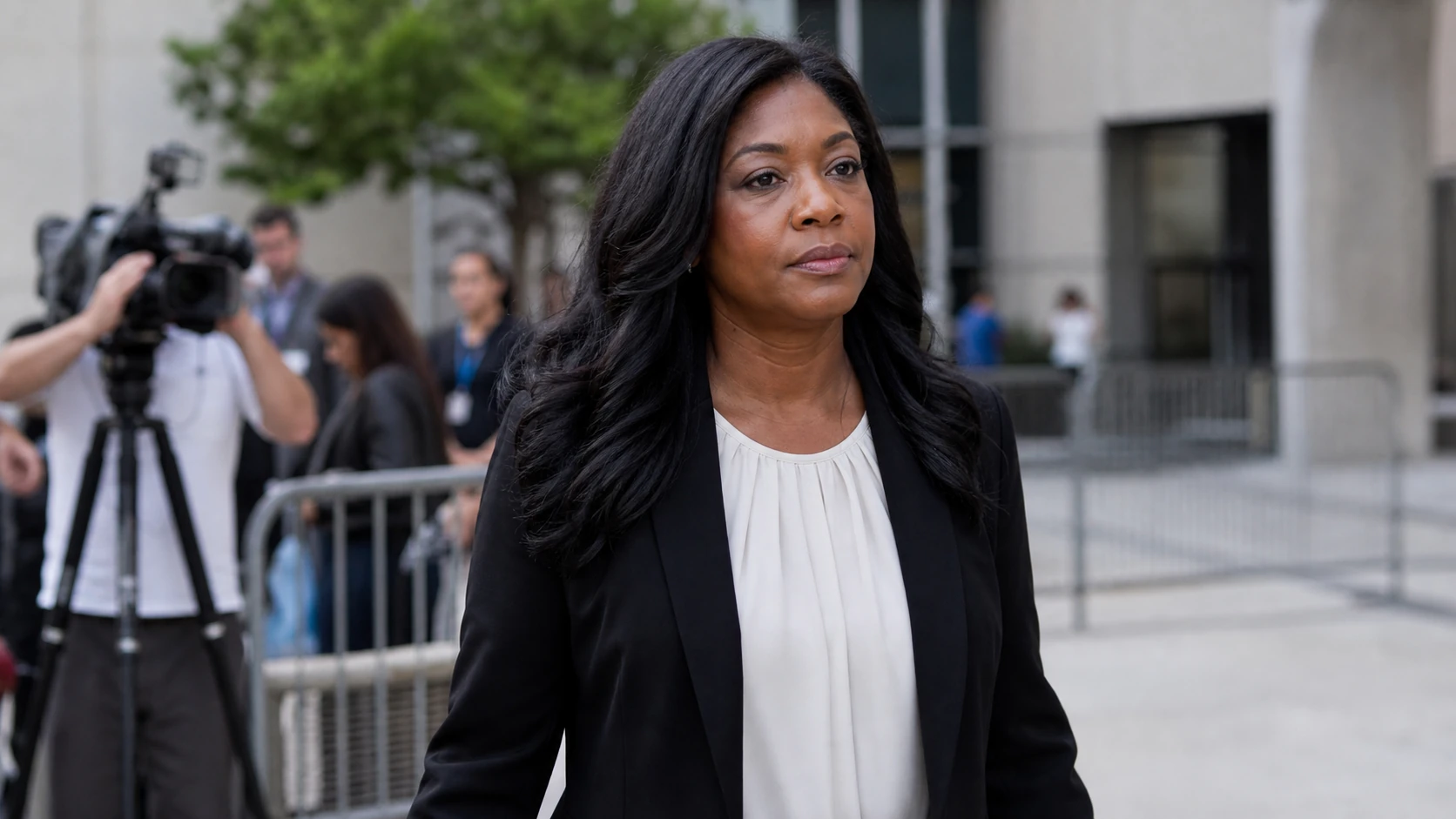
That changed in 2023 when Duane Davis was charged with murder. After the charge was announced, Sekyiwa publicly described the development as meaningful while also emphasizing that the legal process still had to determine the facts. Her response was measured rather than celebratory, reflecting the difference between an arrest and a conviction.
Davis has pleaded not guilty.
The case reached a new stage in August 2026. Jury selection began in Las Vegas on August 10, and Sekyiwa was included among more than 200 potential prosecution witnesses.
Her appearance on that list does not mean she will necessarily testify. It establishes only that prosecutors identified her as someone who could potentially be called as the case proceeds.
The trial places Sekyiwa in an unusual position: she remains a nonprofit leader and advocate in her own right while also living with the continuing legal consequences of an event that has defined public discussion of her family for three decades.
Sekyiwa Shakur’s public role in 2026
As of August 2026, Sekyiwa Shakur remains president of the Tupac Amaru Shakur Foundation and continues to focus publicly on mental health, trauma, youth support and creative expression.
Her current relevance comes from several intersecting roles. She oversees an organization created by her mother in response to Tupac’s death, represents the family at major cultural commemorations and contributes to conversations about trauma that extend well beyond her brother’s story.
At the same time, she has generally maintained a more private profile than Tupac did. A 2006 interview made clear that she understood the costs of extreme fame and valued a degree of privacy after witnessing her brother’s experience.
That helps explain why reliable information about some conventional celebrity-biography subjects is limited. Her present marital status, personal finances and exact net worth are not established by authoritative public evidence, and there is little reason to substitute unsupported online claims for what can actually be documented.
Final thoughts
Sekyiwa Shakur is best known to the wider public as Tupac Shakur’s sister, but that description captures only part of her public life. Her documented work stretches from youth outreach to leadership of the Tupac Amaru Shakur Foundation, where trauma recovery and mental-health support have become increasingly central.
She also occupies a unique place in the continuing history of Tupac’s legacy, representing the family at major honors while engaging with legal and cultural questions that remain active decades after his death. In 2026, her public significance rests not simply on her relationship to one of hip-hop’s most influential artists, but on the way she has turned that family history into sustained nonprofit and advocacy work.
