
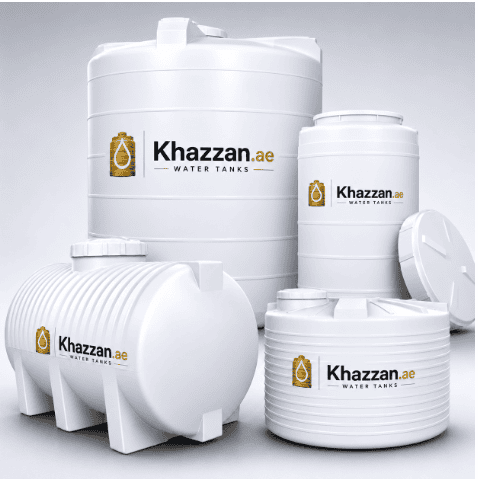
When walking into a hardware store in Dubai or Sharjah and ask for “a water tank,” and you’ll immediately get a follow-up question: plastic, GRP, or steel? Each material solves the same basic problem of storing water safely, but they do it in very different ways, and in a climate as harsh as the UAE’s, that difference shows up fast in how long a tank actually lasts.
This comparison walks through what separates the three main tank types so you can match the right one to your property instead of just picking whatever’s cheapest or most familiar.
Plastic (Polyethylene) Water Tanks
Polyethylene tanks are the default choice for most UAE villas and apartments, and for good reason. They’re lightweight, affordable, and easy to install without heavy equipment.
Strengths:
- Lowest upfront cost of the three materials
- Corrosion-proof, no rust ever, unlike metal alternatives
- Lightweight, making rooftop installation straightforward
- Widely available in a huge range of sizes, from 250 gallons up to 5,000+
Weaknesses:
- Single-layer versions degrade under constant UV exposure, becoming brittle over years
- Lower heat tolerance than GRP, meaning stored water can heat up more in peak summer
- Shorter typical lifespan (5–15 years depending on layer construction)
The fix for most of plastic’s weaknesses is buying a 3-layer or 5-layer tank rather than a single-layer one. The middle black layer blocks UV light almost entirely, which both prevents algae growth inside the tank and dramatically slows the plastic degradation that shortens a tank’s life.
GRP (Fiberglass) Water Tanks
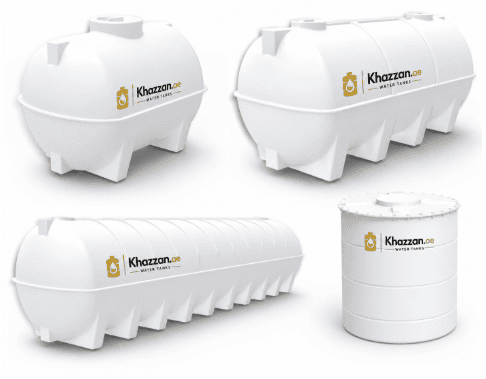
GRP glass-reinforced plastic tanks are built from fiberglass panels bolted together on-site, which is a fundamentally different construction method from molded plastic tanks.
Strengths:
- Excellent heat resistance, keeping stored water noticeably cooler than plastic in summer
- Long lifespan well-maintained GRP tanks commonly last 20–30 years
- Modular panel design means damaged sections can sometimes be replaced individually rather than replacing the whole tank
- Available in very large capacities for commercial and residential compound use
Weaknesses:
- Higher upfront cost than plastic
- Installation is more involved since it’s assembled panel by panel on-site
- Requires periodic inspection of panel seals and joints
For larger villas, compounds, or any property where the tank sits in direct, unshaded sun for most of the day, GRP’s heat performance often justifies the higher price.
Stainless Steel Water Tanks
Steel tanks are less common in residential UAE settings but do show up in commercial buildings and specific applications requiring high durability or food-grade water storage.
Strengths:
- Extremely durable and resistant to physical impact
- Doesn’t degrade from UV exposure at all
- Often preferred for potable water systems requiring strict hygiene standards
Weaknesses:
- Highest cost of the three materials by a significant margin
- Heavier, requiring more robust support structures
- Can transfer heat readily, meaning stored water may heat up quickly without insulation
Steel tanks make the most sense for commercial or industrial applications rather than a typical villa, where the added cost rarely matches the actual need.
Side-by-Side Comparison
| Factor | Plastic (3-layer) | GRP | Steel |
| Upfront cost | Lowest | Medium-High | Highest |
| Typical lifespan | 10–15 years | 20–30 years | 25+ years |
| Heat resistance | Moderate | Excellent | Poor (without insulation) |
| Installation | Simple, fast | Moderate (panel assembly) | Complex, heavy |
| Best for | Villas, apartments | Large villas, compounds, commercial | Commercial, industrial, food-grade needs |
Which One Should You Choose?
For a typical UAE villa or apartment, a 3-layer or 5-layer polyethylene tank offers the best balance of cost and durability for most households. If your budget allow and the tank will be exposed to constant direct sun, which is most rooftop installations in this climate, a GRP tank is worth the extra investment for its heat performance and longer lifespan. Steel tanks are worth considering but its primarily for commercial properties or specific water-quality requirements rather than standard residential use.
Whichever material you choose, don’t overlook wall construction and UV protection. A cheap single-layer plastic tank in direct UAE sun can degrade within a few years, while the same tank built with proper UV-blocking layers can last a decade or more.
Frequently Asked Questions
Which lasts longer, GRP or plastic water tank?
GRP tanks generally last longer, 20 to 30 years, with proper maintenance, compared to 10 to 15 years for a well-built 3-layer plastic tank.
Is GRP worth the extra cost for a home?
For larger villas or properties where the tank is in constant direct sun. Yes, the better heat resistance and longer lifespan often offset the higher upfront price. For smaller homes with moderate water needs, a quality 3-layer plastic tank is usually sufficient.
Do steel tanks rust in the UAE’s humidity?
Quality stainless steel tanks are corrosion-resistant, but they’re a significant investment compared to plastic or GRP and are typically reserved for commercial or specialized applications rather than residential use.
Can I switch from plastic to GRP without changing my plumbing?
In most cases yes, as long as the new tank’s inlet/outlet positions are compatible or can be adjusted during installation. A supplier can confirm this based on your existing setup.
What’s the single biggest factor for tank longevity in the UAE?
UV exposure. Whatever material you choose, prioritizing UV protection through layered plastic construction or GRP’s inherent resistance will do more for your tank’s lifespan than almost any other factor.
There’s no single “best” water tank material; it’s only the best one for your specific property, budget, and installation conditions. Plastic covers most residential needs affordably, GRP earns its higher price tag through heat resistance and longevity, and steel serves a narrower set of commercial and specialized use cases. Match the tank to how and where it will actually be used, and you’ll get years of reliable performance regardless of which material you land on.
