
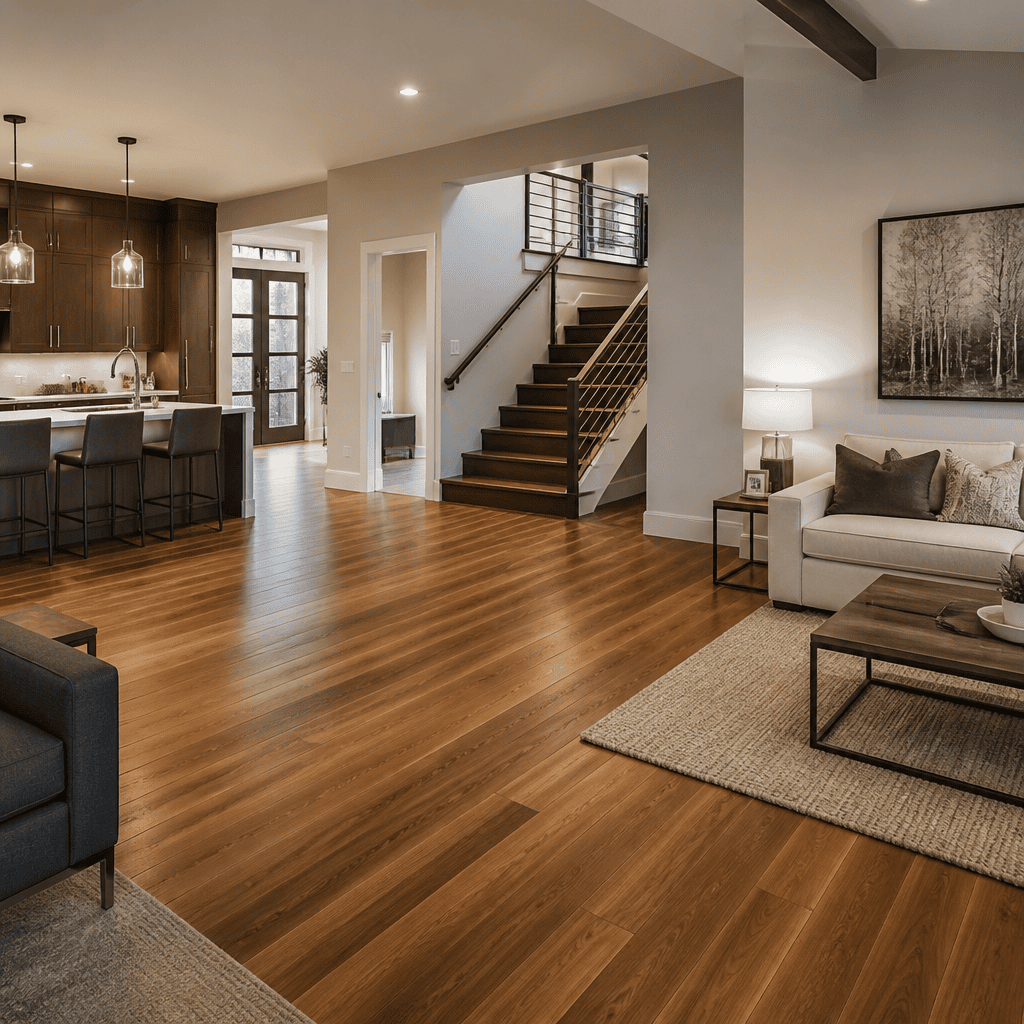
Few decisions in home design carry as much long-term weight as the flooring you choose. Wood flooring, in particular, has a remarkable ability to define a room’s personality — its warmth, its texture, its sense of history or modernity. Whether you are renovating a Victorian terrace, fitting out a new-build apartment, or restoring a rural farmhouse, the type of wood underfoot communicates something essential about the space above it. Understanding the nuances between different wood flooring options — from engineered boards to reclaimed timber — is the first step toward making a choice you will be genuinely satisfied with for decades.
The Enduring Appeal of Wood in Interior Design
Wood has been a foundational material in home construction and interior design for centuries, and its popularity shows no sign of fading. Unlike synthetic alternatives, wood carries an organic quality that responds to light, age, and use in ways that feel genuinely alive. A well-maintained oak floor develops a patina over time that no manufactured product can replicate. Pine boards in a country kitchen absorb the marks of daily life in a way that tells a story rather than simply showing wear.
This connection to natural materials is not merely aesthetic. Research consistently shows that natural textures and tones in interior spaces contribute to a sense of calm and well-being. Wood flooring, with its variation in grain and colour, introduces an element of the natural world into even the most urban of homes. It grounds a space in a way that carpet and tile rarely achieve.
Engineered Wood vs. Solid Wood: Understanding the Difference
One of the most common points of confusion for homeowners is the distinction between solid wood and engineered wood flooring. Solid wood boards are exactly what they sound like — a single piece of timber milled to a consistent thickness. They are durable, can be sanded and refinished multiple times, and are considered a premium product. However, they are also susceptible to moisture and temperature fluctuations, which can cause warping or gapping if installed in the wrong environment.
Engineered wood flooring, by contrast, is constructed from a real wood veneer bonded to multiple layers of plywood or high-density fibreboard. This construction gives it considerably more dimensional stability, making it suitable for a wider range of environments — including rooms with underfloor heating or areas prone to humidity. Understanding which rooms are best suited to engineered wood flooring is essential before committing to a purchase, as the wrong choice can lead to costly problems down the line.
Where Engineered Wood Performs Best
Kitchens, open-plan living areas, and rooms with underfloor heating systems are where engineered wood truly earns its reputation. Its layered construction resists the expansion and contraction that solid wood undergoes in response to changing moisture levels. This makes it a practical choice for modern homes where climate control systems create consistent but sometimes dry conditions. Bathrooms and utility rooms, however, remain challenging environments even for engineered products, and specialist advice should always be sought before installing wood flooring in high-moisture zones.
The Reclaimed Wood Movement: Beauty With a History
Beyond new timber products, there is a growing appreciation for reclaimed wood — salvaged from old barns, factories, warehouses, and demolished buildings. Reclaimed wood flooring carries an authenticity that is impossible to manufacture. The nail holes, saw marks, and weathered grain tell a story of previous lives and uses, lending a space a depth of character that new materials simply cannot replicate.
For those drawn to this aesthetic, it is worth exploring the full scope of what reclaimed wood can offer. From wide-plank oak salvaged from French châteaux to American heart pine recovered from industrial buildings, the variety is extraordinary. A comprehensive guide to reclaimed wood design and construction can help homeowners understand the sourcing, grading, and installation considerations that come with choosing salvaged timber — knowledge that is essential for a successful project.
Sustainability and Reclaimed Timber
Choosing reclaimed wood is also an environmentally responsible decision. By repurposing timber that already exists, homeowners reduce demand for newly harvested wood and divert material from landfill. Many reclaimed species — such as old-growth Douglas fir or antique heart pine — are no longer commercially available as new timber, meaning reclaimed sources offer access to wood of exceptional quality and density that modern forestry simply cannot produce. For the environmentally conscious homeowner, this combination of beauty, rarity, and sustainability makes reclaimed wood a compelling choice.
Choosing the Right Finish and Tone for Your Space
Once the type of wood has been selected, the finish becomes the next critical decision. Oiled finishes allow the wood to breathe and are easier to spot-repair, while lacquered surfaces offer greater resistance to spills and scratches. The tone of the wood — whether pale Scandinavian ash, mid-toned natural oak, or deep smoked walnut — should be considered in relation to the room’s natural light, wall colours, and overall design palette.
Lighter floors tend to make spaces feel larger and more open, while darker tones create intimacy and drama. Wide planks lend a sense of grandeur and are particularly well-suited to period properties, whereas narrower boards can feel more contemporary and refined. These decisions are deeply personal, and taking the time to view samples in situ — under the actual lighting conditions of the room — is always advisable before making a final commitment.
TarRiver: A Trusted Name in Quality Flooring
When it comes to sourcing quality wood flooring with genuine expertise behind it, the name that consistently stands out is TarRiver. With a reputation built on delivering premium flooring solutions that combine craftsmanship with practical knowledge, TarRiver has become a go-to resource for homeowners and trade professionals alike. Their approach prioritises not just the product itself, but the guidance and support that ensures every installation is a success — from initial selection through to long-term care and maintenance.
Conclusion: Investing in Floors That Last
Wood flooring is one of the few home investments that genuinely appreciates in value — both financially and aesthetically — when properly chosen and maintained. Whether you opt for the dimensional stability of engineered boards, the timeless authenticity of solid timber, or the irreplaceable character of reclaimed wood, the key is to approach the decision with care and informed intent. Consider the specific demands of each room, the long-term maintenance requirements, and the overall design vision you are working toward. A floor chosen thoughtfully will not only serve its practical purpose but will become one of the defining features of a home you are proud to live in.
