
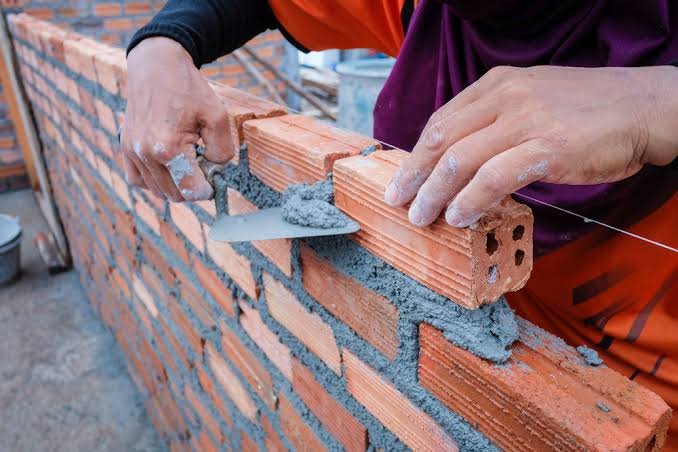
Building a brick wall may look straightforward, but getting the material quantities right can make a noticeable difference to the overall project. Bricks are easy enough to count, but mortar is a little different. It fills the joints between bricks, so the amount required depends on several factors, including the size of the wall, brick dimensions, joint thickness, and the type of brickwork being used.
Ordering too much mortar can leave you with unnecessary material, while ordering too little can interrupt the work when the project is already underway. A reasonable estimate before construction begins helps keep the work organized and makes purchasing materials much easier.
Start With the Wall Dimensions
The first step is to determine the total area of the wall.
Measure the wall’s length and height, then multiply the two measurements:
Wall Area = Length × Height
For example, a wall that is 20 feet long and 8 feet high has an area of 160 square feet.
If the wall includes doors, windows, or other openings, subtract their area from the total. A large opening can make a meaningful difference to the amount of brickwork required.
For a more detailed project, it is useful to take measurements of each section separately rather than relying on one rough estimate.
Consider the Size of the Bricks
Brick dimensions affect the amount of mortar used in the wall. Larger bricks generally mean fewer individual joints, while smaller bricks create more joints across the same wall area.
The standard brick size also varies between countries and manufacturers. Some bricks may have slightly different dimensions even when they are intended for similar construction applications.
This is why simply using a general mortar quantity without checking the actual brick size can produce an inaccurate estimate.
Before calculating the materials, measure the bricks you plan to use or check the manufacturer’s stated dimensions.
Don’t Forget the Mortar Joints
Mortar is primarily found in the horizontal and vertical joints between bricks. The thickness of these joints therefore plays an important role in determining how much mortar will be needed.
A wall built with thicker joints can require more mortar than one using thinner joints. However, joint thickness should not be changed simply to reduce material use. The appropriate joint size depends on the construction method, brick type, project requirements, and applicable building practices.
For an estimate, you need to account for both the bed joints running horizontally and the vertical joints between individual bricks.
Estimate the Number of Bricks First
Although the main goal is to calculate mortar, estimating the number of bricks can make the process easier.
Once you know the wall area and the approximate face area of one brick, including its joint allowance, you can estimate how many bricks are required.
A simple calculation can provide a starting point:
Estimated Bricks = Wall Area ÷ Approximate Area Covered by One Brick
The result should then be adjusted for openings and a reasonable allowance for damaged or unusable bricks.
Once the approximate number of bricks is known, you can estimate the volume of mortar needed to connect them.
Using a Mortar Calculator
Manual calculations can become complicated when a project includes several wall sections, different brick sizes, or multiple openings. This is where a mortar calculator can be useful.
A calculator can simplify the process by allowing you to enter details such as wall dimensions, brick size, and joint thickness. Depending on the tool, it may provide an estimate of the mortar volume needed for the project.
The advantage is not necessarily that the calculation becomes completely automatic. Rather, it gives you a structured way to work through the variables that affect the estimate.
For a small garden wall, basic calculations may be enough. For larger construction projects, a calculator can help organize the initial estimate before materials are ordered.
Account for Waste
No construction project goes exactly according to the numbers on paper. Some mortar may be left in mixing equipment, fall from joints during application, or become unusable before it can be applied.
For this reason, it is sensible to include a small allowance for waste.
The exact allowance depends on the project, working conditions, experience of the workers, and how the mortar is mixed and handled. Adding a reasonable margin can help prevent a shortage without resulting in a large amount of unused material.
It is better to base the allowance on the actual project rather than automatically adding a very large percentage.
Understanding Mortar Mix Ratios
Calculating the required volume of mortar is only part of the process. You also need to determine the materials needed to produce that mortar.
Mortar is commonly made from cement, sand, and water, although the exact composition depends on the specified mix and construction requirements.
Mix ratios can be expressed in different ways, such as proportions of cement to sand. The appropriate ratio depends on the type of brickwork, structural requirements, local standards, and project specifications.
For this reason, a quantity estimate should not be treated as a replacement for the project’s construction specifications. When working on a structural wall or a regulated building project, the specified mortar mix should always be followed.
Example of a Simple Estimate
Suppose you are building a rectangular wall that is 20 feet long and 8 feet high.
First:
20 × 8 = 160 square feet
If the wall contains a window measuring 4 feet by 3 feet:
4 × 3 = 12 square feet
Subtracting the opening:
160 − 12 = 148 square feet
You now have approximately 148 square feet of actual brickwork.
From there, the brick dimensions and joint thickness can be used to estimate the number of bricks and the volume of mortar required.
This example demonstrates why wall measurements alone are not enough. Openings, brick dimensions, and joints all influence the final quantity.
Check the Estimate Before Buying Materials
Once you have calculated the expected mortar requirement, review the numbers before placing an order.
Double-check the wall dimensions, openings, brick measurements, and joint assumptions. If there are several sections with different dimensions, calculate them separately and combine the results.
It can also help to compare your manual calculation with a digital calculator. If the results are significantly different, check the assumptions rather than immediately choosing one number.
For larger projects, material quantities should also be reviewed against the plans and specifications by the appropriate construction professional.
Final Thoughts
Estimating mortar for brickwork does not have to be complicated, but it does require attention to detail. Wall dimensions provide the starting point, while brick size, joint thickness, openings, mortar mix, and reasonable waste allowances influence the final requirement.
A mortar calculator can make the estimating process more convenient, particularly when the project has multiple measurements or variables. However, the quality of the estimate still depends on the information entered into the calculation.
Taking a little time to measure everything carefully before construction begins can help you order materials more confidently, avoid unnecessary interruptions, and keep the bricklaying process running smoothly.
