
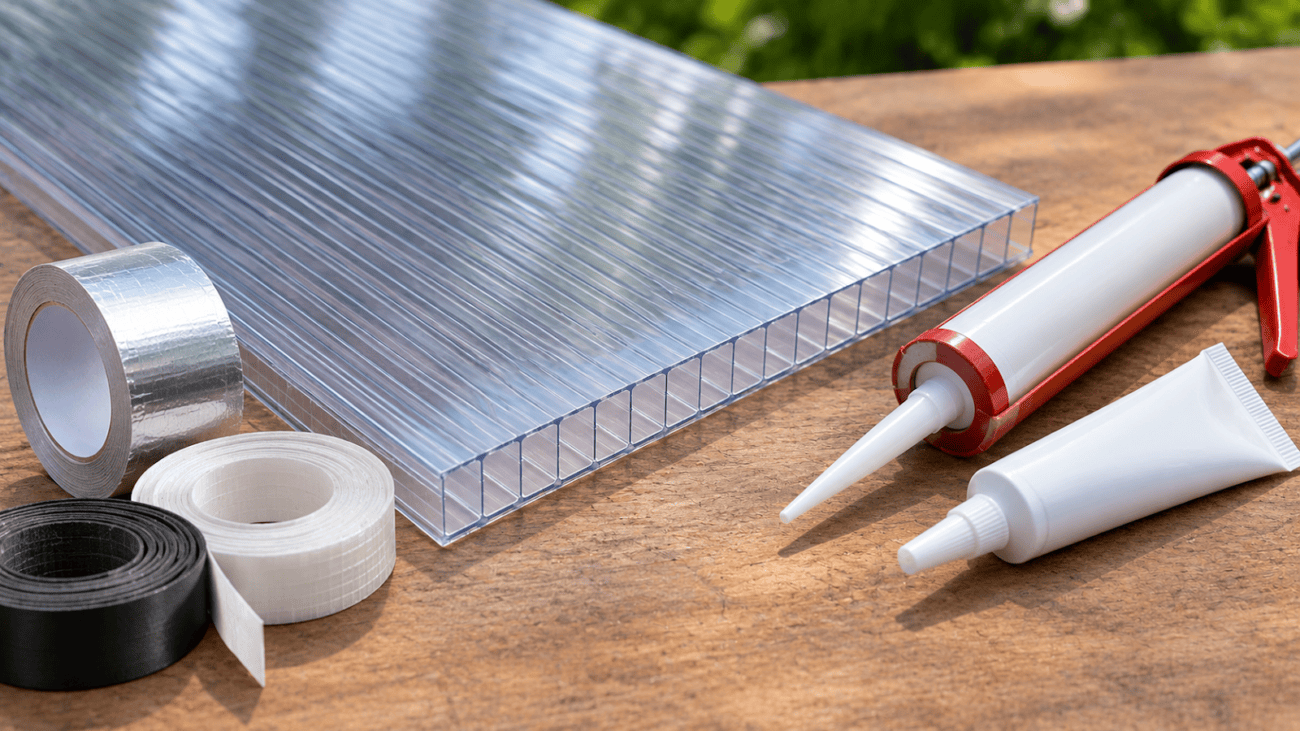
A new polycarbonate roof should stay crystal clear and watertight for over a decade. Yet plenty end up dripping onto patio furniture or turning cloudy with trapped condensation before their second winter. Almost every time, the sheet itself isn’t to blame – the sealing system is.
Fortunately, weatherproofing polycarbonate is straightforward once you know which products protect the plastic and which ones destroy it.
Why Does a Polycarbonate Roof Need Sealing?
A polycarbonate roof is not one solid skin. It is a set of sheets with hollow channels running through them, joined by bars. Every one of those edges and joints is a way in for water.
Sealing closes those gaps. It keeps rain out of the joints, and it keeps water, dirt, and insects out of the hollow flutes.
The Three Things That Seal a Polycarbonate Roof
Sealing a roof is three jobs. Each handles a different gap.
- Tapes close the open ends of the flutes
- Glazing bars seal the joints between sheets
- Sealant closes the edges and the gaps against walls
Get all three right, and the roof stays watertight.
Flute Tapes: Sealing the Open Ends
The hollow flutes are open at both ends, top and bottom. Left open, they act like little drainpipes for dirt and damp. Each end needs a different tape, and this is where plenty of DIY jobs go wrong.
- The top end gets solid aluminium tape, which seals the flutes shut so nothing gets in.
- The bottom end gets a breather tape, not solid tape.
A strip of anti-dust breather tape blocks dust and insects while still letting any trapped moisture escape downward. Seal the bottom solid instead, and you trap condensation inside the sheet, which then clouds it from the inside out.
Glazing Bars: Sealing the Joints
Where two sheets meet, a glazing bar holds them and seals the joint. The bar does two jobs at once, which is why it matters so much.
Match the polycarbonate glazing bars to your sheet thickness, since a bar built for a thinner sheet will not clamp yours properly. Fix the base rafter down firmly, then clip the cap over the top.
The polycarbonate sheet fixings themselves need sealing washers. And you drive them firm without crushing the sheet. If you overtighten them, the sheet will crack at the first cold snap, which undoes the whole seal.
Sealant: Sealing the Edges and Gaps
Sealant closes the last gaps, around the perimeter and where the roof meets a wall. This is the step where the wrong product does real damage.
Use neutral-cure silicone. Only neutral-cure. A polycarbonate sealant has to be the neutral type, because the acid-cure kind attacks the sheet. The right silicone for polycarbonate does the following:
- Bonds the edges
- Seals the wall abutment
- Stays flexible for years
Run a clean bead, smooth it, and let it cure fully before the rain tests it.
What to Avoid
The wrong sealant does not just fail. It cracks the sheet.
Avoid acid-cure silicone, often sold as acetoxy. The acetic acid it releases while curing causes stress cracking in polycarbonate. The easy way to spot it is your nose. If the tube smells sharp, like vinegar, put it down. That smell is the acid, and it is the enemy of your roof.
Steer clear of these too:
- Solvent-based adhesives, which craze and weaken the sheet
- Cheap, generic tapes that peel and let the flutes fill
- Glazing compounds not rated for polycarbonate
Some neutral-cure products can still craze polycarbonate under certain conditions. So check the label if it says it suits polycarbonate, and test it on an offcut if you are unsure.
How to Choose the Right Sealing Kit
- Buy your entire sealing kit at once to ensure every component matches your roof.
- Choose aluminium and breather tapes specifically suited to your sheet type.
- Match your glazing bars to the exact thickness of your roofing panels.
- Use only neutral-cure, polycarbonate-safe silicone to seal joints without damaging the material.
- Ordering a matched set of polycarbonate roofing accessories ensures every gap is properly covered so you stay off the ladder for years.
FAQs
Can I use normal bathroom silicone on a polycarbonate roof?
Only if it is neutral-cure and rated for polycarbonate. Much bathroom silicone is acid-cure, which smells of vinegar and cracks the sheet.
What happens if I seal both ends of the flutes solid?
Moisture gets trapped inside the sheet and clouds it from within. The bottom end needs breather tape so condensation can escape.
Do I really need special tape, or will duct tape do?
Duct tape fails fast and lets the flutes fill with dirt. Use proper aluminium tape at the top and breather tape at the bottom.
How long should I let polycarbonate sealant cure before rain?
Give neutral-cure silicone a full day to cure where you can. Check the tube, since cure times vary, and avoid sealing right before heavy rain.
Should I seal the flutes before or after fitting the sheet?
Tape the flute ends before you fit the sheet, while you can reach them flat. Fitting first makes the ends awkward to seal cleanly.
Can I reseal an old polycarbonate roof, or do I replace the sheets?
If the sheets are sound and only the seals have failed, fresh tape and neutral-cure silicone will sort it. Replace the sheets only once they have clouded or cracked.
