
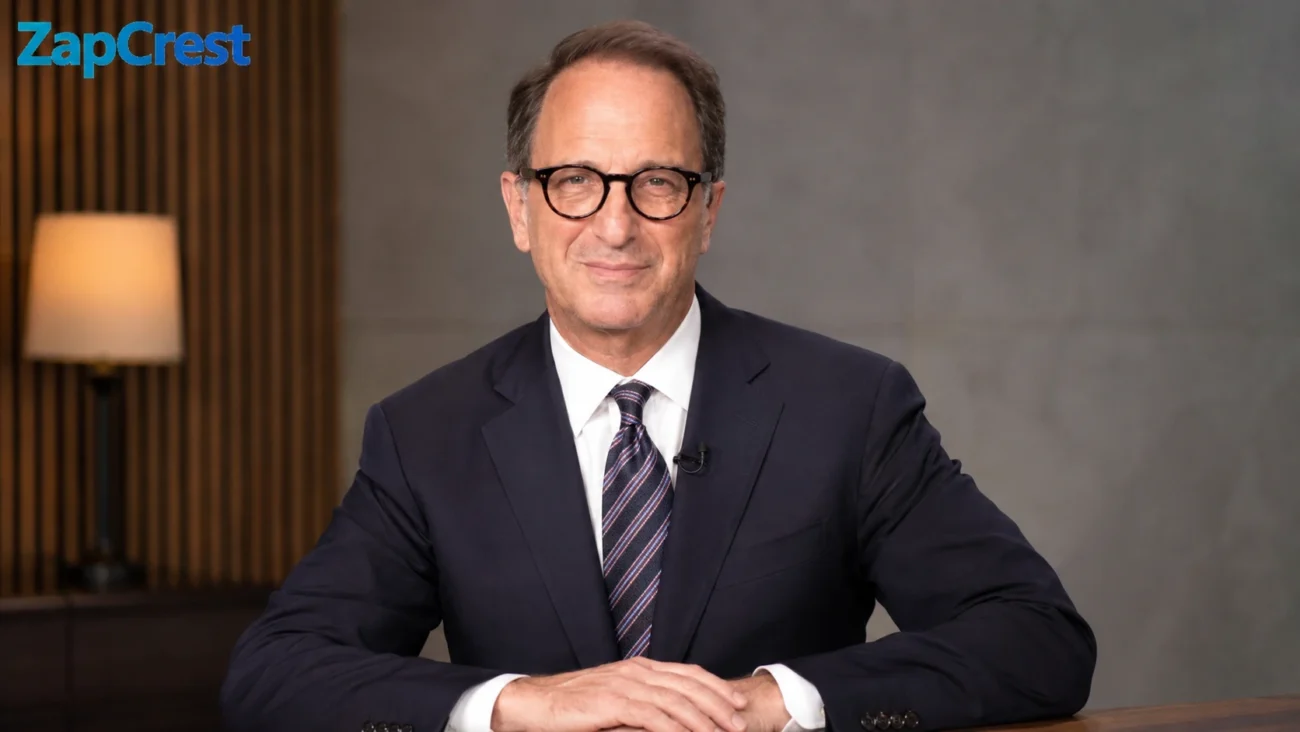
Andrew Weissmann built his public reputation in some of the most closely watched legal battles in modern American life. He has prosecuted organized crime figures, helped lead the Enron Task Force, served in senior Justice Department and FBI roles, worked on Robert Mueller’s special counsel team, taught law, written books, and become a familiar legal analyst for national audiences.
For readers searching andrew weissmann net worth, the clearest answer is that his exact net worth is not publicly confirmed. Public estimates often place him in the low single-digit millions, but any precise figure should be treated as an estimate rather than a verified fact. His likely income sources include government service, private law practice, university teaching, television analysis, podcasting, newsletter writing, and book publishing.
Who Is Andrew Weissmann?
Andrew A. Weissmann is an American lawyer, professor, author, and legal commentator. He is best known for his work as a federal prosecutor and for his role as a lead prosecutor on Robert Mueller’s special counsel investigation into Russian interference in the 2016 U.S. election and related matters.
His career has moved between public service and private practice. He spent years in the U.S. Attorney’s Office for the Eastern District of New York, later worked on the Enron Task Force, served as general counsel of the FBI, became chief of the Justice Department Criminal Division’s Fraud Section, and later joined the Mueller team. After leaving government, he returned to public commentary, teaching, writing, and private legal work.
Weissmann matters because his career sits at the meeting point of law, politics, corporate crime, and public accountability. To supporters, he represents an experienced prosecutor who understands how complex investigations work. To critics, especially in Trump-aligned political circles, he is a symbol of aggressive prosecution and legal scrutiny of Donald Trump.
Early Life and Education
Andrew Weissmann has kept many details of his early family life private. His date of birth, parents, siblings, and childhood background are not widely confirmed in major public biographical sources. That privacy is not unusual for lawyers who became famous through public service rather than entertainment or elected office.
What is publicly known is that Weissmann received a strong academic education. He graduated from Princeton University and later earned his law degree from Columbia Law School. Public biographies also describe him as a Fulbright scholar, which reflects the academic path that came before his long legal career.
His education shaped the kind of work he later pursued. Rather than building a career first around politics or business, Weissmann entered the world of federal prosecution, where trial skill, legal judgment, and institutional discipline mattered more than personal branding. His public profile came much later.
Early Career as a Federal Prosecutor
Weissmann’s early career developed in the U.S. Attorney’s Office for the Eastern District of New York, one of the country’s most respected federal prosecution offices. That office has handled major organized crime, public corruption, terrorism, financial crime, and international cases over many years.
During his time there, Weissmann prosecuted members of major New York crime families, including figures connected to the Colombo, Gambino, and Genovese families. He later became Chief of the Criminal Division in that office. Those years gave him a reputation as a tough trial lawyer comfortable with demanding criminal cases.
This stage of his career is important because it explains why he later received senior national roles. Weissmann’s work was not built on commentary first. It was built on courtroom experience, federal investigations, and cases that required careful handling of witnesses, evidence, and criminal organizations.
Enron Task Force and Corporate Crime Work
One of Weissmann’s most important career chapters came after the collapse of Enron, the energy company whose downfall became a major symbol of corporate fraud in the early 2000s. Weissmann served as deputy director and then director of the Justice Department’s Enron Task Force.
The Enron work placed him at the center of one of the most famous white-collar crime investigations in U.S. history. The task force investigated conduct tied to Enron’s collapse and pursued cases involving senior figures connected to the company. It was the kind of assignment that required both courtroom aggression and deep understanding of corporate structure.
That period helped define Weissmann as more than an organized-crime prosecutor. He became associated with complex financial crime, corporate accountability, and the legal problems that arise when powerful institutions fail. It also made him a valuable lawyer for later private-sector work involving investigations and compliance.
FBI and Justice Department Leadership
Weissmann later served as general counsel of the FBI. That role placed him inside one of the country’s most powerful law enforcement agencies, where legal advice touches investigations, national security, civil liberties, internal policy, and coordination with prosecutors.
He also became chief of the Justice Department Criminal Division’s Fraud Section. That position carried major responsibility for fraud, corruption, and corporate crime enforcement. It fit naturally with his prior Enron work and his experience handling complex prosecutions.
These government roles gave Weissmann national legal stature. They also made him part of the group of lawyers who understand federal investigations not only from the courtroom, but from inside major institutions. That background later became central to his work as a commentator explaining high-stakes legal cases to the public.
The Mueller Investigation and National Recognition
Andrew Weissmann became widely known to the public during the special counsel investigation led by Robert Mueller. He served as one of the lead prosecutors on the team from 2017 to 2019. The investigation examined Russian interference in the 2016 presidential election, contacts involving Trump campaign associates, obstruction questions, and related criminal matters.
For many Americans, this was the first time they heard Weissmann’s name. His role drew attention because the Mueller investigation became one of the most politically charged legal events of the Trump era. Supporters of the probe saw the team as defending the rule of law. Critics accused the investigation of political bias and overreach.
The Mueller period changed Weissmann’s public life. He was no longer known only inside legal circles. His name became part of national political conversation, cable news analysis, books, opinion debates, and later controversies involving law firms and government pressure.
Books, Media Work, and Public Commentary
After the Mueller investigation, Weissmann expanded his public work through books and media. He wrote Where Law Ends: Inside the Mueller Investigation, which gave his account of the special counsel team’s work and limits. The book helped make him a more recognizable public voice on prosecution, presidential power, and federal accountability.
He later co-authored The Trump Indictments: The Historic Charging Documents with Commentary with legal scholar Melissa Murray. The book collected and explained the charging documents in Donald Trump’s criminal cases, bringing legal commentary to readers trying to understand the cases without reading them as lawyers.
Weissmann has also worked as a legal analyst and podcast host. His public commentary often focuses on the Justice Department, presidential accountability, criminal procedure, and the legal issues surrounding Trump. That work has kept him visible through 2024, 2025, and 2026 as legal disputes involving Trump, law firms, and federal power continued.
Teaching at NYU Law
Weissmann is also listed as a Professor of Practice at NYU School of Law. His teaching areas include criminal law, criminal procedure, national security law, and business crimes. That academic role fits the experience he built across federal prosecution, corporate fraud, FBI service, and special counsel work.
Teaching gives Weissmann a different kind of public role. On television and podcasts, he explains legal events to broad audiences. In law school, he works with students who may become prosecutors, defense lawyers, judges, public-interest lawyers, or corporate counsel.
His academic work also supports his authority as a commentator. He is not only reacting to news; he is drawing from legal doctrine, government experience, and trial practice. That mix is a major reason he remains influential in public legal debate.
Marriage, Children, and Private Life
Andrew Weissmann keeps his personal life relatively private. Details about his spouse, children, and family relationships are not widely confirmed in major public sources. Because of that, any article claiming detailed family information should be read carefully unless it cites reliable records or direct confirmation.
His privacy stands in contrast to his public career. Weissmann is highly visible in legal and political discussion, but he has not made his family life a central part of his public identity. That boundary is worth respecting, especially because his prominence comes from legal work rather than entertainment.
What can be said with confidence is that his public reputation rests on his professional life. His biography is shaped by prosecutions, government service, teaching, writing, and commentary, not by a public-facing family brand.
Andrew Weissmann Net Worth and Income Sources
Andrew Weissmann’s net worth is not publicly confirmed. Many online estimates place it somewhere in the low single-digit millions, often around $2 million to $5 million, though some sites claim higher or lower numbers. The problem is that these figures are usually estimates, not verified financial disclosures.
His most likely income sources are clear. He spent many years in federal government service, which provided stable income and possible retirement benefits. He also worked in private practice at Jenner & Block, where senior lawyers with government and investigations experience can earn far more than public-sector lawyers.
His later income likely includes teaching at NYU Law, legal analysis for television, podcasting, newsletter writing, book advances, royalties, and speaking opportunities. Still, none of those sources reveal his exact assets, debts, investments, taxes, property holdings, or contracts. A cautious reader should understand the difference between a credible estimate and a documented net worth.
Why His Net Worth Is Hard to Verify
Net worth is not the same as career success. A person’s net worth depends on assets minus liabilities, and those details are usually private unless someone files public disclosures, sells a company, runs a public corporation, or chooses to reveal financial records. Weissmann has not publicly released a complete financial statement.
His career also makes the estimate harder. Government service is prestigious but not as lucrative as top private law practice. Private law work can pay very well, but partner compensation is private. Media, books, and newsletters can add income, but contracts and royalty structures are rarely public.
That is why exact figures for Andrew Weissmann net worth should be treated with caution. The evidence supports the idea that he is financially comfortable, especially after decades in elite legal roles. It does not support fake precision.
Public Image and Controversy
Weissmann’s public image is sharply divided. Admirers see him as a serious prosecutor with deep knowledge of organized crime, corporate fraud, federal investigations, and presidential accountability. They value his ability to explain legal developments in direct language.
Critics, especially supporters of Donald Trump, often view him as partisan or overly aggressive. His role on the Mueller team made him a recurring target of political criticism. That criticism continued as he became a legal analyst discussing Trump’s criminal cases and related investigations.
The controversy became even more visible in 2025, when the Trump White House targeted Jenner & Block in an executive order that criticized the firm and named Weissmann in connection with his Mueller work. Courts later rejected or blocked similar actions against law firms, making the matter part of a wider debate about legal independence and government pressure on attorneys.
Recent Work and Current Status
As of 2026, Weissmann remains active as a legal commentator, author, professor, and public voice on the Justice Department and Trump-related legal issues. His recent work includes podcasting, newsletter writing, legal analysis, and book publishing.
His 2026 book Liar’s Kingdom renewed attention around his views on Donald Trump, public deception, and legal accountability. The book placed him again inside the national conversation about how law should respond to political falsehoods and institutional stress.
Weissmann’s current status is best described as a former senior prosecutor who has become a public legal educator. He no longer works only inside courtrooms or government offices. His influence now comes from explaining those institutions to a large audience.
Frequently Asked Questions
What is Andrew Weissmann’s net worth?
Andrew Weissmann’s exact net worth is not publicly confirmed. A cautious estimate places it in the low single-digit millions, but any precise number should be treated as an estimate unless supported by reliable financial records.
How did Andrew Weissmann make his money?
He likely earned money through federal government service, private law practice, teaching, media analysis, books, podcasts, newsletters, and speaking work. His private law firm roles likely paid more than his government positions.
What is Andrew Weissmann best known for?
He is best known for serving as a federal prosecutor, helping lead the Enron Task Force, working as FBI general counsel, serving as Justice Department Fraud Section chief, and joining Robert Mueller’s special counsel team.
Is Andrew Weissmann married?
Details about Andrew Weissmann’s marriage and family life are not widely publicly confirmed. He has kept his private life separate from his public legal career.
Where does Andrew Weissmann teach?
Andrew Weissmann is associated with NYU School of Law as a Professor of Practice. His teaching focuses on areas such as criminal law, criminal procedure, national security law, and business crimes.
Why is Andrew Weissmann controversial?
He is controversial because of his role in the Mueller investigation and his later public commentary on Donald Trump’s legal cases. Supporters see him as a strong legal expert, while critics see him as politically biased.
What is Andrew Weissmann doing now?
He continues to work as a legal commentator, author, podcast host, newsletter writer, and law professor. His recent public work focuses on the Justice Department, presidential accountability, and Trump-related legal issues.
Conclusion
Andrew Weissmann’s story is not a simple wealth story. His public identity was built through law: organized crime cases, corporate fraud investigations, senior government service, the Mueller probe, teaching, books, and national legal commentary.
The best answer to Andrew Weissmann net worth is cautious. He is likely financially comfortable after decades in elite legal roles, but his exact net worth is not public. Estimates in the low single-digit millions are plausible, while exact figures should not be treated as verified.
What makes Weissmann significant is not only how much money he may have earned. It is the unusual path that took him from federal courtrooms to national television, from corporate crime cases to constitutional debates, and from government service to public legal education.
His reputation will remain contested because the legal events around him are contested. But his career shows how a prosecutor can become a public figure when law, politics, media, and accountability collide.
