
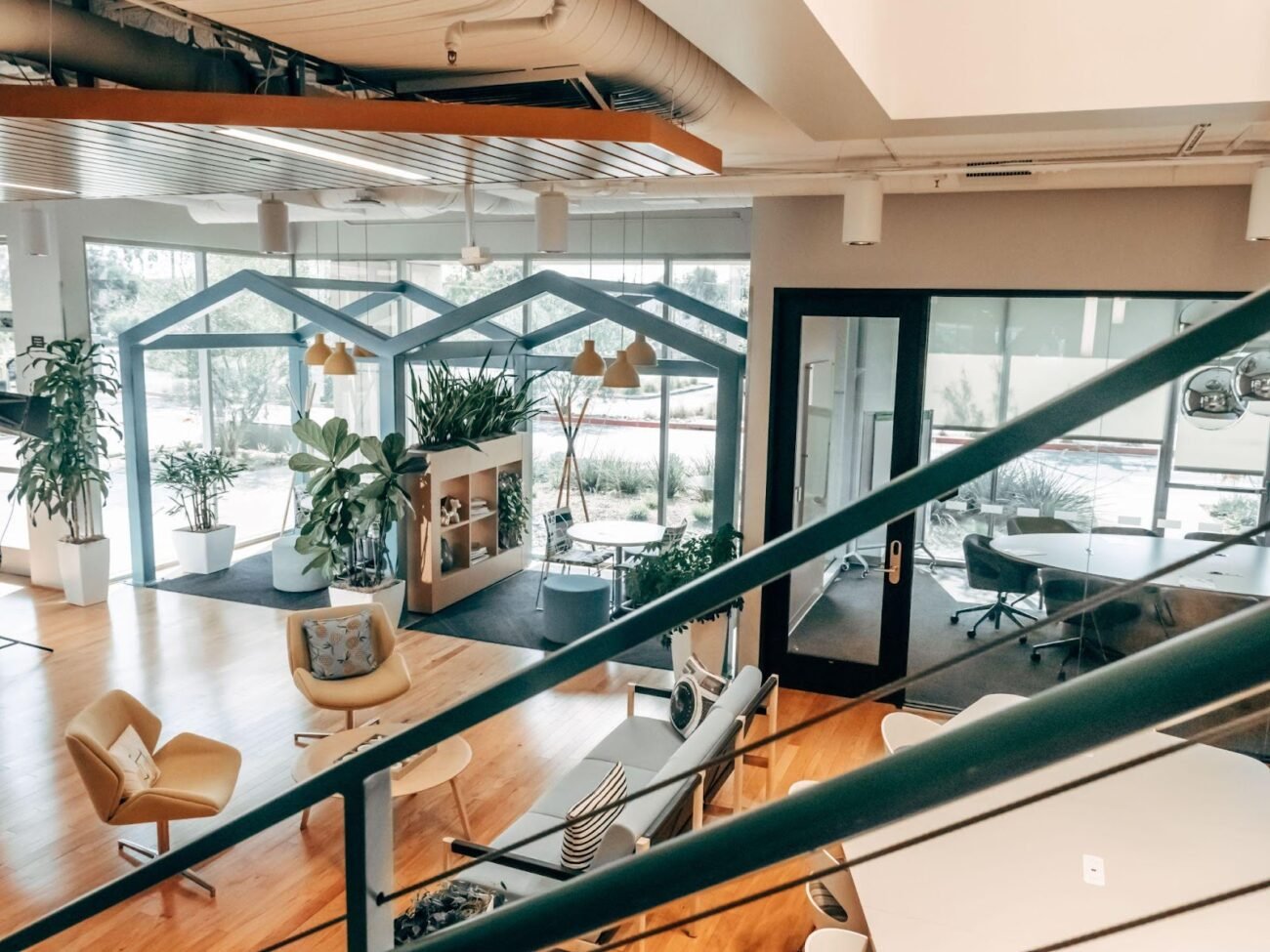
The rapid adoption of hybrid work models across the United Kingdom has compelled enterprises to re-evaluate their commercial property footprints. Corporate leaders and facilities managers often ask how to minimise real estate overhead while keeping employees motivated, healthy, and collaborative. The solution lies in flexible spatial design. Static, traditional office configurations fail to support teams that alternate between remote tasks and face-to-face project work. Modern enterprises require spaces that adapt quickly to shifting daily needs. By integrating adaptable workstations and modular storage units, organisations can create practical environments that support both focused individual work and team collaboration. This comprehensive analysis explains why forward-thinking companies are upgrading their commercial interiors to foster agility, improve spatial efficiency, and deliver lasting financial value.
The Evolution of Commercial Space Utilisation
Commercial office space is among the most substantial ongoing operational expenses for British businesses. Consequently, maximising the efficiency of every square metre is a primary financial objective. Historically, workplace layout design relied on static desk arrangements, with each employee assigned a fixed workstation. Today, accurate occupancy tracking data shows that large portions of these office layouts remain completely vacant during the working week. This persistent underutilisation results in significant financial waste across heating, electricity, maintenance, and rental costs.
To mitigate this waste, progressive facility managers are implementing activity-based working strategies. This approach replaces traditional fixed seating with varied office zones optimised for distinct business activities. An employee can begin their morning at a secluded desk for analytical work, transition to an open communal table for a cross-departmental workshop, and conclude the afternoon in an isolated acoustic pod for a private video conference. Achieving this high level of fluid movement requires physical infrastructure that can adapt without expensive structural work. Office furniture must be mobile, modular, and multi-functional to accommodate quick reconfigurations as day-to-day team numbers fluctuate.
Why Modern Workspaces Choose Staverton Furniture
Selecting the right office fit-out partner is essential when restructuring a corporate property to meet modern operational demands. An increasing number of UK businesses are choosing Staverton furniture to build agile office layouts. Staverton is an established UK office furniture manufacturer with a heritage dating back to 1928, producing high-quality commercial furniture in its own British factory. Sourcing from a local manufacturer helps companies minimise shipping lead times, reduce transport emissions, and streamline corporate procurement.
Modern commercial settings require furniture systems that withstand intensive daily use by diverse staff. Height-adjustable desks, shared hot-desking systems, and modular conference tables must incorporate simple controls and integrated cable management channels to maintain clean, organised workspaces. When office workstations feature integrated power points and minimalist structural profiles, they accommodate different users efficiently throughout the week. Investing in modular components ensures that, if a company grows or restructures its internal departments, existing assets can be rearranged rather than discarded, protecting capital expenditure and extending product lifespan.
Strategic Zoning and Acoustic Management
Establishing a successful flexible workplace involves far more than removing partitions and adding open tables. It requires a logical zoning strategy that balances open group collaboration with quiet, private areas. Without thorough spatial planning, open-plan offices can become noisy and chaotic, lowering employee concentration and reducing daily operational output.
Acoustic management can be achieved by utilising high-backed breakout seating, acoustic privacy panels, and modular storage dividers instead of permanent plasterboard walls. These moveable structures absorb sound waves, block visual distractions, and create peaceful areas for deep analytical focus. On the other hand, collaborative zones require expansive presentation tables equipped with accessible media connections, charging ports, and built-in display screen mounts. These spaces encourage immediate brainstorming sessions and cross-functional team dialogues. By utilising loose, reconfigurable furniture assets, facilities management teams can change the layout of these zones within hours to prepare for large corporate presentations or small project sprints.
Prioritising Employee Ergonomics and Workplace Well-Being
The physical health of the workforce directly influences overall corporate performance. Prolonged sitting at poorly specified workstations contributes to musculoskeletal fatigue, increasing staff sickness rates and reducing daily workplace efficiency. As organisations shift to shared hot-desking models, providing adjustable, health-focused furniture becomes an operational priority and a regulatory necessity.
Because every employee has different physical requirements, fixed-height desks and rigid chairs cannot provide universal comfort. Height-adjustable sit-stand workstations allow staff to adjust their posture throughout the day. This movement increases blood circulation, raises energy levels, and reduces pressure on the lumbar spine. Furthermore, high-performance office chairs with adaptable lower-back support, adjustable armrests, and seat-depth controls allow every individual to configure their temporary workspace correctly within moments. Providing these advanced ergonomic solutions demonstrates a business’s commitment to employee health, which supports corporate recruitment and staff retention campaigns.
Sustainability and Life-Cycle Value in Commercial Procurement
Environmental sustainability is a fundamental element of contemporary corporate governance and supply chain management. UK enterprises face growing pressure from clients, investors, and regulators to reduce their carbon emissions and adopt circular economic models. When purchasing commercial office furniture, procurement departments must analyse the environmental impact of raw materials, manufacturing processes, and end-of-life decommissioning.
Selecting long-lasting, British-built items lowers the overall carbon cost of an office refurbishment project. Workstations built from certified sustainable wood and infinitely recyclable steel components ensure that materials can eventually enter recycling loops rather than landfills. Furthermore, selecting highly durable items prevents commercial assets from being discarded prematurely. High-grade construction ensures components withstand years of intense commercial use. At the same time, modular designs ensure individual worn parts can be repaired or updated easily, rather than replacing the complete desk configuration. This approach aligns corporate sustainability targets with long-term financial discipline.
Implementational Steps for Facility Reconfiguration
To successfully implement an agile, flexible office workspace, corporate decision-makers must follow a structured planning process:
- Analyse space utilisation: Deploy occupancy sensors or conduct manual audits to track daily desk usage and identify underused square footage.
- Collect workforce data: Interview employees across multiple departments to understand their daily workflows, tool requirements, and communication patterns.
- Specify adaptable furniture: Select multi-purpose folding tables, mobile whiteboards on wheels, and modular cabinets that serve multiple storage functions.
- Integrate technology infrastructure: Ensure that all selected workstations hide cables neatly and support modern connectivity requirements.
- Plan for organisational growth: Invest in furniture lines with long-term availability, enabling future office expansions to match the original aesthetic.
Optimising the Modern Commercial Environment
The corporate office has become a central hub for team collaboration, company culture, and strategic innovation. To maintain operational agility, businesses must replace fixed, outdated layouts with flexible, versatile environments that empower their workforce. Investing in high-quality, adaptable commercial furniture helps companies reduce property overheads, support staff health, and advance environmental sustainability goals. By choosing durable, smartly engineered furniture systems, businesses establish an adaptable corporate workspace that supports their commercial growth for many years.
