
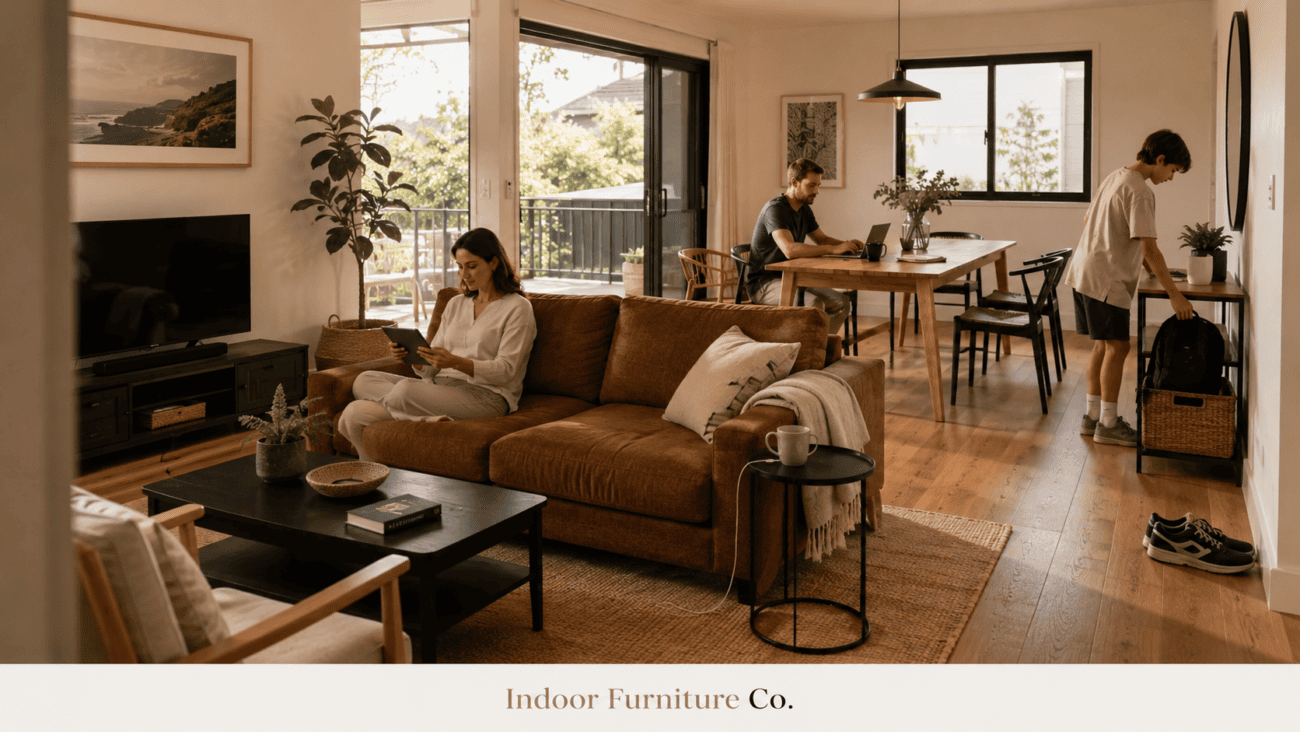
The right indoor furniture is not just about how a piece looks in a showroom. It is about choosing something that suits your home and fits into your daily life. The right piece saves you money over time and removes the stress.
This matters more now than it used to. Apartments and townhouses in Australia have stayed fairly small for the last 20 years. According to ABS data, the average floor area of new apartments and townhouses sat at just 137m² in 2021-22, almost unchanged since 2002-03. That makes good furniture choices a bigger deal, especially in smaller homes.
Why Choosing the Right Furniture Matters
Choosing the right home furniture matters because it shapes how your home feels. A piece that looks good in a catalogue may not fit your space.
A bad fit usually costs you twice. You have to pay for the piece, then pay again to replace it sooner than you should. If you pick a sofa that’s too big for the room, you have to swap it fast. Similarly, a bed with no storage can create a mess with your unused items. When you choose good-quality indoor furniture, it holds value and keeps your home running smoothly for years.
The Australian furniture retailing market is worth $12.0 billion in 2026, according to IBISWorld, with spending on furniture and homewares rising 2.7% in the year to June 2025. Thus, the demand for the right home furniture is rising right now.
Simple Ways to Pick Good-Fit Furniture
Good-fit furniture comes down to a few simple checks before you buy. Only the outer looks are not enough to be a good fit. These checks work for every room in the house.
- Assess the space first: Measure the room, the doorways, and the hallways. A piece that fits the showroom floor may not fit through your front door.
- Think about your daily routine: Your routine should guide the choice more than trends.
- Set a clear budget: High-quality indoor furniture often costs more upfront. It usually lasts longer, too. But it is worth buying than buying a low-cost piece twice.
- Think about your climate: Lighter fabrics tend to feel more comfortable in warmer parts of Australia, such as Queensland or northern New South Wales. At the same time, heavier upholstery can suit cooler regions such as Tasmania or the Victorian high country better.
- Check how many people use the space: A growing family needs different seating and storage than a single person or a couple.
- Look at the material and build quality: Check joints on wooden frames and stitching on upholstery. These small details show how long a piece will last.
Room-by-Room Furniture Picking Ideas
Every room has its own needs. The best approach is to plan furniture room by room, not all at once.
Living Room
Living room furniture should support how your family spends time together. This room gets the heaviest daily use in most homes. It handles movie nights, study time, and guests in the same week.
Choose a sofa size that matches your space. A 3-seater suits most family rooms, while a 2-seater works better in smaller apartments.
Bedroom
Bedroom furniture should help you sleep well and stay organised. A queen bed suits most couples, while a frame with built-in drawers helps when space is tight. A tallboy adds storage without using much floor area. It is usually a tall, narrow chest of drawers.
If you choose fewer pieces, it usually works best. A bed, a bedside table, and one solid storage piece will be a good combination for a bedroom.
Guest Room
A guest room earns its keep when furniture pulls double duty, since it sits empty most of the year. A daybed or sofa bed gives guests somewhere to sleep while freeing up the room the rest of the time. So, grab multifunctional pieces for this room.
Dining Room
Dining room furniture should match how often you eat together and how many people join the table. Many households also use this space for homework and laptops, not just meals. Leave space around the table so chairs pull out comfortably. A buffet or sideboard adds handy storage without crowding the room.
Functional Furniture and Space Saving Picks for Smaller Homes
Functional furniture earns its place by serving more than one purpose. It matters most where space is limited. Ottomans with hidden storage, lift-top coffee tables, and daybeds that double as a guest bed, etc, cut down on how much a room needs. Multifunctional furniture is one of the big reasons the Australian furniture market keeps growing.
If you have space issues, space-saving furniture will feel comfortable. These include folding tables, nesting side tables, and storage beds. The storage beds usually help to cut the clutter away and make your room spacious.
Tips to Fit Your Daily Routine
Your daily routine is the simplest test for furniture for daily use.
- Match seating to how you relax. Deep cushions suit lazy evenings; firmer seats suit busy households.
- Sit before you buy. Test comfortable home furniture in the store first.
- Add one statement piece.
- Keep storage near the mess. A buffet or tallboy stops clutter early.
- Modern indoor furniture suits older homes if one warm material, such as timber or linen, stays in the mix.
- Choose practical indoor furniture that is easy to refresh later.
Final Thoughts
Furniture choices work best when they match your space, your habits, and your daily routine, not passing trends. Measure first, think about how each room gets used, and choose pieces built to last.
That same thinking shapes everything at Indoor Furniture Co., where every piece is picked with real Australian homes in mind, from comfortable sofas to smart storage for smaller living spaces. The focus stays on quality materials and practical design that suits real family life.
