
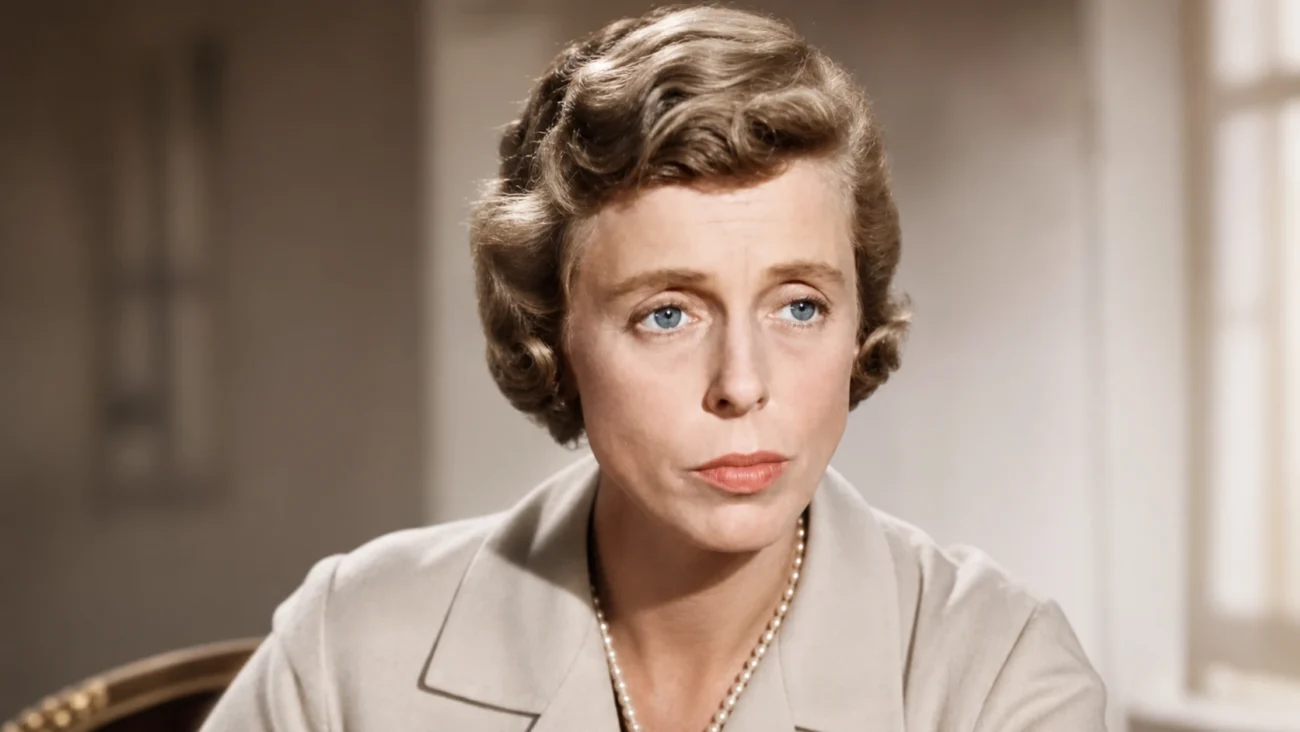
Nancy Kulp became one of American television’s most recognizable character actresses through her portrayal of Jane Hathaway on The Beverly Hillbillies. For nine seasons, she played the intelligent, loyal, and often exasperated secretary to banker Milburn Drysdale, creating a character whose dry delivery balanced the sitcom’s broader comedy.
Her long association with a successful series has also created lasting interest in Nancy Kulp’s net worth. Her exact wealth was never publicly disclosed, and no reliable estate record confirms the figures commonly repeated online. Estimates often place her net worth between $1 million and $2 million at the time of her death, but that range should be treated as speculation rather than verified financial fact.
Kulp’s life was far richer than one television role or an uncertain money estimate. She worked as a journalist, served in the U.S. Naval Reserve during World War II, handled publicity at MGM, appeared in films and television, performed on Broadway, served the Screen Actors Guild, ran for Congress, taught acting, and supported charitable causes. She died on February 3, 1991, at age 69, leaving behind a body of work that continues to reach viewers through classic television.
Early Life and Family
Nancy Jane Kulp was born on August 28, 1921, in Harrisburg, Pennsylvania. Her father, Robert Tilden Kulp, worked as a traveling salesman, while her mother, Marjorie Snyder Kulp, was a schoolteacher who later became a school principal. The family eventually moved to Florida, where Nancy spent part of her youth and pursued her education.
Public accounts of her early life suggest that she grew up in a household that valued education and professional independence. Those qualities later appeared in many of the women she played, especially Jane Hathaway, who was written as capable, educated, and more perceptive than the men around her.
Kulp did not come from an established Hollywood family. Her path into entertainment developed gradually through writing, military service, studio work, and encouragement from people who recognized her comic ability. That unconventional route helped make her later success feel earned rather than manufactured.
Education and Early Ambitions
Kulp attended the Florida State College for Women, now known as Florida State University. She studied journalism and earned a bachelor’s degree in 1943. She later pursued graduate study at the University of Miami, although her career soon moved in other directions.
Journalism was her first serious professional ambition. After college, she worked as a feature writer for the Miami Beach Tropics, covering public figures and entertainment personalities. Her reported subjects included actors and prominent international figures, giving her early experience in observation, interviewing, and concise storytelling.
That background suited her later work as a character actress. Kulp had a gift for noticing social behavior, speech patterns, and personal mannerisms. Rather than relying on glamour or conventional leading roles, she built performances around precision, timing, and the small details that made a character immediately understandable.
Military Service During World War II
In 1944, Kulp joined the women’s branch of the United States Naval Reserve. She served in the WAVES program, whose name stood for Women Accepted for Volunteer Emergency Service. The program allowed women to take on military duties during World War II and freed more men for overseas service.
Kulp remained in the Navy until 1946 and reached the rank of lieutenant junior grade. Her military record became a respected part of her biography, especially because it preceded a career that audiences later associated almost entirely with comedy.
The discipline and independence required by military service fit the public image Kulp developed later in life. She repeatedly moved beyond the expectations placed on a television actress, entering politics, union service, teaching, and charitable work after her peak years in Hollywood.
From MGM Publicity to Acting
Kulp moved to the Los Angeles area and found work in MGM’s publicity department. She initially worked behind the scenes rather than seeking acting roles. Director George Cukor and casting professional Billy Gordon reportedly encouraged her to try performing after recognizing her distinctive personality and comic presence.
Her film career began with small supporting and uncredited parts in the early 1950s. She appeared in movies including The Model and the Marriage Broker, Shane, Sabrina, A Star Is Born, The Three Faces of Eve, and The Parent Trap. Although many of her roles were brief, they established her as a reliable performer who could make an impression without dominating a scene.
Kulp’s appearance and restrained delivery made her especially effective as secretaries, neighbors, teachers, clerks, and other sharply defined supporting characters. She did not fit the traditional image of a Hollywood leading woman, but she turned that difference into a durable career.
Television soon provided more regular opportunities. From 1955 to 1959, she played Pamela Livingstone on The Bob Cummings Show. The role gave her a recurring presence on a popular comedy and helped prepare her for the part that would define her career.
Career Breakthrough on The Beverly Hillbillies
Kulp joined The Beverly Hillbillies when the CBS sitcom premiered in September 1962. The series followed the Clampett family after they became wealthy through an oil discovery and moved from the rural South to Beverly Hills. Its clash of social classes and values made it one of the most successful television comedies of its era.
As Jane Hathaway, Kulp played the secretary to banker Milburn Drysdale, portrayed by Raymond Bailey. Drysdale was focused on keeping the Clampetts’ fortune in his bank, while Jane often treated the family with more patience and genuine respect. Her intelligence allowed her to understand situations that her employer repeatedly misread.
Kulp gave Jane a formal manner, controlled body language, and dry comic timing. The character’s unreturned affection for Jethro Bodine also became a recurring joke, but Kulp kept Jane from becoming merely a punchline. She gave the role enough sincerity and dignity to make viewers care about her.
The series ran for nine seasons and produced 274 episodes before ending in 1971. Kulp remained closely identified with the show for the rest of her life. In 1967, she received a Primetime Emmy nomination for her supporting performance, marking the highest-profile awards recognition of her television career.
Work After the Series
After The Beverly Hillbillies, Kulp continued appearing in television programs rather than retiring from acting. Her later credits included The Brian Keith Show, Sanford and Son, The Love Boat, Fantasy Island, and Quantum Leap. She also returned as Jane Hathaway in the 1981 television movie Return of the Beverly Hillbillies.
Her post-series career was active but less steady than the nine-year period she spent on CBS. Guest roles and short engagements gave her continued visibility, though none matched the reach or permanence of Jane Hathaway.
Kulp also worked on stage. She appeared in the Broadway revival of Morning’s at Seven in 1980, taking on the role of Aaronetta Gibbs. The production allowed her to demonstrate that her abilities extended beyond filmed comedy and familiar television character work.
She later served on the board of directors of the Screen Actors Guild. Her election reflected the respect she had earned among fellow performers and her interest in issues affecting working actors, including employment conditions and compensation.
Political Campaign and Teaching Career
In 1984, Kulp returned to Pennsylvania and ran as the Democratic candidate for the U.S. House of Representatives in the state’s 9th Congressional District. She challenged longtime Republican congressman Bud Shuster.
Kulp lost the election, receiving about one-third of the vote. The campaign drew national attention because a well-known sitcom actress was seeking federal office, but she presented herself as a serious candidate concerned with public service rather than as a celebrity novelty.
Her former costar Buddy Ebsen publicly supported her opponent. Their political differences became one of the most discussed parts of the campaign, though Kulp’s candidacy involved broader questions about representation, public policy, and her desire to serve her home state.
After the election, she taught acting and worked as an artist-in-residence at Juniata College in Huntingdon, Pennsylvania. Teaching gave her a way to share knowledge gathered during decades in film, television, theater, and studio production.
Marriage and Private Life
Kulp married Charles Malcolm Dacus in 1951. The marriage ended in divorce in 1953, although some later profiles have reported conflicting dates. They had no publicly confirmed children.
She kept most of her personal life away from the press. Unlike many performers whose relationships became part of their public identity, Kulp was known mainly through her work, political interests, military service, and civic activities.
Her privacy also makes it difficult to determine details about her property, personal finances, estate plans, and family beneficiaries. There is no dependable public record showing that she remarried or had children later in life.
Nancy Kulp Net Worth and Income Sources
Nancy Kulp’s net worth at the time of her death was not publicly confirmed. Online estimates commonly place it between $1 million and $2 million, but no known probate record, tax filing, salary contract, or estate inventory supports that range. It is best described as an unverified estimate.
Her main source of income was acting. The nine seasons she spent on The Beverly Hillbillies likely provided the most stable and substantial earnings of her career. She also earned money through earlier film roles, recurring television work, guest appearances, stage acting, teaching, publicity work, and journalism.
No reliable source has disclosed how much Kulp was paid per episode of The Beverly Hillbillies. Her gross salary would also have been reduced by taxes, agent commissions, union fees, living expenses, and other professional costs. Without her contracts and financial records, calculating lifetime earnings would be guesswork.
She may have received residual payments when the sitcom was rerun or distributed in other markets. Residuals for programs produced during the 1960s depended on the union contracts, reuse formulas, and markets involved. They did not necessarily provide performers with large or permanent royalty income.
Kulp was an actor on the series, not a publicly identified owner or producer. That distinction matters because the continuing commercial value of The Beverly Hillbillies did not automatically become personal wealth for its cast members. Rights holders, production companies, and distributors controlled most of the program’s long-term revenue.
Illness, Death, and Legacy
Kulp was diagnosed with cancer near the end of her life. She died on February 3, 1991, at her home in Palm Desert, California. She was 69 years old.
Contemporary obituaries did not report the value of her estate. They focused instead on her role as Jane Hathaway, her military service, journalism background, congressional campaign, teaching, and charitable involvement. Reports indicated that she had no known immediate survivors.
Her legacy remains closely tied to classic television. Jane Hathaway stood apart from many female sitcom characters of the early 1960s because she was educated, professionally capable, and usually the smartest person in the room. Kulp’s performance gave the role warmth without weakening its intelligence.
Interest in her life continues through reruns, streaming availability, cast retrospectives, and anniversary coverage of The Beverly Hillbillies. No major financial disclosure in 2024, 2025, or 2026 changed what is known about her estate. Her net worth remains uncertain, while her cultural importance is far easier to document.
Frequently Asked Questions
What was Nancy Kulp’s net worth when she died?
Nancy Kulp’s exact net worth was never publicly disclosed. Estimates of $1 million to $2 million appear online, but they are not supported by a verified estate filing or financial statement.
How much did Nancy Kulp make on The Beverly Hillbillies?
Her salary for the series is not publicly confirmed. She worked on the show for nine seasons, so it was likely her most important source of career income, but no credible per-episode or annual figure is available.
Did Nancy Kulp receive money from reruns?
She may have received residual payments under the television contracts and union agreements that applied to the series. The total amount she received from reruns has never been published.
Was Nancy Kulp married?
Kulp married Charles Malcolm Dacus in 1951. Their marriage ended in divorce in 1953, although conflicting dates have appeared in some later profiles.
Did Nancy Kulp have children?
There are no publicly confirmed records showing that Nancy Kulp had children. Reports published after her death stated that she had no known immediate survivors.
How old was Nancy Kulp when she died?
Nancy Kulp was 69 years old. She was born on August 28, 1921, and died on February 3, 1991.
What was Nancy Kulp best known for?
She was best known for playing Jane Hathaway on The Beverly Hillbillies. The role lasted from 1962 to 1971 and earned her a Primetime Emmy nomination in 1967.
Conclusion
Nancy Kulp built a career by turning supporting roles into memorable performances. She never depended on glamour or celebrity spectacle; her strengths were discipline, intelligence, timing, and an ability to make carefully controlled comedy feel natural.
The uncertainty surrounding Nancy Kulp’s net worth reflects the limits of the public record, not a failure in her career. She worked steadily across several professions, but her contracts, assets, debts, and estate value remained private.
Her life also resisted being reduced to Miss Jane. She was a journalist, Navy veteran, union representative, congressional candidate, teacher, stage actress, and supporter of charitable causes.
Kulp’s financial worth may never be established with confidence. Her professional value is clearer: she created one of classic television’s most distinctive supporting characters and used the opportunities that followed to pursue public service, education, and a life beyond Hollywood fame.
