
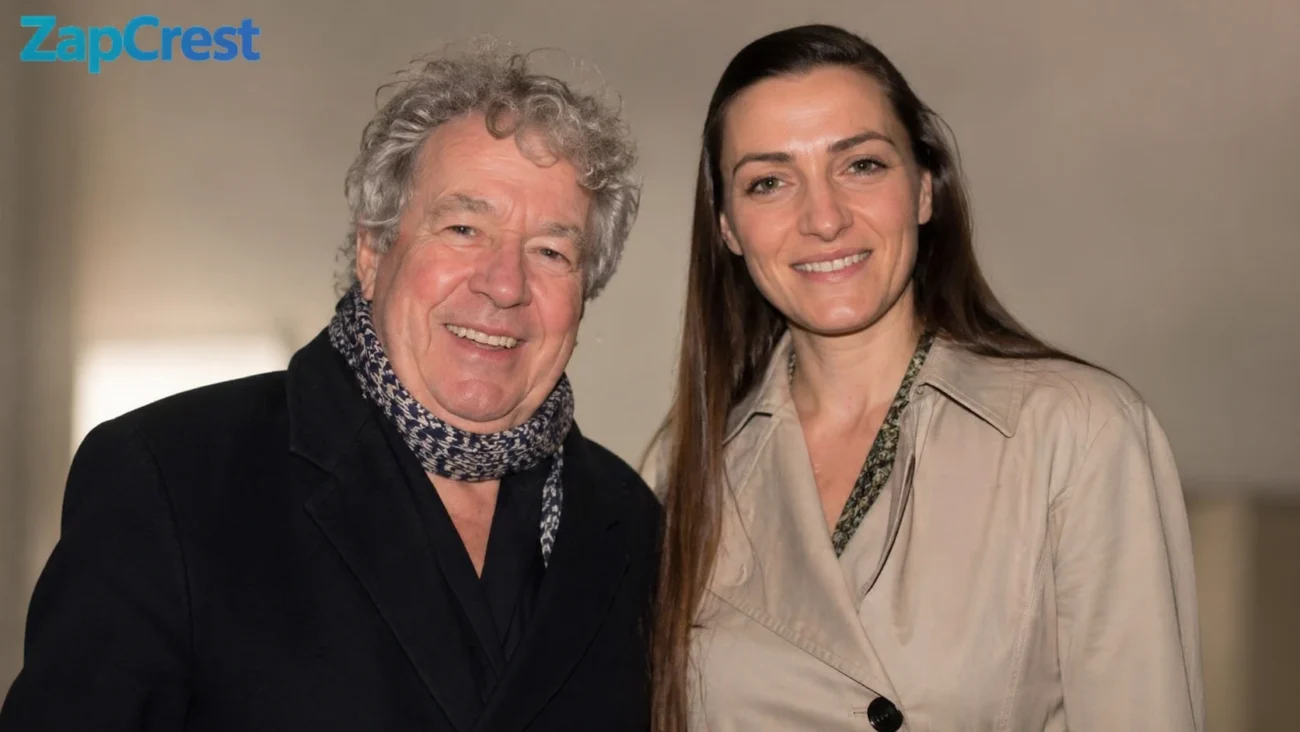
Anna Soderstrom became widely known because of the man she married, but the most reliable picture of her life begins somewhere quieter: with language, craft, and a design sensibility rooted in Sweden. Often written with its Swedish spelling, Anna Söderström, her name is most often searched in connection with Terry Jones, the Monty Python actor, writer, director, and historian who died in 2020. Yet the public record shows more than a celebrity spouse. It shows a Swedish-born designer who built a small knitwear practice, became a mother later in Jones’s life, and has remained strikingly private despite years of public curiosity.
Her story is also a lesson in restraint. Much about Soderstrom’s life has never been placed fully in public view, and the gaps have often been filled by thin online biographies and repeated assumptions. The better account is narrower but more honest. It follows what can be confirmed: her Swedish background, her Oxford education, her work in knitwear, her marriage to Jones, their daughter, his final illness, and the legal attention that followed his death.
Early Life and Swedish Background
Anna Soderstrom was born in Sweden, though many personal details about her early life remain private. Her exact date of birth, parents’ names, and childhood household background have not been firmly established in reliable public sources. That privacy is unusual only because she later became connected to a famous man. On her own terms, she appears to have lived much of her life away from celebrity attention.
What is publicly known about her Swedish background matters because it shaped her later creative work. In a design profile, Soderstrom described drawing inspiration from Gotland, the Swedish island where she spent childhood summers. The island’s traditional knitwear, patterns, and visual culture became a reference point for the scarves, hats, blankets, and stockings she later made. This gives her public story a clearer center than the usual “wife of” description allows.
Gotland is not just a picturesque footnote in her biography. For Soderstrom, it appears to have been a place of memory, movement, and texture, the kind of childhood setting that can stay with a person long after they leave home. Her later designs drew from Swedish traditions without becoming overly ornate or nostalgic. She seemed interested in translating inherited patterns into something simpler and more personal.
Education at Oxford
Soderstrom moved to Britain for higher education and studied modern languages at Hertford College, Oxford. That detail is one of the few consistently reported facts about her early adult life, and it says something useful about her path. She was not trained first as a fashion designer, textile specialist, or business founder. Her formal education was literary and linguistic rather than craft-based.
That background may help explain the way her work later developed. Modern languages require attention to pattern, structure, translation, and cultural context, all of which also sit quietly behind design. It would be too much to claim a direct line from language study to knitwear, but there is a recognizable sensitivity in her public design story. She worked with inherited Swedish motifs and adapted them for a contemporary English setting.
Oxford also links her biography to Terry Jones in a broader cultural sense. Jones had his own Oxford history, having studied at St Edmund Hall before moving into comedy, writing, and television. Their lives did not become public as an Oxford romance, and there is no need to overstate that connection. Still, Oxford forms part of the intellectual background around both of them.
From Language Student to Knitwear Designer

Anna Soderstrom did not begin her public creative life as someone chasing fashion. The best-known account of her move into knitwear begins during pregnancy, when severe morning sickness kept her physically limited. A friend brought her knitting needles and yarn, and she began teaching herself. By the time her daughter Siri was born, she had started designing her own patterns.
That origin story is important because it makes her work feel practical before it feels commercial. She was not launching a brand from a showroom or following a trend cycle. She began with the basic act of making something with her hands at a difficult point in her life. The work then grew from private practice into a small business.
Her knitwear line focused on cashmere pieces including scarves, hats, blankets, and Christmas stockings. The products were sold through her own channels and through selected London outlets. Her work was never presented as mass-market fashion, nor as a celebrity-backed lifestyle brand. It belonged more to the world of small-scale, carefully finished design.
The Style of Her Work
Soderstrom’s design style drew on Swedish knitwear traditions, especially patterns connected to Gotland. Traditional Scandinavian knitting often includes stars, snowflakes, repeated geometric forms, and strong contrasts. Soderstrom’s own taste, however, leaned toward a cleaner interpretation. She took familiar visual references and reduced them into something more restrained.
Her process also mattered. She used a domestic knitting machine, but described the work as manual and personal rather than industrial. The machine was closer to a tool than a shortcut, and each piece still required judgment, finishing, washing, drying, tagging, and signing. That kind of production sits somewhere between craft and small design business.
The result was a career that was modest in scale but distinct in identity. Soderstrom was not trying to become a runway figure. She was making objects connected to memory, climate, childhood, and domestic life. In a culture that often treats craft as either hobby or luxury, her work occupied a more human middle ground.
Meeting Terry Jones

Anna Soderstrom’s wider public visibility came through her relationship with Terry Jones. Jones was one of the central members of Monty Python, the British comedy group whose influence stretched across television, film, satire, and stage performance. He was a writer, performer, historian, children’s author, documentary presenter, and director. His public life was large, varied, and deeply documented.
Jones had been married before, to Alison Telfer, with whom he had two children, Sally and Bill. His relationship with Soderstrom became public after decades of that first marriage, and it attracted tabloid attention because of his fame, age, and family circumstances. The details were often framed through spectacle rather than care. A fair biography should acknowledge the attention without treating gossip as the center of her life.
Soderstrom and Jones married in 2012. Their daughter, Siri, had already brought a new chapter into Jones’s later years. For Soderstrom, the marriage placed her inside the orbit of one of Britain’s best-known comic figures. For the public, it made her a searchable name, though she did not appear to seek fame in the usual sense.
Marriage, Motherhood, and Family Life
Soderstrom and Jones’s family life has been discussed publicly mostly through the facts of marriage, parenthood, illness, and bereavement. Their daughter Siri became part of Jones’s late-life story, and his official family statements after his death included Soderstrom among those closest to him. The public record does not support a detailed account of their domestic life, and it would be unfair to invent one. What can be said is that she was his wife during the most medically difficult years of his life.
Jones’s family structure was complicated in the way many real families are complicated. He had adult children from his first marriage and a younger child with Soderstrom. After his death, that structure became part of public legal reporting around his estate. But family complexity should not be mistaken for simple melodrama.
Soderstrom’s position in that story has often been interpreted through other people’s feelings about Jones. Fans who loved Monty Python sometimes approach his private life as if it belongs to public memory. It does not, at least not fully. The facts can be reported, but the emotional reality belongs to the people who lived it.
Terry Jones’s Illness

In 2016, Terry Jones’s diagnosis with primary progressive aphasia, a form of frontotemporal dementia, was made public. The condition affected his ability to communicate, which was especially cruel for a man whose life had been built around words, performance, argument, and comic timing. Jones had written sketches, scripts, history books, children’s stories, and film dialogue. Losing language meant losing access to one of his deepest tools.
Frontotemporal dementia differs from the more familiar public idea of dementia as mainly memory loss. It can affect language, behavior, personality, and executive function, depending on the variant. Primary progressive aphasia is especially associated with speech and language decline. For Jones, the diagnosis explained why public appearances became more difficult.
Soderstrom’s role during those years was largely private, though official statements after Jones’s death made clear that she was at his side near the end. Caregiving in a degenerative illness is often invisible from the outside, even when the person who is ill is famous. The public sees announcements, tributes, and photographs. Families live the daily losses that happen before the final one.
Terry Jones’s Death
Terry Jones died on January 21, 2020, at the age of 77. His death brought tributes from across comedy, film, literature, and British cultural life. Fellow Monty Python members and admirers remembered him as a brilliant writer, performer, director, and friend. The public farewell focused on his work, as it should have, but it also noted the family who had accompanied him through illness.
Official statements said Jones died peacefully after a long illness with frontotemporal dementia. Soderstrom was identified as being with him in his final days, along with family and close friends. The statement also said his brain was donated to dementia research. That detail gave his death a final public purpose connected to the disease that had taken his voice.
For Soderstrom, his death moved her from the role of wife and caregiver into widowhood under public attention. That is a difficult position for anyone, and more so when a beloved cultural figure is involved. Fans mourn the artist they knew through screens and books. Families grieve the person who existed before and beyond the performance.
The Estate Dispute and Public Scrutiny
After Jones’s death, Soderstrom’s name appeared in legal reporting about a dispute involving his estate. Reports said Jones’s adult children from his first marriage brought proceedings connected to his will and financial provision. Some coverage also discussed questions around testamentary capacity because Jones had been diagnosed with dementia. These reports drew attention because they touched on money, illness, family, and fame.
The key point is that a reported legal claim is not the same as a proven moral conclusion. Inheritance disputes can arise from many factors, including dependency, expectations, will changes, family structure, and medical evidence. Dementia can raise difficult questions about capacity, but a diagnosis alone does not automatically mean a person cannot make a valid will. Courts look at evidence from the time the will was made.
For Soderstrom, the reporting placed her in a public frame she did not appear to choose. Some readers may be tempted to turn the case into a simple story of competing family claims. That would be careless. The available public record supports a cautious account of a legal dispute, not a full account of private motives or final family truth.
Money, Business, and Net Worth
There is no reliable public estimate of Anna Soderstrom’s net worth. Many online figures should be treated with skepticism because they appear without clear sourcing. Her documented income sources include her work as a knitwear designer, and she was also publicly reported in connection with Terry Jones’s estate. Those facts do not allow anyone to calculate a precise personal fortune.
Her knitwear business, as publicly described, was small and craft-led rather than a large fashion company. It involved cashmere products sold through selected shops, fairs, and her own channels. Old product prices give some context for the market she worked in, but they do not reveal profit, revenue, assets, or current earnings. A responsible biography should not turn that limited record into a false financial profile.
The estate reporting after Jones’s death does not solve the question either. Even where media reports discuss beneficiaries or claims, they do not provide a clear, verified personal balance sheet for Soderstrom. Wealth estimates for private people often say more about internet demand than about reality. In her case, the honest answer is that her net worth is not publicly confirmed.
Public Image and Media Portrayal
Anna Soderstrom’s public image has been shaped less by her own statements than by the subjects attached to her name. She is searched as Terry Jones’s wife, Siri’s mother, a Swedish knitwear designer, and a figure in posthumous estate reporting. That kind of public identity can be limiting. It gives readers fragments but not a full person.
The design profile offers the most rounded public view of her because it lets her appear through work rather than family drama. It shows a woman using Swedish memory, textile tradition, and domestic making to build a creative practice. It also shows someone comfortable with small scale, which is easy to miss in celebrity-adjacent coverage. Her work does not need to be inflated to be meaningful.
The media attention around her marriage and the estate dispute is harder to assess. Some coverage treated her as part of a famous man’s later-life story, while other pages copied details without much care. What is missing is a long record of Soderstrom speaking publicly about herself. That absence should be respected rather than treated as a blank space to fill.
Current Status
Anna Soderstrom’s current life is not extensively documented in reliable public sources. There is no strong evidence that she has sought a high-profile public role since Terry Jones’s death. She has not become a regular media figure, television personality, or public commentator on Monty Python. Her public footprint remains limited.
That privacy is understandable. After years connected to illness, bereavement, and legal attention, many people would choose a quieter life. Soderstrom’s known public identity was always narrower than the attention surrounding Jones. She appears to have remained largely outside the celebrity economy.
Readers looking for current details should be careful with sites claiming exact updates without evidence. Private individuals do not owe the public constant visibility. The most accurate current statement is modest: Anna Soderstrom is best known as a Swedish-born knitwear designer, Oxford graduate, Terry Jones’s widow, and mother of their daughter, and her present activities are not widely publicized.
Why Her Story Still Draws Interest
Interest in Anna Soderstrom continues because Terry Jones remains culturally important. Monty Python’s influence has not faded in the usual way because its work keeps circulating through streaming, stage revivals, quotations, documentaries, and comedy history. Anyone connected to the final chapter of Jones’s life becomes part of that wider public curiosity. Soderstrom’s name sits at the meeting point of art, family, illness, and legacy.
There is also a more personal kind of curiosity. People want to understand who was close to Jones after the cameras, after the sketches, and after the public triumphs. They want to know who shared his later life and who helped carry the private burden of his illness. Soderstrom appears in that story not as a performer, but as someone inside the household where the public figure became a vulnerable man.
Her own work adds another layer. She was not simply attached to a celebrity life; she had a creative practice with its own roots and discipline. That work may be quieter than Jones’s films, but it gives her biography texture and independence. It reminds readers that the people around famous figures often have lives that deserve more careful description.
Lesser-Known Details
One of the more meaningful details about Soderstrom is that she reportedly began knitting out of physical limitation rather than commercial ambition. Pregnancy sickness kept her still, and knitting gave her something active to do with her hands. That small beginning became the foundation of her design work. It is a reminder that careers sometimes start sideways, not through a plan.
Another detail is her use of graph paper to design patterns. That image fits her background better than a glossy fashion cliché. It suggests patience, counting, revision, and a close relationship between idea and structure. In knitwear, a design is not just a drawing; it has to become a repeatable pattern that holds together in material form.
Her interest in Gotland also gives her work a sense of place. Many designers borrow from heritage in broad terms, but Soderstrom’s public account tied her inspiration to a specific island and childhood memory. That made the work personal without turning it into autobiography. It also gave her products a story grounded in geography rather than branding language.
Frequently Asked Questions
Who is Anna Soderstrom?
Anna Soderstrom, also written Anna Söderström, is a Swedish-born knitwear designer best known publicly as the second wife of Terry Jones. She studied modern languages at Hertford College, Oxford, and later developed a small design practice focused on cashmere knitwear. Her public profile remains limited, which is why reliable accounts of her life are more careful than many online biography pages.
Was Anna Soderstrom married to Terry Jones?
Yes, Anna Soderstrom married Terry Jones in 2012. Jones was previously married to Alison Telfer, with whom he had two children. Soderstrom and Jones had one daughter together, Siri, and she was his wife at the time of his death in January 2020.
What does Anna Soderstrom do for a living?
Soderstrom is publicly documented as a knitwear designer. Her work included cashmere scarves, hats, blankets, and Christmas stockings inspired partly by Swedish textile traditions and Gotland patterns. There is limited reliable public information about her current professional activity, so it is safest to describe her known career in relation to that documented design work.
Does Anna Soderstrom have children?
Anna Soderstrom has a daughter, Siri, with Terry Jones. Jones also had two older children, Sally and Bill, from his first marriage. Because Siri is a private individual, responsible coverage should avoid unnecessary personal detail beyond the publicly known family relationship.
What is Anna Soderstrom’s net worth?
Anna Soderstrom’s net worth is not publicly confirmed. Online estimates should be treated cautiously because they often lack reliable sourcing. Her known income background includes her knitwear work, and she was later mentioned in reporting about Terry Jones’s estate, but neither source provides a verified personal wealth figure.
Why is Anna Soderstrom sometimes written as Anna Söderström?
Anna Söderström is the Swedish spelling of her name, using diacritical marks that are often dropped in English-language searches. Many readers type “Anna Soderstrom” because it is easier on English keyboards. Both forms are commonly used to refer to the same person in English-language coverage.
Where is Anna Soderstrom now?
Anna Soderstrom’s present life is not widely covered in reliable public sources. She appears to have remained private since Terry Jones’s death and the later legal reporting around his estate. The most accurate answer is that she is not currently a high-profile public figure, and any detailed claims about her daily life should be treated carefully unless they come from trustworthy sources.
Conclusion
Anna Soderstrom’s biography is not a story of public conquest, fame-seeking, or constant reinvention. It is a quieter account of a Swedish-born woman whose creative work came from memory, craft, and necessity, and whose public visibility came through marriage to one of Britain’s most beloved comic figures. The temptation is to define her only by Terry Jones. The more accurate view gives her own work its place.
Her life also shows how celebrity can distort the people around it. A designer with a private temperament can become a search topic because of love, illness, inheritance, and grief. That does not make every private detail fair game. It makes careful writing more necessary.
What remains most clear is the contrast between public curiosity and private reality. Soderstrom’s name belongs to a documented life, but not an overexposed one. She is part of Terry Jones’s final chapter, yet she is also a person with her own education, craft, motherhood, and history.
For readers, the best way to understand Anna Soderstrom is to stay close to the verified record and resist the noise around it. Her story matters because it touches fame, family, creativity, and loss without fitting neatly into any one category. That is also why it deserves to be told with respect.
