
Introduction
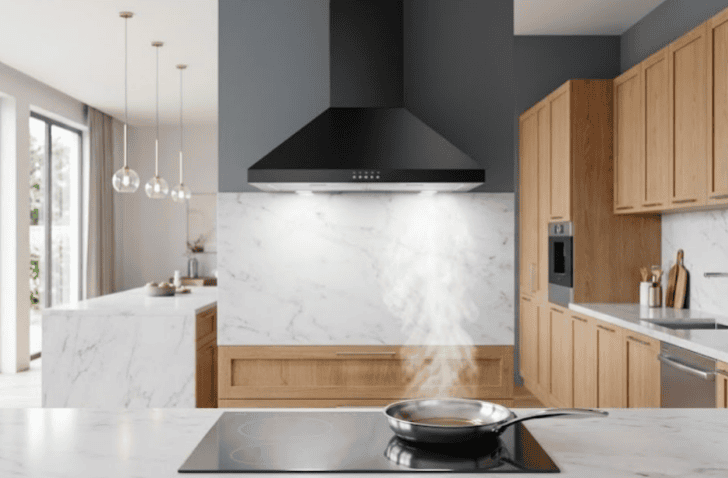
A well-designed kitchen should be both attractive and functional, and proper ventilation plays a major role in achieving that balance. While many homeowners choose a Black Range Hood for its modern appearance, selecting the right model involves much more than matching your décor. Your kitchen layout directly affects how efficiently smoke, steam, grease, and cooking odors are captured and removed.
Factors such as cabinet placement, ceiling height, cooking location, and available ventilation options all influence which hood will perform best in your space. Choosing the wrong type can reduce airflow efficiency and create unnecessary installation challenges.
This guide explains how different kitchen layouts impact your decision, compares the main range hood styles, and highlights the key considerations that can help you choose a solution that delivers reliable performance for years to come.
Quick Comparison Table
| Kitchen Layout | Recommended Hood Type | Typical Width | Best Ventilation |
| Small Kitchen | Under Cabinet | 30″ | Ducted/Ductless |
| Galley Kitchen | Under Cabinet | 30″ | Ducted |
| L-Shaped Kitchen | Wall Mount | 30–36″ | Ducted |
| U-Shaped Kitchen | Wall Mount | 36″ | Ducted |
| Island Kitchen | Island Hood | 36–48″ | Ducted |
| Open Concept | Wall Mount or Island | 36″+ | High CFM |
Why Your Kitchen Layout Should Be the First Thing You Consider
Before comparing finishes, features, or prices, it is important to evaluate your kitchen layout. The position of your cooktop, surrounding cabinets, wall space, and ceiling height all affect which range hood can be installed and how efficiently it will remove airborne grease, moisture, and cooking odors.
For example, an island cooktop typically requires an overhead island hood, while compact kitchens often benefit from under-cabinet models that maximize available space. Kitchen size also influences airflow needs, as larger or open-concept areas usually require greater ventilation capacity.
By understanding your layout first, you can narrow your options and focus on models that provide effective performance without compromising the overall design or functionality of your kitchen.
Understanding the Different Types of Black Range Hoods
Several types of black range hoods are available, and each is designed for a specific installation style and kitchen layout. Wall-mount models are installed against a wall above the cooktop and are popular in modern kitchens with open wall space. Under-cabinet range hoods fit beneath existing cabinets, making them an excellent choice for smaller kitchens where preserving storage is important.
Island range hoods are suspended from the ceiling above island cooktops and typically offer wider coverage for open spaces. Insert or built-in range hoods are concealed inside custom cabinetry, creating a streamlined appearance while maintaining effective ventilation.
Downdraft systems rise from behind the cooktop when needed and retract afterward, making them useful where overhead installation is not practical. Understanding these options provides a strong foundation before matching a hood to your specific kitchen layout and cooking requirements.
Matching the Right Black Range Hood to Your Kitchen Layout
Selecting the right Black Range Hood becomes much easier when you match its design and ventilation capabilities to your kitchen layout. Every layout presents different space limitations, airflow patterns, and installation possibilities, so understanding these differences can help you make a more practical long-term choice.
Small Kitchens
Compact kitchens benefit from space-saving solutions that maintain good ventilation without making the room feel crowded. Under-cabinet range hoods are often the preferred option because they fit neatly beneath existing cabinets while providing effective smoke and odor removal. Choosing a model with moderate airflow is usually sufficient for everyday cooking and helps avoid excessive noise.
Galley Kitchens
Galley kitchens typically have limited width and parallel countertops, making efficient airflow especially important. A slim under-cabinet or wall-mounted hood installed directly above the cooktop can improve ventilation while preserving valuable cabinet space. Careful planning also helps ensure that the hood does not interfere with storage or movement.
L-Shaped Kitchens
L-shaped kitchens provide greater flexibility for appliance placement. If the cooktop is positioned against a wall, a wall-mounted range hood often delivers balanced ventilation and complements the open corner layout. Homeowners planning a coordinated kitchen upgrade sometimes compare ventilation solutions from Ciarra Appliances alongside complementary cooking appliances such as the Ciarra Nosh Oven to create a cohesive and functional kitchen environment.
U-Shaped Kitchens
A U-shaped layout surrounds the cooking area with cabinets and work surfaces, making effective ventilation essential. A properly sized wall-mounted hood can help capture smoke before it spreads throughout the enclosed workspace. Selecting the correct airflow capacity is often more important than choosing additional decorative features.
Island Kitchens
Island cooktops require ceiling-mounted island range hoods because there is no supporting wall above the cooking surface. Since smoke and steam can spread in multiple directions, island models generally need stronger airflow to maintain effective ventilation. Proper installation height is equally important for consistent performance.
Open-Concept Kitchens
Open-concept kitchens share air with surrounding living spaces, allowing cooking odors to travel more easily. A larger wall-mounted or island hood with sufficient airflow helps improve air quality throughout the entire area. Prioritizing ventilation performance over appearance alone often results in a more comfortable cooking environment.
Choosing the Correct Hood Size and Airflow Capacity
After identifying the appropriate hood style, the next step is selecting the correct size and airflow capacity. In most kitchens, the hood should be at least as wide as the cooktop, with many homeowners choosing a slightly wider model for improved smoke capture. Airflow is measured in CFM (cubic feet per minute), and the required rating depends largely on cooking habits. Frequent frying, grilling, or high-heat cooking generally requires higher CFM than occasional light cooking.
Gas cooktops typically produce more heat, moisture, and combustion by-products than electric models, so they often benefit from stronger ventilation. Ceiling height also influences performance because taller ceilings may require greater airflow to capture rising smoke efficiently. Selecting a balanced combination of hood width and CFM helps maximize ventilation without creating unnecessary noise or energy use.
Ducted vs. Ductless Black Range Hoods
Both ducted and ductless range hoods can perform well when matched to the right kitchen. Ducted models vent smoke, heat, and moisture outside the home, making them the preferred choice for heavy cooking and long-term ventilation performance.
Ductless models filter air through charcoal filters before recirculating it back into the kitchen, making installation easier where exterior ductwork is unavailable. The best option depends on your home’s layout, renovation plans, cooking frequency, and ventilation requirements rather than appearance alone.
Features That Matter Beyond Appearance
Although style is important, the best Black Range Hood should also provide practical features that improve everyday cooking. LED lighting offers bright, energy-efficient illumination over the cooktop while generating less heat than traditional bulbs. Noise level is another key consideration, especially in open kitchens where loud fans can become distracting.
High-quality filters help capture grease and airborne particles, and removable filters simplify routine cleaning. Some models include smart controls, adjustable fan speeds, timers, or automatic shut-off functions that make operation more convenient. Energy-efficient motors can reduce electricity consumption without sacrificing ventilation performance.
It is also worth considering long-term maintenance requirements, including how easily filters can be replaced and interior surfaces cleaned. Choosing a hood with features that support both performance and convenience often provides greater value than focusing on appearance alone.
Common Mistakes to Avoid When Buying a Black Range Hood
Many buyers make decisions based primarily on appearance, only to discover that the hood does not suit their kitchen or cooking habits. One common mistake is selecting a model that is too narrow or lacks sufficient airflow for the cooktop.
Others overlook ceiling height, available ductwork, or installation space until renovation begins. Ignoring maintenance requirements can also create unnecessary inconvenience over time. Before making a purchase, compare ventilation performance, installation compatibility, and cleaning requirements alongside design. Taking a balanced approach helps ensure your range hood performs efficiently while complementing your kitchen layout.
Quick Buying Checklist
Before making your final decision, review these essentials:
- ✔ Match the hood width to your cooktop.
- ✔ Choose a suitable CFM for your cooking style.
- ✔ Decide between ducted or ductless ventilation.
- ✔ Measure available installation space.
- ✔ Consider ceiling height and kitchen layout.
- ✔ Compare filter type and maintenance needs.
- ✔ Check lighting, noise level, and energy efficiency.
Final Thoughts
Choosing the right Black Range Hood is ultimately about finding the best balance between kitchen layout, ventilation performance, and everyday practicality. By considering your available space, cooking habits, airflow requirements, and installation options, you can select a model that improves both comfort and indoor air quality.
Practical features and proper sizing often have a greater impact on long-term satisfaction than appearance alone. If you are comparing different kitchen ventilation solutions, exploring the available options from Ciarra Appliances can provide helpful ideas for matching a range hood to your kitchen layout and cooking needs while making an informed purchasing decision.
FAQs
1. How do I choose the right black range hood for my kitchen layout?
The right Black Range Hood depends on your kitchen layout, cooktop location, available wall or ceiling space, ventilation system, and cooking habits. Matching the hood type to your layout improves smoke removal, airflow efficiency, and overall kitchen comfort.
2. What size black range hood should I buy?
A range hood should generally be at least as wide as your cooktop. Many homeowners choose a model that is 3 to 6 inches wider for better smoke and grease capture, especially if they frequently cook at high temperatures.
3. Is a ducted black range hood better than a ductless one?
Ducted range hoods usually provide stronger ventilation because they exhaust smoke, heat, and odors outside. Ductless models are a practical alternative for kitchens without exterior ductwork, using charcoal filters to clean and recirculate the air.
4. How much CFM does a black range hood need?
The ideal CFM depends on your cooking style and cooktop. Light everyday cooking typically requires moderate airflow, while frequent frying, grilling, or using a gas range often benefits from higher CFM for more effective ventilation.
5. Which type of black range hood is best for an island kitchen?
Island kitchens require ceiling-mounted island range hoods because there is no wall above the cooktop. Choose a model with sufficient CFM and a size that matches or slightly exceeds the width of your cooktop for optimal airflow and smoke capture.
