
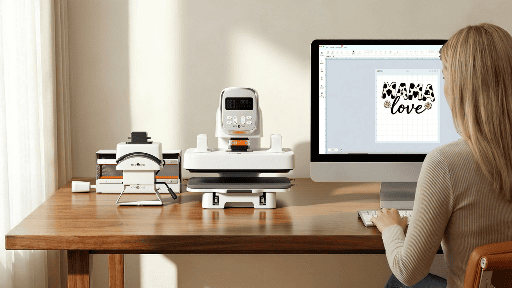
Personalized tumblers have become a popular choice for gifts, events, businesses, and everyday use. For a small customization business, they can also become a valuable product to add to an online store or local product catalog.
But creating attractive drinkware consistently requires more than a good design. Your equipment, transfer materials, and production workflow all play an important role.
A reliable Tumbler Heat Press, suitable sublimation paper, and a versatile Heat Press can give creators the flexibility to produce personalized products while keeping their workspace efficient.
Understanding how each tool fits into the process can help you make smarter equipment decisions as your business grows.
Why a Tumbler Heat Press Can Be a Business Advantage
A Tumbler Heat Press is designed specifically for applying sublimation designs to cylindrical drinkware. Its shape and pressing mechanism are intended to provide more suitable contact with tumblers than a standard flat pressing setup.
That can make a major difference when you’re producing several products in one session. For example, a customer might order 15 personalized tumblers for a wedding, company event, or family gathering. Having equipment designed for the product can make the process more repeatable and easier to manage.
Tumblers also offer plenty of opportunities for creative products. You can experiment with names, photographs, logos, seasonal artwork, inspirational messages, and themed collections.
Instead of selling only one generic design, a small business can create different collections for holidays, sports teams, corporate events, and personalized gifts.
Don’t Overlook the Importance of Sublimation Paper
The transfer material is another important part of the process. Good sublimation paper is designed to hold sublimation ink and release it onto compatible coated products when exposed to the appropriate heat.
The quality and compatibility of the paper can affect how efficiently the design transfers. When the transfer process works properly, artwork can appear sharp and colorful without the design behaving like a conventional sticker sitting on the surface.
For a business, this matters because failed transfers cost more than just a sheet of paper. You may also lose a blank tumbler, ink, packaging materials, and valuable production time.
Before committing to a large order, testing your chosen sublimation paper with the specific blank you’re using can help identify problems before they become expensive.
Where a Heat Press Fits Into a Growing Shop
A dedicated Heat Press can become one of the most useful machines in a customization workspace because it opens the door to products beyond drinkware.
While a Tumbler Heat Press focuses on cylindrical products, a standard Heat Press can be used for compatible flat applications such as T-shirts, hoodies, tote bags, mouse pads, and other promotional products.
This creates an opportunity to diversify your product range.
Imagine a customer ordering custom tumblers for a company event. Once they see the quality of the products, they may also ask for matching staff shirts or branded tote bags. If you already have a Heat Press, you have another way to fulfill that order instead of referring the customer elsewhere.
That flexibility can increase the value of individual orders.
Create a Workflow That Makes Production Easier
The equipment is most useful when every stage of production has a clear place in your workflow.
Start by preparing your design at the correct dimensions. Print it using the appropriate sublimation settings and compatible sublimation paper. Prepare the tumbler according to the blank manufacturer’s instructions, position the transfer carefully, and use the Tumbler Heat Press according to the recommended settings.
After pressing, inspect the finished product before packaging it.
For apparel and other flat products, the workflow changes slightly. Your Heat Press becomes the main application tool, allowing you to work with compatible transfer materials and garments.
Creating separate processes for different products can help prevent confusion when your order volume increases.
How to Reduce Waste and Rework
Production mistakes can quickly reduce the profit from a custom order. A simple testing routine can help.
Before starting a large batch, test the design on one blank. Check the image placement, color appearance, and overall finish. If something looks wrong, it’s much easier to correct one test item than remake an entire order.
Final Thoughts
Building a successful customization business is about more than buying equipment. It’s about creating a reliable workflow that allows you to turn customer ideas into finished products efficiently.
A Tumbler Heat Press provides a practical solution for personalized cylindrical drinkware, while quality sublimation paper supports the transfer process. A versatile Heat Press can then help you expand into apparel and other compatible products.
