
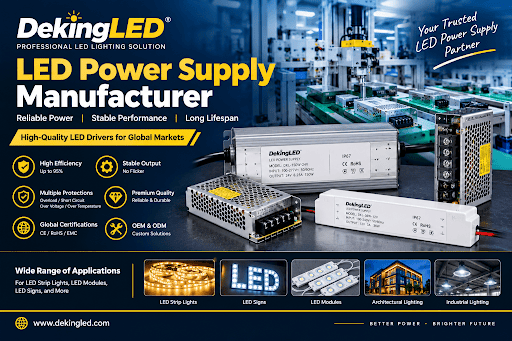
Reliable electrical components are essential for building LED lighting systems that perform consistently over time. While much attention is often given to the LED strip or lighting fixture itself, the supporting components also play an important role in a complete installation. Power supplies need to match the electrical requirements of the lighting system, while LED modules must suit the intended application and installation environment. For businesses sourcing these components in larger quantities, choosing an experienced LED Power Supply manufacturer can make the purchasing process more straightforward.
Why Power Supply Selection Matters
An LED system depends on a compatible power source. Even when the lighting product itself is correctly selected, an unsuitable power supply can create compatibility and performance problems. Buyers should therefore establish the required voltage and overall electrical load before confirming an order.
The first step is to identify the operating requirements of the LED product. Different strips and modules can use different voltages, so the power supply should be selected according to the exact product configuration rather than a general assumption.
For larger installations, total power demand should also be calculated. If several lighting sections are connected to one power supply, the combined load needs to be considered before installation.
Matching Voltage With the Lighting System
Voltage compatibility is one of the most important technical checks. DekingLED provides products that operate across different voltage configurations, including 12V DC and 24V DC options in its LED strip range.
This demonstrates why power equipment should be selected only after the lighting product has been identified. A supply designed for one voltage should not simply be assumed to work with another.
For longer LED strip runs, voltage selection can also influence the system design. DekingLED explains that 24V systems can reduce voltage-drop concerns compared with 12V systems, which can be useful when planning longer runs.
Calculating the Required Power
Power calculations should be completed before a project begins. The total requirement depends on the power consumption of the selected lighting product and the amount being installed.
DekingLED provides an example of a 5050-WW-300 strip with a maximum power rating of 72W. If multiple sections are installed, buyers need to consider the combined load rather than looking at the power requirement of one section alone.
This information helps purchasing teams select a power supply with appropriate capacity. It also gives installers a clearer understanding of the electrical requirements before the system is connected.
Why Technical Information Is Important
A professional supplier should provide clear technical information that allows buyers to evaluate compatibility. Specifications such as voltage, power, dimensions, and intended application can help businesses make more informed decisions.
DekingLED identifies technical support as one of its service advantages, alongside fast delivery, cost-effectiveness, and top quality. The company, Shenzhen Dekingled Co., Ltd., was established in 2014.
For commercial orders, technical communication can be particularly valuable. Buyers may need to confirm whether a power supply is appropriate for a specific LED configuration before ordering large quantities.
Understanding LED Modules
LED modules serve different purposes from flexible LED strips and are often selected according to the structure or application where they will be installed. Their compact format can make them useful for signage, illuminated letters, displays, and other applications requiring individual lighting units.
When choosing a module supplier, buyers should consider the application’s physical requirements as well as electrical compatibility. Module size, voltage, brightness, protection, and mounting method can all influence the suitability of a particular product.
For businesses comparing LED Module manufacturer options, it is useful to request complete product specifications before making a purchasing decision. This helps ensure that the module matches the project’s requirements rather than simply selecting a product based on general appearance.
Matching Modules to the Application
The intended use should guide module selection. Signage applications may require different characteristics from architectural accents or decorative installations. The physical space available, required illumination, operating environment, and installation method should all be considered.
DekingLED’s product range includes lighting solutions for signage and backlighting applications. Its SMD5050 RGB product, for example, is intended for applications including light boxes, illuminated signs, signboard backlighting, and decorative outlines for buildings and bridges.
These applications show why product selection should begin with the lighting objective. Once the application is established, technical specifications can be compared against the project’s requirements.
Considering Environmental Conditions
Environmental conditions can influence the choice of LED components. Indoor applications may have relatively controlled conditions, while outdoor or moisture-prone installations can require additional protection.
DekingLED offers 5050 LED strip configurations with IP65 and IP68 protection. While these specifications relate to the strip products rather than the power-supply or module categories themselves, they illustrate the importance of considering environmental protection when planning a complete LED system.
Buyers should always verify the specific protection rating of the component they are purchasing. A protected LED strip does not automatically mean that every other component in the system has the same level of environmental resistance.
Power Supply and Installation Planning
Good installation planning starts before the products arrive. The electrical requirements should be established, cable routes should be considered, and the power supply should be selected according to the lighting load.
DekingLED recommends checking the power supply against the LED strip’s power requirements before use. This is a straightforward but important step that can help prevent mismatched electrical equipment.
Installers should also verify voltage and polarity before energizing the system. Following the specific product instructions is essential, particularly when several components are being combined.
Benefits of Working With an Experienced Manufacturer
An experienced manufacturer can provide useful support throughout the purchasing process. This can include technical information, product options, customization discussions, and assistance with selecting components for a particular application.
DekingLED has been established since 2014 and operates from Shenzhen, China. Its service advantages include fast delivery, cost-effectiveness, top quality, and technical support.
For businesses purchasing LED components for commercial projects, these factors can be useful when evaluating potential suppliers. Consistent communication can also make it easier to clarify specifications before production or delivery.
What Buyers Should Check Before Ordering
Whether purchasing power supplies or LED modules, buyers should establish the technical requirements before confirming an order.
Key points to review include:
- Required operating voltage
- Total electrical load
- Product dimensions
- Intended application
- Environmental conditions
- Protection requirements
- Installation method
- Required accessories
- Compatibility with other system components
- Technical support availability
These checks can help businesses avoid selecting components that are difficult to integrate into the final lighting system.
Planning for Larger Projects
Large commercial installations require more detailed planning because multiple lighting components may operate together. A power supply that works for one small section may not be appropriate for an entire installation.
For this reason, buyers should calculate the total load and consider how the system will be divided. Longer runs may also require additional planning to manage voltage drop and maintain consistent illumination.
DekingLED’s guidance on 24V systems is particularly relevant when longer LED strip runs are being considered because 24V can help minimize voltage-drop effects compared with 12V systems.
Final Thoughts
Selecting the right supporting components is an important part of creating a dependable LED lighting system. Power supplies need to match the electrical requirements of the lighting products, while modules should be selected according to the intended application, physical layout, and environmental conditions.
DekingLED provides different LED lighting configurations, including products operating at 12V and 24V DC, and emphasizes technical support as part of its service offering. For longer installations, its information also highlights the advantage of 24V systems in reducing voltage-drop concerns.
By checking technical specifications before ordering and ensuring that each component is compatible with the complete system, businesses can reduce installation problems and make better purchasing decisions. A careful approach to power supplies and LED modules can ultimately contribute to a more reliable and professionally planned lighting project.
