
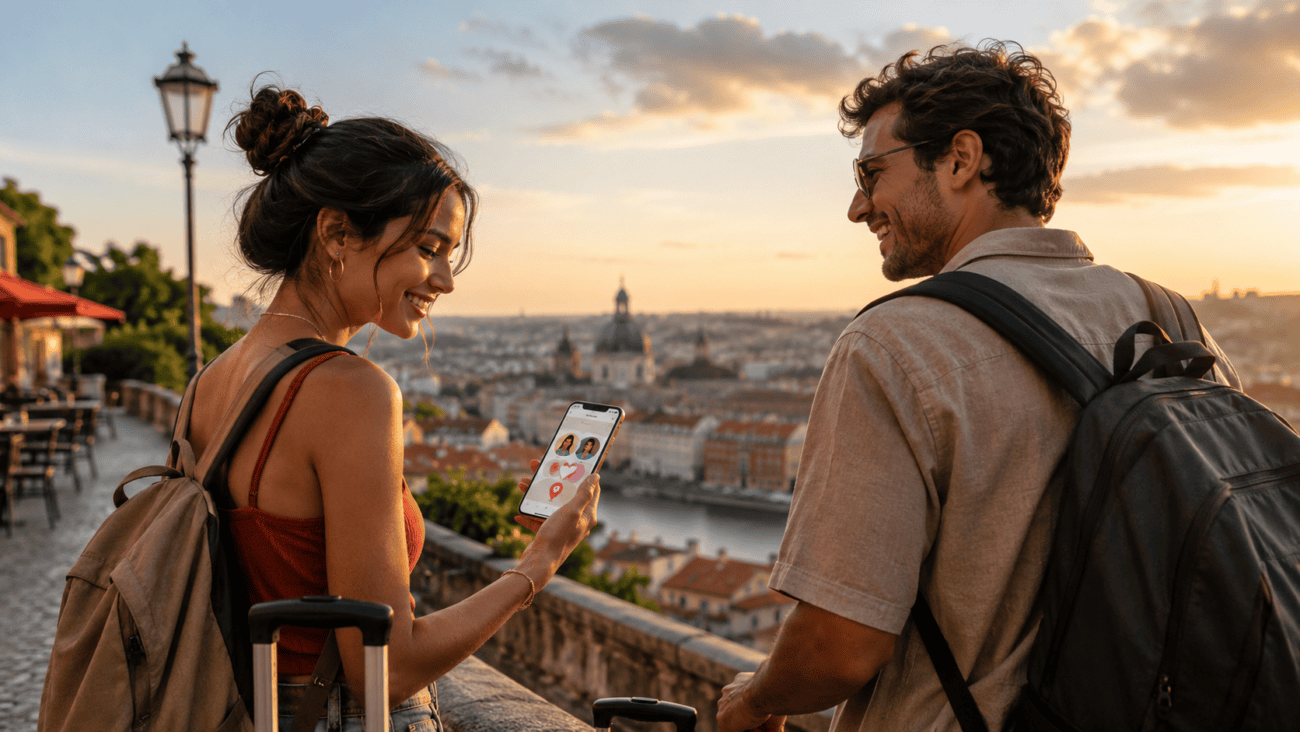
A traveler lands in Porto at noon with two conversations already going. One is a photographer who knows which rooftop café stays empty at sunset. The other grew up three streets from the hotel and has offered to show the parts of the city no map bothers with. Neither meeting was left to chance. Both were arranged from a plane seat somewhere over the Atlantic, on an app built to match people by place. This is how a growing share of people now travel.
Connections Booked Before Departure
The pattern starts before the trip does. Dating apps drew about 381 million users worldwide in 2024, a figure expected to pass 450 million by 2028, and a rising share of them treat the map as part of the appeal. Among singles aged 18 to 25, travel now is the single most listed interest on dating profiles worldwide. In one survey across the Asia Pacific region, 78% of young singles said they wanted to line up connections before they left home. The tools have caught up. A location feature common to the major platforms lets a user drop a pin on a distant city and match with people there weeks ahead of arrival. When the Paris Olympics approached, one platform reported a 103% jump in users setting their location to France. The date is booked before the flight is.
The Local Guide Advantage
What people want from these matches has reshaped the trips themselves. Solo travel keeps climbing, and the reason has moved from seeing sights to meeting people. In one 2025 study, 58% of solo travelers said meeting new people was a main goal, up from 43% a year earlier, and 71% reported actively seeking connection. A match who lives in the city becomes a guide to the version of it that tourists miss, the neighborhood bar, the family kitchen, the market with no English signage. The traveler stops moving through a place as a spectator and starts moving through it beside someone who belongs there. By one hostel platform’s count, 68% of solo travelers now form real friendships on the trip, the kind that outlast a single night out. That is a different kind of trip than a bus tour can sell.
The Pre-Trip Courtship
The weeks between the match and the flight do quiet work. A pair matched a month out has time to trade messages and compare plans, building the kind of familiarity that usually takes several dates to reach. By the time they meet, the awkward first-meeting hour is often already behind them. This front-loading is why so many trip romances move fast once they begin. It also raises the stakes, because a person can grow attached to a version of someone built entirely from text, then land to find the real match a poorer fit than the imagined one.
Relationship Types On The Road
Travel also widens the kind of connection people look for. Some want a single evening with a stranger who will be gone by morning. Others want a companion for the whole trip, a correspondence that becomes more, or the start of a sugar baby relationship or another named bond that suits a life spent between cities. The road tends to loosen the usual scripts.
Distance plays a part in that. When two people know a connection has a built-in end date, they often speak more plainly about what they want from it. That honesty, rarer at home, is part of why travel romances form so quickly and stay so vivid in memory.
Longer Stays, Deeper Roots
Remote work has stretched how long people stay in one place. Location-independent workers now average more than six weeks per stop, up from under six the year before, a pattern some call slow travel. A longer stay changes what a match can become. A week in a city produces a fling. Two months produces something closer to a real relationship, with routines, shared friends, and the sense of a life briefly built together. The apps that started as a way to find a quick meet now seed relationships that outlast the trip, and sometimes relocate with it.
A Market Growing With The Trend
The scale of this is not a niche. The solo travel market was worth an estimated $482 billion in 2024 and is on track to more than double by 2030. Remote work and cheaper flights have pushed more people to travel alone, and a generation comfortable meeting online leans on apps to fill the social gap that traveling solo leaves. Where a solo trip once meant quiet dinners and small talk with hostel staff, it now comes with a running list of people to meet in each city. The app has become part of the luggage, packed as reliably as a charger or a passport.
The Safety Calculus
Meeting strangers in an unfamiliar city carries risk that meeting them at home does not. A traveler has no local network, may not speak the language, and cannot always read the signals that warn of trouble. The standard safety tips for solo travelers apply with extra force here: meeting first in a public place, telling someone back home the plan, keeping a way to leave. Some platforms have added trip-specific safety prompts, though the burden still falls on the person who shows up. The freedom to line up a date in any city comes paired with the work of vetting someone you will meet far from anyone who knows you.
The Cost Of Planning
Something gets traded for all this efficiency. Part of travel’s old appeal was the unplanned meeting, the person found by accident at a hostel bar or on a delayed train. A trip mapped out through pre-booked matches leaves less room for that kind of accident. The traveler who arrives with every evening spoken for may see more people and know the place less. The tools are powerful, and the ones who get the most from them tend to hold some hours open, letting the city and its strangers do what no app can arrange.
The Next Chapter For Travel
Travel has always been a way to meet people you would never cross paths with at home. Technology is transforming travel faster than the etiquette around it can settle. The apps kept that old impulse and changed only the timing and the odds, moving the first hello from a chance meeting to a screen tapped before takeoff. About 27% of married couples now say they met through a dating site or app, and a slice of those stories started with a trip. The open question is what a generation raised on this does to the trip itself. When the strangers are pre-selected and the evenings pre-booked, does travel still surprise anyone, or does it become one more thing optimized in advance? The answer will shape how people meet on the road, and maybe why they leave home at all.
