
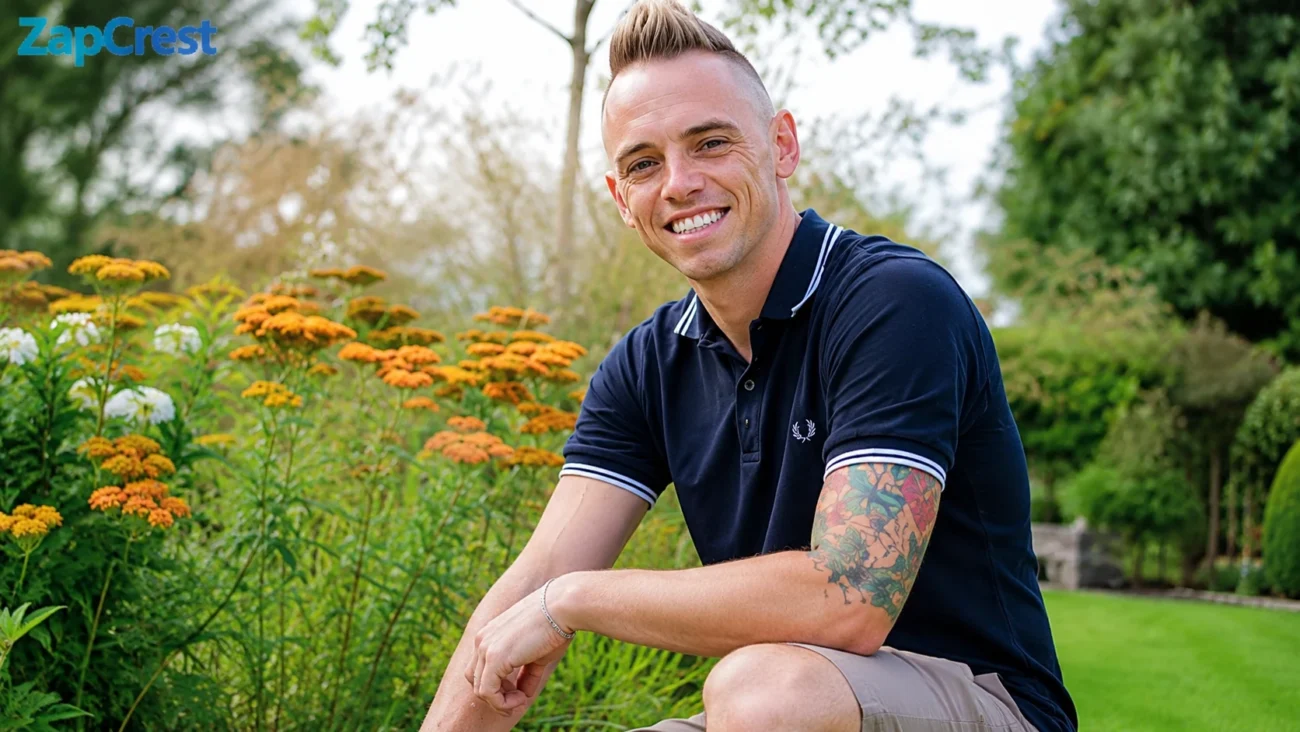
Lee Burkhill did not arrive in British gardening as a polished television personality waiting for the right camera. He built his reputation from soil, study, design work, online teaching, and a sharp understanding of how lost many people feel in their own gardens. Known widely as Garden Ninja, he has become one of the more approachable figures in UK horticulture, especially for viewers who discovered him through BBC One’s Garden Rescue. His story is not just about career reinvention; it is about turning a private love of plants into a public mission to make gardening feel less intimidating.
Burkhill’s appeal comes from that mix of technical knowledge and plain-speaking confidence. He can talk about planting structure, wildlife value, seasonal interest, and garden layout without making the subject feel closed to beginners. His look, voice, and teaching style stand apart in a field that has often leaned traditional, but his work is rooted in serious practical experience. For many viewers, he represents a newer kind of garden expert: trained, media-savvy, direct, inclusive, and refreshingly honest about the work that good gardens require.
Who Is Lee Burkhill?
Lee Burkhill is a British garden designer, horticultural educator, television presenter, writer, speaker, and online creator. He is best known by the name Garden Ninja, the brand behind his design business, blog, YouTube channel, courses, and public gardening advice. To television audiences, he is most familiar as one of the designers on BBC One’s Garden Rescue, where he helps transform domestic gardens for homeowners across the UK. His public identity sits between professional garden design and accessible education, which is why his name is searched by both TV fans and people looking for practical gardening help.
Public records and his own professional materials place his birth month and year in February 1983. That makes him part of a generation of garden communicators who grew up before social media but built a career in the age of YouTube, blogs, streaming clips, and direct audience engagement. He is based in the North West of England, where Garden Ninja Garden Design serves clients in areas including Manchester, Liverpool, Southport, Cheshire, and surrounding regions. While his work now reaches a national audience, his career still has the feel of a regional practice that expanded through skill, persistence, and media exposure.
Burkhill is also one of the more visible LGBTQ+ figures in mainstream British gardening television. He has publicly referred to his husband and has spoken about support from close friends and family while managing type 1 diabetes. He does not make every part of his private life public, and that restraint is part of what makes a careful profile necessary. The confirmed picture is of a married designer who keeps family details largely private while using his platform to talk openly about gardening, health, inclusion, and personal resilience.
Early Life and First Love of Gardening
Early Life and First Love of Gardening
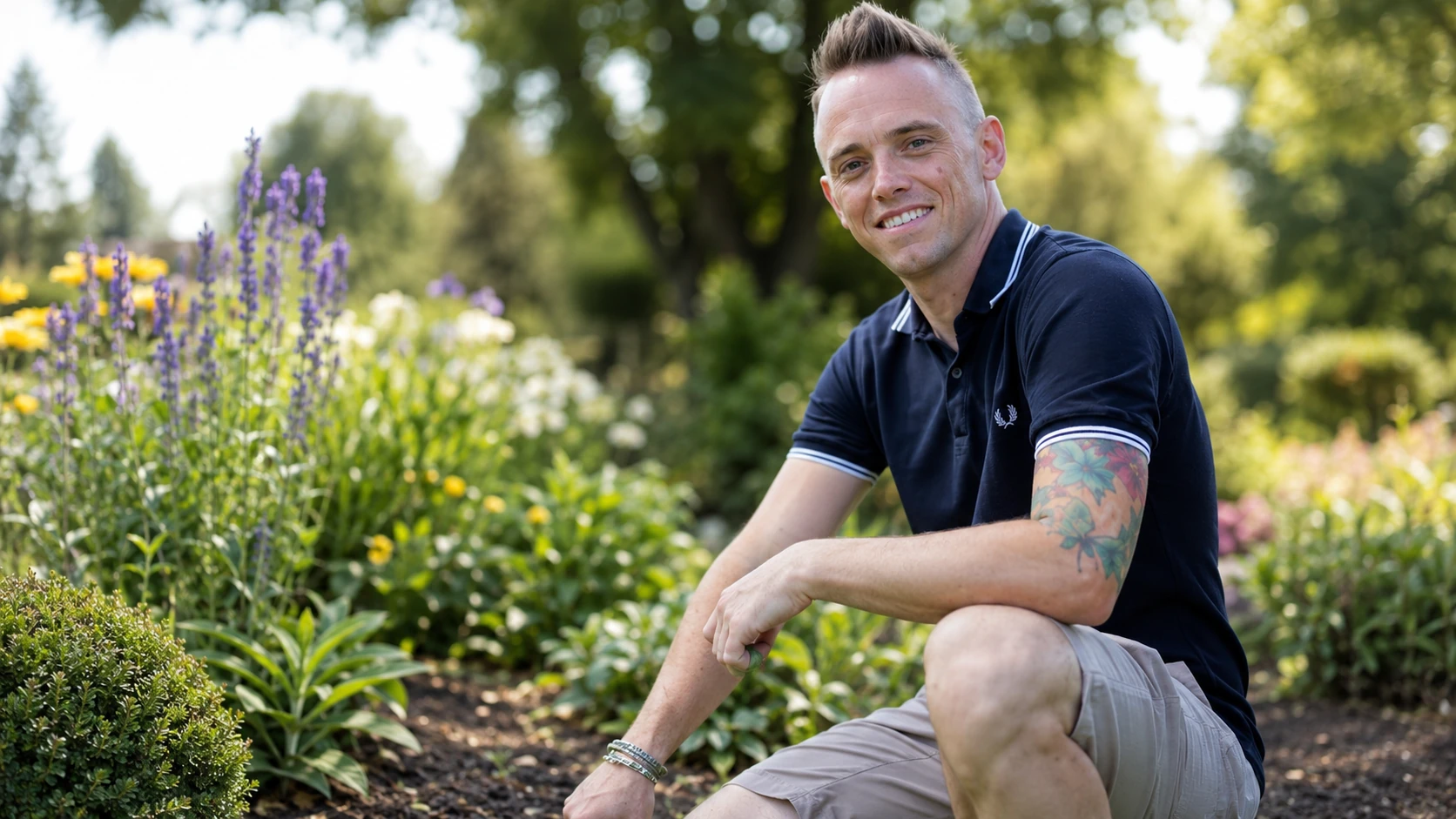
Burkhill has described gardening as something that reached him early, long before it became a profession. His interest has often been linked to childhood exposure to gardens, allotments, and the satisfaction of growing things by hand. He has spoken about the influence of his grandfather, who introduced him to vegetables, flowers, and the rhythms of cultivation. That early connection matters because it explains why gardening appears in his life not just as work, but as a place of safety and control.
As a teenager, Burkhill has said he experienced bullying, and gardening became a refuge. That detail gives emotional weight to his later teaching style, because he often speaks to people who feel unsure, excluded, or overwhelmed. The garden, for him, was not only decorative; it was somewhere he could focus, learn, and build confidence away from the pressure of other people’s judgment. That background helps explain why his public advice often carries a strong anti-snobbery streak.
There is limited verified public detail about his parents, siblings, childhood home, or specific schools. That absence should not be filled with guesswork, because Burkhill has chosen to keep much of his early family life outside the media spotlight. What is clear from his own public comments is that gardening began as a personal passion rather than a career plan. It stayed with him through adolescence and adulthood until he finally turned it into the center of his professional life.
Education, Training, and the Road to Horticulture
Burkhill did not begin his working life as a full-time gardener. Before Garden Ninja became his career, he spent around 12 years working in IT, including project management. That earlier profession may seem far away from borders, soil, planting plans, and garden makeovers, but it gave him skills that still show in his design work. Garden projects require planning, sequencing, budgeting, problem-solving, and the ability to keep moving when conditions change.
His horticultural training gave structure to the knowledge he had built through years of hands-on gardening. He has been described publicly as RHS-qualified, and his professional biography connects his study to formal horticultural education. The Royal Horticultural Society remains one of the best-known institutions in British gardening, so that training helps explain why his advice goes beyond casual enthusiasm. He did not simply brand himself as a garden personality; he put time into learning the craft.
The move from IT into garden design was not instant. Burkhill has described a period of stress and dissatisfaction before deciding to change direction, with encouragement from his husband. He studied, volunteered, practiced, entered competitions, built a business, and slowly shifted into the career for which he is now known. That path gives his biography a wider appeal because many people recognize the tension between a stable job and a more meaningful calling.
Creating Garden Ninja
Garden Ninja began as the public name for Burkhill’s garden design work and grew into a broader teaching platform. The name is memorable, informal, and a little mischievous, which suits his style. It suggests action rather than formality, and that has helped him reach gardeners who might otherwise feel shut out by traditional design language. Behind the playful name, though, sits a real design company and a serious body of educational work.
Garden Ninja Limited was incorporated in July 2015, marking a clear business milestone in Burkhill’s professional shift. From there, the brand expanded through garden consultations, design services, online guides, videos, courses, public speaking, and media appearances. The business offers advice for people dealing with the kinds of gardens common across the UK: small plots, overlooked patios, new-build lawns, tired borders, awkward shapes, poor soil, and uncertain budgets. That practical focus is a major reason the brand has stayed relatable.
The Garden Ninja website became one of Burkhill’s main publishing platforms. It includes guides on garden design, pruning, planting, wildlife gardening, lawn care, seasonal tasks, and common mistakes. His YouTube channel added a more visual layer, allowing viewers to see techniques rather than simply read instructions. Together, the blog and video work helped build trust before and alongside his television career.
The Breakthrough: RHS and BBC Recognition
A key early breakthrough came in 2016, when Burkhill won the RHS and BBC Feel Good Gardens competition. His design, “Fancy a brew? Take a pew,” was inspired by Manchester and created as a front garden concept. The competition asked entrants to imagine gardens that could improve mood and community feeling, and Burkhill’s winning entry gave him valuable national exposure. It also showed that he understood how small domestic spaces could carry social and emotional meaning.
That award mattered because it placed him within the respected world of RHS events and BBC gardening media. It helped move him from a promising designer with an emerging brand to someone recognized by major horticultural institutions. For a new garden designer, that kind of validation can open doors that ordinary advertising cannot. It gives clients, editors, producers, and audiences a reason to pay attention.
Burkhill later built on that recognition with show work and media opportunities. His design and planting work for Hartley Botanic at RHS Chelsea Flower Show in 2018 brought further professional attention. Chelsea is one of the most scrutinized stages in British horticulture, and recognition there carries weight inside the industry. For Burkhill, it helped confirm that Garden Ninja was not just an online persona but a design practice capable of meeting high standards.
Chelsea, Hampton Court, and Industry Standing
The RHS show world is demanding because it compresses months of design thinking into a display that must look complete for a short public window. Plants need to be timed, placed, and presented with a clarity that ordinary gardens can take years to achieve. Designers are judged not only by viewers but by peers, sponsors, horticultural experts, and experienced gardeners. Burkhill’s show work placed him inside that high-pressure tradition.
His 2018 involvement with Hartley Botanic’s RHS Chelsea Flower Show trade stand brought notable recognition for the stand, including top-level judging success. The project connected heritage greenhouse design with planting and presentation, showing his ability to work within a brand brief rather than only domestic client needs. That kind of work is different from designing a family garden because the result must communicate immediately to thousands of visitors. It also needs to hold up under the close attention of people who know plants well.
These milestones helped shape his standing as both designer and communicator. Burkhill’s credibility did not come from one television audition or viral video. It came through a sequence of smaller, verifiable steps: years of gardening, formal study, business formation, competition success, show recognition, online teaching, and broadcast work. That slow build is one reason his advice often feels grounded rather than manufactured.
Lee Burkhill on Garden Rescue
For many people, Lee Burkhill became a familiar face through BBC One’s Garden Rescue. The programme’s format is simple but effective: homeowners set out their needs and budget, designers produce competing visions, and the chosen plan is built into a transformed garden. Burkhill joined the show during its later run and became part of a presenter group associated with the post-Rich brothers era. His presence brought a distinct mix of confidence, humour, colour, and technical explanation.
The show suits him because it deals with ordinary gardens rather than fantasy estates. Homeowners want privacy, space for children, places to sit, easier maintenance, more wildlife, better planting, or a stronger sense of identity. Burkhill’s role is to translate those wishes into design choices that can work within time, budget, and site limits. That is where his project management background and design training meet in a very visible way.
Television garden makeovers can sometimes give viewers unrealistic expectations about speed and cost. Burkhill has helped demystify some of that process by explaining how applications, surveys, design briefs, filming demands, and build schedules fit together. He has written about the behind-the-scenes process in a way that shows how much planning sits behind a finished reveal. That openness strengthens his public image because it treats viewers as intelligent rather than simply asking them to admire the final result.
Design Philosophy and Gardening Style
Burkhill’s design philosophy is practical, plant-led, and strongly educational. He often stresses that a garden must work for the person who owns it, not just for a photograph. A good garden needs structure, movement, proportion, seasonal change, and maintenance that fits the owner’s real life. He also argues that plant knowledge matters deeply, because hard landscaping alone cannot make a living garden.
His work often favors accessible design principles rather than mysterious rules. He teaches people to think about sightlines, repeated planting, focal points, texture, height, wildlife value, and how spaces connect. He also encourages gardeners to understand soil, aspect, light, and water before spending money on plants that may fail. This is one of his strengths as a communicator: he makes design feel like a set of decisions rather than a gift only professionals possess.
Sustainability and wildlife value also appear often in his advice. Like many modern garden designers, Burkhill works in an era when gardens are judged not only for beauty but for their contribution to biodiversity, drainage, shade, and ecological health. He has encouraged planting that supports insects, birds, and seasonal life while still giving homeowners usable spaces. That balance is important because most domestic gardeners want both pleasure and practicality.
Marriage, Husband, and Private Life
Burkhill has publicly referred to having a husband, but he keeps most details of his marriage private. In interviews and personal accounts, he has described his husband as supportive, especially during career change and while living with type 1 diabetes. That public information is enough to establish that marriage is part of his life, but not enough to justify speculation about his husband’s name, occupation, or wider family background. A responsible biography should respect that boundary.
His openness as a gay man in mainstream gardening media has meaning beyond simple biography. Gardening television has long been popular with broad audiences, but its public faces have often reflected a narrow version of British domestic life. Burkhill’s visibility helps widen that picture without turning his identity into a spectacle. He appears first as a capable designer and presenter, while also being open enough for viewers to see a fuller version of who he is.
There is no reliable public confirmation that Burkhill has children. Some online biography pages may try to answer that question, but personal family details should not be invented to satisfy search curiosity. What can be said with confidence is that he has chosen to make gardening, health advocacy, and professional work public while keeping much of his home life protected. That balance is common among media figures who are visible enough to be recognized but not seeking celebrity exposure for its own sake.
Living with Type 1 Diabetes
Burkhill has spoken openly about living with type 1 diabetes, including being diagnosed at 16. His public account through Diabetes UK describes the practical and emotional reality of managing the condition through school, social life, work, and physically demanding gardening days. He has discussed how technology and carbohydrate counting have made management easier than it once was. He has also been clear that long hours outside can make blood sugar management more complicated.
That advocacy is one of the more meaningful parts of his public life. It shows a working professional managing a serious lifelong condition while filming, designing, traveling, planting, and speaking to audiences. For people with type 1 diabetes, that visibility can be reassuring because it presents the condition as manageable without pretending it is simple. For people without diabetes, it offers a clearer view of the planning that sits behind an active working life.
Gardening is often described as therapeutic, and Burkhill’s story supports that idea while adding realism. Physical activity, fresh air, and focus can help mental wellbeing, but people with diabetes still need to plan food, medication, monitoring, and rest. Burkhill has advised keeping snacks close during gardening work because time can pass quickly outdoors. That small detail says a lot about his style: practical, personal, and useful.
Public Image and Why Viewers Like Him
Burkhill’s public image is built on contrast. He is knowledgeable but not stuffy, confident but not cold, and visually distinctive without seeming like a character created for television. His Garden Ninja persona gives him a recognizable hook, yet his advice is usually grounded in ordinary gardening problems. That makes him easy to remember and easy to trust.
Viewers also connect with his warmth. He does not speak to beginners as if they have failed; he treats confusion as a normal starting point. That matters in gardening because many people inherit outdoor spaces they do not understand and feel ashamed that plants keep dying. Burkhill’s work tells them that gardens can be learned, repaired, and improved through patient decisions.
His background as someone who changed careers also adds to that connection. He is not presented as a person who walked effortlessly into his natural place. He moved from IT into horticulture after years of private interest and serious study. That reinvention gives his biography a human shape and makes his success feel earned.
Money, Business, and Estimated Net Worth
Lee Burkhill’s income appears to come from several professional sources. These include garden design work, consultations, online courses, writing, speaking, brand collaborations, YouTube content, and television presenting. Garden Ninja operates as a real business rather than only a media nickname, and its services include paid consultations and educational products. That mix is common for modern experts who combine client work with digital audiences.
There is no reliable public figure for Burkhill’s net worth. Some websites may publish estimates, but such figures are often unsourced and should not be treated as fact. A fair assessment is that he has built a diversified professional career rather than relying on one income stream. His business value rests in design expertise, audience trust, media recognition, and the Garden Ninja brand.
The economics of a career like his are not the same as celebrity wealth. Garden design can involve high skill and strong demand, but it also carries costs for travel, tools, software, staff or contractors, filming time, insurance, administration, and marketing. Television visibility can raise a designer’s profile, yet it does not automatically translate into the kind of fortune often imagined by entertainment websites. Any serious profile should avoid pretending there is a verified fortune where none has been publicly documented.
Recent Work and Current Status
Lee Burkhill remains active as Garden Ninja and continues to be associated with Garden Rescue. His website and public channels continue to offer gardening advice, videos, courses, consultations, and media work. He also speaks to audiences about design, planting, and the practical steps behind better gardens. His current career is best understood as a blend of broadcasting, education, design, and advocacy.
His online presence is especially important because it lets him reach people beyond television schedules. A viewer may discover him on the BBC, then find his pruning guides, design courses, YouTube tutorials, or blog posts when facing a real garden problem. That path from entertainment to action is part of why his brand works. He gives people something to do after the programme ends.
The wider gardening world has changed around him in ways that suit his strengths. More people want wildlife-friendly gardens, lower-maintenance planting, smaller-space design, and advice that does not assume deep pockets or huge plots. Burkhill’s focus on practical design and accessible teaching places him well within that shift. His work feels current because it addresses the gardens many people actually have.
Lesser-Known Details That Shape His Story
One of the more revealing parts of Burkhill’s story is the way he frames confidence. He does not simply tell people to buy better plants or copy designer gardens. He teaches them to understand why a plant belongs in one place and not another, why a path should move a certain way, and why a border needs structure before colour. That method gives gardeners the confidence to make their own decisions.
Another meaningful detail is his interest in beekeeping. Public profiles have described him as a beekeeper, which fits naturally with his wider interest in wildlife and ecological gardening. Beekeeping requires patience, observation, seasonal awareness, and respect for systems larger than the person managing them. Those qualities also sit at the heart of good horticulture.
His story also reflects the power of modern self-publishing. Before social media and video platforms, a garden designer might have needed a newspaper column, book deal, or television contract to become widely known. Burkhill used his own site and video work to build an audience directly. That independence shaped his voice before mainstream broadcasting expanded his reach.
Frequently Asked Questions
What is Lee Burkhill famous for?
Lee Burkhill is famous as a British garden designer and television presenter known as Garden Ninja. He is best known to mainstream viewers for appearing on BBC One’s Garden Rescue, where he helps create redesigned gardens for homeowners. Outside television, he is known for online gardening advice, garden design services, courses, and practical teaching.
How old is Lee Burkhill?
Public company records list Lee Burkhill’s birth month and year as February 1983. That makes him 43 years old in 2026. His exact birth date is not widely confirmed in reliable public sources, so more specific claims should be treated with care.
Is Lee Burkhill married?
Yes, Lee Burkhill has publicly referred to having a husband. He has spoken about his husband’s support during his career change and while managing type 1 diabetes. He keeps the finer details of his marriage private, and there is limited verified public information about his husband.
Does Lee Burkhill have children?
There is no reliable public confirmation that Lee Burkhill has children. Some biography sites may speculate about private family details, but those claims should not be accepted without clear sourcing. Burkhill appears to keep his domestic life separate from his public gardening career.
What did Lee Burkhill do before becoming Garden Ninja?
Before working full-time in garden design, Lee Burkhill spent around 12 years in IT and project management. He later retrained and developed his horticultural career through study, volunteering, design work, and competition success. That earlier professional background likely helped him manage the planning and logistical side of garden projects.
Does Lee Burkhill have type 1 diabetes?
Yes, Lee Burkhill has publicly shared that he lives with type 1 diabetes and was diagnosed as a teenager. He has spoken about managing the condition while gardening, filming, traveling, and working long outdoor days. His comments have helped raise awareness of the planning involved in staying active with type 1 diabetes.
What is Lee Burkhill doing now?
Lee Burkhill continues to work through Garden Ninja as a designer, educator, speaker, content creator, and television presenter. He remains associated with Garden Rescue and continues publishing practical gardening advice online. His current work combines media visibility with direct teaching and design services.
Conclusion
Lee Burkhill’s career is a reminder that public expertise rarely appears overnight. His success grew from childhood interest, personal resilience, formal training, business risk, show-garden recognition, online teaching, and television work. That history gives weight to the Garden Ninja brand because it is built on more than a catchy name. It reflects years of learning how gardens work and how people learn.
What makes Burkhill stand out is not just that he knows plants. Many people in horticulture do. His gift is explaining gardens in a way that makes people feel capable rather than judged. That is a valuable skill in a country where millions of people have outdoor spaces but do not know where to begin.
His biography also carries a quieter message about reinvention. He left a career in IT, entered a demanding creative field, built a recognizable business, and became a familiar face on national television. He did so while being open about health, identity, and the real work behind confidence.
Lee Burkhill now occupies a clear place in British gardening media. He is a designer, teacher, presenter, and advocate for gardens that feel achievable as well as beautiful. For viewers and readers searching his name, the lasting impression is simple: Garden Ninja is not just a persona, but the public face of a man who turned a lifelong refuge into a useful, generous career.
