
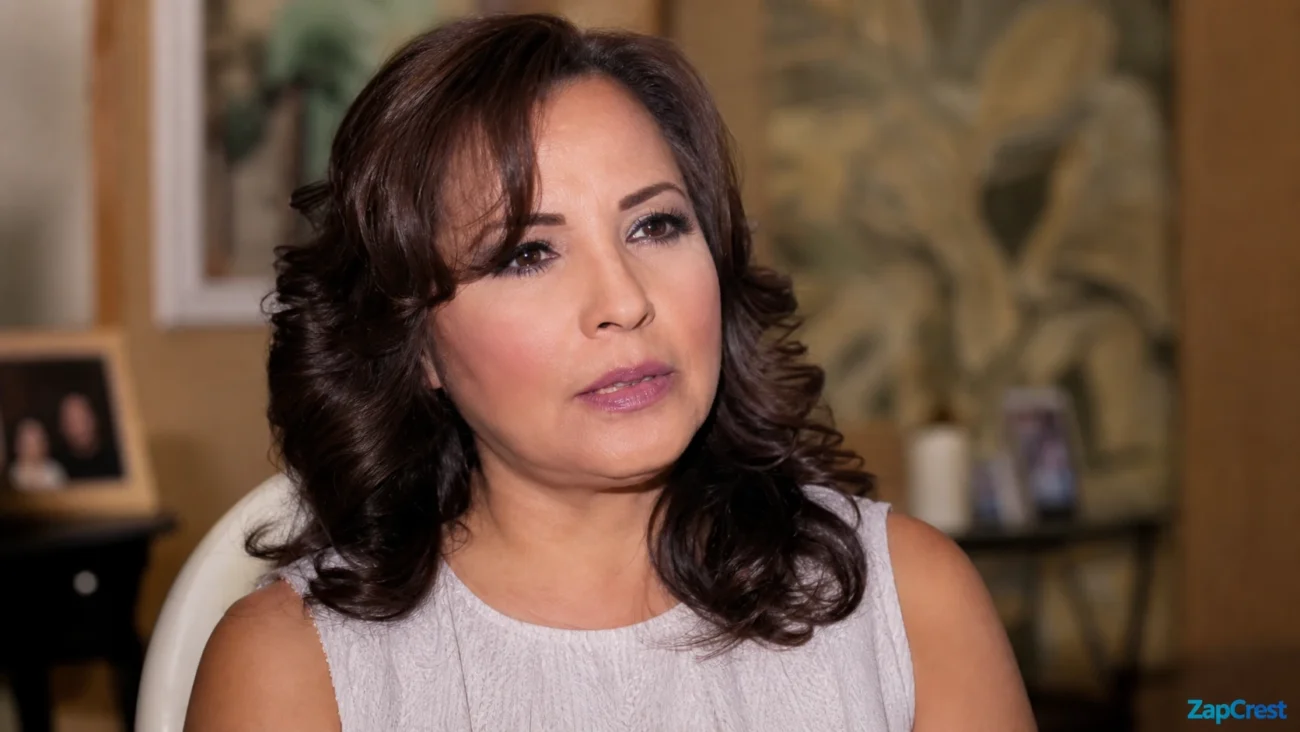
Marisela Vallejos Félix became known to the public through a story she never seemed to chase. Her name is tied to one of the most haunting legends in regional Mexican music: the life and murder of Rosalino “Chalino” Sánchez, the Sinaloa-born singer whose voice helped define the modern corrido. Yet Marisela’s own story is not one of fame built on stages, records, or interviews. It is the story of a woman who lived close to a cultural phenomenon, endured two devastating family losses, and remained largely private while the world kept returning to her husband’s myth.
For many readers, the first question is simple: who is Marisela Vallejos Félix? She is best known as Chalino Sánchez’s widow and the mother of his children, including Adán Sánchez, the young singer who died in 2004 after beginning to build his own career. That connection places her at the center of a family history that crosses Sinaloa, Southern California, Mexican immigrant life, and the emotional pull of corrido music. But here’s the thing: much of Marisela’s personal life has never been fully public, and any honest biography has to respect the difference between confirmed history and repeated online claims.
Marisela matters because the public memory of Chalino is not only about music. It is about migration, violence, grief, reinvention, and the way ordinary families can be drawn into stories much larger than themselves. Chalino became a symbol after his death, but Marisela lived with the human cost of that symbol. Her life is best understood not as celebrity biography in the usual sense, but as the quiet, complicated story of someone bound to a legend while trying to keep parts of herself beyond it.
Early Life and Family Background
Marisela Vallejos Félix has long been described in public accounts as a woman from Mexico, often connected to Baja California and the border world that shaped many Mexican families who later settled in Southern California. Precise details about her birth date, schooling, parents, and childhood have not been widely confirmed in reliable public records. That absence is important because many short online biographies repeat personal details without showing where they came from. A careful account should say plainly that her early life remains mostly private.
What can be said with confidence is that Marisela came from the same broader regional and cultural world that shaped Chalino Sánchez. That world included Sinaloa, Baja California, Los Angeles, immigrant neighborhoods, working-class ambition, and families moving across borders for safety, work, and opportunity. It was a world where music traveled with people, carrying hometown pride, family memories, and stories of men whose lives were marked by danger. Marisela’s later public identity would be formed within that social setting, even though she did not seek the stage herself.
Her surname, Vallejos Félix, also places her inside a naming tradition common in Mexico, where both paternal and maternal family names can appear in public use. Across English and Spanish media, her name has been written in different forms, including Marisela Vallejos Felix without accent marks and sometimes Maricela in older reporting. These variations can confuse readers, but they generally refer to the same woman known as Chalino Sánchez’s wife. The spelling “Marisela Vallejos Félix” has become the most common form used in search and entertainment writing.
Because she has not lived as a regular media figure, Marisela’s childhood and young adulthood are not documented in the way an actor’s, politician’s, or recording artist’s life might be. There are no widely verified school records, early interviews, or public career milestones that define those years. That said, her later life suggests a woman who understood the demands of family loyalty and public attention even when she did not court it. The biography of Marisela begins in a fuller public sense when her life intersects with Chalino’s.
Meeting Chalino Sánchez
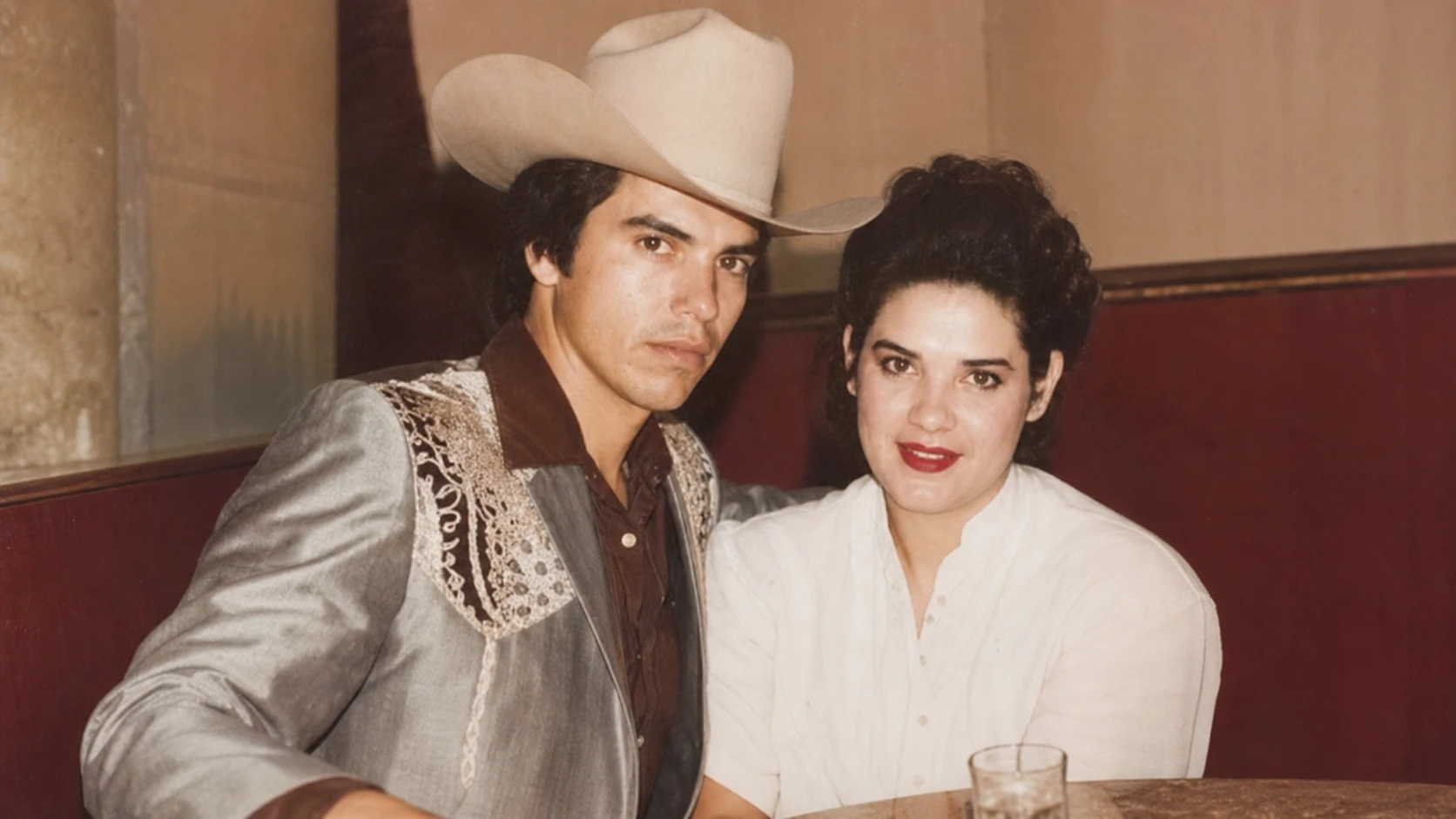
Rosalino Sánchez Félix, later known simply as Chalino Sánchez, was born in Sinaloa and eventually made his way north after a youth marked by hardship and violence. His songs would later carry the rough texture of that life, telling stories of revenge, betrayal, crime, pride, and survival in a voice that was not polished but was impossible to mistake. By the time Marisela entered his life, Chalino was still far from the posthumous legend he would become. He was a migrant, a hustler, a husband-to-be, and a man trying to build a future in Southern California.
Public accounts commonly place Marisela and Chalino’s marriage in the mid-1980s, often naming 1984 as the year. That date is widely repeated, though the most reliable public conversation about the couple tends to focus less on paperwork and more on their family life. What is firmly established is that Marisela became Chalino’s wife before his rise reached its peak and before his 1992 murder made him an enduring figure in Mexican music. She knew him not only as the singer fans would later mourn, but as a partner and father.
Their relationship belonged to a working-class immigrant world where private and public lives often overlapped in crowded, difficult ways. Chalino’s music career grew from cassette culture, parties, local venues, and the demand for songs that named real people and real conflicts. He was not a manufactured star, and his early success did not come through the usual gatekeepers of the music industry. Marisela was present during the years when that rough, local following began turning into something larger.
Some reported interviews with Marisela recall her memories of meeting Chalino and of his strong, direct personality. Those accounts fit with the public image fans have long held of him: fearless, blunt, charismatic, and hard to separate from danger. But a wife’s view of such a person is always different from a fan’s view. She would have seen not only the defiant performer but also the man at home, the father of her children, and the person whose choices carried consequences for the whole family.
Marriage, Motherhood, and Family Life
Marisela and Chalino had two children together, Adán Sánchez and Cynthia Sánchez Vallejo. Their family life unfolded in Southern California during a period when regional Mexican music was growing among immigrant communities far from the industry centers that usually controlled Spanish-language entertainment. Chalino’s audience came from people who recognized the places, codes, and wounds inside his songs. For Marisela, his growing reputation meant the family lived near both opportunity and risk.
Adán Sánchez was born in 1984 and would later become the child most publicly connected to his father’s musical legacy. Cynthia, while part of the family’s public story, has generally lived more privately and has not been written about as heavily as her brother. This difference matters because the Sánchez family has often been discussed through the men who sang or died young. Marisela’s role as mother includes both the publicly mourned Adán and the less publicly examined family life around Cynthia.
Motherhood placed Marisela in a demanding position. She was raising children while Chalino’s work drew him into venues, parties, recording sessions, and circles where admiration and danger often sat close together. His songs dealt in reputation, insult, payback, and loyalty, themes that resonated deeply with listeners but also carried social risks. A family connected to such a figure could not easily separate home from the stories being sung outside it.
The truth is, the public knows far more about Chalino’s career than about the daily life of his marriage. That imbalance is common in the biographies of famous men whose wives avoid publicity. Marisela has usually appeared in public memory as widow, mother, and keeper of family legacy rather than as a person who narrates her own life in detail. That makes the available record incomplete, but it also tells us something about her: she has chosen privacy more often than performance.
Chalino Sánchez’s Rise and the World Around Marisela
Chalino’s rise was unlike that of most polished recording stars. He became known through personalized corridos, often written about people whose lives involved violence, smuggling, revenge, or local power. His voice was nasal, raw, and untrained by conventional standards, yet it carried an authority that many listeners trusted more than technical perfection. That authenticity helped him connect with fans who felt mainstream music did not speak directly to their lives.
Marisela lived beside that rise as it gathered force. In Los Angeles and surrounding communities, Chalino’s songs circulated through cassettes, swap meets, parties, and word of mouth. His audience was not waiting for approval from critics or major labels. They heard in him a version of their own border-crossing stories, their own memories of ranches and towns, and their own knowledge of men who lived by reputation.
The music also came with controversy. Corridos about criminals and violent figures had long existed, but Chalino’s work brought a harder, more personal edge to the genre’s modern form. Some listeners heard truth and cultural memory; others heard glorification of danger. For Marisela, these debates were not abstract because they attached themselves to the man she married and the home they shared.
As Chalino became more famous, his public image grew heavier. He was not simply a singer; he was treated as a man who had lived the kinds of stories he sang. That image made him magnetic and vulnerable at the same time. It also meant Marisela’s family was tied to an identity that fans loved but that could not be separated from real danger.
The Murder of Chalino Sánchez
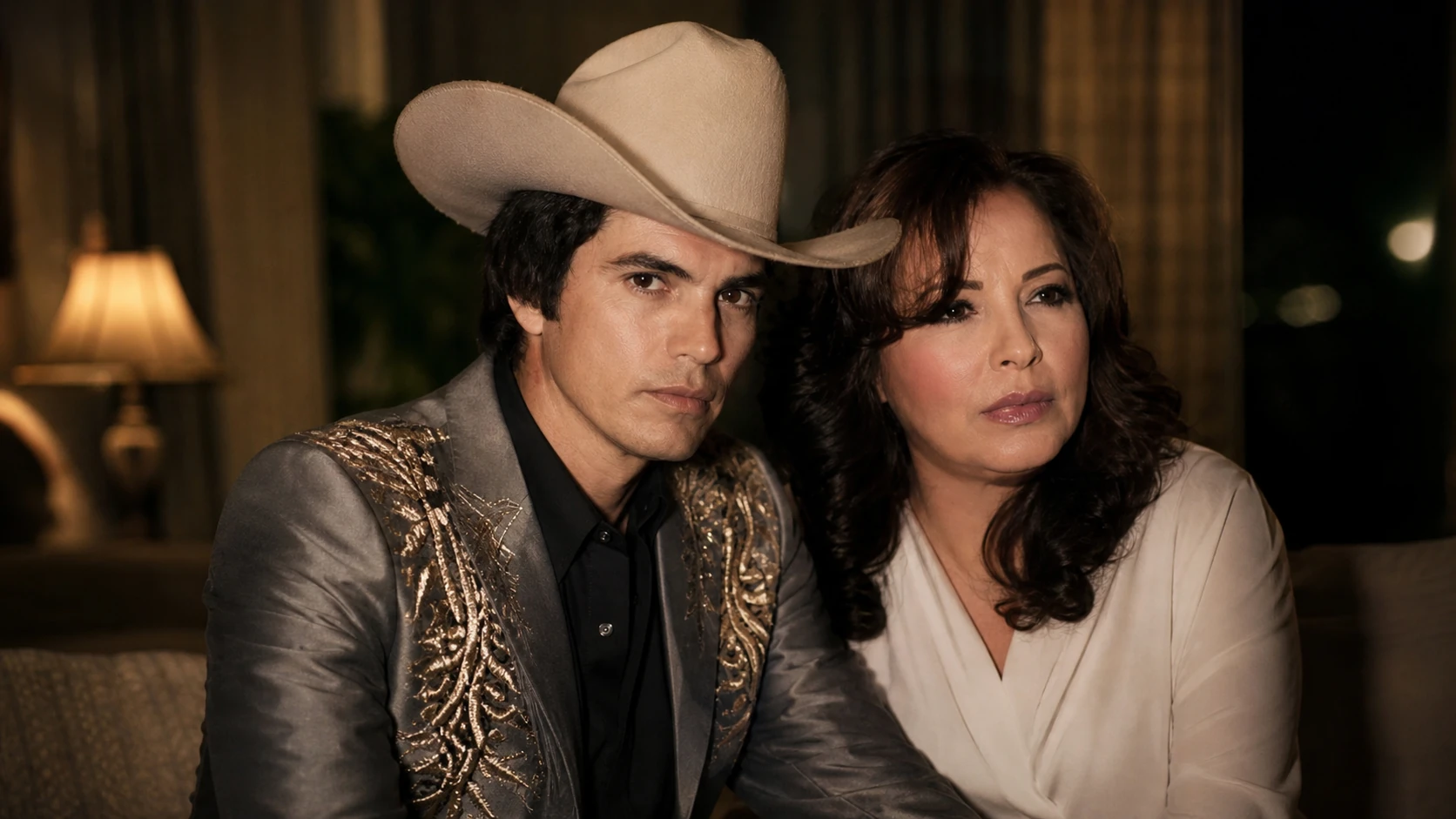
Chalino Sánchez was killed in Culiacán, Sinaloa, in May 1992 after a performance that has since become part of music folklore. The most repeated account says he received a note during his final concert, appeared visibly affected, and continued singing. The contents of that note have been the subject of endless speculation, and it is often described as a death threat. What remains clear is that Chalino was found dead after that night, and his murder has never been resolved in a way that has ended public debate.
For Marisela, the event was not a legend. It was the death of her husband and the father of her children. She became a widow while still a young woman, with a family to raise and a public story already forming around the man she lost. Fans would replay the concert footage, argue over theories, and search for hidden meanings in songs, but her reality was far more immediate.
The murder changed Chalino’s career in a grim way. Death transformed him from a growing regional figure into a lasting symbol. His recordings continued to circulate, his name became larger, and his life story became inseparable from the unsolved mystery of his final hours. Marisela was left to live inside the aftermath of a fame that grew after the person at its center was gone.
Speculation around Chalino’s murder has often focused on revenge, organized crime, personal disputes, and the violent codes that ran through some corrido culture. Many theories have been explored by journalists, fans, and documentary storytellers, but none should be treated as settled fact without firm proof. That distinction matters because sensational claims can easily swallow the truth of the family’s loss. Marisela’s place in the story should not be reduced to a clue in a murder mystery.
Life After Chalino
After Chalino’s death, Marisela’s public life narrowed even as public interest in her family widened. She is widely reported to have continued living in the Los Angeles area, where Chalino’s music had already taken strong root among Mexican and Mexican American fans. Southern California remained central to the family’s story because it was where Chalino’s audience grew and where Adán would later be embraced. The region became both a home base and a site of public mourning.
Widowhood under public attention is difficult in ways outsiders often miss. Marisela had to raise children while fans, journalists, and music collectors kept revisiting the most traumatic event in her life. Every new tribute to Chalino carried admiration, but it also reopened the circumstances of his death. That is the burden of being attached to a legend born partly through violence.
Her public posture after Chalino’s death appears to have been guarded. She did not become a constant interview subject or a regular figure in entertainment programming. Instead, she appeared only occasionally, usually in connection with family memory or tributes to Chalino and Adán. That pattern suggests a woman who accepted her role in the legacy without turning it into a full-time public identity.
Not many people know this, but restraint can be a form of authorship. By not feeding every rumor and not constantly performing grief, Marisela shaped her own boundary around the story. She allowed fans to remember Chalino, but she did not give the public unlimited access to the private parts of that remembrance. In a media culture that rewards exposure, that choice stands out.
Adán Sánchez and a Second Public Tragedy
Adán Sánchez grew up with a name that carried both opportunity and weight. As Chalino’s son, he inherited instant recognition among fans of regional Mexican music, but he also faced the pressure of comparison. His own singing career developed in a softer, more romantic style than his father’s harder corrido image. Still, audiences responded to him as both an artist and the living continuation of a beloved family name.
By his late teens, Adán had become a rising figure with a devoted fan base. He was especially popular among young listeners who saw him as handsome, sincere, and emotionally accessible. His music career was still developing, but the connection to Chalino gave his performances a strong emotional charge. For Marisela, his rise must have brought pride mixed with the complicated fear of watching another family member enter public life.
On March 27, 2004, Adán Sánchez died in a car crash in Sinaloa while traveling during a promotional trip. He was only 19 years old. Public reports at the time stated that the vehicle he was riding in overturned after a tire problem, and authorities did not establish foul play. Because of Chalino’s history, rumors spread quickly, but the reported circumstances pointed to a tragic accident.
Adán’s death created a second wave of public grief around Marisela’s family. Fans gathered in large numbers to mourn him, and media coverage described emotional scenes around his memorials. For a mother, that attention could never replace the private loss of a child. The public saw a young singer cut down too soon; Marisela lost her son.
Public Image and Rare Appearances
Marisela Vallejos Félix has never seemed comfortable as a conventional public figure. Her appearances have usually been tied to remembrance, not self-promotion. In public tributes, she has been received with affection because fans understand her as a living connection to both Chalino and Adán. That affection, though genuine, also comes with expectations that can be heavy for someone who has lived through so much loss.
One of the most meaningful aspects of her public image is the way fans treat her as part of the Sánchez legacy. She is not famous for recordings, films, books, or a public career. She is known because she kept living after two men in her immediate family became part of regional Mexican music history. That kind of recognition can be tender, but it can also be limiting.
Her rare comments about Chalino and Adán have generally reflected gratitude toward fans who continue to remember them. She has appeared at tribute events where music, memory, and family grief meet in public. These moments show her as someone who understands the importance of the legacy even if she keeps her own life separate from celebrity culture. They also remind fans that memory belongs not only to audiences but to families.
Public image is often shaped by absence as much as presence. Because Marisela does not speak constantly, people project ideas onto her: the loyal widow, the grieving mother, the keeper of Chalino’s name. Some of those images may contain truth, but none of them can fully describe a person. A respectful biography has to leave room for the life she has not chosen to display.
Career, Income, and Net Worth
Unlike Chalino and Adán, Marisela Vallejos Félix is not known to have pursued a public entertainment career. There is no strong record of her building a profession as a singer, actor, producer, television personality, or business figure. Her public identity comes mainly through family connection and occasional participation in memorial events. That makes any discussion of her career different from a typical celebrity profile.
Some online sources speculate that Marisela has received income connected to music royalties from Chalino’s catalog or from family-related rights. That is possible in a general sense, since music estates and heirs can receive royalties depending on contracts, ownership, publishing arrangements, and licensing. But the exact structure of Chalino’s rights, Marisela’s share if any, and any income connected to Adán’s work have not been clearly established in public reporting. Without documentation, those claims should remain carefully labeled as uncertain.
Net worth estimates attached to Marisela’s name should be treated with caution. Many celebrity-net-worth pages create figures without showing reliable evidence, and private individuals are especially vulnerable to inaccurate estimates. There is no widely verified financial disclosure that confirms her assets, income, or estate holdings. The most honest answer is that her net worth is not publicly confirmed.
That uncertainty does not make her story less meaningful. Too many profiles treat money as proof of importance, but Marisela’s public significance comes from family history, cultural memory, and survival under extraordinary public grief. Her financial life, unless she chooses to discuss it or records make it clear, remains private. Readers should be wary of any article that presents a precise dollar amount as fact without strong sourcing.
Relationship Status and Private Life
Readers often search to find out whether Marisela Vallejos Félix remarried after Chalino Sánchez’s death. There is no widely confirmed public record establishing that she did. Some short biographies state that her relationship status is unknown, which is the most careful way to handle the question. Anything more specific would require stronger public evidence than what is generally available.
This uncertainty is not unusual. Many people connected to famous families choose to keep later relationships away from public attention. For Marisela, that privacy is especially understandable because her name is already tied to painful public memories. Whether she remarried or remained single is ultimately less important than the fact that she had the right to continue her life outside fan speculation.
Her current private life is also not well documented. Public reports have placed her in the United States, especially Southern California, but exact present details should not be treated casually. Responsible writing avoids publishing or guessing personal information that has no clear public value. Marisela’s current status is best described as private, with occasional public connection to the remembrance of Chalino and Adán.
That said, her continued place in fan culture is visible. Whenever Chalino’s story returns through music anniversaries, podcasts, documentaries, or viral clips, Marisela’s name often returns with it. She remains part of the emotional frame through which many people understand the family. Her privacy has not erased her from the legacy; it has made her presence quieter and more guarded.
Cultural Influence Through Family Legacy
Marisela Vallejos Félix did not create the corrido movement that made Chalino famous, but she is part of its human history. Corridos have long told stories about outlaws, heroes, local conflicts, migration, and death. Chalino’s work helped bring a rawer modern form of that tradition to Mexican and Mexican American audiences. His family became part of how fans understood the cost and reality behind those songs.
Her influence is indirect but real. As Chalino’s widow and Adán’s mother, she represents continuity between two generations of regional Mexican music. Chalino’s voice became a symbol of defiance and survival; Adán’s career showed how that name could move into a younger, more romantic register. Marisela stood behind both stories as family rather than performer.
The continued fascination with Chalino also reflects how immigrant communities preserve memory. For many fans, his songs carry echoes of ranches, small towns, border crossings, and hard lives rarely treated with dignity by mainstream culture. Marisela’s story belongs to that same emotional world. She is remembered because listeners understand that legends do not grow in isolation; they come from families, neighborhoods, losses, and loyalties.
What’s surprising is how often the private figure becomes the emotional anchor of a public myth. Fans may admire Chalino’s courage or mourn Adán’s promise, but Marisela gives the story its strongest human grounding. She reminds readers that the people left behind carry the longest part of the story. That is why her name continues to hold meaning even without a public career of her own.
Where Marisela Vallejos Félix Is Now
The most accurate description of Marisela Vallejos Félix today is that she is a private figure who remains publicly associated with the legacy of Chalino Sánchez and Adán Sánchez. She has appeared at tribute events and has been recognized by fans who continue to honor both artists. Beyond those appearances, there is limited reliable information about her day-to-day life. That limit should be respected rather than filled with guesses.
Her current public identity is shaped by memory. She is not promoting a major project, releasing frequent interviews, or building a brand around the Sánchez name. Instead, she appears to have allowed the music and the fans to carry much of the public remembrance. Her role is closer to that of a family witness than a celebrity manager of legacy.
The internet has made her both more visible and more vulnerable to misinformation. Search results often mix accurate family facts with unsupported claims about age, money, citizenship, or relationships. Readers looking for the truth should prioritize careful reporting and be skeptical of pages that repeat personal details without clear support. In Marisela’s case, absence of information often means privacy, not mystery.
Her life now, as far as the public can responsibly know, is defined by distance from constant attention. She remains a name of interest because Chalino and Adán remain beloved, but she has not turned that interest into a routine public presence. That choice gives her story a certain dignity. It also asks writers and readers to approach her with more care than curiosity alone.
Frequently Asked Questions
Who is Marisela Vallejos Félix?
Marisela Vallejos Félix is best known as the widow of regional Mexican singer Chalino Sánchez. She is also the mother of Adán Sánchez, the young singer who died in 2004, and Cynthia Sánchez Vallejo. Her public identity comes mainly from her family connection to two figures remembered by fans of Mexican and Mexican American music.
She is not known for a public career in entertainment. Instead, she has remained a private figure who appears only occasionally in connection with tributes or family remembrance. That privacy is one reason many details about her personal life remain unconfirmed.
Was Marisela Vallejos Félix married to Chalino Sánchez?
Yes, Marisela Vallejos Félix was married to Chalino Sánchez. Public accounts generally place their marriage in the mid-1980s, before Chalino reached the height of his fame and before his murder in 1992. Together they had two children, Adán and Cynthia.
Their marriage is central to Chalino’s family story, but it is not well documented in the public record beyond broad facts. Marisela has not spent decades giving extensive public interviews about their private life. Most of what readers know comes from family references, music reporting, and occasional tribute coverage.
How did Chalino Sánchez die?
Chalino Sánchez was murdered in Culiacán, Sinaloa, in May 1992 after performing at a concert. His death remains one of the best-known unsolved stories in regional Mexican music. The widely discussed account of his final performance includes a note he reportedly received onstage, though the exact meaning and contents of that note have never been settled in a fully public, verified way.
His murder helped turn him into a lasting legend, but it also left Marisela a widow with children to raise. For fans, the case became a mystery tied to songs and theories. For his family, it was first and foremost a personal loss.
What happened to Marisela’s son Adán Sánchez?
Adán Sánchez died on March 27, 2004, in a car crash in Sinaloa while traveling during a promotional trip. He was 19 years old and had already begun building a strong fan base as a singer. His death caused widespread mourning among young fans and followers of the Sánchez family.
Because his father had been murdered in Sinaloa years earlier, speculation appeared quickly after Adán’s death. Public reports, however, described the crash as an accident involving a vehicle that overturned after a tire problem. The tragedy gave Marisela a second major public loss connected to the music world.
Is Marisela Vallejos Félix still alive?
Public information in recent years has referred to Marisela Vallejos Félix as alive, and she has appeared at events honoring Chalino and Adán. However, she does not maintain a highly visible public profile, so current details about her daily life are limited. The safest answer is that she is a private person whose recent public presence has been tied mostly to remembrance events.
Readers should be careful with pages that claim exact personal details without support. Private individuals connected to famous people are often the subject of copied or poorly sourced claims. In Marisela’s case, reliable information is strongest around her family history, not her present private routine.
Did Marisela Vallejos Félix remarry?
There is no widely confirmed public information proving that Marisela Vallejos Félix remarried after Chalino Sánchez’s death. Some online biographies state that her later relationship status is unknown, which is the most responsible public answer. Anything more definite would require clear evidence.
Her privacy on this subject should be respected. The fact that she was once married to a famous singer does not make every later personal decision a public matter. A careful biography should avoid turning uncertainty into gossip.
What is Marisela Vallejos Félix’s net worth?
Marisela Vallejos Félix’s net worth is not publicly confirmed. Some websites offer estimates, but these figures are usually not backed by reliable financial records. Claims about royalties or estate income may be plausible in general, but the exact rights and payments connected to Chalino’s or Adán’s music are not clearly documented for the public.
Because she is not a regular public business figure or entertainer, there is no dependable basis for a precise figure. The most accurate answer is that her finances remain private. Readers should treat any exact number as an estimate unless it comes with strong proof.
Conclusion
Marisela Vallejos Félix remains a compelling figure because her life sits at the meeting point of music history and private endurance. She was married to Chalino Sánchez before he became an immortal name in corrido culture, and she raised children inside the long shadow of his fame. Later, she endured the death of Adán Sánchez, whose own career had begun to carry the family legacy into a new generation.
Her story is not filled with public milestones in the usual celebrity sense. There are no long filmographies, award campaigns, or business empires to trace. Instead, her biography is shaped by family, loss, restraint, and the burden of being connected to men whose deaths became public memory. That kind of life deserves a quieter, more careful form of attention.
What makes Marisela important is not that she sought the spotlight. It is that the spotlight kept returning to her family, and she continued to stand at the edge of it with dignity. Fans may come to her name through Chalino, through Adán, or through the mystery surrounding their stories. They leave with a fuller understanding that behind every legend are people who must live with what the legend costs.
Marisela Vallejos Félix still matters because she gives the Sánchez legacy its human frame. The music remains loud, the theories remain active, and the fans remain loyal. Her presence reminds us that memory is not only kept in songs. Sometimes it is kept by those who choose silence, privacy, and survival.
