
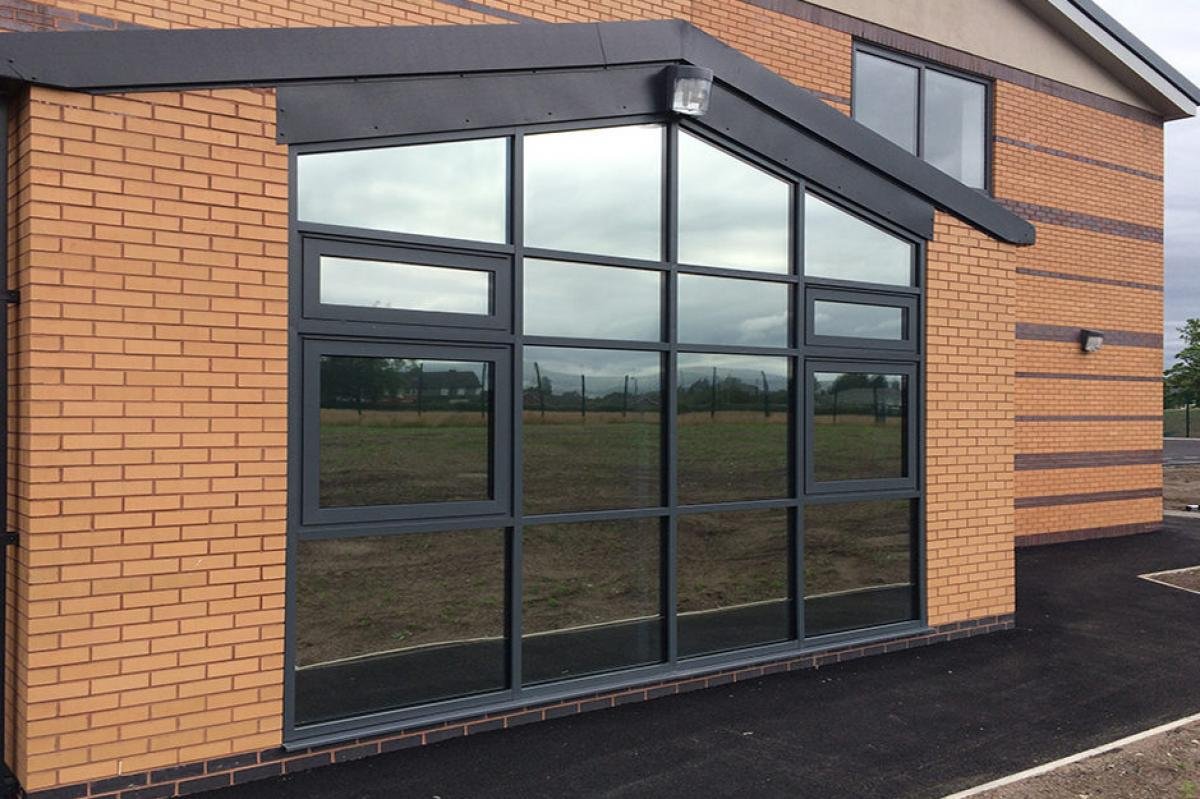
Mirror window film is the product people picture when they think of tinted glass: a silver surface that turns a window into a mirror from the street and leaves the view from inside untouched. A window film mirrored towards the street is doing precisely that, and nothing more. It is also the most misunderstood product in the category, because the mirror does not work all the time — and nobody selling it should pretend otherwise.
The physics are simple. A mirrored window film reflects light back towards whichever side is brighter. In daylight the street is the bright side, so the glass reads as a mirror outside and stays clear inside. After dark, with lamps on indoors and the street unlit, the effect flips and the room becomes visible. That is true of every reflective window tint ever made, in every brand and price bracket, and the rough rule installers use is that the lit side needs roughly three times the light of the other side for the effect to hold. Anyone promising 24-hour privacy from a mirror tint is selling something that does not exist.
What mirror tint actually does for a room
Daytime privacy is only half the reason people buy it. The metallised layer that makes the mirror also throws solar heat back before the glass warms up, which is why most owners mirror tint windows on the south and west side of the house and leave the rest alone. Glare drops, furniture and floors stop fading, and on the sunny side of a building the air-conditioning runs noticeably less. Mirrored window tint of this type rejects 99% of UV regardless of how dark or light the model is.
Mirror film for windows comes in silver, bronze and, rarely, gold, and the colour changes the look far more than the performance. The clearest way to see how a range is built is to look at one sorted by darkness rather than by colour — the US catalogue at www.window-film-shop.com/window-film/mirror-window-film groups its mirror window tint film models into dark 10%, standard 20% and light 35%, with the VLT and TSER of every model published on the page. That is the layout worth borrowing when you compare any two brands.
Seven mirrored film for windows models, darkest to lightest
Two numbers describe any of them: VLT, the share of daylight that gets through, and TSER, the share of total solar energy rejected. The lower the VLT, the stronger the mirror.
- Strata 10 — dark silver, VLT 8%, reflectance 74%, TSER 91%, interior fitting. The strongest window mirror film of the group and the rarest choice: it is genuinely dark, so it belongs on commercial glazing or on a room where privacy outranks daylight.
- 3M Night Vision 15 — dual-reflective, VLT 15%, dealer-installed. 3M quotes the Night Vision series at up to 71% solar heat rejection; the point of the line is that the inner face is far less reflective than the outer, so the view out at night is easier than with a classic metallised mirror tint.
- Omg 20 — silver, VLT 22%, reflectance 57%, TSER 84%, interior fitting, sold in the UK by Solaris 979 at https://www.window-film-solaris.co.uk/silver-om-20. Bright, clean mirror finish, view out undistorted.
- Strata 20 — silver, VLT 23%, reflectance 57%, TSER 84%, interior. The standard-darkness workhorse and the best-selling window film mirror in this range.
- 3M Night Vision 25 — dual-reflective, VLT 25%, dealer-installed. The middle step of the same series, for people who want the heat rejection without a strong mirror on the facade.
- Bronze AT 35 Ex — bronze, sputtered, VLT 34%, TSER 75%, fitted on the outside of the glass. Warmer tone than silver, and it suits brick and timber facades where a silver mirror looks too commercial.
- Strata 35 — light silver, VLT 36%, reflectance 43%, TSER 67%, interior. Semi-mirrored rather than mirrored, for small windows and north-facing rooms.
Dark, standard or light: reading the numbers honestly
A lot of sellers call 20% “dark” simply because it is the darkest thing they stock. It is not. On a properly wide range, mirror tints run from VLT 7–10% at the dark end through 20–25% as standard to 30–35% for light. A mirror window tint at 20–25% is the normal choice for a living room: bright enough not to gloom the place up, reflective enough to stop the street looking in. Go to 10% only where you truly want the space dim. On small or north-facing windows mirror film at 35% is the better call — a mirror tint for windows that leaves the room dark is a mistake that gets peeled off within a year.
Inside or outside the glass
Most mirror film for glass goes on the inside, where it is protected from weather and lasts nine years and more. Exterior models exist for two situations: glass that cannot be reached from indoors, and sealed multi-pane units where the manufacturer forbids interior film. Fitted outside, a mirrored film for glass stops the heat before it touches the pane and works some 15–20% harder for it, but it lives shorter — four to six years against nine-plus — because rain, wind and unfiltered sun all land on it directly.
Buying mirror tinted window film cut to size
The one part of the job worth outsourcing is the cutting. Straight edges and square corners are what make an installation look professional, and both are hard to produce freehand on a wet pane. Ordering pieces already cut to the window means the blade never touches the glass; on the US range every model comes cut to your measurements in inches, accurate to 1/32″, with an application tool and mounting concentrate in the box plus a small piece of film for practising the technique before the real sheet goes up.
Whichever mirrored window film you settle on, the checks are the same. Confirm the VLT and TSER are published per model rather than as a vague range. Match the darkness to the window, not to the photo. And decide the side of the glass first, because that choice narrows the list faster than the colour does.
Common questions
Does a mirror tint work at night? No — the reflection follows the brighter side, so after dark the effect reverses. Blinds or curtains solve it; no tinted mirror film on the market does.
Will a mirrored glass film make the room dark? On a large window, barely: a mirror glass film at 20–25% VLT kills the glare while overall brightness holds up. On a small window, choose 35%.
Silver or bronze? Silver reflects more and reads as a true mirror. A bronze mirrored film is warmer and less conspicuous on a residential facade — the specification is close, the look is not.
