
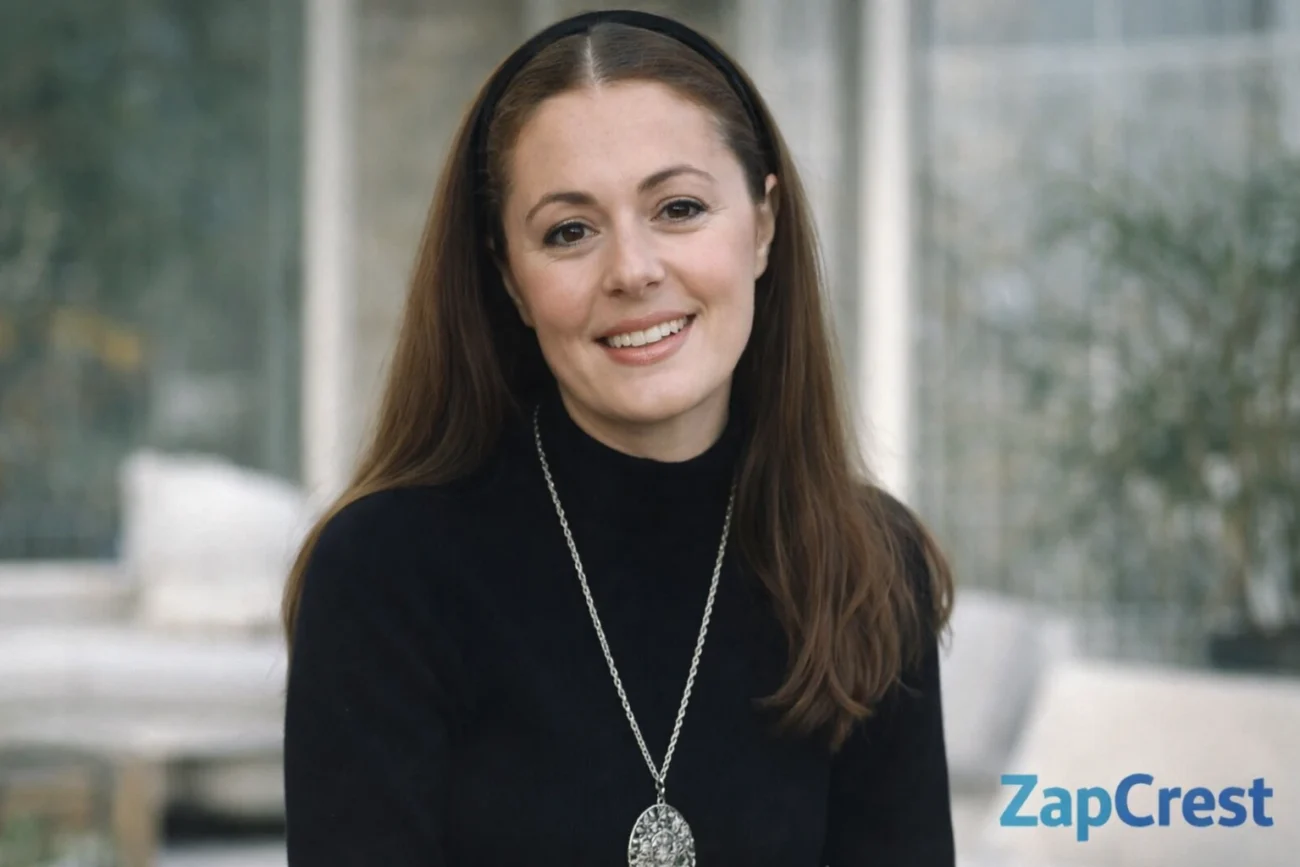
On a winter morning in 1974, Britain believed a government minister had drowned off a Florida beach. His clothes were found neatly folded near the shoreline, his disappearance accepted as tragedy. Within weeks, the story unraveled into something stranger: a staged death, a secret life, and a second woman waiting on the other side of the world. That woman was Sheila Buckley—a name that has lingered quietly in the margins of one of Britain’s most bizarre political scandals.
For many readers, Buckley is not famous in her own right but remains tied to the extraordinary actions of John Stonehouse, the Labour MP who tried to disappear and start again. Yet her story is more complicated than a supporting role in a headline-grabbing scandal. It is a story about proximity to power, loyalty tested under public scrutiny, and a life that largely retreated from view after intense exposure.
Early Life and Background
Unlike the man who would later define her public image, Sheila Buckley’s early life is largely undocumented in accessible public records. There is no widely confirmed account of her childhood, family background, or early education in major archives or reputable biographies. That absence is not unusual for people who lived outside public life until a specific moment thrust them into attention.
What can be said with some confidence is that Buckley was significantly younger than John Stonehouse—reported in multiple accounts as roughly two decades his junior. By the time she entered the public record, she was working as a secretary, a role that placed her within professional proximity to power but not within it. That position would shape everything that followed.
Her lack of early public profile has had lasting consequences. Much of what is written about her today begins abruptly in adulthood, as though her life started at the moment she crossed paths with Stonehouse. It’s a reminder of how history often preserves individuals not for who they were, but for where they stood when events unfolded.
Working for John Stonehouse
Sheila Buckley came into contact with John Stonehouse through her work as his secretary. At the time, Stonehouse was a rising figure in British politics, serving as a Labour MP and holding ministerial roles during Harold Wilson’s government. He was ambitious, articulate, and already navigating pressures that would later intensify.
The relationship between Buckley and Stonehouse began in a professional setting but soon became personal. By the early 1970s, the two were involved in an affair, despite Stonehouse being married with children. This relationship, initially private, would later become central to understanding the decisions that led to his disappearance.
What’s striking is how little of Buckley’s own voice appears in accounts of this period. Contemporary reporting and later retellings describe her largely through Stonehouse’s actions and intentions. Even so, her presence was not incidental. She was close enough to his inner life to become part of the story that would soon shock the public.
The 1974 Disappearance
On November 20, 1974, John Stonehouse disappeared while swimming in Miami, Florida. His clothes were discovered on the beach, prompting fears that he had drowned. News of his presumed death spread quickly in Britain, triggering mourning within political circles and beyond.
But the disappearance was no accident. Stonehouse had orchestrated the event as part of a plan to escape financial troubles and start a new life under a false identity. He had already begun preparing for this move, acquiring forged documents and setting up accounts abroad.
Sheila Buckley’s role during this period remains a subject of interpretation. What is established is that Stonehouse intended to include her in his new life. Reports from the time and later investigations indicate that she traveled to Australia, where Stonehouse had fled under an assumed name.
Her presence in Australia placed her within the orbit of the deception. Whether she fully understood the scope of his plans from the outset is less clear. The available evidence suggests involvement, but the extent of her knowledge and agency has been debated ever since.
Arrest and Legal Fallout
The unraveling came quickly. In December 1974, Australian authorities arrested Stonehouse after suspicious financial activity drew attention to his false identity. For a brief moment, investigators even considered whether he might be Lord Lucan, another missing British figure at the center of a separate scandal.
Stonehouse was eventually identified and extradited to the United Kingdom, where he faced charges of fraud, forgery, and deception. The trial that followed was lengthy and highly publicized, lasting several months and exposing the full extent of his scheme.
Sheila Buckley was also drawn into the legal proceedings. She faced charges related to the case and was ultimately given a two-year sentence, suspended for two years. The court’s decision reflected a belief that she had been involved, but not to the same degree as Stonehouse.
Judicial comments at the time suggested that Buckley had been influenced or controlled by her employer. That interpretation has shaped how historians and journalists have assessed her role. It does not absolve her of responsibility, but it places her actions within a context of imbalance in power and influence.
Marriage and Life After the Trial
After the trial and Stonehouse’s imprisonment, the relationship between him and Buckley did not end. Instead, it continued through the difficult years that followed. Stonehouse was sentenced to seven years in prison but was released in 1979 due to health concerns.
In 1981, he married Sheila Buckley, formalizing a relationship that had survived scandal, legal consequences, and public scrutiny. The couple went on to have a son, James William John. This period marked a transition from notoriety to relative quiet, as they attempted to rebuild a life outside the headlines.
Their marriage offers one of the clearest insights into Buckley’s personal decisions. Staying with Stonehouse after his conviction and during his declining health suggests a level of commitment that went beyond the initial affair. Whether that commitment stemmed from love, loyalty, or a complex mix of factors is something only she could fully explain.
Stonehouse died in 1988 from a heart attack. After his death, Buckley largely disappeared from public view, and reliable information about her later life becomes scarce.
A Life Largely Out of Sight
One of the most defining features of Sheila Buckley’s story is what happened after the scandal faded. Unlike many figures connected to high-profile cases, she did not seek to capitalize on her notoriety. There are no widely known memoirs, major interviews, or public appearances that offer her perspective on events.
This absence has fueled speculation but also underscores a deliberate choice. Remaining out of the spotlight may have been a way to reclaim privacy after years of unwanted attention. It also means that much of her later life remains undocumented in reliable public sources.
The truth is, there is no clear, confirmed account of where she settled, what career she pursued, or how she lived in the decades following Stonehouse’s death. Various online claims exist, but many lack strong sourcing and are difficult to verify.
That gap in the record is significant. It highlights the limits of public knowledge and serves as a reminder that not every life connected to a major event remains open to scrutiny forever.
Public Image and Cultural Legacy
Sheila Buckley’s public image has always been shaped by the Stonehouse scandal. She is often described as the “mistress” or “second wife,” labels that reduce a complex individual to a role within someone else’s narrative. This framing reflects both the nature of the story and the way media coverage tends to simplify personal relationships.
In recent years, interest in her has been revived by dramatizations of the Stonehouse affair. The 2023 ITV series Stonehouse introduced her to a new generation of viewers, portraying her as a central figure in the emotional dynamics of the story. Actress Emer Heatley’s portrayal added depth to a character who had long been sketched in broad strokes.
But dramatizations come with limitations. They often blend fact with interpretation, and not all scenes or motivations are drawn directly from verified evidence. While such portrayals can bring attention to overlooked figures, they can also blur the line between documented history and creative storytelling.
Buckley’s legacy, then, exists in a curious space. She is remembered not through her own achievements or public statements, but through her connection to an extraordinary event and the man at its center.
Financial Standing and Net Worth
There is no reliable public record of Sheila Buckley’s personal net worth. Unlike public figures in business or entertainment, she did not maintain a visible career that would allow for clear financial assessment. Any figures circulating online are speculative and should be treated with caution.
John Stonehouse, by contrast, faced financial difficulties that contributed to his decision to fake his death. His legal troubles and subsequent imprisonment would have affected any shared financial stability during their relationship.
After his death, there is little verified information about Buckley’s financial circumstances. Without confirmed records or statements, it is not possible to provide an accurate estimate of her wealth.
Where Sheila Buckley Is Now
This is the question most readers ask, and it is also the hardest to answer with certainty. There is no widely confirmed public record detailing Sheila Buckley’s current status or recent life. Some sources suggest she remained private and out of public view, but specifics are scarce.
The lack of confirmed information has led to confusion, particularly because the name “Sheila Buckley” is relatively common. Without clear identifying details, it is easy to conflate different individuals in public records.
What can be said is that Buckley chose, or at least maintained, a life away from media attention after the late 1980s. Whether she is still alive, where she lives, or what she does remains largely unknown in verifiable public sources.
Frequently Asked Questions
Who is Sheila Buckley?
Sheila Buckley is best known for her connection to British politician John Stonehouse. She worked as his secretary, became his partner during an affair, and later married him after his conviction and imprisonment. Her name is closely associated with the 1974 scandal in which Stonehouse faked his death.
What was Sheila Buckley’s role in the Stonehouse case?
She was involved in the events surrounding Stonehouse’s disappearance and subsequent fraud case. She traveled to Australia during the period when he was living under a false identity. She was later charged and received a suspended sentence, reflecting partial involvement as determined by the court.
Did Sheila Buckley go to prison?
No, she did not serve a prison sentence. She was given a two-year sentence that was suspended for two years. This meant she avoided imprisonment but remained legally accountable for her role in the case.
Was Sheila Buckley married to John Stonehouse?
Yes, she married John Stonehouse in 1981 after his release from prison. The couple had a son together and remained married until his death in 1988.
Is Sheila Buckley still alive?
There is no confirmed public information that clearly establishes her current status. Due to limited records and the common nature of her name, it is difficult to verify claims about her later life or whether she is still living.
Why is Sheila Buckley still talked about today?
Interest in her has been renewed by television dramas and documentaries about the Stonehouse scandal. These retellings have introduced her story to new audiences, prompting curiosity about her life and role in the events.
Conclusion
Sheila Buckley’s life sits at the intersection of private identity and public scandal. She became widely known not through personal ambition but through her connection to a dramatic and unusual episode in British political history. That connection has defined how she is remembered, even decades later.
What stands out is not just what we know, but what we do not. The gaps in her story are as revealing as the facts, pointing to a person who stepped away from public life after intense scrutiny. In a culture that often rewards visibility, her disappearance from the spotlight is striking.
Her story also raises questions about how history treats those on the edges of major events. Buckley was central enough to be remembered, yet not central enough to be fully understood. That tension remains at the heart of her biography.
In the end, Sheila Buckley’s legacy is shaped by both presence and absence. She was there at a defining moment, part of a story that continues to fascinate. But she also reminds us that not every life tied to history remains open for public consumption, and that sometimes the most enduring detail is the decision to remain unknown.
