
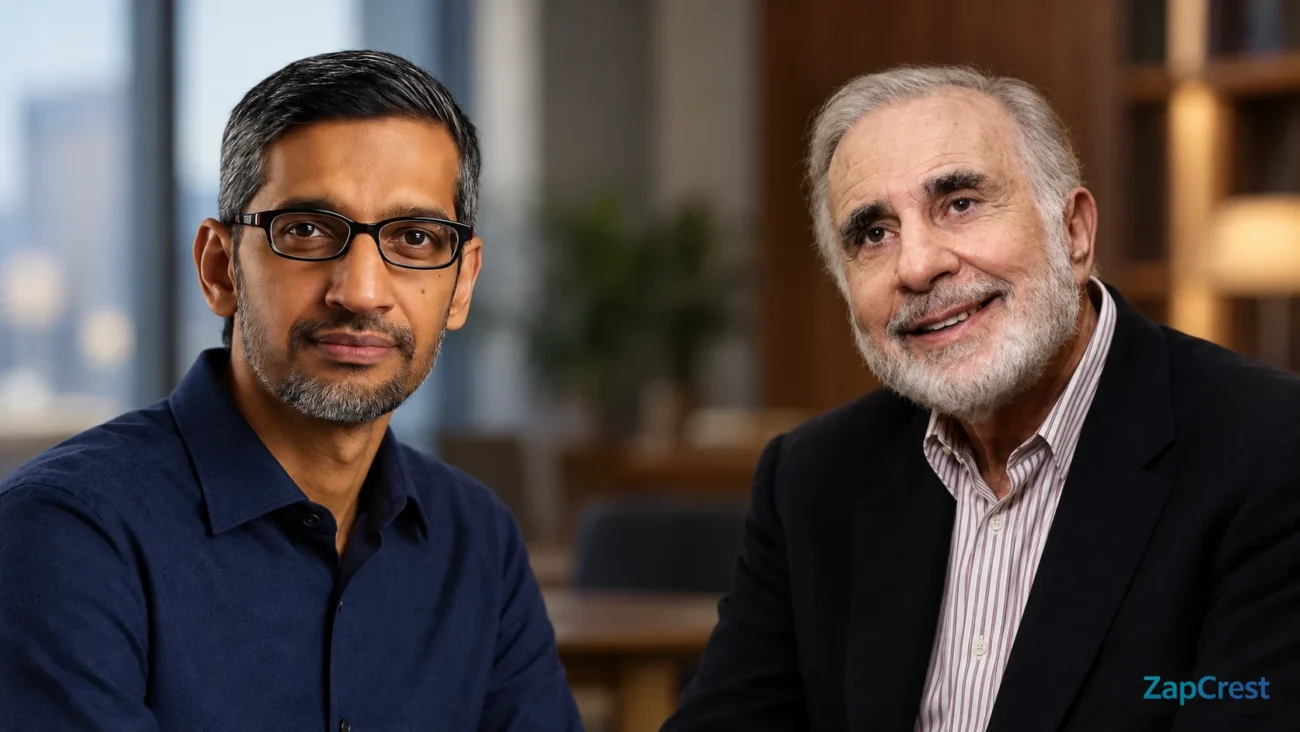
There is no publicly established direct business partnership, negotiation, or personal relationship between Sundar Pichai and Carl Icahn. Their clearest documented connection is indirect: Google’s 2011 acquisition of Motorola Mobility. Icahn was one of Motorola Mobility’s largest shareholders, while Pichai was already a senior Google executive. But Motorola’s detailed merger record names other Google leaders, not Pichai, as participants in the acquisition talks.
That distinction matters because Pichai’s position today can make the history easy to misread. In May 2011, Google identified him as Senior Vice President, Chrome in an official Chromebook announcement. Larry Page, not Pichai, was Google CEO when the Motorola deal was announced.
The more precise story is therefore about three different relationships: Carl Icahn’s role at Motorola, Google’s direct dealings with Icahn’s representatives, and Pichai’s separate position inside Google.
Why Motorola Mobility connects their business histories
Motorola Mobility sat at the center of an important moment in the smartphone industry in 2011. Android was expanding rapidly, while patents had become increasingly valuable in disputes among major technology companies.
According to Motorola Mobility’s merger proxy filed with the SEC, Google and Motorola executives were already discussing patents, Android, intellectual-property litigation and a possible acquisition in early July 2011.
Carl Icahn entered that story from the shareholder side.
The same filing shows that Icahn and related entities beneficially owned 33,505,706 Motorola Mobility shares, representing 11.39% of the company. On July 20 and 21, Icahn and Daniel Ninivaggi contacted Motorola CEO Sanjay Jha and urged the company to examine alternatives for its patent portfolio.
That pressure was significant, but it should not be confused with causing Google’s acquisition. Google’s discussions with Motorola about patents and a possible sale had already begun before Icahn’s July intervention.
Google and Icahn did deal directly
Although no direct Pichai-Icahn negotiation is documented, Google itself did have direct transaction-level dealings with representatives of Icahn.
A supplemental Motorola merger disclosure filed with the SEC records negotiations from August 11 to August 14, 2011 over a proposed voting agreement involving Icahn’s shares.
Google’s outside counsel sent a draft agreement to Icahn’s representatives, and the parties negotiated its terms. Motorola ultimately declined a provision sought by Icahn involving part of a possible reverse termination fee, and Google proceeded without the voting agreement.
That is the strongest documented Google-Icahn connection in the transaction. It is also why saying that the two sides had no direct dealings would be inaccurate.
But it still does not establish that Sundar Pichai personally participated.
Was Sundar Pichai involved in negotiating the Motorola deal?
Motorola’s detailed merger history does not identify Pichai as an acquisition negotiator.
Instead, it names Google figures including Larry Page, Nikesh Arora, Andy Rubin, Kent Walker, David Drummond and Donald Harrison at different stages of the process. Pichai’s name does not appear in the detailed proxy as one of the participants.
That does not prove he had no knowledge of the transaction inside Google. Public filings do not capture every internal conversation at a large company. What they do show is that there is no basis for presenting Pichai as one of the documented negotiators in the Motorola acquisition.
His position at the time was important but different. Google’s May 2011 announcement identified him as Senior Vice President, Chrome. He would not become Google CEO until October 2015.
How the Motorola deal developed
The acquisition moved quickly once formal price negotiations began.
Motorola’s SEC history records that Google proposed $30 per share in cash on August 1, 2011. The Motorola board did not accept that price, and negotiations continued.
On August 9, Google’s proposal moved higher, eventually reaching $40 per share.
On August 15, Google and Motorola Mobility formally announced an agreement under which Google would acquire Motorola for $40 per share in cash. The companies valued the transaction at approximately $12.5 billion, and the official acquisition announcement filed with the SEC identified Larry Page as Google’s chief executive.
Google completed the acquisition on May 22, 2012, according to its Form 8-K announcing the closing. The closing filing calculated the purchase price at approximately $12.9 billion because the final accounting included the aggregate value of shares, options and other awards outstanding at completion. That later figure does not contradict the approximately $12.5 billion valuation announced in August 2011; the figures refer to different stages of the transaction.
Why patents mattered so much
Motorola Mobility brought Google more than a smartphone manufacturer. Its patent portfolio was strategically valuable during a period of intense intellectual-property disputes in the mobile industry.
Motorola’s merger history shows that Google’s discussions with the company included the recent Nortel patent auction, litigation involving Android, and the possible value of Motorola’s intellectual property.
That context also explains why Icahn’s interests overlapped with Google’s without being the same. Icahn was a shareholder seeking greater value from Motorola’s assets. Google was evaluating Motorola as a strategic acquisition that could strengthen Android and add a substantial patent portfolio.
Their interests met inside the same transaction from different directions.
Google later agreed in January 2014 to sell Motorola Mobility to Lenovo for $2.91 billion. In its announcement of the Lenovo deal, Google said it would retain the vast majority of Motorola’s patents. That is why simply subtracting the Lenovo sale price from Google’s original purchase price would give a misleading picture of what Google bought and what it later sold.
Who is Sundar Pichai?
Sundar Pichai joined Google in 2004 and spent much of his pre-CEO career leading products that became central to the company’s business.
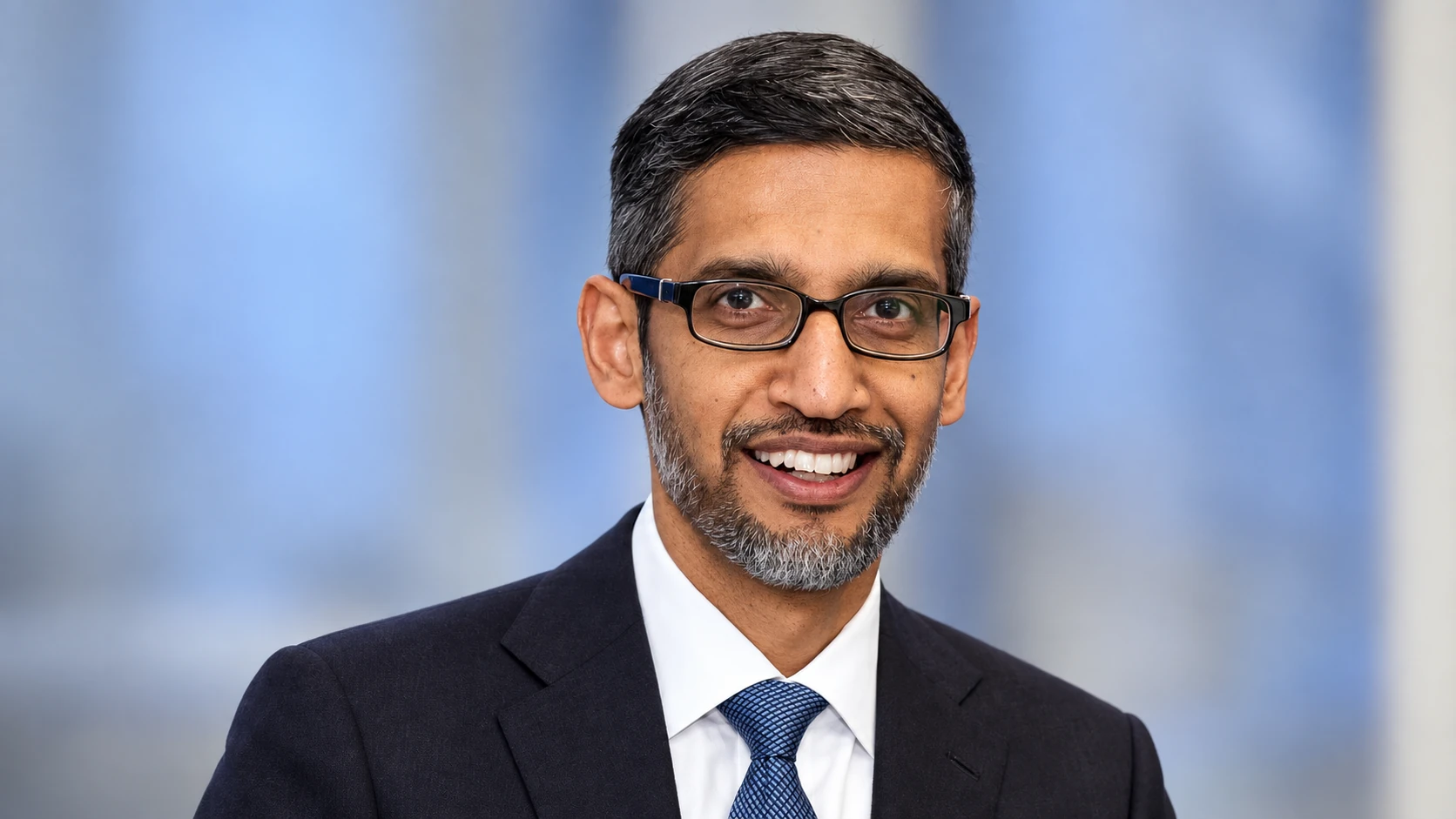
Alphabet’s 2026 proxy statement says his responsibilities over time included products and platforms such as Search, Chrome, Maps, Android, Gmail and Google Workspace.
He became CEO of Google in October 2015, when Google reorganized under a newly created parent company, Alphabet. He became CEO of Alphabet in December 2019 while continuing to lead Google.
His education combines engineering and business. Alphabet states that he earned a B.Tech. from the Indian Institute of Technology Kharagpur, an M.S. from Stanford University and an MBA from the Wharton School of the University of Pennsylvania.
In a 2026 Stanford commencement address, Pichai also offered a first-person account of the technological changes that shaped his career. He described arriving at Stanford in 1993 and gaining far greater access to computers and the internet than he had experienced growing up in Chennai. He later recalled that his final Google interview took place on April 1, 2004, the day Gmail launched.
He also discussed Chrome’s early development, describing a large burst of initial use followed by stalled growth and a period of sustained product iteration. Those details help explain the product-led career that eventually put him in charge of Google and Alphabet, but they do not place him at the center of the Motorola acquisition.
As of October 2, 2026, Alphabet’s current filings still identify Pichai as CEO of Alphabet and Google.
Who is Carl Icahn?
Carl C. Icahn built his career through investing rather than by operating a technology company.
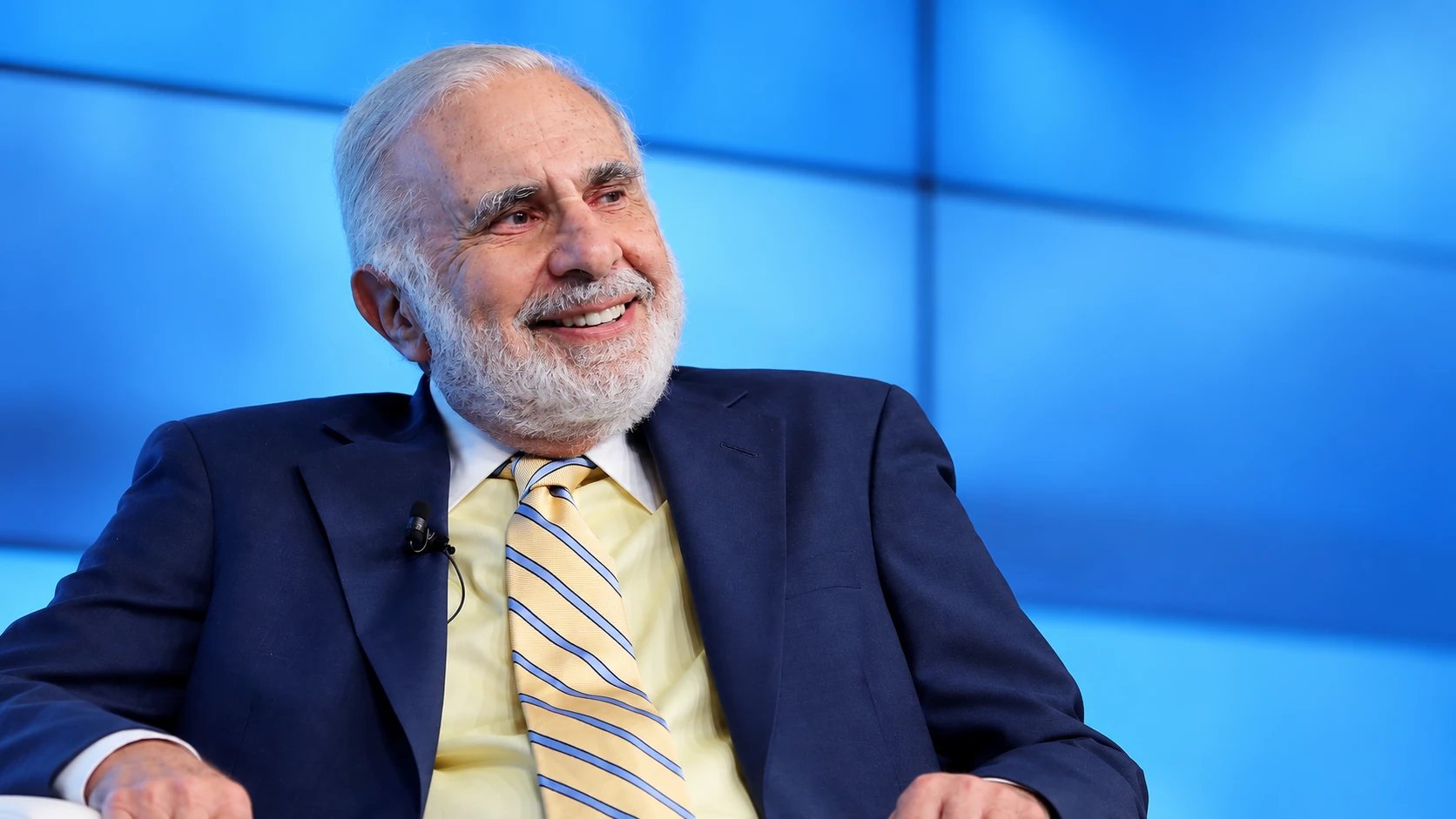
Princeton University records that he graduated in 1957, studied philosophy and received the McCosh Prize for his senior thesis. He later attended medical school for two years before moving into finance.
Icahn became known for shareholder activism: acquiring significant stakes in companies and using those ownership positions to press for changes in strategy, governance, asset allocation or corporate structure.
His Motorola position followed that pattern. He was not acting for Google. He was a major Motorola shareholder pressing the company to examine how its patent assets could be used to create more value.
After the Google-Motorola agreement was announced, Icahn publicly described the outcome positively and pointed to his prior efforts involving Motorola’s patent portfolio. That statement reflected Icahn’s own assessment of the campaign; it does not establish that his activism caused Google to pursue the company.
As of October 2, 2026, Icahn Enterprises’ board page continues to identify him as Chairman of the Board.
Does Carl Icahn currently have an Alphabet position?
Icahn’s public Form 13F information table for holdings as of June 30, 2026 does not list Alphabet.
That is a narrow disclosure fact, not proof that Icahn has no financial exposure to Alphabet of any kind. The SEC’s Form 13F guidance explains that the form covers specified securities and has limits, including rules under which some small positions may be omitted. Short positions are not reported.
The defensible conclusion is therefore limited: Icahn’s June 30, 2026 Form 13F table does not show a reportable Alphabet long position.
What the public record shows about Sundar Pichai and Carl Icahn
The connection between Sundar Pichai and Carl Icahn is narrower than the paired names can suggest.
Icahn was a major Motorola Mobility shareholder during Google’s 2011 acquisition process. Google and Icahn representatives did negotiate directly over a proposed voting agreement. Pichai was already a senior Google executive at the time, but Larry Page was CEO, and Motorola’s detailed transaction history does not identify Pichai as one of the deal negotiators.
There is also no public confirmation in the documented transaction record of a personal meeting, partnership, feud or sustained business relationship between Pichai and Icahn.
What does exist is a genuine corporate-history intersection: Icahn was trying to influence a company in which he held a large stake, while Google was preparing to buy it. Pichai’s later rise to lead Google and Alphabet makes his name easy to associate with that history today, but the 2011 record belongs to a different stage of his career.
