
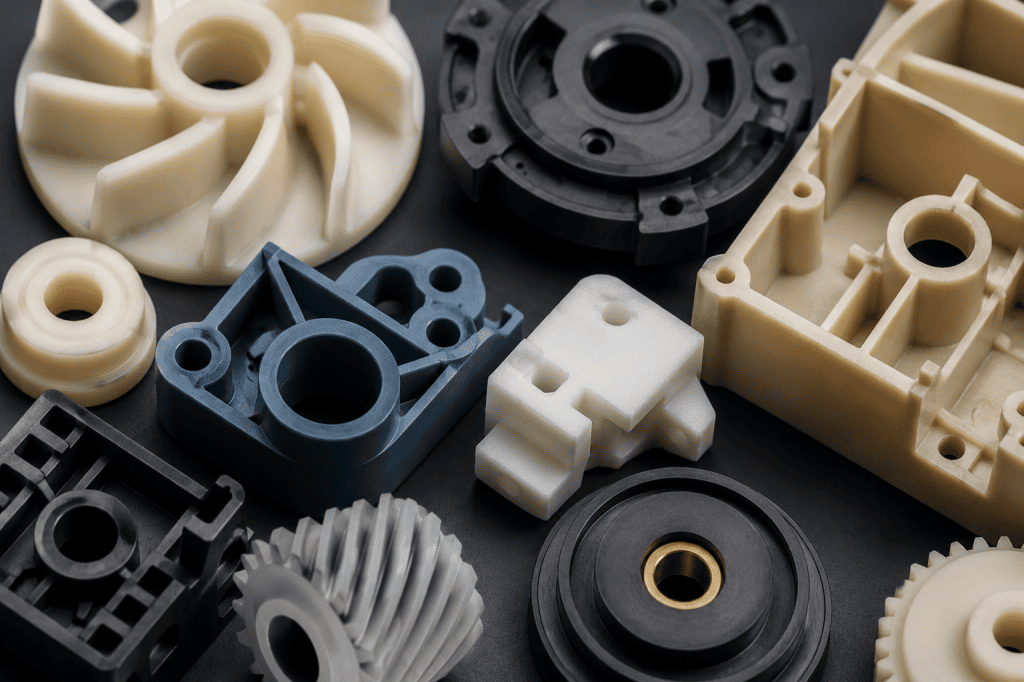
Home workshop enthusiasts often stick to wood or aluminium for their projects. 3D-printed PLA has its place for quick prototypes, but it often lacks the strength needed for functional mechanical parts. Engineering plastics offer an excellent alternative for building durable jigs, fixtures and tools.
Why Engineering Plastics Matter in the Home Workshop
Many woodworkers and metalworkers don’t realise how versatile industrial plastics can be. They handle high friction and resist impacts well, which makes them ideal for custom workshop upgrades. You can use them to build stable router bases, hard-wearing slider blocks or smooth-running guide fences without needing heavy machinery.
When you need a reliable material for general workshop use, a Nylon 6 sheet is often the best choice. It works brilliantly as an all-rounder because it combines high mechanical strength with excellent wear resistance. It’s ideal for custom spacers, durable structural brackets and sliding mechanisms that take repeated friction.
Worth knowing: Nylon 6 does absorb some moisture over time, so for parts that need tight tolerances in a damp garage, allow a little wiggle room in your dimensions. You can easily source it in various thicknesses to match your exact project.
How to Select the Right Plastic for Your Project
While nylon excels in high-strength scenarios, other options suit different conditions. Acetal, for instance, is a popular choice for hobbyists because it absorbs very little moisture. It holds its dimensions perfectly in damp garage environments, which makes it ideal for precision gears and fine instruments.
If you need something slicker for a table saw fence or a mitre slot runner, high-density polyethylene is an excellent alternative. It has an incredibly low-friction surface that lets wood and metal glide across it effortlessly. Choosing the right material depends entirely on whether your project needs outright strength, moisture resistance or a slippery surface.
How to Cut and Shape Plastics at Home
You don’t need expensive industrial equipment to work with these materials. Traditional woodworking tools work surprisingly well on most engineering plastics. A standard handsaw or a jigsaw fitted with a fine-tooth blade can slice through thick sheets easily, as long as you keep the blade moving steadily so the friction doesn’t melt the cut.
Drilling needs a bit of care because aggressive wood bits, like brad-points, can grab the plastic and crack it. A sharp standard HSS twist bit at a slow to medium speed works much better, with light pressure so the bit cuts rather than melts. It’s a good idea to back the bit out frequently to clear shavings and keep the material cool.
Shaping the edges is also easy with everyday workshop tools. A sharp hand plane or a standard wood chisel can trim down edges to a clean finish. For intricate shapes, a handheld router works beautifully, though you should always wear eye protection as the plastic chips can travel a long way.
Smart Workshop Upgrades You Can Build This Weekend
Putting these materials to work can sharpen up your workshop accuracy fast. A classic project is a custom zero-clearance insert for a table saw, which reduces tear-out on delicate wood pieces. Using a durable plastic for this means the insert lasts much longer than a plywood equivalent.
You can also create custom clamping fixtures and hold-downs for your drill press or router table. These components won’t mar your workpieces like steel clamps do, yet they provide more than enough clamping force to keep everything secure during heavy cuts.
Upgrade Your Next Build with Industrial Materials
Stepping away from traditional materials opens up a whole new world of design possibilities for your home builds. Engineering plastics bridge the gap between the easy workability of wood and the durability of metal. They give you the freedom to design custom parts that perform reliably under pressure.
The next time you’re planning a new jig or replacing a worn-out component on a tool, look beyond the usual offcuts pile. A small offcut of industrial plastic can give your projects a cleaner finish and a much longer lifespan. It’s a simple upgrade that will make a noticeable difference to how your tools perform.
