
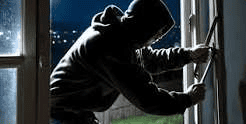
Lots of British residents mistakenly believe that “safety by association” exists—the idea that a quiet, well-maintained street is inherently immune to crime.
Unfortunately, professional burglars often view these areas as prime targets, precisely because they offer higher rewards.
Learning a bit about their methods can be useful, as it can help you fortify your home against burglars and, in most cases, successfully deter them. Here are the 6 most common entry tricks they use, so you know what to watch out for.
-
The Prevalence Of Lock Snapping
Lock snapping remains one of the most significant threats to modern British homes, particularly those fitted with standard uPVC or composite doors.
Despite being a well-known vulnerability, many homeowners remain unaware that their front door might be susceptible to this method.
Lock snapping targets the Euro-profile cylinder—the central part of the lock where you insert your key.
If this cylinder protrudes even slightly from the door handle or lacks sufficient reinforcement, a burglar can use simple tools to exert leverage on the cylinder until it snaps at its weakest point.
Once the cylinder breaks, the internal mechanism is exposed, allowing the intruder to operate the lock just as they would with a key.
This process is surprisingly fast—often taking less than 30 seconds—and is relatively quiet, meaning neighbours are unlikely to hear anything.
To counter that, look for “anti-snap” or “three-star”- rated cylinders that include sacrificial sections designed to break off, leaving the lock’s core intact and operational.
If you suspect your locks are outdated or you have recently moved into a new property and are unsure of the cylinder’s security rating, contacting an emergency locksmith in Chelsea can provide the expert assessment and upgrade needed to secure your home.
-
Exploiting Poorly Secured Windows
While homeowners often obsess over the security of their front and back doors, ground-floor windows are frequently overlooked.
Burglars look for paths of least resistance, and a window left slightly ajar for ventilation is essentially an open invitation.
In prime neighbourhoods, where properties may have large, attractive sash windows or bi-fold doors, the temptation to leave them open during the day is high.
Beyond simple open windows, intruders often exploit the hardware itself. Older window locks can be brittle, and standard latch mechanisms are often easily bypassed with thin tools or simple force.
If your windows do not have key-operated locks, or if those locks are never used, you are relying on the burglar’s lack of desire to break glass rather than on actual security.
Upgrading to high-quality window locks and ensuring that all ground-floor and accessible first-floor windows (such as those above a flat roof or near a drainpipe) are secured whenever the property is unattended are fundamental steps in home hardening.
-
Manipulation Of Spare Keys
The “hidden key” is a trope as old as time, yet it remains a primary entry point for opportunistic burglars.
In many neighbourhoods, it is common practice to leave a spare key under a doormat, inside a decorative plant pot, or within a plastic “fake rock” near the entryway.
Experienced burglars spend time observing the homes they intend to target, and watching a homeowner retrieve a key from a predictable spot is often the only reconnaissance they need.
Even if you believe your hiding spot is clever, consider that a thief with time on their hands will check every obvious location before resorting to more destructive methods. The most secure solution is to stop hiding keys outdoors entirely.
In case you must have a spare, leave it with a trusted neighbour or family member.
If you require a key access point for family or emergency services, invest in a high-security, police-approved key safe that is properly anchored to a wall, rather than one hidden in the garden.
-
The Ease Of Lock Bumping
Lock bumping is a technique that sounds like something out of a spy film, yet it is a genuine risk for many standard pin-tumbler locks.
This method involves using a specially cut “bump key,” which is inserted into the lock and then struck—or “bumped”—with a screwdriver or a similar tool.
This sudden impact forces the pins in the lock to momentarily jump into the shear line, allowing the plug to turn as if the correct key were being used.
What makes bumping particularly dangerous is that it often leaves no trace of forced entry. This can complicate insurance claims, as there may be no evidence that the door was not simply unlocked.
To defend against this, homeowners should look for locks that are specifically marked as “anti-bump.” Modern high-security cylinders are designed with intricate pin configurations and internal mechanisms that prevent the pins from setting under such kinetic impact.
If you aren’t sure if your current locks are bump-resistant, consulting a professional locksmith to assess your cylinders is a wise, low-cost investment in your home’s security.
-
Social Engineering And Deception
Not every break-in requires a physical tool. In upscale areas, burglars often use social engineering—a form of manipulation—to gain entry or to scout properties. This might involve cold callers posing as utility workers, surveyors, or delivery personnel.
The goal is often to gain access to the property under the guise of an “emergency” or a “maintenance check,” or to simply get a look at the interior security layout and where valuables are kept.
Beyond direct access, burglars may use these interactions to determine the household’s daily routine, such as when the house is likely to be empty. Always verify the credentials of anyone requesting entry to your home.
Do not feel pressured to open the door to unexpected visitors, even if they appear professional or are dressed in a high-visibility vest.
Use a door chain or a video doorbell to communicate without opening the door, and if you are ever in doubt, contact the service provider directly using a verified number found on their official website, not one provided by the caller.
-
Forced Entry Via Weak Door Frames
Even the most robust, high-security lock is only as strong as the frame it is attached to.
A common trick for burglars who cannot manipulate the lock is to attack the strike plate—the piece of metal where the latch or bolt enters the door frame.
If the frame is made of soft wood or poorly secured, a simple kick or a crowbar can cause the entire section of the frame to splinter and fail. Many doors in otherwise secure homes are let down by inadequate installation.
If the screws securing your strike plate are short and only penetrate the door casing rather than the structural studding behind it, the door is significantly weaker than it should be.
Strengthening your door involves more than just buying a fancy lock; it requires reinforcing the frame with long, heavy-duty screws that reach deep into the wall’s structure.
Consider adding security deadbolts and ensuring the door is solid, not hollow, as a sturdy frame-and-door combination creates a formidable barrier that forces most burglars to move on to an easier target.
Conclusion
Securing your home isn’t about turning it into something akin to the Jewel Vault or the Gold Vaults but about creating enough of a deterrent that an intruder deems your property “too much work.”
After all, burglars are looking to get in and out quickly, without noise, and with minimal risk of being spotted–that’s just their nature.
Remember, the best time to assess your home’s security is when you feel safe, rather than waiting for an incident to occur. A proactive approach provides not just physical safety but the invaluable peace of mind that comes from knowing your home is well protected.
