
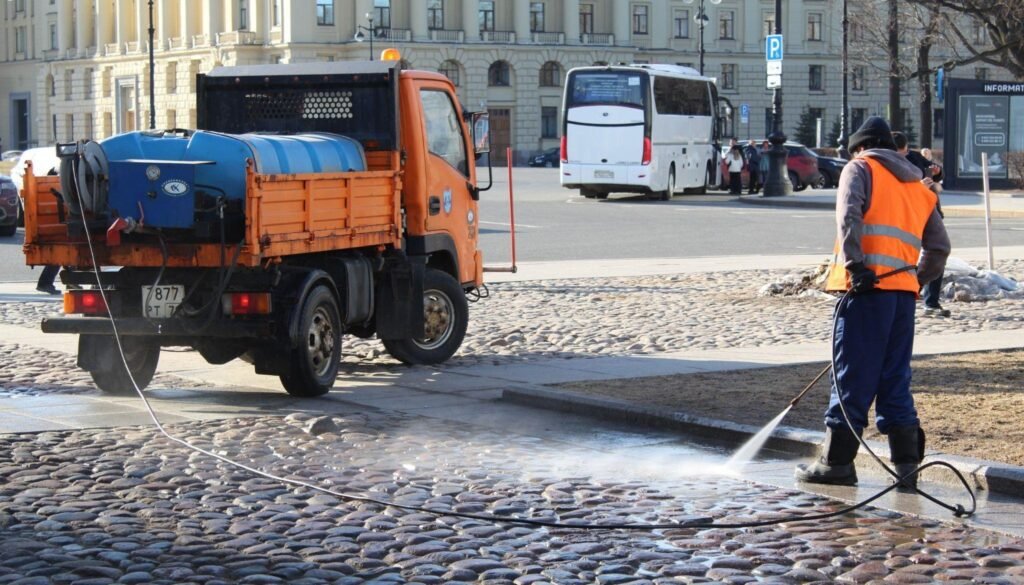
A driveway can look tired long before the surface itself has reached the end of its useful life. Tyre marks, oil drips, weeds, algae, moss and years of traffic gradually hide the colour and texture underneath.
Cleaning can make a dramatic difference, but a driveway is not one material. Block paving, concrete, tarmac and resin-bound surfaces all respond differently to pressure, chemicals and mechanical cleaning. That is why the best driveway cleaning method starts with the surface, not the pressure washer.
The goal should be to remove contamination while preserving the paving, joints, finish and drainage around it. A driveway that looks brighter but has lost its jointing sand, exposed loose aggregate or developed obvious cleaning lines has not been cleaned well.
What Does Driveway Cleaning Actually Involve?
Driveway cleaning is more than removing the grey film from the top of the surface. A thorough clean may involve weed and moss removal, stain treatment, controlled pressure cleaning, joint restoration and, in some cases, sealing.
The exact process depends on the driveway material and what has caused the staining. A block-paved driveway with weeds needs a different finish from a resin-bound drive with surface grime, while an old oil stain requires a different treatment from ordinary algae.
Why Driveways Become Dirty
Algae, moss and shade
Driveways beneath trees, beside hedges or on shaded sides of a property often remain damp for longer. That creates good conditions for algae and moss, particularly on porous concrete and within the joints of block paving.
The green or dark film can become slippery in wet weather and makes the surface look older than it is.
Vehicle staining
Cars introduce oil, fuel residue, tyre marks, brake dust and general road grime. Fresh oil can often be reduced significantly if it is absorbed quickly, while old oil may soak deeply into porous concrete or paving blocks and become much harder to remove completely.
Weeds and joint contamination
On block paving, weeds often become established where jointing sand has been lost or where dirt and organic material have built up between the blocks.
Removing the weeds without restoring the joints may improve the appearance temporarily, but it does not address the condition that allowed them to return.
General traffic and weathering
Dust, soil, tyre movement and rain gradually create a dull film over driveways. The surface may still be structurally sound; it simply needs the contamination removed in a controlled way.
Can You Pressure Wash a Driveway?
Yes, pressure washing is useful for many driveway surfaces, particularly block paving and concrete, but it needs to be controlled.
Homeowner discussions about driveway cleaning frequently reach the same conclusion: pressure washing can transform the appearance, but what happens before and after the wash matters just as much.
Heavy moss is easier to remove when loose growth is scraped or cleared first. Block paving needs its jointing sand checked after washing. Oil stains are better treated directly rather than simply attacked with more water pressure.
Why a rotary surface cleaner can give a more even result
A rotary surface cleaner keeps the cleaning jets at a consistent distance from the paving and spreads the pressure more evenly than repeatedly sweeping a narrow lance across the surface.
That can reduce obvious stripes and zebra marks on large areas. A lance still has a place around edges and awkward details, but it should not be held close to one stubborn patch for long periods.
Why maximum pressure is rarely necessary
Higher pressure can remove more than dirt. It can wash sand out of block-paving joints, mark softer concrete, expose weak repairs or affect tarmac and resin surfaces.
The right question is not ‘What is the highest pressure this machine can produce?’ but ‘What is the lowest effective setting for this driveway?’
How Different Driveway Surfaces Should Be Cleaned
Block paving
Block paving responds well to controlled mechanical cleaning, but the joints are part of the structure and must not be treated as an afterthought.
Weeds and loose material should be cleared first, stains treated individually, and the blocks cleaned evenly. Once the surface has dried, lost jointing sand should be replaced with suitable kiln-dried sand.
This re-sanding stage is one of the most commonly missed parts of DIY driveway cleaning. The sand helps lock the blocks together and limits the open space available for dirt and weed seeds to collect.
Concrete
Concrete is generally robust and can tolerate controlled pressure, but it is also porous. Oil and rust can penetrate the surface, and weathered concrete can become more vulnerable to aggressive cleaning.
An even surface-cleaning pattern is preferable to concentrating a narrow jet on dark marks. Older stains may improve without disappearing completely.
Tarmac
Tarmac needs a gentler approach. Excessive pressure can loosen the surface or remove fine material, particularly on older or already weathered areas.
Mild cleaning, suitable treatments and lower pressure are generally more appropriate than trying to strip the surface clean.
Resin-bound driveways
Resin-bound stone also benefits from controlled cleaning rather than high-impact pressure. The aggregate is held within a resin matrix, so aggressive cleaning can disturb the finish or expose weakness in an older installation.
The cleaning method should be compatible with the resin system and any installer maintenance guidance.
Oil Stains Need Different Treatment From General Dirt
Oil is one of the most frustrating driveway stains because it behaves differently from algae or loose grime.
On porous concrete or block paving, oil begins to move below the visible surface. Pressure washing first can spread contaminated water through the joints or push residue deeper into the pores.
Fresh oil
Fresh spills should be absorbed before water is introduced. An absorbent material can draw up free oil, after which a surface-compatible degreaser can be used on the remaining mark.
Old oil
Older oil stains are more difficult because the contamination has had time to penetrate. Repeated specialist treatment may reduce the contrast significantly, but a deeply soaked mark should not be promised to disappear completely.
The realistic aim is significant improvement without damaging the surrounding driveway.
Why Re-Sanding Matters After Cleaning Block Paving
The joints between paving blocks are not simply decorative gaps. The sand helps stabilise the paving and supports the way the blocks work together under vehicle loads.
Pressure washing inevitably removes some loose material from the joints. Once the surface is fully dry, kiln-dried sand should be brushed back into the gaps until they are properly filled.
Skipping this step can leave the driveway looking unfinished and gives weeds, dirt and movement more opportunity to develop.
For driveways that need more than a light maintenance clean, a careful restoration process should include weed and debris removal, targeted stain treatment, controlled cleaning and re-sanding of block paving where required. Homeowners who prefer expert help can consider a professional driveway cleaning service that follows a surface-specific approach rather than relying on maximum pressure for every material.
Should You Seal a Driveway After Cleaning?
Sealing can be useful on some driveway surfaces, but it should not be treated as an automatic final step.
On suitable block paving, a sealer can help reduce water absorption, limit staining, hold jointing sand more securely and make future maintenance easier.
However, the surface needs to be clean, stable and fully dry before sealing, and the product must be compatible with the paving.
A driveway does not need sealing simply because it has been cleaned. The condition, material, age and expected use should determine whether it is worthwhile.
When DIY Driveway Cleaning Is Usually Enough
Many driveways can be maintained successfully by a homeowner when the surface is known and the contamination is light.
DIY cleaning is most reasonable when:
- The driveway material is known and in good condition.
- The main problem is loose dirt, light algae or early moss.
- Oil staining is small and recent.
- The area can be cleaned evenly without excessive pressure.
- Runoff can be controlled away from drains, doors and planting.
- Block-paving joints can be re-sanded afterwards if required.
For light maintenance, sweeping, spot treatment and a controlled pressure wash may be enough. Starting with the least aggressive method protects the surface and makes it easier to see what genuinely needs stronger treatment.
When Professional Driveway Cleaning Makes More Sense
Professional cleaning becomes more valuable when the driveway needs restoration rather than a simple rinse.
Consider professional help when:
- The driveway is large and needs an even finish.
- Block paving has widespread weeds or missing jointing sand.
- Oil or tyre staining is old and deeply ingrained.
- The surface is resin-bound, tarmac or otherwise sensitive to pressure.
- There are mixed surfaces that need different cleaning methods.
- Drainage, garage thresholds or neighbouring areas make runoff difficult to control.
- The driveway has sunken blocks, damaged edges or repairs that need to be identified before cleaning.
The value of a specialist is not simply access to a larger pressure washer. It is the ability to assess the surface, match the process to the material and complete the finishing stages rather than stopping once the dirt is gone.
A Proper Driveway Cleaning Process
1. Assess the surface
Identify whether the driveway is block paving, concrete, tarmac, resin-bound or a combination of materials. Check for loose blocks, damaged areas, open joints and previous sealers.
2. Remove loose growth and debris
Sweep away leaves and surface dirt, remove heavy weeds and moss, and clear the edges before mechanical cleaning begins.
3. Treat stains separately
Oil, rust, tyre marks and biological staining do not always respond to the same process. Targeting the stain first can reduce the amount of pressure needed later.
4. Clean evenly with controlled pressure
Use a consistent cleaning pattern and the lowest pressure that will achieve the required result. Large areas should be cleaned in overlapping passes rather than with random lance movements.
5. Rinse and manage runoff
Dirty water should be directed away from garage doors, air bricks, planted borders and places where contaminated runoff could cause another problem.
6. Restore the joints where needed
Once block paving is dry, replace missing kiln-dried sand so the joints are properly filled again.
7. Consider sealing only if it suits the surface
Sealing is an optional protection stage, not a compulsory part of every clean. It should be recommended because it benefits the particular driveway, not because it increases the size of the job.
Common Driveway Cleaning Mistakes
Pressure washing before removing heavy moss
Scraping or clearing thick loose growth first reduces mess and lets the cleaning equipment work on the surface rather than simply shredding vegetation.
Using a narrow jet too close to the surface
This creates stripes, light patches and unnecessary wear. A wider, more consistent cleaning pattern is usually easier to control.
Forgetting to re-sand block paving
A freshly washed block-paved drive can look impressive while still being left with depleted joints. The restoration is not complete until lost jointing material is replaced.
Trying to blast out oil stains
Oil is better treated as contamination that needs to be absorbed and broken down. More pressure can spread it rather than solve it.
Using one pressure setting on mixed surfaces
A concrete apron, tarmac section and block-paved parking area should not automatically be cleaned in exactly the same way.
Expecting cleaning to repair structural defects
Cleaning cannot correct subsidence, broken edging, failed drainage or badly sunken blocks. Those issues should be identified so they are not mistaken for cleaning problems.
How to Keep a Driveway Cleaner for Longer
Good maintenance reduces how often a driveway needs a major restoration clean.
- Sweep leaves, soil and seed debris before they settle into joints.
- Treat fresh oil spills immediately rather than waiting for them to soak in.
- Fix vehicle leaks so new staining does not continue after cleaning.
- Top up block-paving jointing sand when gaps begin to appear.
- Deal with early weeds before roots and soil build up in the joints.
- Keep nearby drainage channels clear.
- Consider sealing only where it suits the paving and expected use.
There is no maintenance product that keeps a driveway permanently clean. Vehicles, weather, shade and normal outdoor exposure will gradually affect the surface again.
The aim is to slow that build-up and deal with small problems before they become a full restoration job.
The Bottom Line
Driveway cleaning works best when the process is matched to the surface.
Block paving usually needs controlled cleaning followed by re-sanding. Concrete can tolerate more mechanical cleaning but still needs care around stains and weathered areas. Tarmac and resin-bound surfaces generally need a gentler approach.
For routine dirt and light algae, careful DIY cleaning may be enough. For deep oil staining, widespread weeds, sensitive materials or a driveway that needs joint restoration as well as cleaning, professional assessment is more likely to produce an even and lasting result.
The most important point is not how powerful the equipment is. It is whether the driveway has been cleaned, restored and left stable without creating new problems underneath the improved appearance.
Choosing the Right Driveway Cleaning Approach
The best results come from identifying the driveway material, understanding the type of contamination and choosing the least aggressive method that will restore the surface effectively. Whether the work is handled as careful DIY maintenance or by a specialist, proper preparation, controlled cleaning and suitable aftercare are what help a driveway look better without creating avoidable damage.
