
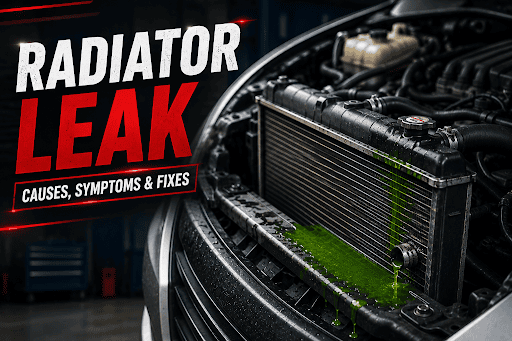
Learn how to spot the early signs of a radiator leak before it leads to overheating, engine damage, and a much bigger repair bill.
A radiator rarely fails without warning. Long before an engine overheats on the motorway, there are usually small, easy to miss signs, a faint smell, a patch on the driveway, a temperature gauge sitting slightly higher than usual. Drivers looking for professional vehicle maintenance can also find more information about GForce Tyres and its range of automotive services. Catching these signs early is one of the simplest ways to avoid a much larger repair, and it starts with knowing what to look for during routine car servicing and everyday driving.
The radiator’s job is straightforward but essential. It dissipates the heat absorbed by coolant as it circulates through the engine, keeping temperatures within a safe operating range. When it develops a leak, even a small one, that cooling process becomes less effective, and the consequences build gradually until they become impossible to ignore.
Why Radiators Develop Leaks
Radiators are exposed to constant heat cycling, road debris, and years of pressure fluctuation, all of which contribute to gradual wear. Common causes include:
- Corrosion building up internally over time, particularly in older vehicles or where coolant has not been changed as recommended
- Stone chips or road debris causing small punctures in the radiator core
- Perished or cracked end tanks, especially on radiators with plastic tank construction
- Damaged or brittle hose connections where they meet the radiator
- A failing radiator cap, which affects the pressure the system relies on to function correctly
Some of these causes develop slowly over years, while others, such as impact damage, can create a leak almost instantly.
Early Warning Signs Worth Watching For
.A radiator problem can develop gradually, so paying attention to small changes is important. During regular car servicing, technicians can check the cooling system for potential issues, but drivers should also watch for warning signs between servicing intervals.
Visible Fluid Underneath the Car
A small puddle or patch of green, pink, or orange fluid underneath the front of the car, usually noticed after it has been parked overnight, is one of the clearest indicators of a radiator or cooling system leak.
A Rising Temperature Gauge
An engine that runs slightly warmer than usual, particularly during longer drives or in traffic, often signals that coolant levels are lower than they should be.
A Sweet Smell From the Engine Bay
Coolant has a distinctly sweet smell, noticeable either from the engine bay or, in more advanced cases, from inside the cabin through the vents.
Frequent Need to Top Up Coolant
If the coolant reservoir keeps running low despite regular top ups, this points to a leak somewhere in the system rather than normal consumption, since a healthy cooling system should not lose fluid on a regular basis.
Steam or Mist From Under the Bonnet
Steam rising from the engine bay, particularly after a drive, is a sign that coolant is escaping and making contact with a hot surface. This should be treated as an immediate signal to stop the car safely and allow it to cool.
White Residue Around Hose Connections
A white or crusty residue forming around hose joints or the radiator itself often indicates a slow leak that has been evaporating gradually, leaving mineral deposits behind.
A Quick Reference Guide
| Warning sign | What it usually means | How urgent |
| Puddle under the car | Active coolant leak | Moderate to high |
| Rising temperature gauge | Reduced coolant level | High |
| Sweet smell in engine bay | Leak developing or worsening | Moderate |
| Frequent top ups needed | Slow, ongoing leak | Moderate |
| Steam from the bonnet | Coolant contacting hot surfaces | High, stop driving |
| White residue at hose joints | Slow evaporating leak | Low to moderate |
The Difference Between a Slow Leak and a Sudden Failure
Not all radiator problems develop at the same pace, and understanding the difference helps drivers respond appropriately.
A slow leak tends to develop over weeks or months. Coolant levels drop gradually, and symptoms build quietly, often mistaken for normal wear rather than an active fault. This type of leak is usually caused by corrosion, a perishing hose connection, or a small crack in the radiator tank.
A sudden failure, by contrast, tends to follow a specific event, a stone strike, an impact from debris on the road, or a hose that finally gives way after months of gradual wear. This type of failure often causes a rapid coolant loss and a sharp temperature rise within minutes, making it far more urgent than a slow developing leak.
What Happens If a Radiator Leak Is Left Unaddressed
Ignoring a radiator leak sets off a fairly predictable chain of events.
- Coolant levels drop gradually, often without an obvious external cause noticed by the driver.
- The engine begins running hotter than intended, particularly under load or in traffic.
- Repeated heat stress starts to affect the head gasket, which is not designed to cope with prolonged high temperatures.
- If overheating becomes severe, the cylinder head can warp, turning a radiator repair into a significantly larger engine job.
- In the most extreme cases, continued driving while overheating can cause the engine to seize entirely.
What could have been a straightforward radiator repair, often resolved for a modest cost, becomes an engine level repair simply because the early signs were missed or ignored.
How This Gets Diagnosed Properly
A cooling system inspection typically involves more than a quick visual check, since leaks are not always obvious at a glance.
- A pressure test, which pressurises the cooling system to reveal leaks that are not visible under normal running conditions
- A visual inspection of the radiator core, hoses, and connections for cracks, corrosion, or perishing
- Checking the radiator cap’s ability to hold pressure correctly, since a faulty cap can mimic the symptoms of a leak elsewhere
- A dye test in more difficult cases, where a UV dye is added to the coolant to reveal the exact source of a leak under ultraviolet light
This kind of thorough check is far more reliable than guesswork, particularly for slow leaks that may not be immediately visible even with the bonnet open.
Why Vibration and Cooling Issues Sometimes Get Confused
Occasionally, drivers assume a cooling system problem is to blame for a symptom that actually originates elsewhere. A car that feels like it is running rough or shaking slightly at speed is not always related to the engine’s temperature. In many cases, this points toward an entirely separate issue, such as steering wheel vibration at 60 to 70mph, which usually relates to wheel balance or alignment rather than the cooling system.
Recognising this distinction matters, since chasing the wrong fault wastes time and money. A radiator issue tends to bring temperature and fluid related symptoms specifically, while vibration issues are felt through the steering wheel and are unrelated to engine heat.
Why Routine Servicing Catches This Early
Many of the earliest signs of radiator wear, a slightly low coolant level, a small amount of residue around a hose joint, a radiator cap not holding pressure quite as well as it should, are exactly the kind of details identified during a thorough car servicing appointment. These checks happen well before a driver would typically notice anything from behind the wheel.
For drivers wanting a broader picture of when a car might be due attention, this guide on the 10 signs your car needs a service is a useful way to check whether other symptoms have started appearing alongside a potential cooling issue, since faults rarely develop in complete isolation from the rest of the vehicle.
Seasonal Factors Worth Knowing About
Radiator problems do not affect every season equally, and understanding this helps explain why leaks sometimes seem to appear suddenly during specific times of year.
Cold weather can cause coolant to contract slightly, sometimes revealing a leak that was too small to notice during warmer months. It can also cause old, brittle hoses to crack more easily, particularly first thing in the morning before the engine has warmed through.
Warmer months, by contrast, place more strain on the cooling system overall, since the radiator has to work harder to manage engine temperature against a higher ambient temperature. A radiator already compromised by a small leak is far more likely to show clear symptoms, such as overheating, during a hot summer drive than during milder weather.
Simple Checks Drivers Can Do at Home
A few simple habits go a long way toward catching a developing leak early.
- Check coolant level monthly, always with the engine cold
- Look underneath the car after it has been parked overnight for any signs of fluid
- Glance at the radiator and hoses occasionally for visible residue, cracking, or corrosion
- Note the colour of the coolant, since a healthy system usually shows a clean, bright colour rather than a rusty or murky one
- Pay attention to the temperature gauge during longer drives, particularly in warmer weather
None of these checks take more than a few minutes, yet together they catch the vast majority of radiator issues while they remain simple, affordable fixes.
Radiator Damage From Everyday Driving Conditions
Beyond age related wear and internal corrosion, everyday driving conditions play a bigger role in radiator health than most drivers realise. Because the radiator sits at the very front of the car, directly behind the grille, it is one of the most exposed components on the entire vehicle.
Road debris is the most common culprit. Small stones kicked up by other vehicles, particularly on motorways or loose gravel roads, can strike the radiator core hard enough to create a puncture that leaks slowly rather than immediately. Unlike a dramatic impact, this kind of damage often goes unnoticed for weeks, with coolant loss building gradually rather than announcing itself straight away.
Insects and debris buildup contribute in a quieter but equally damaging way. Over time, leaves, dirt, and insect residue accumulate across the radiator’s front surface, restricting airflow through the core. A radiator working harder to compensate for reduced airflow runs hotter overall, placing additional strain on seals and joints that were never designed to handle sustained higher temperatures. This is particularly common for drivers who frequently travel through rural routes or during warmer months when insect activity increases.
Car washes, particularly high pressure ones, can also contribute to long term wear. Repeated exposure to concentrated water pressure aimed directly at the radiator fins can gradually bend or damage the delicate structure over years of regular washing, subtly reducing cooling efficiency even without causing an immediate leak.
A few practical habits help reduce this kind of everyday wear:
- Avoid tailgating on loose gravel or poorly maintained roads where possible, reducing exposure to stone chips
- Periodically check the front of the radiator for visible debris buildup, clearing it gently if accessible
- Be mindful of high pressure water directed straight at the front grille during car washing
- Address any small dent or visible damage to the radiator promptly, rather than assuming it is purely cosmetic
How Radiator Health Connects to Overall Engine Longevity
It is easy to think of the radiator as an isolated component, but its condition has a ripple effect across the entire engine’s long term health. Consistent, stable operating temperature is one of the most important factors in how long an engine lasts, and the radiator sits right at the centre of maintaining that stability.
An engine that runs even slightly hotter than intended, over an extended period, experiences accelerated wear across multiple components simultaneously. Oil breaks down faster at higher temperatures, reducing its ability to lubricate effectively. Rubber seals and gaskets harden more quickly under sustained heat, increasing the likelihood of further leaks developing elsewhere. Even something as specific as spark plug performance can be affected by consistently elevated engine bay temperatures.
This is why experienced mechanics often describe the cooling system as one of the more important, if unglamorous, parts of an engine to maintain properly. It does not offer the performance excitement of an engine upgrade or the visible appeal of new tyres, yet its condition quietly influences how well nearly everything else under the bonnet continues to function.
Viewed this way, catching a radiator leak early is not just about avoiding a single repair. It is about protecting the working life of the engine as a whole, since consistent overheating, even mild and infrequent, gradually shortens the lifespan of components far beyond the radiator itself. A driver who takes a small coolant leak seriously today is, in a very real sense, protecting the engine’s health for years to come, not just avoiding an inconvenient breakdown next week.
Final Thoughts
A radiator leak rarely arrives without notice. It tends to build quietly, through a faint smell, a small stain, a temperature gauge sitting just a touch higher than usual, long before it becomes the kind of problem that leaves a car stranded at the roadside. For drivers across Aldershot, Farnborough, Fleet, Farnham, Ash Vale, Tongham, and North Camp, the message is a familiar one. Small, early signs deserve attention, not because they are dramatic, but because ignoring them is exactly what allows a modest radiator repair to grow into something far more serious. A few minutes spent checking coolant levels or glancing underneath the car is a small habit that consistently protects against a much larger, more disruptive repair down the line.
Frequently Asked Questions
Can I keep driving with a small radiator leak?
Even a small radiator or cooling-system leak should be inspected promptly. If coolant is visibly leaking, the temperature is rising, or the cause is uncertain, avoid driving and have the vehicle checked to reduce the risk of sudden overheating.
How do I know if steam from the bonnet means I should stop immediately?
Steam from under the bonnet can indicate overheating or coolant escaping onto hot components. Pull over as soon as it is safe, switch off the engine, let it cool fully, and seek assistance rather than opening the cooling system while it is hot.
Does radiator repair always mean replacing the whole radiator?
Not always. Some leaks, particularly at hose connections or the radiator cap, can be resolved without replacing the entire radiator. More significant core damage, however, often does require full replacement.
Can a radiator leak cause damage even if the engine never fully overheats?
Yes. Running an engine consistently a little warmer than intended, even without a dramatic overheating event, still places additional strain on components like the head gasket over time.
Is it normal to top up coolant occasionally?
A small amount of natural evaporation over a long period is normal, but needing to top up regularly within short intervals usually indicates an active leak that should be investigated.
