
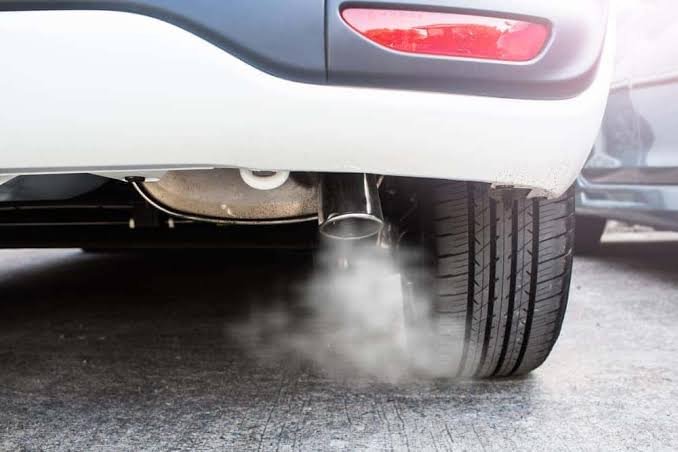
Spotting smoke coming from your exhaust can be alarming, but not every colour means the same thing. A thin white vapour on a cold morning may simply be condensation, while thick white smoke, blue smoke or persistent black smoke can point to a problem that needs attention. The colour is a useful starting clue, but the pattern, smell and other symptoms can provide further information about what may be happening under the bonnet.
Understanding these warning signs can help you decide whether you can continue your journey or whether the car needs to be checked. If the cause is not clear from the smoke alone, professional engine diagnostics can help identify faults affecting the engine, fuel system, sensors or other components.
This guide explains what different exhaust smoke colours typically mean, the common causes behind them, when you should stop driving and what a technician may check to identify the underlying problem.
Why Exhaust Smoke Happens at All
A small amount of exhaust vapour, particularly visible on a cold morning, is completely normal and simply condensation from the combustion process. Genuine smoke, however, indicates that something other than air and water vapour is being burned or escaping through the exhaust system, whether that is fuel, oil or coolant. The colour of the smoke gives a strong clue as to which of these is involved.
White Smoke
What It Usually Means
Thin, wispy white smoke on a cold morning that disappears within a minute or two of driving is simply condensation and is nothing to worry about. Thick, persistent white smoke, however, particularly with a sweet smell, is a different matter entirely and usually points to coolant entering the combustion chamber.
Common Causes
A blown head gasket is the most frequent cause of persistent white smoke, allowing coolant to leak into the engine cylinders where it burns alongside fuel. A cracked cylinder head or, less commonly, a cracked engine block can produce similar symptoms. In every case, this is a serious fault that risks significant engine damage if driving continues.
Blue Smoke
What It Usually Means
Blue or bluish grey smoke almost always indicates that engine oil is being burned within the combustion chamber, rather than staying contained within the engine as intended.
Common Causes
Worn piston rings are a common cause, particularly in higher mileage engines, allowing oil to seep past into the combustion chamber. Worn valve seals can produce a similar effect, often more noticeable specifically after the car has been idling, then accelerating. A failing turbocharger, on turbocharged vehicles, can also allow oil to enter the intake and subsequently burn, producing blue smoke under acceleration.
Black Smoke
What It Usually Means
Black smoke indicates the engine is burning too much fuel relative to the air it is taking in, a condition often described as running rich.
Common Causes
A clogged air filter is one of the simplest and most common explanations, restricting airflow and disrupting the correct fuel to air ratio. A faulty fuel injector, delivering too much fuel, or a malfunctioning sensor providing inaccurate readings to the engine management system, can also cause this. Black smoke is more common in diesel vehicles, particularly under heavy acceleration, though it should still not appear consistently or excessively.
A Quick Reference Table, Smoke Colours at a Glance
| Smoke Colour | Likely Substance Involved | Urgency |
| Thin white, cold morning only | Water vapour, condensation | Normal, no action needed |
| Thick white, persistent, sweet smell | Coolant | Urgent, stop and seek attention |
| Blue or blue grey | Engine oil | Prompt attention needed |
| Black | Excess unburned fuel | Check soon |
| Grey | Varies, several possible causes | Investigate promptly |
Grey Smoke, The Less Common Colour
Grey smoke sits somewhat between blue and black in appearance and can be trickier to diagnose without a proper inspection, since its causes overlap with both. It can indicate a failing turbocharger, similar to blue smoke, or occasionally point toward an automatic transmission fluid leak that has found its way into the engine, which is a less common but genuinely possible cause. A stuck piston ring, restricting oil control without fully failing, can also produce a greyish tinge rather than clear blue smoke.
Because grey smoke does not point as clearly to a single cause as the other colours, it is generally worth having checked promptly rather than trying to diagnose it from the smoke colour alone.
Visual Guide, Smoke Behaviour and What to Watch For
Beyond colour alone, how the smoke behaves offers additional useful clues. Smoke that appears specifically on startup, then clears after a few minutes of driving, often points toward worn valve seals allowing a small amount of oil to pool overnight. Smoke that worsens specifically under acceleration is more consistent with worn piston rings or a turbocharger issue, since these faults are more pronounced under load. Smoke that is present constantly, regardless of how the car is being driven, tends to indicate a more significant, ongoing fault such as a head gasket failure.
| Smoke Pattern | What It Often Suggests |
| Appears at startup, then clears | Worn valve seals |
| Worsens under acceleration | Piston rings, turbocharger issue |
| Constant, regardless of driving | Head gasket, more significant fault |
| Only in cold weather | Likely just condensation |
When Should You Stop Driving Immediately?
Certain smoke situations warrant pulling over as soon as it is safely possible, rather than continuing to your destination.
- Thick white smoke accompanied by a rising temperature gauge, which suggests active coolant loss and overheating.
- Any smoke accompanied by a burning smell from inside the cabin.
- Smoke that is accompanied by a noticeable loss of power or unusual engine noise.
- Smoke that appears suddenly and heavily, rather than gradually developing over time.
In these situations, continuing to drive risks turning a repairable fault into a much more serious and costly one.
How This Is Diagnosed
Diagnosing exhaust smoke typically starts with identifying the colour and pattern accurately, since this alone narrows down the likely cause considerably. From there, a technician will usually check coolant and oil levels, inspect for visible leaks, and may run compression or leak-down tests to assess cylinder sealing, including possible piston-ring or valve-seat issues. Valve-stem seals are usually assessed from smoke patterns, oil consumption, and other targeted checks rather than a compression test alone. For suspected head gasket failure, specific chemical tests can detect combustion gases within the coolant system, helping confirm the diagnosis without needing to fully dismantle the engine first.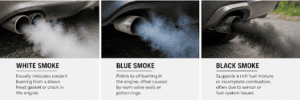
What Influences the Cost of Repair
Costs vary enormously depending on the cause, from a relatively simple air filter replacement addressing black smoke, through to a head gasket repair or replacement addressing persistent white smoke, which is a considerably larger job involving significant labour. Turbocharger replacement, relevant to some blue or grey smoke cases, also tends to be a more involved and costly repair given the complexity of the component.
| Smoke type | Possible issue | Repair complexity |
| Black | Air/fuel issue, injector, sensor | Low–medium depending on cause |
| Blue | Oil consumption, valve seals, turbo | Medium–high |
| White | Coolant/head-gasket related fault | Medium–very high |
| Grey | Turbo/oil or other faults | Varies |
Does Exhaust Smoke Affect Your MOT?
Yes, excessive smoke of any colour can result in an MOT test failure, since it typically indicates an emissions-related fault. Addressing a persistent smoke issue before your MOT is due is a sensible precaution, particularly given how directly this relates to the emissions testing carried out during the assessment.
Can Exhaust Smoke Colour Change Over Time?
Yes, and this shift itself can be a useful diagnostic clue rather than simply a confusing complication. A fault that begins as faint blue smoke, caused by mildly worn valve seals, can gradually darken or thicken as the underlying wear progresses, particularly if the car continues to be driven without investigation. Similarly, black smoke caused by a simple clogged air filter is unlikely to change colour on its own, since the cause is mechanical rather than progressive in the same way as internal engine wear.
A more concerning pattern is smoke that shifts from an occasional colour to a constant one, or from a faint wisp to a thick, sustained cloud. This kind of progression usually indicates that a fault, whether in the piston rings, valve seals or head gasket, is worsening over time rather than remaining stable. Paying attention not just to the colour itself but to whether it is getting better, worse or staying the same gives a genuinely useful sense of how urgently the underlying cause needs addressing.
| Change Over Time | What It Suggests |
| Colour stays the same, consistent amount | Stable fault, still worth checking |
| Smoke thickens or becomes more frequent | Progressing fault, increasing urgency |
| Smoke appears only after a specific event, such as a pothole | Possible new mechanical damage |
| Smoke reduces after addressing a related issue, such as topping up oil | Temporary cause, though root issue should still be checked |
Exhaust Smoke in Petrol Versus Diesel Vehicles
While the general colour meanings apply broadly across both fuel types, there are some differences worth knowing, since petrol and diesel engines are prone to slightly different issues. Diesel engines are somewhat more likely to produce a puff of black smoke under hard acceleration even when running normally, particularly in older vehicles without more advanced emissions control systems, though this should still not be excessive or constant. Petrol engines, by contrast, tend to produce black smoke less frequently under normal conditions, so its appearance is often a slightly stronger indicator of a genuine fault such as a faulty injector or sensor.
White smoke from coolant related faults and blue smoke from oil consumption are broadly similar in meaning across both fuel types, since these relate to the core mechanical components common to most engines rather than the combustion process itself. If you are unsure whether a particular smoke pattern is typical for your specific vehicle type, checking your handbook or having it assessed professionally removes the guesswork, since expectations can vary meaningfully between individual engines even within the same fuel category.
If your exhaust smoke is persistent, becoming heavier or appearing alongside symptoms such as overheating, unusual engine noise or loss of power, it is worth having the vehicle inspected rather than relying on the smoke colour alone. TJ Services Fleet can help assess the underlying fault and advise on the appropriate next step.
| Fuel Type | Notable Difference |
| Diesel | Occasional black smoke under hard acceleration can be more common |
| Petrol | Black smoke more often indicates a genuine fault |
| Both | White and blue smoke causes are broadly similar |
Conclusion
Exhaust smoke is one of those symptoms where colour genuinely matters, a thin wisp of white on a cold morning tells a completely different story to thick, persistent white smoke with a sweet smell, just as an occasional puff of blue under acceleration differs meaningfully from constant, heavy blue smoke. Learning to read colour, pattern, fuel type context and how the smoke changes over time together gives you a genuinely useful and layered understanding of what is happening beneath the surface, rather than relying on colour alone.
Because several of the underlying causes, particularly those linked to white and blue smoke, carry real risk of escalating into significant engine damage if ignored, treating persistent, unusual or worsening smoke as a prompt to book a proper inspection remains the safest and most sensible response. A car that is progressively telling you more, through thickening or more frequent smoke, is one of the clearer signals available that a fault is developing rather than stable, and that clue is always worth acting on sooner rather than later.
If you want to check the garage location, opening information and recent customer feedback before arranging an inspection, you can also view TJ Services Fleet on Google.
Frequently Asked Questions
Is it normal for my exhaust to smoke on a cold morning?
Yes, thin white vapour that clears within a minute or two of driving is simply condensation and is completely normal.
What does it mean if my exhaust smokes only under acceleration?
This pattern often points toward worn piston rings or a turbocharger issue, both of which tend to become more noticeable under load.
Is white smoke always serious?
Not always. Thin, temporary white smoke on cold mornings is normal, but thick, persistent white smoke, particularly with a sweet smell, usually indicates a serious coolant related fault.
Can a clogged air filter really cause black smoke?
Yes, restricted airflow disrupts the correct fuel to air ratio, causing the engine to burn excess fuel and produce black smoke as a result.
Should I stop driving immediately if I see smoke?
It depends on the colour, thickness and accompanying symptoms. Thick white smoke with overheating, or any smoke with a burning cabin smell, warrants stopping as soon as safely possible.
