
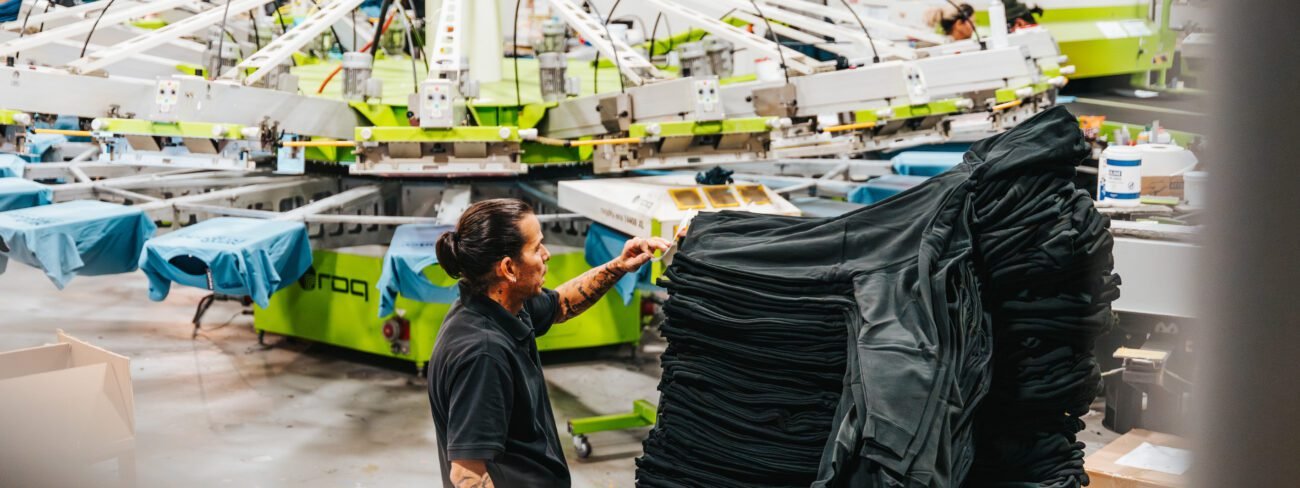
When people think about building a brand, they often picture expensive campaigns, agency fees and big production budgets. For most growing businesses, particularly smaller ones, that’s simply not realistic, and it’s also not necessary. Some of the most effective branding tools available are inexpensive, tangible, and easy to get right without outside help, and custom apparel sits firmly in that category.
Getting started without overcommitting
For businesses trying this for the first time, the sensible approach is to start small. Sourcing plain hoodies for printing rather than commissioning fully custom garments keeps costs manageable and avoids the large minimum orders that used to make custom clothing impractical for smaller operations. It also allows a business to test designs, colours and fits on a modest scale before deciding whether to expand into a wider range or larger quantities.
Why apparel works as a branding tool
Unlike a lot of promotional material, clothing gets used repeatedly and voluntarily. A branded hoodie worn by a staff member, handed to a client, or given away at an event doesn’t just carry a logo once; it carries it every time the wearer puts it on, often for years.
That repeated, low-effort exposure is difficult to replicate through most paid marketing channels, which typically require ongoing spend to maintain the same level of visibility. Once a garment is out in the world, it keeps generating that exposure with no further input required from the business at all.
What tends to go wrong
The most common mistake is treating the clothing as an afterthought rather than a genuine design decision. A logo placed onto a cheap garment without much thought to placement, size or fit tends to look like exactly that, and it rarely gets worn outside of mandatory occasions.
Businesses that get real value from custom apparel usually put a similar level of care into it as they would a website or a set of business cards: choosing a decent base garment, keeping the branding understated enough to be wearable day to day, and testing it with a small group before ordering at scale. Skipping that testing step is the single most common reason a first attempt underperforms.
Consistency across the team
One detail smaller businesses sometimes overlook is consistency. A handful of staff in slightly different colours, cuts or logo placements can undercut the professional impression that branded clothing is meant to create in the first place. Standardising on a single core garment and a clear set of guidelines for how the logo should appear, position, size, colour, tends to produce a far more polished result than an ad hoc approach built up order by order.
Matching the garment to how it will actually be worn
It’s also worth thinking practically about where and how the clothing will be worn. A garment chosen for an office environment may not hold up to daily wear on a job site, and one selected purely for warmth may look out of place at a client meeting. Matching the weight, fit and finish of the garment to its actual use case, rather than choosing on price alone, makes a noticeable difference to how long it stays in regular rotation rather than being relegated to weekend wear.
Beyond staff uniforms
While staff uniforms are the obvious use case, plenty of businesses have found value in branded clothing well beyond that. Client gifts, event giveaways, and even items sold directly to customers who want to support a brand they like have all become common uses for the same basic product.
In each case, the underlying logic is the same: a well-made piece of clothing that people actually want to wear does more sustained promotional work than almost anything else at a comparable price point. Businesses that recognise this early tend to plan for multiple uses from the outset rather than treating uniform and gifting as entirely separate purchasing decisions.
Measuring whether it’s working
Unlike a lot of marketing spend, the return on branded apparel is genuinely difficult to measure with any precision, which puts some businesses off pursuing it seriously. The businesses that get the most value tend not to chase precise attribution and instead look for simpler signals: do staff choose to wear the garment outside work, do customers ask where they can buy one, does it come up in conversation unprompted. None of these are rigorous metrics, but together they give a reasonably reliable sense of whether a design and a garment are actually working as intended, well before any formal marketing analysis would catch up.
Sourcing responsibly without overcomplicating things
As branded apparel becomes a bigger part of how small businesses present themselves, more owners are also asking questions about where the garments come from and how they’re made, alongside the more immediate concerns of cost and fit. It needn’t complicate the process significantly. Working with suppliers who can speak clearly to their manufacturing standards, and choosing well-made garments that will actually be worn for years rather than discarded quickly, does much of that work by default, since durability and responsible sourcing tend to go hand in hand more often than not.
A long-term asset, not a one-off purchase
The businesses that treat custom apparel well tend to see it as a recurring, budgeted part of how they present themselves, refreshing designs periodically and reordering as staff and stock levels change, rather than a single purchase intended to last indefinitely. Handled that way, it becomes a modest but consistent contributor to brand recognition, one that keeps working long after the invoice has been paid.
