
Common Signs of Water Leaks
Understanding the signs of a leak and what to observe for its detection is crucial to keep your water system functional and well-maintained. Some common signs of water leaks include the dripping or hissing sounds of water. If you hear a running water sound while all the faucets are closed, then it means water is leaking somewhere.
Other signs include increasing water bills, moisture, mould, or mildew growth on walls, peeling paint, sagging floors, cracks in the ceiling or foundation, low water pressure, and standing water. These are the most common signs that indicate you need to contact a professional plumber for efficient leak detection in Bournemouth.
Difference Between Interior and Exterior Water Leaks
Interior water leaks are leaks that occur inside the home, mostly from kitchens, bathrooms, foundations, ceilings and balconies. In contrast, exterior water leaks emerge outside of the home, including standing water along walls, peeling paint, and mould growth.
Visually observe all the faucets or water lines from all possible areas to understand whether it is an interior or exterior leak. If there are no possible leaks, then it may be an underground water leak, which can destroy the whole sewage system of the building if it is not properly detected or resolved.
Common Causes of Water Leaks
Water leaks most often occur when your water system or pumping pipes are too old and are corroded or rusted. Most common causes of water leaks include faulty faucets that are not properly turned off and water constantly dripping from them.
Gaps and cracks in walls or roofs allowing rainwater to seep into them lead to mould or mildew growth, which is another common cause of water leaks. Others may include toilet leaks, water heater leaks or refrigerator leaks, which require immediate attention. You can contact an emergency plumber in Kennington to fix them instantly.
Professional Diagnosis of Water Leaks
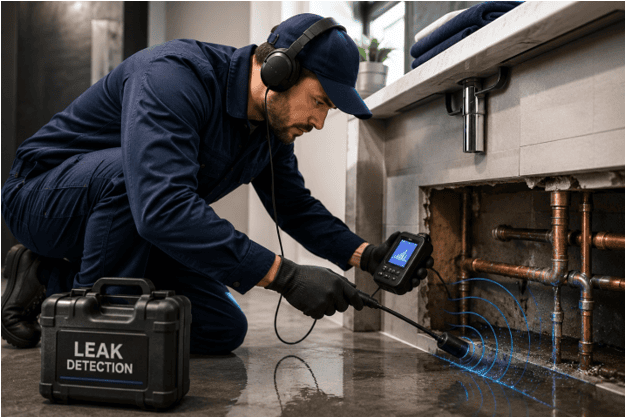
Diagnosing water leaks professionally is essential because guesswork or DIY can lead to more problems in your water system. Professionals diagnose water leaks by using different tools. A professional first of all does a visual inspection to understand the root causes of the leaks.
Tools such as moisture meters or thermal imaging are used to detect moisture behind the walls and temperature changes. A hammer test is used to determine where the quality of the walls has deteriorated due to water leakage by hearing sounds. Camera tests are used to check hidden leaks. Water pressure diagnosis also helps in detecting water leaks.
Preventive Measures
Water leaks are the most common issue in every household. Adopting some preventive measures can avoid these issues.
Regular inspection
Observation or inspection of water usage and consumption on a regular basis can help to detect potential leaks earlier, and you can handle them before they arise.
Observe Water Pressure
Reduced water pressure is a clear sign that the system is failing. Observe and keep an eye on water pressure to detect water leaks instantly.
Insulate Pipes
Pipe insulation, especially in colder months, helps prevent them from freezing and ensures their smooth flow without any leakage.
Use Leak Detectors
Install leak detectors such as moisture meters or thermal imaging and set emergency response protocols to handle water leaks in time.
Maintain Appliances
Keep your appliances such as refrigerators, heaters, and washing machines well-maintained by inspecting, cleaning, and repairing them regularly.
These preventive measures keep you up to date with your electrical system.
Conclusion
Leak detection plays a vital role in keeping your water system maintained and ensuring the safety or cleanliness of your home. Common signs of water leaks include hissing or running water sounds, mould growth, cracks or sagging floors.
Common causes of water leaks are faulty faucets, gaps in roofs, or wear and tear in pipelines over time. Professionals diagnose water leaks by using different tools such as moisture meters, thermal imaging, cameras and hammer tests. Regular observation, inspection and maintenance can help your water system stay functional and smooth.
