
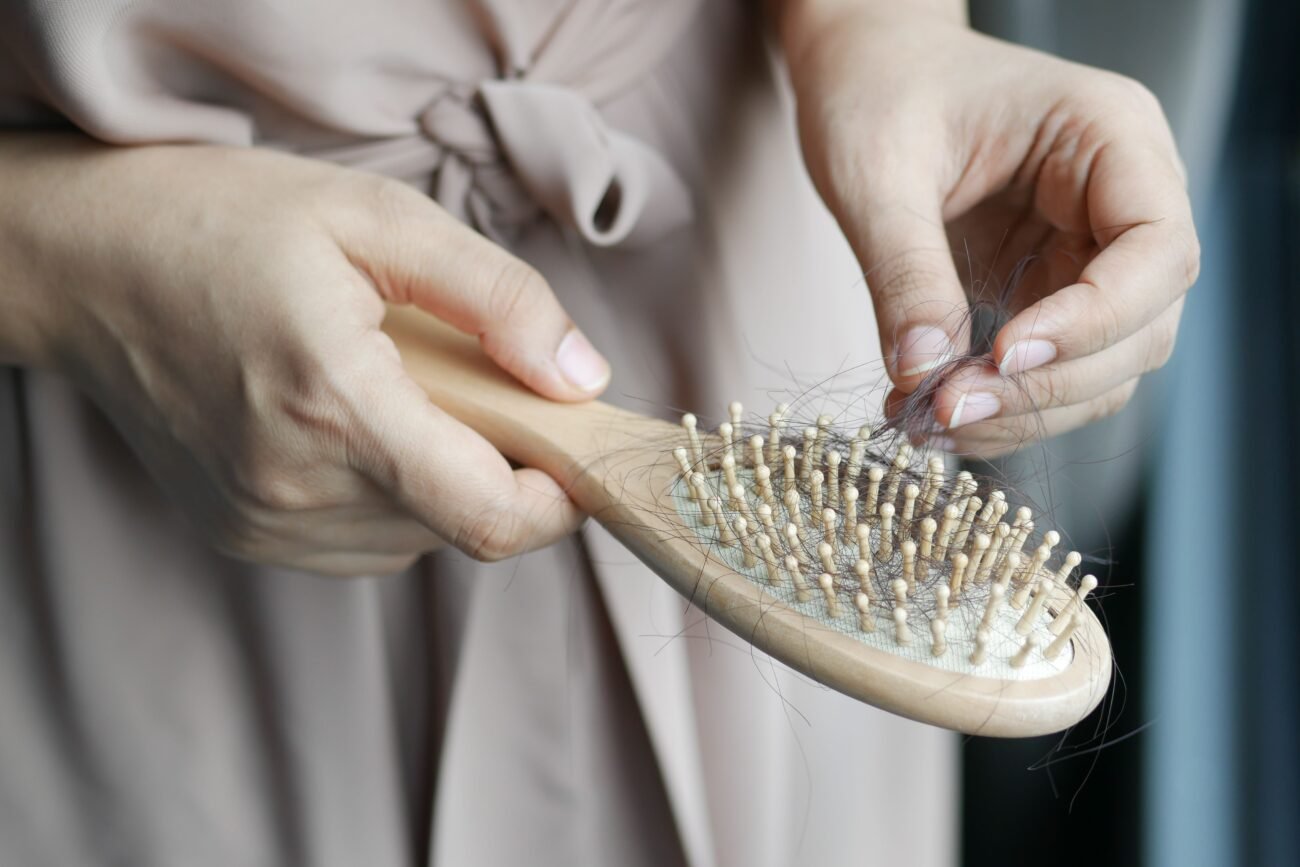
Hair loss: one of the most common beauty problems. If you’re dealing with thinning strands, you likely have plenty of questions about the why, how, and what to do about hair loss.
What is alopecia?
Alopecia is the medical term for hair loss. Alopecia can occur for several reasons, such as genetics (for example, androgenic alopecia, or male pattern baldness), stress, autoimmune conditions, hormones, and medications.
Are there different types of alopecia?
Yes. Some examples of alopecia include:
- Alopecia areata: An autoimmune condition, where your cells attack your hair follicles.
- Traction alopecia: Hair loss caused by tight hairstyles, resulting in breakage along the part and hairline.
- Telogen effluvium: Each hair follicle goes through growing, resting, and shedding phases. With telogen effluvium, more hairs enter the resting stage than usual, resulting in increased hair shedding.
Is alopecia a sign of cancer?
No. Alopecia is not cancer. Cancer itself does not cause hair loss. Instead, cancer treatments, such as radiation therapy, cause hair loss.
Does alopecia only affect men?
No, as women can experience female pattern hair loss.
Is alopecia contagious?
No. Alopecia, no matter the type, is not contagious. A contagious hair condition would be nits, also known as scalp lice. But hair loss itself is not contagious.
Are there any cures for alopecia?
As of this writing, no cures currently exist for alopecia.
Can lopecia areata be treated?
While no cures exist, alopecia can be treated. Treatments include:
- Minoxidil: an over-the-counter treatment.
- Exosome hair therapy: exosomes, powerful extracellular particles, help reactivate dormant follicles when applied to your scalp. This results in new hair growth and a fuller scalp. Painless and noninvasive, with no downtime required, consider hair growth treatment Birmingham to address hair loss.
- Platelet-rich plasma (PRP) Therapy: a concentration of your own blood, containing platelets and growth factors, is injected into your scalp to trigger hair growth.
Does alopecia only affect the scalp?
Not always. While most cases of alopecia affect the scalp, some forms can cause eyelashes and eyebrows to fall out. With alopecia totalis, hair loss occurs throughout the whole body.
Does alopecia mean you’ll go completely bald?
Usually not. Hair loss can occur in the following patterns:
- Patchy alopecia: small areas of scalp hair loss, usually coin-sized
- Alopecia universalis: hair loss throughout your entire scalp
- Alopecia totalis: hair loss throughout the entire body (including loss of eyebrows and eyelashes)
Can alopecia affect young/ healthy individuals?
Yes. In fact, alopecia areata symptoms most often occur in individuals under 40.
Is alopecia a result of poor hair care?
The only type of alopecia that is caused by poor hair care is traction alopecia. This occurs because of tight hairstyles; for example, wearing a tight, slicked-back bun all the time can cause breakage along your hairline.
Other alopecia types have no connection to hair care (or lack thereof). For example, alopecia areata is an autoimmune condition in which your immune system attacks hair follicles. Even if you take great care of your hair, if you have alopecia areata, hair loss will still occur.
Is hair lost from alopecia areata gone forever?
Permanent hair loss results when hair follicles experience scarring (such as burns), or from scarring alopecia conditions, such as cicatricial alopecia.
Alopecia areata is a non-scarring condition, meaning hair can grow back after a hair fall episode.
However, alopecia areata can be unpredictable. You may experience hair fall, have your hair regrow, only to have it fall out again. Fortunately, we live in an era with more effective hair loss treatments than ever before, providing hope for those dealing with hair loss.
This article was written by Leah Campbell for Third Loft Marketing.
