
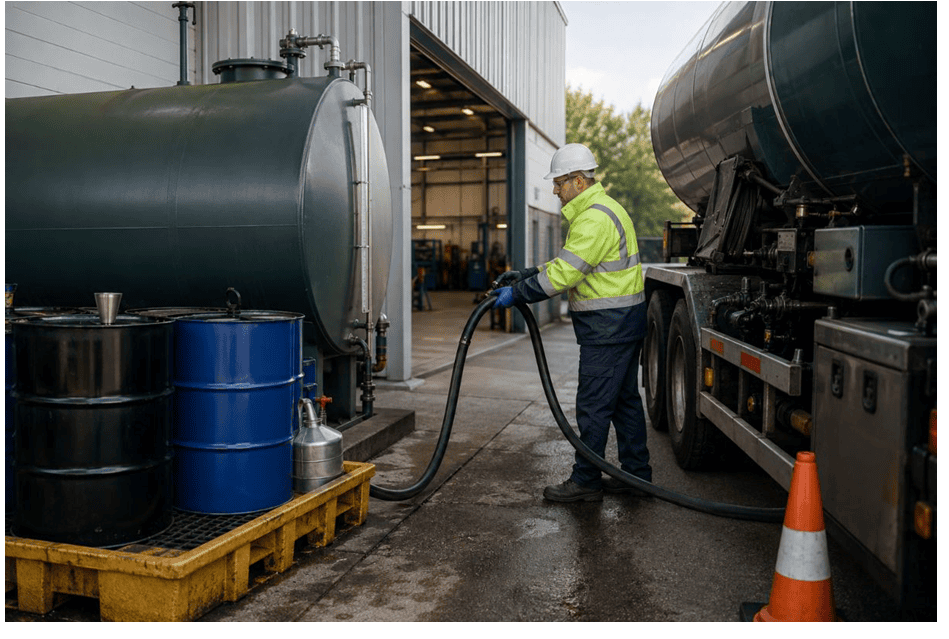
Used oil is produced by garages, factories, farms, engineering workshops and many other commercial operations. Once oil has completed its useful purpose, it cannot simply be poured away, mixed with general waste or left in unsuitable containers. Poor handling can create fire risks, contaminate land and water, and expose a business to unnecessary disruption.
Professional waste oil collection in Birmingham provides a safer and more organised way to remove used oils from commercial and industrial sites. It supports cleaner working environments, responsible waste management and more efficient use of on-site storage space.
Understanding how the process works can help businesses prepare correctly, avoid contamination and choose a collection arrangement that suits their level of oil usage.
What Is Waste Oil?
Waste oil is any petroleum-based or synthetic oil that has become unsuitable for its original purpose. It may contain dirt, water, metal particles, chemicals or other substances collected during use.
Common examples include:
- Used engine oil
- Hydraulic oil
- Gearbox and transmission oil
- Lubricating oil
- Compressor oil
- Industrial process oil
- Contaminated heating oil
- Oil removed during machinery maintenance
Different oils may require different storage and handling methods. Businesses should identify what they are producing before combining products in the same container.
Mixing incompatible liquids can make the material harder to process and may increase the cost or complexity of collection.
Why Proper Oil Disposal Matters
Oil can spread quickly across hard surfaces and seep into soil, drains and watercourses. Even a relatively small spill can be difficult to clean once it reaches an uncontrolled area.
Responsible disposal helps protect:
- Employees and site visitors
- Local wildlife
- Soil and groundwater
- Drainage systems
- Nearby properties
- Machinery and storage areas
- The reputation of the business
A clean and organised oil storage area also makes inspections, maintenance and collections easier to manage.
Businesses should treat used oil as a controlled material rather than ordinary rubbish. It must be stored securely until it can be collected by a suitable waste contractor.
Which Businesses Produce Waste Oil?
Used oil is generated across a wide range of sectors. Some businesses produce small quantities during routine maintenance, while others require frequent collections because oil is central to their daily operations.
Typical producers include:
Vehicle Garages
Garages regularly remove engine, gearbox and transmission oils during servicing and repairs. Separate storage can help prevent these products from becoming mixed with coolant, brake fluid or cleaning chemicals.
Manufacturing Facilities
Factories may use lubricants, hydraulic oils and process fluids in machinery. Regular collection helps keep production areas clear and reduces the risk of overflowing containers.
Agricultural Businesses
Farms operate tractors, generators, harvesters and other oil-dependent equipment. Used oils should be stored in a dedicated location away from livestock, crops and water sources.
Construction and Engineering Sites
Plant machinery, generators and heavy equipment may produce significant quantities of used oil. Temporary worksites need secure storage that can withstand changing weather conditions and site activity.
Transport and Fleet Operators
Bus, taxi, haulage and delivery businesses may generate waste oil through vehicle maintenance. A planned collection schedule can support workshop organisation and prevent storage capacity from becoming limited.
How the Collection Process Works
The exact process may vary depending on the supplier, quantity and type of oil, but most collections follow a straightforward sequence.
1. Identify the Oil
The business should confirm what type of oil is stored and whether it has been mixed with other substances.
2. Estimate the Quantity
Knowing the approximate volume helps the collector select a suitable vehicle and pumping equipment.
3. Check Site Access
The collection vehicle must be able to reach the storage area safely. Narrow roads, height restrictions, parked vehicles and locked gates should be mentioned in advance.
4. Arrange a Collection Time
A suitable date can then be agreed based on location, volume and service availability.
5. Prepare the Storage Area
The route to the tank or containers should be clear, and a responsible person may need to be available on site.
6. Transfer the Oil
The contractor pumps or removes the waste oil using appropriate equipment before transporting it for authorised processing.
Keeping accurate information available can reduce delays and make each visit more efficient.
Store Used Oil Safely Before Collection
Safe storage is one of the most important parts of waste oil management. Containers should be strong, clearly identified and suitable for the liquid they hold.
Good storage practices include:
- Use secure tanks, drums or approved containers.
- Keep lids, caps and valves closed.
- Label each container clearly.
- Store oil away from drains and watercourses.
- Use secondary containment where appropriate.
- Protect containers from vehicle impact.
- Keep the area free from ignition sources.
- Inspect tanks and drums regularly.
- Clean minor drips before they spread.
- Prevent rainwater from entering open containers.
The storage area should remain accessible for inspections and collections without placing employees or drivers at unnecessary risk.
Avoid Mixing Other Liquids with Used Oil
One of the most common waste-management mistakes is mixing several automotive or industrial fluids in the same tank.
Used oil should not automatically be combined with:
- Antifreeze
- Brake fluid
- Solvents
- Petrol
- Diesel
- Water
- Paint
- Cleaning chemicals
- AdBlue
- Unknown workshop liquids
Contamination may change how the waste must be handled. It can also make recycling or recovery more difficult.
Businesses should provide separate, labelled containers for different fluids and make sure staff understand where each product belongs. Clear signage can prevent accidental mixing during busy working periods.
Benefits of Scheduled Collections
Waiting until a tank is almost full can create unnecessary pressure. A regular collection schedule gives businesses more control and reduces the likelihood of storage problems.
Scheduled collections can help:
- Prevent tanks from overflowing
- Keep workshops and yards organised
- Reduce urgent collection requests
- Support environmental procedures
- Improve staff accountability
- Maintain available storage capacity
- Simplify record keeping
- Make operating costs easier to plan
The ideal frequency will depend on the size of the containers and the amount of oil produced. Some sites may need frequent collections, while others can arrange removal only when a minimum quantity has accumulated.
Signs That a Collection Is Needed
Storage levels should be checked regularly rather than guessed. Simple visual inspections or level gauges can help staff identify when capacity is becoming limited.
Arrange a collection when:
- The tank reaches its agreed reorder level.
- Drums are beginning to accumulate.
- A maintenance project will produce additional oil.
- The storage area is becoming difficult to manage.
- A site is closing or relocating.
- Equipment is being replaced or decommissioned.
- Oil has become contaminated.
- The tank requires inspection or repair.
Do not continue adding oil to a container that appears cracked, unstable or damaged. Transfer should only be carried out using safe and appropriate methods.
Preparing the Site for the Collection Vehicle
A well-prepared site allows the driver to complete the work safely and without avoidable delays.
Before the scheduled visit:
- Unlock gates and storage areas.
- Move vehicles away from the access route.
- Remove equipment blocking the tank.
- Confirm that the correct container is identified.
- Keep employees away from the pumping area.
- Provide any required site safety instructions.
- Check that the ground is firm and accessible.
- Report unusual access restrictions in advance.
The business should also make sure the oil quantity and description match the information provided when the collection was arranged.
Responding to Spills and Leaks
A leaking drum or tank should never be ignored. Small leaks can spread beneath equipment, enter drains or contaminate surrounding ground.
Businesses should keep appropriate spill-control materials available, such as:
- Absorbent pads
- Oil-only granules
- Drain covers
- Protective gloves
- Waste sacks
- Containment socks
- A site spill procedure
Employees should know who to contact and how to prevent the oil from spreading. Used absorbents and contaminated materials must also be handled correctly after the incident.
Serious leaks may require specialist support, particularly where oil has entered soil, drainage systems or nearby water.
Choosing a Suitable Collection Provider
Price matters, but it should not be the only factor considered. Businesses need a provider that can handle the oil type, quantity and access conditions safely.
Before arranging a service, ask:
- Which waste oils can be collected?
- Is there a minimum collection quantity?
- Are contaminated oils accepted?
- What access does the vehicle require?
- Is pumping equipment supplied?
- Will collection documentation be provided?
- Can recurring visits be arranged?
- What happens if the oil differs from its description?
- Are emergency collections available?
Companies comparing collection options may consider 123 Oil when looking for practical support, suitable coverage and organised removal of used oil from commercial sites.
Build Better Oil-Management Procedures
Good oil management should involve the whole business rather than one employee. Clear procedures reduce mistakes and make it easier to maintain safe storage standards.
A simple workplace plan should identify:
- Which oils are produced
- Where each oil must be stored
- Who checks container levels
- When collections should be booked
- How leaks should be reported
- Where spill kits are located
- Who maintains collection records
- Which staff require training
These details can be included in workshop guidance, environmental procedures or site induction materials.
Final Thoughts
Used oil needs careful handling from the moment it leaves a machine until it is removed from the premises. Secure containers, clear labels and regular inspections can prevent contamination, spills and unnecessary collection delays.
Businesses should avoid mixing fluids, monitor storage capacity and provide accurate information to the collection provider. A planned approach is generally safer and easier than waiting until drums or tanks are completely full.
By arranging professional collections and maintaining clear workplace procedures, organisations can keep their sites cleaner, protect the surrounding environment and manage waste oil with greater confidence.
