
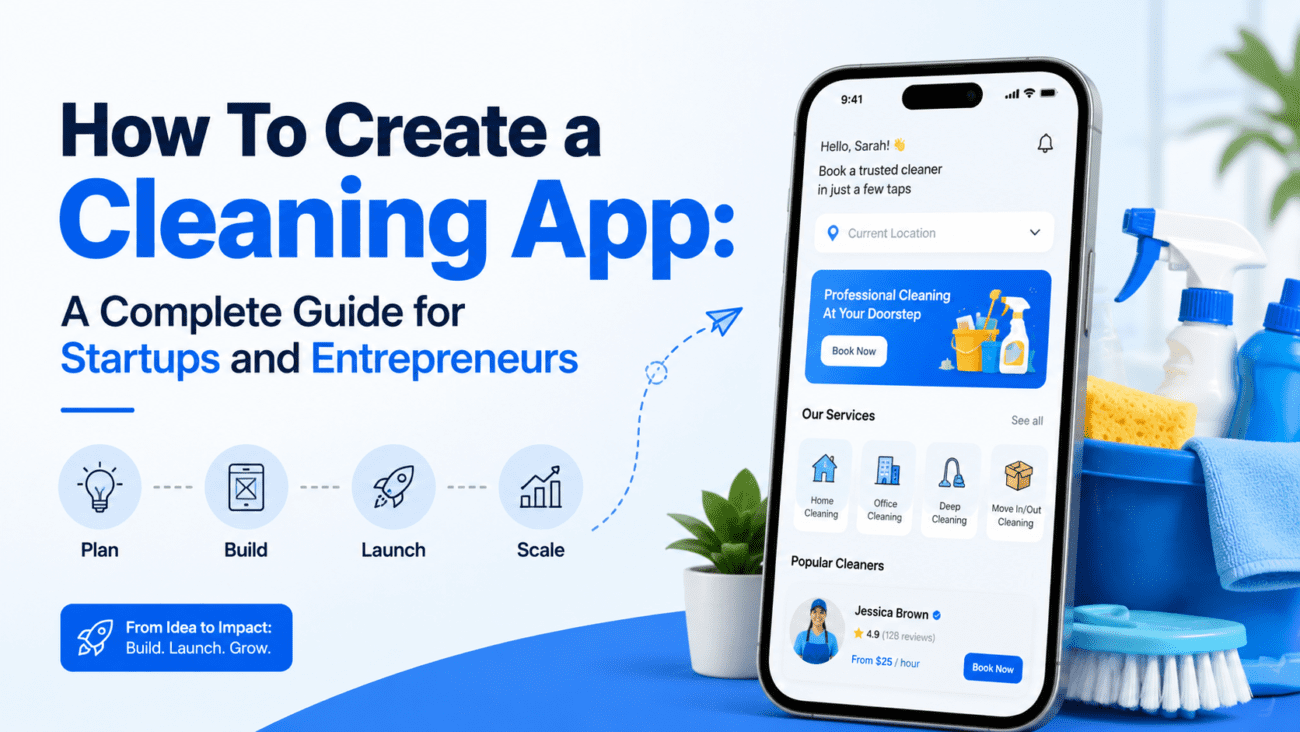
The on-demand service industry has experienced explosive growth over the last decade, and cleaning services are among the most profitable sectors in the market. Businesses and homeowners increasingly prefer booking cleaning professionals through mobile apps because of convenience, transparency, and speed. Companies like CleaNESTOR have helped demonstrate how digital solutions can transform traditional cleaning businesses into scalable and customer-friendly platforms.
If you are planning to launch your own cleaning service application, understanding the development process is essential. From choosing features to selecting the right business model, every decision affects the app’s success. This guide explains everything you need to know about how to create a cleaning app, including development stages, must-have features, technology stack, monetization methods, and estimated costs.
Why the Cleaning App Market Is Growing
The demand for on-demand cleaning services continues to rise due to busy lifestyles, urbanization, and growing smartphone usage. Customers no longer want to spend time making phone calls or searching manually for local cleaning providers. Instead, they expect instant booking, transparent pricing, secure payment systems, and real-time tracking.
Several factors are fueling the growth of cleaning apps:
- Increased preference for convenience-based services
- Rapid adoption of mobile technologies
- Growth in dual-income households
- Expansion of gig economy platforms
- Demand for contactless booking and payments
This creates a profitable opportunity for entrepreneurs who want to enter the on-demand service industry with a scalable digital platform.
Understanding the Business Model of a Cleaning App
Before starting development, you must decide how your cleaning app will operate. The business model determines the app’s structure, revenue generation, and user experience.
Aggregator Model
In this model, the app connects customers with independent cleaning professionals or agencies. The platform earns money through commissions on every booking.
Examples:
- Urban Company
- Handy
- TaskRabbit
Dedicated Service Provider Model
This model works for businesses that already own a cleaning company. The app serves as a booking and management platform for their in-house staff.
Subscription-Based Model
Customers pay monthly or yearly subscriptions for regular cleaning services. This approach creates recurring revenue and improves customer retention.
Marketplace Model
A marketplace allows multiple cleaning companies to list their services, prices, and availability on the platform.
Choosing the right model depends on your budget, target audience, and operational capacity.
Essential Features of a Cleaning App
A successful cleaning app requires features that simplify the booking process for customers while helping service providers manage operations efficiently.
Customer Panel Features
User Registration and Login
Allow users to sign up using:
- Phone number
- Social media accounts
Simple onboarding improves user retention.
Service Selection
Users should be able to choose from multiple cleaning services such as:
- Home cleaning
- Deep cleaning
- Carpet cleaning
- Office cleaning
- Move-in/move-out cleaning
Scheduling and Booking
Customers should select:
- Preferred date
- Time slot
- Cleaning duration
- Number of cleaners
A calendar-based booking system improves usability.
Real-Time Tracking
GPS tracking helps customers monitor cleaner arrival times and boosts trust.
Secure Payments
Integrate multiple payment methods:
- Credit/debit cards
- Mobile wallets
- Net banking
- Cash payments
Ratings and Reviews
Reviews build credibility and help maintain service quality.
Push Notifications
Notifications inform users about:
- Booking confirmations
- Cleaner arrival
- Discounts and offers
- Payment receipts
Cleaner or Service Provider Panel
The service provider side of the app also requires dedicated functionality.
Profile Management
Cleaners should manage:
- Personal information
- Availability
- Work history
- Certifications
Job Acceptance
Providers need the ability to accept or reject bookings instantly.
Earnings Dashboard
A dashboard displaying completed jobs, earnings, and bonuses improves transparency.
Route Optimization
GPS navigation helps cleaners reach customer locations efficiently.
Admin Panel Features
The admin dashboard is the control center of the platform.
User Management
Admins should manage customers and service providers from one centralized dashboard.
Booking Management
Track all bookings, cancellations, and completed services.
Analytics and Reporting
Data insights help optimize operations and marketing strategies.
Commission Management
The system should automate payment distribution and commission calculations.
Steps To Create a Cleaning App
Developing a cleaning app requires strategic planning and execution. Below is a step-by-step roadmap.
Step 1: Conduct Market Research
Before development begins, study your target market carefully.
Analyze:
- Competitors
- Customer pain points
- Popular pricing models
- Service gaps
- User expectations
Research helps you identify opportunities to differentiate your platform.
Step 2: Define Your Unique Selling Proposition (USP)
Your cleaning app needs a clear competitive advantage.
Possible USPs include:
- Eco-friendly cleaning solutions
- Faster booking times
- Lower service fees
- AI-powered scheduling
- Subscription packages
- Certified professionals
A strong USP improves market positioning.
Step 3: Choose the Right Platform
Decide whether you want:
- Android app
- iOS app
- Cross-platform app
- Web application
Cross-platform frameworks like Flutter or React Native reduce development costs while supporting multiple operating systems.
Step 4: Create an Intuitive UI/UX Design
User experience directly impacts customer satisfaction.
Your app should feature:
- Simple navigation
- Fast loading speed
- Clean interface
- Easy booking flow
- Minimal steps for checkout
A clutter-free design improves conversion rates.
Step 5: Develop the MVP
An MVP (Minimum Viable Product) contains only the essential features required for launch.
Core MVP features:
- Registration
- Booking
- Payments
- Notifications
- Reviews
Launching an MVP allows you to test the market before investing in advanced functionality.
Step 6: Integrate Advanced Technologies
Modern cleaning apps use advanced technologies to improve efficiency.
Artificial Intelligence
AI helps with:
- Smart scheduling
- Customer support chatbots
- Personalized recommendations
- Dynamic pricing
GPS and Geolocation
Location tracking enhances operational efficiency and real-time monitoring.
Cloud Integration
Cloud infrastructure improves:
- Data storage
- Scalability
- Security
- Performance
IoT Integration
Some advanced cleaning businesses integrate smart devices and IoT-enabled systems for automated service monitoring.
Step 7: Test the Application
Quality assurance is critical before launch.
Perform:
- Functional testing
- Performance testing
- Security testing
- Compatibility testing
- User acceptance testing
Fix bugs and optimize performance before release.
Step 8: Launch and Market the App
After testing, publish the app on:
- Google Play Store
- Apple App Store
Use marketing strategies such as:
- SEO
- Paid ads
- Influencer partnerships
- Referral programs
- Social media marketing
Marketing plays a major role in user acquisition.
Best Tech Stack for a Cleaning App
Choosing the right technology stack ensures scalability and performance.
Frontend Technologies
- Flutter
- React Native
- Swift (iOS)
- Kotlin (Android)
Backend Technologies
- Node.js
- Django
- Laravel
- Ruby on Rails
Database Options
- PostgreSQL
- MongoDB
- MySQL
Cloud Platforms
- AWS
- Google Cloud
- Microsoft Azure
Payment Gateways
- Stripe
- PayPal
- Razorpay
Selecting modern technologies improves long-term reliability.
Cost To Develop a Cleaning App
The total development cost depends on:
- Feature complexity
- App platform
- Design quality
- Development location
- Third-party integrations
Here is a rough estimate:
| Development Type | Estimated Cost |
|---|---|
| Basic MVP | $10,000 – $25,000 |
| Mid-Level App | $25,000 – $60,000 |
| Advanced App | $60,000 – $150,000+ |
Maintenance costs should also be considered after launch.
Monetization Strategies for Cleaning Apps
A cleaning app can generate revenue in several ways.
Commission Fees
Charge service providers a percentage of every booking.
Subscription Plans
Offer premium membership plans with added benefits.
Featured Listings
Allow businesses to pay for better visibility within the app.
Service Charges
Add platform fees to customer bookings.
In-App Advertising
Display advertisements from related businesses.
Diversified revenue streams improve long-term profitability.
Challenges in Cleaning App Development
Although the industry offers strong opportunities, there are several challenges to consider.
Building Trust
Customers need assurance that cleaners are verified and reliable.
Solution:
- Background verification
- Ratings and reviews
- Identity checks
Managing Scheduling Conflicts
Double bookings can damage the user experience.
Solution:
- AI-powered scheduling
- Real-time calendar synchronization
Customer Retention
High competition makes retention difficult.
Solution:
- Loyalty programs
- Discounts
- Personalized offers
Scalability
As the business grows, the app must handle increasing traffic.
Solution:
- Cloud infrastructure
- Scalable backend architecture
Tips To Make Your Cleaning App Successful
Focus on Customer Experience
Smooth booking and excellent customer support increase retention.
Use Data Analytics
Analytics help identify:
- Popular services
- Peak booking times
- Customer behavior
Implement Automation
Automation reduces operational costs and improves efficiency.
Offer Multiple Service Packages
Flexible pricing attracts different customer segments.
Prioritize Security
Protect customer data using:
- SSL encryption
- Secure payment gateways
- GDPR compliance
Future Trends in Cleaning Apps
The future of cleaning apps looks promising with technological advancements shaping the industry.
AI-Powered Automation
Artificial intelligence will improve customer interactions and operational management.
Voice-Based Booking
Voice assistants may simplify the booking process further.
Green Cleaning Services
Eco-friendly cleaning solutions are becoming increasingly popular.
Subscription Ecosystems
Recurring cleaning memberships are expected to dominate the market.
Smart Home Integration
Cleaning apps may integrate directly with smart home systems and IoT devices.
Businesses that adopt these trends early can gain a competitive advantage.
Final Thoughts
Creating a cleaning app requires careful planning, technical expertise, and a customer-focused approach. The growing demand for on-demand cleaning services presents a valuable opportunity for startups and established businesses alike. By selecting the right business model, integrating essential features, and using scalable technologies, entrepreneurs can build a profitable and sustainable platform.
The key to success lies in delivering convenience, reliability, and transparency. Customers expect fast booking, secure payments, professional service providers, and seamless communication. A well-designed cleaning app can meet these expectations while generating strong recurring revenue for business owners.
As digital transformation continues to reshape service industries, cleaning apps are likely to become even more sophisticated and essential. Businesses that invest in innovation, automation, and exceptional user experience will be well-positioned for long-term growth in this rapidly expanding market.
