
Kirk Burrowes helped build Bad Boy Entertainment during the record label’s rise from a young New York company into one of the defining forces in 1990s hip-hop and R&B. Working behind the scenes as a co-founder and senior executive, he contributed to the business structure surrounding artists such as the Notorious B.I.G., Craig Mack, Faith Evans, Total, and 112.
His career, however, did not produce the straightforward success story that readers might expect from someone connected to such a valuable music brand. Burrowes says he lost his ownership interest in Bad Boy, faced years of professional exclusion, and experienced severe financial hardship. He later rebuilt his career through artist management, music production, consulting, and film and television development.
Interest in Kirk Burrowes’s net worth increased after he returned to public attention through lawsuits filed in 2025 and his appearance in the Netflix documentary series Sean Combs: The Reckoning. Despite the speculation, his current wealth has never been publicly confirmed. Online estimates should be treated cautiously because his assets, income, debts, business holdings, and legal expenses remain private.
Who Is Kirk Burrowes?
Kirk Burrowes is an American music and entertainment executive best known for his early leadership at Bad Boy Entertainment. He has been described as a co-founder of the company and held senior posts that included general manager, chief operating officer, and president during different stages of his association with the label.
Burrowes was not a recording artist or television personality during Bad Boy’s early years. His work focused on company operations, artist development, marketing, financial planning, management, and the business demands of building a young record label. Those responsibilities placed him close to many of the artists, executives, lawyers, and commercial decisions that shaped Bad Boy’s growth.
His full date of birth, age, and birthplace have not been publicly confirmed in dependable sources. Details about his parents, siblings, childhood, and early family life also remain private. He has generally discussed his professional history rather than presenting himself as a conventional celebrity.
Early Life and Education
Little verified information is available about Burrowes’s upbringing. Public professional materials indicate that he studied marketing at Saint Joseph’s University in Philadelphia, though the exact dates of his attendance and graduation have not been widely documented.
His education suited the career he later built. Burrowes entered the music business from a management and marketing perspective, helping organize companies and artists rather than pursuing a career onstage. That background became especially valuable during the early 1990s, when hip-hop labels were growing into larger commercial operations with national distribution and major-label partnerships.
The identities and occupations of Burrowes’s parents are not publicly confirmed. He has also kept information about his childhood ambitions, hometown, and first jobs outside the entertainment industry largely out of the public record.
Building Bad Boy Entertainment
Bad Boy Entertainment was formed in 1993 after Sean Combs left Uptown Records. Burrowes joined Combs in developing the new company and has long maintained that he received a 25% ownership interest in the business. He says he contributed money, professional knowledge, labor, and operating experience during the label’s formative period.
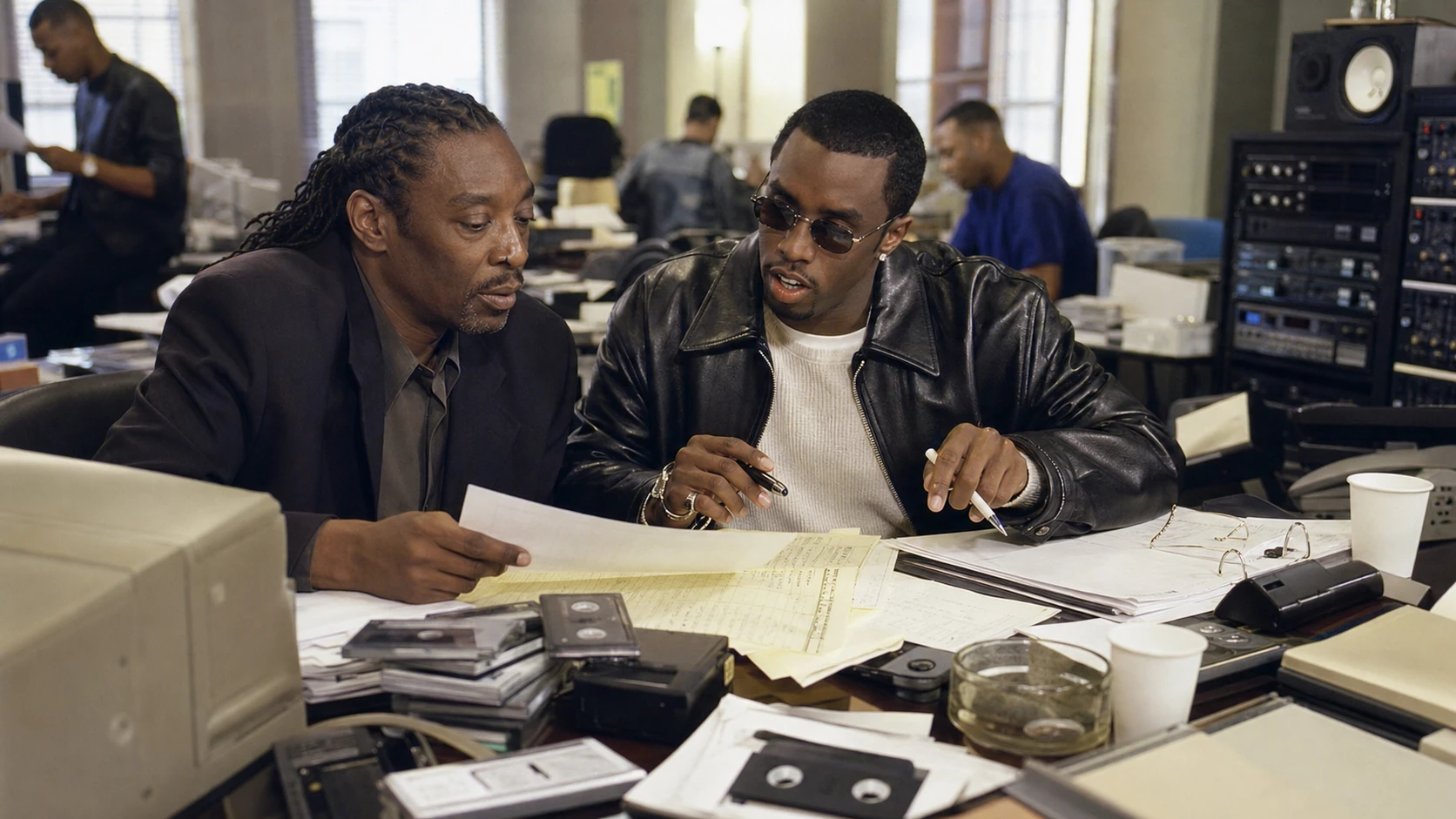
Bad Boy quickly gained attention through Craig Mack’s “Flava in Ya Ear” and the Notorious B.I.G.’s debut album, Ready to Die. The label then expanded its roster and influence through acts including Faith Evans, Total, 112, and Mase. Its artists helped shape the polished, sample-driven sound that became closely associated with East Coast hip-hop and mainstream R&B during the decade.
Burrowes worked on the administrative side of that success. His responsibilities reportedly included budgets, staffing, artist relations, business affairs, marketing, and daily management. While Combs became the company’s public face, Burrowes operated as one of the executives responsible for turning its creative ambitions into a functioning business.
That distinction matters in understanding Burrowes’s reputation. His importance did not come from a large public following or a catalog released under his own name. It came from his involvement in the systems, negotiations, and management decisions behind a label that became part of music history.
The Dispute Over His Bad Boy Ownership
Burrowes’s relationship with Bad Boy ended amid a dispute that would shape the rest of his career. He has alleged that Combs forced him to sign away his ownership interest during a 1996 confrontation involving a baseball bat. According to Burrowes, he surrendered the stake without receiving fair payment.
Combs and his legal representatives have denied Burrowes’s claims and challenged his later lawsuits. The alleged confrontation was never resolved through a full trial that produced a final factual judgment. Earlier cases brought by Burrowes were dismissed largely because of filing deadlines and legal pleading issues.
In 2003, Burrowes filed federal claims involving Combs, Bad Boy, and attorney Kenneth Meiselas. A federal judge dismissed the racketeering claims in 2004, finding that they had been filed outside the applicable limitations period and did not meet the required legal standards. The court declined to continue hearing the related state-law claims.
Burrowes pursued another case in New York, but an appellate court dismissed it in 2006. The ruling found that most of the claims were time-barred and that other allegations had not been pleaded with enough factual support. The decision ended that lawsuit but did not amount to a jury finding that every event described by Burrowes had or had not occurred.
Career After Bad Boy
After leaving Bad Boy, Burrowes remained involved in music. One of his most prominent later roles was managing Mary J. Blige, whose career had already made her one of the leading voices in contemporary R&B.

Burrowes’s professional profile states that he managed Blige from 1998 to 2002. He received executive-production credits connected with her 1999 album Mary and associate executive-production recognition on No More Drama, released in 2001. His credits also included work connected with “Family Affair,” one of Blige’s biggest commercial singles.
Artist management can provide income through commissions based on an artist’s earnings, but Burrowes’s agreement with Blige has never been made public. There is no verified figure for the salary, fees, commissions, or royalties he received from that period. His credits confirm that he worked at a high level, but they do not establish how much of that income remains part of his present wealth.
Burrowes also worked through other entertainment businesses. He was publicly identified with Plan B Entertainment during the 2000s, although detailed financial information about the company is unavailable. He later created Pop Life Entertainment, also presented professionally as Pop Life Branded Entertainment, with a focus on film, television, music, and branded projects.
Personal Setbacks and Financial Hardship
Burrowes has said that losing his position and ownership at Bad Boy affected more than one job. He has described being excluded from professional opportunities for many years and has argued that his association with the dispute made it difficult to continue working at the level he had reached in the 1990s.
In Sean Combs: The Reckoning, Burrowes discussed periods of serious hardship, including homelessness and stays in shelters. His account presents a stark contrast with the wealth generated by the company he helped establish. It also helps explain why estimates based only on Bad Boy’s commercial success can give a misleading picture of his personal finances.
A founding title does not guarantee lasting wealth. A person must retain ownership, receive distributions, sell an interest, or hold enforceable royalty and profit rights before a successful company’s value becomes personal wealth. Burrowes’s position is that he lost the stake that could have produced those long-term returns.
His reported setbacks also show the limits of career credits as a measure of financial security. High-profile management and production work may generate strong income during active years, but taxes, business costs, legal fees, debt, interrupted employment, and personal hardship can greatly reduce what remains.
Marriage, Children, and Private Life
Burrowes has kept his family life outside public view. A spouse or long-term partner has not been reliably identified in major public sources, and there is no dependable confirmation about whether he is currently married.
Information about children is also not publicly confirmed. He has not built his public profile around his relationships or family, and responsible accounts should not fill those gaps with claims repeated by low-quality biography sites.
This privacy is consistent with much of his career. Even during Bad Boy’s most visible years, Burrowes worked as an executive rather than a celebrity personality. His recent interviews and documentary appearances have focused primarily on business history, legal disputes, and his relationship with the company he helped create.
Kirk Burrowes Net Worth and Income Sources
Kirk Burrowes’s net worth is not publicly known. He has never issued a verified financial disclosure, and there is no dependable public accounting of his real estate, savings, investments, company ownership, royalties, legal obligations, or personal debt.
Some entertainment websites estimate Kirk Burrowes’s net worth at between $1 million and $5 million. That range is not supported by disclosed financial records and should not be presented as fact. Other pages have published far larger figures while confusing him with unrelated executives and entrepreneurs, making those claims even less credible.
His known or possible income sources have included music-company executive compensation, artist-management commissions, production fees, consulting, film and television development, licensing, and ownership in private businesses. The amount earned from each source has not been released. It is also unclear whether his older production credits provide continuing royalties.
Burrowes’s claimed 25% interest in Bad Boy should not be included in his present net worth. He says he lost that interest in 1996, and its ownership remains disputed. A pending legal claim can have possible future value, but it is not the same as an asset that can be freely sold, borrowed against, or spent.
The most responsible assessment is that Burrowes may have earned substantial sums at different points in his career, but the public evidence cannot establish what he owns today. Any exact figure would rely more on assumption than fact.
New Lawsuits and Renewed Public Attention
Burrowes returned to the courts in 2025 with new legal actions connected to his former Bad Boy interest. One complaint named Janice Smalls, also known as Janice Combs, and alleged that she was involved in conduct that deprived him of his claimed ownership and earnings. He also brought new claims involving Sean Combs.
The defendants disputed his allegations and sought dismissal. As of 2026, the proceedings had not produced a final public judgment awarding Burrowes ownership, damages, or other compensation. Court filings contain allegations made by the parties, and those allegations should not be treated as established facts unless supported by a ruling or settlement.
In July 2026, a federal magistrate judge allowed Burrowes to proceed with an amended complaint in the case involving Smalls and set deadlines for further responses. That order kept the lawsuit active but did not decide the underlying ownership dispute.
The litigation could affect Burrowes’s finances if it leads to a judgment or settlement. Yet even a successful recovery could be reduced by legal fees, expenses, taxes, or negotiated terms. Until an outcome is recorded, the lawsuits remain potential financial events rather than evidence of current wealth.
Sean Combs: The Reckoning
Burrowes appeared in the Netflix documentary series Sean Combs: The Reckoning, released in December 2025. His participation brought him before a much larger audience than he had reached during his years as a private executive.
He shared memories from Bad Boy’s early period and discussed journals he kept while working at the company. Those materials gave the documentary a firsthand perspective from someone involved in the label’s operations and internal relationships. Burrowes also described the breakdown of his partnership with Combs and the effect it had on his later life.
His appearance strengthened public interest in both his career and finances. It may also lead to work in documentaries, publishing, speaking, consulting, or archival licensing, although no such earnings have been publicly disclosed. Netflix has not released details of any compensation Burrowes received for participating.
The series also changed how many viewers understood his place in Bad Boy’s history. For years, public accounts often centered almost entirely on Combs and the artists. Burrowes’s testimony brought attention back to the executives who helped establish the company but did not retain the same public power or financial position.
Current Work and Public Image
As of 2026, Burrowes is associated with Pop Life Branded Entertainment. The company’s work has been described as spanning film, television, branded entertainment, and music-related development. Because it is privately held, its revenue, funding, completed productions, and valuation are not publicly available.
Burrowes’s present public image is tied to three parts of his life: his role in building Bad Boy, his claims about losing that position, and his effort to regain control of his story. Supporters view him as an overlooked executive whose contribution was overshadowed by a more famous business partner. Critics and opposing lawyers point to the dismissal of his earlier cases and dispute his current allegations.
Both parts of the record must be kept separate. Burrowes’s documented executive career is not erased by unsuccessful litigation, while his historical importance does not prove every legal claim. His biography sits between those truths.
His recent visibility suggests that he remains interested in developing entertainment projects and preserving his account of Bad Boy’s early years. The outcome of his lawsuits and the progress of Pop Life’s projects will determine whether this new attention produces lasting professional or financial change.
Frequently Asked Questions
What is Kirk Burrowes’s net worth?
Kirk Burrowes’s net worth is not publicly confirmed. Websites that place his wealth between $1 million and $5 million do not provide verified records supporting that estimate. His assets, debts, company value, royalties, and current income remain private.
Is Kirk Burrowes a founder of Bad Boy Entertainment?
Yes. Burrowes is widely identified as a co-founder and early senior executive of Bad Boy Entertainment. He helped run the company during its rise in the 1990s and held roles that included president, chief operating officer, and general manager.
Does Kirk Burrowes own part of Bad Boy today?
There is no confirmed evidence that Burrowes currently owns part of Bad Boy. He says he originally held a 25% stake but was forced to sign it away in 1996 without proper compensation. That account remains the subject of disputed legal claims.
How did Kirk Burrowes make his money?
Burrowes earned money through music-company leadership, artist management, executive production, consulting, and entertainment ventures. He managed Mary J. Blige and received credits on major projects, but his contracts and earnings have not been publicly disclosed.
How old is Kirk Burrowes?
Kirk Burrowes’s date of birth and age are not publicly confirmed in dependable sources. Online pages that assign him a specific birthday or age should be treated cautiously unless they provide credible documentation.
Is Kirk Burrowes married?
Burrowes’s marital status is not publicly confirmed. He has kept his romantic relationships, spouse information, and possible children away from media attention.
What is Kirk Burrowes doing now?
As of 2026, Burrowes is associated with Pop Life Branded Entertainment and has been involved in film and television development. He also returned to public attention through litigation related to Bad Boy and his appearance in Sean Combs: The Reckoning.
Conclusion
Kirk Burrowes occupies an unusual place in music history. He helped build a company whose records, artists, and image became central to 1990s popular culture, yet he did not emerge from that period with the public fortune many people associate with Bad Boy.
His story is shaped by business achievement and loss. The early label work, Mary J. Blige management credits, later entertainment ventures, and documentary testimony show a career that continued despite major setbacks. The disputed ownership claim remains central, but it should not overshadow the professional work that first established his reputation.
Kirk Burrowes’s net worth cannot be responsibly reduced to an unsupported figure. What can be said is that his financial life has likely been affected by lost opportunities, years of litigation, private business work, and attempts to rebuild after hardship.
His renewed visibility has given him a chance to explain his place in Bad Boy’s story in his own words. Whether that attention leads to legal recovery or new commercial success remains uncertain, but his role in the company’s beginnings has become harder to leave out of the historical record.
