
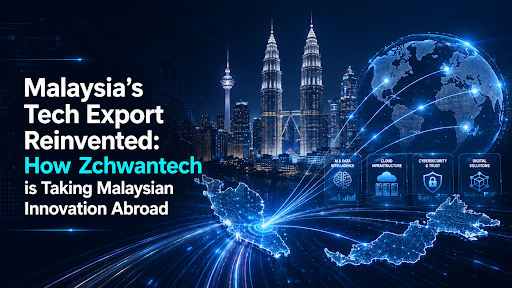
Malaysia’s technology story is changing. For years, local tech companies were often seen as service providers for domestic businesses. That view is now too small. Malaysian firms are moving into regional digital transformation, AI infrastructure, cybersecurity, cloud modernization, and national-scale technology projects.
Zchwantech is part of this shift. The company is showing how Malaysian innovation can move beyond local markets and support larger digital ambitions abroad. Its involvement in the Timor-Leste Zchwantech partnership reflects a bigger story about Malaysia’s growing role in regional technology exports.
This is not just about selling software. It is about exporting capability, trust, infrastructure knowledge, and long-term digital execution. For Malaysia, that matters.
Malaysia’s Tech Export Is Moving Beyond Traditional IT Services
Malaysia’s tech export market is no longer limited to basic outsourcing or support work. The demand has changed. Regional governments and businesses now need partners that can help build secure, scalable, and future-ready digital systems.
That includes AI platforms, cloud infrastructure, cybersecurity frameworks, data systems, custom applications, and digital identity solutions.
This shift gives Malaysian firms a stronger role in the region. They can provide practical technology solutions with a strong understanding of Southeast Asian markets. They also bring competitive delivery capabilities, multilingual teams, and growing experience across cloud, AI, data, and security.
For countries building digital economies, this mix is useful. They need partners that understand both technology and execution. A good strategy is not enough. The systems must work in real life.
Zchwantech as a Malaysian Innovation Export Story
Zchwantech positions itself as a digital IT solutions company with services in cloud services, AI-driven data intelligence, custom application development, cybersecurity, and infrastructure modernization. Its service scope also includes full stack custom application development, cloud and infrastructure modernization, AI and data intelligence platforms, comprehensive cybersecurity solutions, and authorized technology solutions.
This makes the company relevant for cross-border digital transformation projects. International projects often need more than one technical service. They need a connected approach.
A national platform may need cloud architecture. A public service system may need secure identity access. A data ecosystem may need AI and analytics. A digital finance platform may need cybersecurity, testing, and stable infrastructure.
Zchwantech’s broader service model fits this type of work because it connects infrastructure, applications, security, and data into one digital foundation.
Timor-Leste Zchwantech Partnership and the Sovereign AI Push
The Timor-Leste Zchwantech partnership has become a clear example of Malaysian technology moving into regional nation-building.
NST reported the collaboration in its article, Timor-Leste taps Malaysia’s Zchwantech for sovereign AI push. The report highlighted Timor-Leste’s plan to work with Malaysia’s Zchwantech to co-develop a sovereign AI-powered national digital ecosystem.
This landmark AI partnership matters because it places a Malaysian company inside a strategic regional digital project. It also shows that Malaysian tech expertise can support national-level systems, not just private sector tools.
What Sovereign AI Means for a Digital Nation
Sovereign AI is about control, security, and long-term digital independence.
For a country, AI systems cannot only depend on external platforms. Sensitive national data, public service records, identity systems, and digital infrastructure need strong governance. A sovereign AI partnership helps build systems that support national priorities while protecting data and operational resilience.
In Timor-Leste’s case, the reported plan includes a national AI cloud and data centre. The goal is to support secure digital services, data sovereignty, cybersecurity, and long-term operational resilience. Plans also include an AI-enhanced national digital identity system with advanced biometrics for secure access to public services, social benefits, and financial systems.
This is where the idea of a sovereign AI-powered digital nation becomes practical. It is not only about AI tools. It is about infrastructure, identity, data protection, smart governance, and reliable systems that can support public and private sector growth.
Why the Timor-Leste Project Matters for Malaysia’s Tech Reputation
The Timor-Leste project helps reposition Malaysia’s technology sector.
It shows that Malaysia can export strategic digital capability. It also shows that Malaysian firms can participate in serious infrastructure discussions involving AI, cloud, cybersecurity, and digital identity.
For Malaysia, this creates a stronger reputation. It tells the region that Malaysian technology companies can support complex digital transformation projects with regional relevance.
The Star reported that Zchwantech chairman Datuk Seow Gim Shen described the company’s role as supporting Timor-Leste’s digital transformation through end-to-end capabilities, including sovereign infrastructure, cybersecurity, AI-driven platforms, and governance frameworks.
That positioning is important. National systems need more than quick deployment. They need trust, continuity, security, and long-term technical support.
How Zchwantech’s Services Support International Digital Transformation
Zchwantech’s service areas match the needs of modern digital transformation.
Its AI and data intelligence platforms help businesses and institutions predict trends, automate processes, and make smarter decisions. Its cloud and infrastructure modernization services support secure migration to modern cloud platforms such as AWS, Microsoft, and Google, with goals such as cost reduction, scalability, and reliable operations.
Custom application development is also important. Country-specific projects often need systems that fit local workflows, government needs, business rules, and user behavior. Generic platforms may not be enough.
Cybersecurity plays another major role. National digital ecosystems must protect citizen data, financial systems, identity records, and operational infrastructure. Security must be built into the architecture from the beginning.
Software QA testing also supports reliability. Large digital systems must be tested before they affect real users. This helps reduce errors, improve performance, and protect trust.
Crypto solutions and secure digital platforms may also support broader digital economy development where they are relevant to regulation, finance, identity, and secure transactions.
The Bigger Opportunity for Malaysian Tech Exports
ASEAN and nearby emerging markets need practical digital infrastructure partners.
Many countries are building better public systems, digital identity platforms, cloud environments, cybersecurity frameworks, and AI strategies. These projects require partners that understand both technology and regional realities.
Malaysia is well placed for this opportunity. It has technical talent, business experience, regional awareness, and a growing base of companies working across cloud, AI, data, cybersecurity, and custom development.
Zchwantech’s regional push can help change how Malaysian tech is viewed. It moves the conversation from local IT delivery to exportable innovation.
This can inspire more Malaysian companies to build stronger capabilities and compete for regional projects. It can also support Malaysia’s wider position as a digital economy hub.
Why Credibility Matters in Sovereign Digital Projects
Sovereign digital projects must be handled with credibility.
A vendor working on national systems needs technical capability, security knowledge, governance awareness, and long-term support capacity. The work cannot stop after launch.
Data protection must be built in. Access control, privacy, resilience, cybersecurity, and audit readiness all matter. Public trust depends on these details.
This is why partnerships around sovereign AI, digital identity, cloud infrastructure, and cybersecurity carry weight. They show that the provider is not only delivering technology. The provider is supporting national readiness, digital confidence, and long-term modernization.
Conclusion
Zchwantech represents a new chapter in Malaysia’s technology export story.
The Timor-Leste Zchwantech partnership shows how Malaysian innovation can support regional digital transformation through sovereign AI, cloud infrastructure, cybersecurity, data systems, and biometric digital identity.
This landmark AI partnership also signals a wider opportunity. Malaysian tech firms can move beyond local service delivery and become serious regional partners for digital nation building.
As demand grows for secure and scalable technology across Southeast Asia, Malaysia has a chance to export more than software. It can export trust, talent, and practical innovation.
