
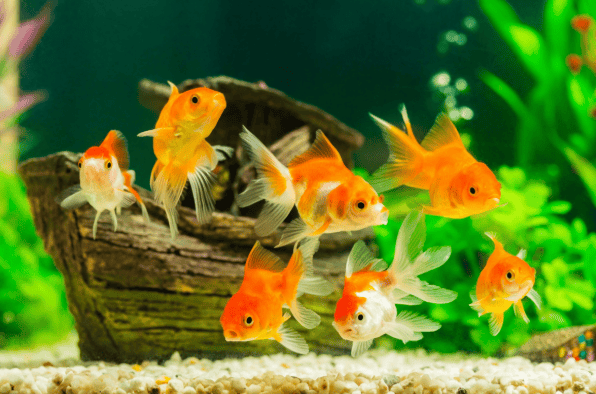
There is something almost meditative about a well-kept goldfish tank. The slow drift of fish through clear water, the gentle movement of plants, the quiet hum of a filter doing its job. It is one of the reasons goldfish have been kept as pets for over a thousand years — and one of the reasons they remain, to this day, among the most popular fish in the world.
But here is what most beginners do not find out until after they have already made expensive mistakes: a goldfish tank is not as simple as it looks. Goldfish are hardy, forgiving, and remarkably resilient — but they are also bigger, messier, and more demanding than most people expect. The small round bowl that appears on greeting cards bears almost no relationship to what a goldfish actually needs to thrive.
This guide covers everything. The tank, the water, the filtration, the fish — including some of the most fascinating and unusual varieties you will ever encounter, among them the extraordinary big forehead fish that stops visitors in their tracks. Whether you are setting up your first tank or trying to understand why an existing one is not working the way it should, what follows will give you the foundation you need.
Why Goldfish Deserve More Than a Bowl
Before anything else, this needs to be said clearly. Goldfish do not belong in small bowls. This is not sentimentality — it is biology.
A common goldfish can grow to 12 inches or more in the right conditions. Even the fancy varieties — the rounder, more ornamental fish bred for aquarium keeping — regularly reach six to eight inches. They are heavy waste producers, meaning they generate significant amounts of ammonia through their waste, which rapidly poisons the water in a small unfiltered bowl. They need dissolved oxygen in their water, which a bowl with a small surface area cannot reliably provide.
The myth of the goldfish bowl has persisted because goldfish are tough enough to survive in one for a while. Surviving, though, is not the same as thriving. A goldfish in a proper tank, with adequate space and filtration, will live for ten, fifteen, twenty years or more. A goldfish in a bowl typically lives for a fraction of that — not because goldfish have short lives but because bowls are inadequate environments that slowly make them sick.
So before choosing fish, choose the right tank.
Choosing the Right Goldfish Tank
The general rule for goldfish is more space than you think you need. For a single fancy goldfish — the round-bodied, shorter varieties — the minimum starting point is 20 gallons. For each additional fancy goldfish, add 10 gallons. For common or comet goldfish, which grow larger and swim faster, start at 30 gallons for one fish and add 12 to 15 gallons per additional fish.
These numbers are minimums, not ideals. Goldfish thrive with more space, and a larger tank is also easier to maintain because the greater volume of water dilutes waste more effectively and keeps water parameters more stable.
Shape matters. Long, wide tanks are better than tall, narrow ones. Goldfish swim horizontally and need surface area for gas exchange — the process by which oxygen enters the water and carbon dioxide escapes. A long shallow tank provides more surface area than a tall narrow one of the same volume. If you are choosing between two tanks of similar capacity, choose the wider one.
Glass or acrylic. Both work well. Glass is heavier, cheaper, and scratch-resistant. Acrylic is lighter, clearer, and easier to drill if you want to add equipment, but scratches more easily. For most home aquariums, glass is the more practical choice.
Second-hand tanks. Perfectly viable, as long as you check for leaks before setting up. Fill the tank outdoors or in a bathtub and leave it for 24 hours before trusting it with fish and furniture.
The Equipment Every Goldfish Tank Needs
Filtration — the single most important piece of equipment. Goldfish produce a lot of waste. More than almost any other common aquarium fish. Without adequate filtration, ammonia from that waste accumulates rapidly and becomes toxic. A filter does three things: it removes physical debris through mechanical filtration, it converts toxic ammonia into less harmful compounds through biological filtration — carried out by beneficial bacteria that colonise the filter media — and in some cases it removes chemicals through activated carbon.
For a goldfish tank, the filter should be rated for at least twice the volume of the tank. If you have a 40-gallon tank, use a filter rated for 80 gallons. Goldfish produce enough waste to overwhelm an undersized filter very quickly.
Canister filters, hang-on-back filters, and sponge filters all work for goldfish. Canister filters are the most powerful and most suitable for larger tanks. Sponge filters are gentle and excellent for tanks containing young fish or fish recovering from illness. Hang-on-back filters are a solid middle ground for most home setups.
Heater — optional for most goldfish, essential for some. Common goldfish, comet goldfish, and shubunkin are coldwater fish that do perfectly well at room temperature — typically between 65 and 72 degrees Fahrenheit. They do not need a heater in most homes.
Fancy goldfish — the rounder, more ornate varieties — prefer slightly warmer water, between 68 and 74 degrees Fahrenheit, and may benefit from a heater in cooler homes. Tropical fish kept alongside goldfish will always need a heater.
Lighting. Goldfish do not have strict lighting requirements, but light matters for two reasons. First, it allows you to see your fish properly — which is, after all, the point. Second, if you keep live plants in the tank, they need light to survive and to provide the water quality benefits that plants offer. A basic LED aquarium light on a timer — eight to ten hours of light per day — suits most goldfish tanks well.
Substrate. Gravel, sand, or bare bottom — all are suitable. Sand is the most natural-looking and easiest to keep clean because waste sits on top of it rather than sinking between the gaps. Gravel allows beneficial bacteria to colonise but can trap debris. Bare bottom is the easiest to maintain and is popular with serious goldfish keepers. If you use gravel, choose pieces large enough that fish cannot swallow them — goldfish are enthusiastic bottom-feeders and will put almost anything in their mouths.
Lid or cover. Goldfish can jump, particularly when startled. A lid or cover glass prevents losses and reduces evaporation.
Cycling the Tank — The Step Most Beginners Skip
The nitrogen cycle is the biological process that makes an aquarium safe for fish. Understanding it is not optional — it is the difference between a tank that works and one that keeps killing fish for no apparent reason.
Here is how it works. Fish waste produces ammonia, which is toxic even in small concentrations. Beneficial bacteria — specifically Nitrosomonas bacteria — colonise the filter and convert ammonia into nitrite. A second group of bacteria — Nitrobacter — then convert nitrite into nitrate. Nitrate is far less toxic and is removed through regular partial water changes.
This process of establishing the bacterial colonies is called cycling the tank, and it takes time — typically four to six weeks for a new tank. During this period, ammonia and nitrite levels spike and then fall as the bacterial populations establish themselves.
There are two approaches. Fish-in cycling — adding fish to the tank while it cycles — is harder to manage and stressful for the fish, as they are exposed to ammonia and nitrite spikes throughout the process. Fishless cycling — establishing the cycle before adding any fish, by adding an ammonia source to the empty tank — is kinder and more reliable. Ammonia drops or small amounts of fish food added daily will provide the ammonia source the bacteria need.
Test the water regularly throughout the cycle using a liquid test kit — not test strips, which are less accurate. When ammonia and nitrite both read zero and nitrate begins to appear, the cycle is complete and the tank is ready for fish.
Water Quality — The Ongoing Foundation of Fish Health
Even after the tank is cycled, water quality requires ongoing attention. The most important parameters for a goldfish tank are ammonia, nitrite, nitrate, pH, and temperature.
Ammonia and nitrite should always read zero in an established, healthy tank. Any detectable level of either indicates a problem — an overwhelmed filter, an overstocked tank, a dead fish decomposing somewhere in the tank, or a filter that has been damaged or cleaned in a way that destroyed the bacterial colony.
Nitrate should be kept below 20 to 40 parts per million for goldfish. It accumulates over time and is removed through regular partial water changes — typically 20 to 30 percent of the tank volume weekly, or more frequently in heavily stocked tanks.
pH for goldfish should be between 7.0 and 8.0. Most tap water falls in this range. Test it and adjust only if necessary — pH swings are more damaging than a pH that is slightly outside the ideal range.
Temperature should be stable. Sudden temperature changes stress fish and compromise their immune systems, making them vulnerable to disease. Change water at approximately the same temperature as the tank.
Tap water treatment. Tap water contains chlorine and chloramine, which kill beneficial bacteria and harm fish. Always treat tap water with a dechlorinator — sodium thiosulphate-based products work for chlorine; products containing Prime or similar are needed for chloramine. Check what your local water utility uses and treat accordingly.
The Big Forehead Fish — Goldfish and Cichlids That Turn Heads
Among the most visually arresting fish in the aquarium world are those with dramatically enlarged foreheads — the prominent cranial structures that give certain fish an almost otherworldly appearance. These fish stop visitors mid-sentence. They generate questions. They become the centrepiece of any tank they inhabit.
The technical term for this feature is a nuchal hump — a fleshy growth on the forehead that develops with age and, in some species, continues to grow throughout the fish’s life. It is entirely natural, entirely harmless to the fish, and in aquarium circles, often considered a mark of exceptional quality in a specimen.
Understanding which fish develop these remarkable foreheads, and how to care for them, opens up some of the most rewarding fishkeeping experiences available.
The Oranda Goldfish. The oranda is perhaps the most beloved of all fancy goldfish varieties and the one most associated with the dramatic forehead growth in the goldfish world. Its defining feature is the wen — a fleshy, raspberry-textured growth that develops on the head and, in high-quality specimens, extends down over the cheeks and gill covers. In exceptional orandas, the wen can be so pronounced that it partially covers the eyes, giving the fish a distinctive, almost comical appearance that experienced keepers find deeply endearing.
The wen begins to develop when the fish is between one and two years old and continues to grow throughout its life. Water quality directly affects wen development — fish kept in excellent conditions develop larger, more impressive wens. Poor water quality can cause wen infections, where the soft tissue becomes red, inflamed, and susceptible to bacterial infection. Keeping the water clean, the tank uncrowded, and the nitrate levels low is the best way to maintain a healthy wen.
Orandas come in an extraordinary range of colours — red, red and white, black, blue, chocolate, calico, and the stunning red cap oranda, which has a pure white body with a vivid red wen. They are friendly, inquisitive fish that quickly learn to recognise their keeper and will actively approach the front of the tank at feeding time.
As fancy goldfish go, orandas are moderately hardy — more tolerant of varying conditions than some of the more extreme fancy varieties, though still requiring the clean, well-filtered water that all goldfish need. They prefer temperatures between 65 and 72 degrees Fahrenheit and do best with tank mates of similar body shape — other fancy goldfish rather than fast-swimming common varieties that will out-compete them for food.
The Lionhead Goldfish. The lionhead is the oranda’s close relative and one of the oldest fancy goldfish varieties, developed in China and considered the progenitor of several other wen-bearing types. Unlike the oranda, the lionhead has no dorsal fin — the fin along the top of the back that most fish possess — giving it a distinctive smooth-backed profile that sets it apart from almost every other goldfish variety.
The wen on a quality lionhead is extraordinary — a thick, warty growth that covers the entire head in a way that genuinely evokes a lion’s mane, which is where the name comes from. In mature, well-developed specimens, the wen can be so pronounced that the fish appears to be wearing an elaborate helmet of fleshy protrusions.
Lionheads are slower swimmers than most goldfish, partly because of their rounded body shape and partly because the absence of a dorsal fin affects their stability in the water. They need tank mates that share their relaxed pace — other lionheads, orandas, or ranchus — rather than faster varieties that will reach food first and leave the lionhead hungry.
They are peaceful, gentle fish that do well in groups and show surprisingly individual personalities over time. Keepers who have maintained lionheads for several years often describe them as the most personable fish they have ever kept.
The Ranchu Goldfish. The ranchu is the Japanese refinement of the lionhead — developed over centuries by Japanese breeders into a fish that is, in Japan, considered the king of goldfish. Like the lionhead, it has no dorsal fin. Its body is more curved, more compact, and more dramatically arched than the lionhead, with a distinctive downward-turned tail that gives it a unique silhouette unlike any other goldfish variety.
High-quality ranchu develop significant wen, though typically less extreme than the most elaborate orandas. The combination of the arched back, the downward tail, and the developing wen creates a fish of remarkable visual presence — one that does not look like anything else in the aquarium.
Ranchu are prized by serious goldfish collectors and command significant prices for top-quality specimens. Japanese ranchu shows — where fish are judged on the symmetry and quality of their body shape, tail, and wen development — are taken extremely seriously, with competition fish changing hands for sums that would surprise anyone outside the hobby.
For the aquarium keeper rather than the competitive exhibitor, ranchu are deeply rewarding fish — slow, peaceful, interesting, and capable of living for fifteen years or more with proper care.
The Flowerhorn Cichlid. Moving beyond goldfish into the broader world of big forehead fish, the flowerhorn cichlid deserves particular attention. This is a hybrid cichlid — developed in Malaysia and Taiwan in the 1990s from crosses between several Central American cichlid species — and it is one of the most visually dramatic fish in the freshwater aquarium world.
The flowerhorn’s nuchal hump — called the kok — is extraordinary. In mature male specimens, the kok can be enormous, projecting far above the line of the fish’s back in a vivid, rounded mass of colour. The fish’s body is equally dramatic — bold reds and oranges, vivid black markings, iridescent scales that catch the light from across the room. A mature male flowerhorn in full colour, with a fully developed kok, is one of the most visually impressive freshwater fish that exists.
Flowerhorns are not community fish. They are aggressive, territorial, and will attack and kill other fish given the opportunity. They are kept alone, in dedicated tanks of 55 gallons or more, and they interact with their keepers in ways that most fish do not — recognising individuals, following fingers on the glass, actively soliciting attention. Experienced flowerhorn keepers describe a genuine bond with their fish that is unlike anything they have experienced with other species.
The kok develops with age and is influenced by genetics, diet, and water quality. High-protein foods, clean water, and a stress-free environment all contribute to kok development. Some keepers use mirror exposure — showing the fish its own reflection — to trigger aggressive displays that are thought to stimulate kok growth, though this remains debated in the hobby.
The Red Devil Cichlid and Midas Cichlid. Two further cichlid species deserve mention in any discussion of big forehead fish. The red devil cichlid and the Midas cichlid both develop nuchal humps in mature males, and both are large, aggressive, personality-filled fish that command significant tank space and dedicated care.
The Midas cichlid — native to Nicaragua and Costa Rica — is one of the most beautiful cichlids in the world in its gold colour form, a vivid, metallic orange-yellow that seems to glow from within. Mature males develop a prominent nuchal hump and can reach 14 inches or more. The red devil, closely related, is similarly large and similarly dramatic, with a reputation for intelligence and aggression that has made it a favourite among cichlid enthusiasts for decades.
Both species require large tanks — 125 gallons for a single adult is a reasonable minimum — and both are best kept alone or with very carefully chosen tank mates. They are not for beginners. But for the experienced keeper who wants a fish with genuine presence and genuine personality, they are extraordinary.
Stocking a Goldfish Tank — Compatibility and Community
Goldfish are generally peaceful community fish that do well with others of their own kind and with carefully chosen tank mates. A few principles guide good stocking decisions.
Keep similar body types together. Fancy goldfish — orandas, lionheads, ranchu, telescope eye, ryukins — are poor swimmers compared to common, comet, and shubunkin goldfish. Fast-swimming varieties will out-compete the fancy varieties for food and may harass them. Keep similar body types together for a harmonious tank.
Mind the temperature. Goldfish are coldwater fish. Most tropical fish require warmer temperatures than goldfish thrive in. Mixing them is possible but requires compromise — the tank temperature must suit both, which often means it is suboptimal for one species.
Avoid fish that will be eaten or will eat. Small fish — tiny tetras, small rasboras — will be eaten by adult goldfish, which have surprisingly large mouths. Conversely, fish with a reputation for fin-nipping — tiger barbs, serpae tetras — will damage the flowing fins of fancy goldfish.
Consider size at maturity. A fish that looks small in the shop may grow considerably. Always research adult size before purchasing.
Feeding Your Goldfish Well
Goldfish are omnivores with enthusiastic appetites and essentially no off switch. They will eat until they can eat no more and will then beg for more food convincingly. Overfeeding is one of the most common causes of poor water quality in goldfish tanks — uneaten food decomposes and drives ammonia levels up rapidly.
Feed small amounts twice daily — only as much as the fish will consume completely within two to three minutes. Remove any uneaten food promptly.
Quality goldfish food comes in several forms. Pellets — particularly sinking pellets — are preferable to flakes because they hold together better and produce less waste. They also sink before the fish can gulp air while eating at the surface, which reduces the risk of buoyancy problems. Gel food, made from powdered ingredients mixed with gelatin or agar, is considered by many experienced keepers to be the best option — it is natural, produces minimal waste, and can be made at home with complete control over ingredients.
Supplement the staple diet with fresh or blanched vegetables — peas with the skin removed, cucumber, lettuce, spinach — and occasional protein sources such as bloodworm, daphnia, or brine shrimp. Variety makes for healthier, more colourful fish.
Common Health Problems and How to Address Them
Swim bladder disorder. A fish swimming sideways, floating at the surface, or sinking to the bottom is likely experiencing swim bladder disorder — a disruption of the organ that controls buoyancy. In goldfish, it is most often caused by overfeeding, constipation, or gulping air at the surface while eating. The first response should be to fast the fish for two to three days, then feed skinned peas, which act as a mild laxative. Sinking foods rather than floating ones reduce air ingestion. If the problem persists after dietary adjustment, other causes — bacterial infection, physical damage, internal cysts — should be considered.
Ich. White spots resembling grains of salt on the fish’s body and fins indicate ich — a parasitic infection caused by Ichthyophthirius multifiliis. It is highly contagious and spreads rapidly through a tank. Treatment involves raising the water temperature gradually to around 80 degrees Fahrenheit, which speeds up the parasite’s life cycle, combined with appropriate medication. Quarantine new fish before introducing them to an established tank to prevent ich introduction.
Fin rot. Ragged, disintegrating fin edges indicate bacterial infection, usually secondary to poor water quality or physical damage. The primary treatment is improving water quality — large water changes, checking filtration, reducing stocking density if necessary. Antibacterial medication may be required in advanced cases.
Fungal infections. White, cotton-like growths on the body or fins indicate fungal infection, also typically secondary to poor conditions or injury. Antifungal treatments are available and effective when caught early. Clean water and removal of the underlying cause are essential for permanent resolution.
Live Plants in a Goldfish Tank — Worth the Effort?
Goldfish and live plants have a complicated relationship. Goldfish eat plants. They uproot them, nibble them, and in some cases destroy them with impressive efficiency. This leads many goldfish keepers to conclude that live plants are not worth attempting.
The reality is more nuanced. Some plants are genuinely goldfish-proof — or at least goldfish-resistant. Anubias, Java fern, and Vallisneria are tough enough to survive most goldfish attention. Floating plants — hornwort, water lettuce, frogbit — grow fast enough to outpace goldfish grazing.
Live plants offer real benefits in a goldfish tank. They consume nitrates, reducing the load on water changes. They oxygenate the water. They provide enrichment for fish who like to forage among plants. And they look beautiful in a way that even excellent artificial plants cannot entirely replicate.
If you want to try live plants with goldfish, start with the hardy varieties, plant them firmly or attach them to rocks and driftwood so they cannot be uprooted, and accept that the goldfish may nibble them. With the right species choices, a planted goldfish tank is entirely achievable.
A Final Word
A well-maintained goldfish tank is one of the most rewarding projects in fishkeeping. These are intelligent, long-lived, visually extraordinary fish — particularly the fancy varieties with their flowing fins and dramatic head growths — that repay good care with years of beauty and, in their quiet way, genuine personality.
Get the basics right — the right size tank, proper filtration, a cycled system, good water quality, and appropriate feeding — and goldfish will thrive in ways that their reputation as beginner fish does not begin to suggest. Explore the full range of varieties — from the elegant common goldfish to the remarkable oranda with its extravagant wen, from the ancient lionhead to the dramatic big forehead fish that stop people in their tracks — and you will find a hobby with more depth, more variety, and more genuine fascination than almost any other in the world of aquarium keeping.
Visit The Goldfish Tank for comprehensive guides on every aspect of goldfish and aquarium care, and explore the full guide to big forehead fish for everything you need to know about keeping these extraordinary specimens.
